
Ranking the 7 Best Mobility Tools for Better Flexibility
"Flexibility is the key to stability."
—John Wooden
Mobility is the foundation of a healthy, active life. It’s not just about being able to touch your toes or move without discomfort; it’s about improving the way your body moves every day. Whether you're an athlete, recovering from an injury, or simply trying to prevent your chin from hitting the floor when you walk due to poor posture, incorporating mobility work into your routine can help increase flexibility, reduce pain, and keep you performing at your best.
Over the years, I've found that having the right tools in my toolkit has made a huge difference in my own recovery and mobility. Here are seven of my go-to tools that I use to improve my movement.
Tools to Improve Your Mobility
1. IASTM
Instrument Assisted Soft Tissue Mobilization (IASTM) is my favorite mobility tool. It involves using specialized tools to apply pressure to the soft tissues of the body, breaking down adhesions and scar tissue while promoting blood flow to the targeted areas. I use it both in the clinic on my patients as well as at home on myself, most often targeting my quads, calves, and forearms.

What I love about IASTM is its ability to target specific muscle groups and soft tissue areas and precisely break up muscle adhesions. In fact, you can literally feel the muscle adhesions breaking up as you “scrape” the muscle. I describe it as going from a gravel road to a smooth one with each swipe, something I can feel using it on myself, and my patients can feel as I use it on their muscles and team them how to carry it over. There are plenty of simple tools out there to choose from so I just mentioned the one I use in the link below. Just make sure to use some sort of emolient (such as coconut oil) when you do it.
2. Resistance Bands
Resistance bands are a powerhouse for improving mobility, and they’re the mobility tool that I use most often. One of the biggest benefits of using resistance bands is that they provide constant tension throughout the movement, making it easier to engage muscles fully and perform controlled stretches. The two movements I do before almost every strength training session are overhead reaching (which stretches the shoulders and upper back while simultaneously strengthening the muscles involved in the movement) and external rotation movements for the shoulders (which can help prevent injury by strengthening the rotator cuff and improving shoulder stability). These movements are excellent for opening up tight areas, especially if you're sitting for long periods or performing repetitive overhead motions.
In addition to increasing flexibility and joint mobility, resistance bands are great for activating muscles before a workout, which is why so many pro athletes use them. Plus, they’re portable, versatile, and can be used to target any muscle group.
3. Bar to Hang From (Pull-Up Bar)
Hanging from a bar or surface for dead hangs is a highly effective exercise that taps into our evolutionary roots. Throughout human history, our ancestors relied on hanging from trees or other surfaces as part of survival, whether it was for climbing, escaping predators, or reaching for food. This natural movement pattern engages several muscles, particularly in the shoulders, upper back, and forearms, while helping to decompress the spine and improve overall mobility. Incorporating dead hangs into your routine can increase shoulder flexibility, reduce tightness, and improve the range of motion in your upper body, allowing for smoother overhead movements which also helps improve your posture.
As a bonus, dead hangs improve your grip strength, something that is highly correlated to overall health and longevity. When you hang, your forearms, hands, and fingers are actively engaged, helping to build grip strength over time.
4. Symbodi Vertiball

If you’re looking for something to tackle low back pain or tight muscles, the Symbodi Vertiball is a must-have. Soft tissue mobilization (STM) has been shown in multiple studies to help reduce muscle tension and promote recovery, and the Symbodi Vertiball allows for self-mobilization of tight muscles, especially in hard-to-reach areas like the lower back.
I use the Symbodi Vertiball in my own mobility routine, and I recommend it to my patients. By positioning the ball against the wall, you can pinpoint specific areas of tightness and release the muscle tension gradually. The goal is to apply enough pressure to the area without overdoing it—if it’s too painful, ease off a little. It’s an incredibly effective way to target my personal hot spots, and it's convenient enough to have mounted in the kitchen, where my wife and I both use it regularly.
5. Fasciitis Fighter
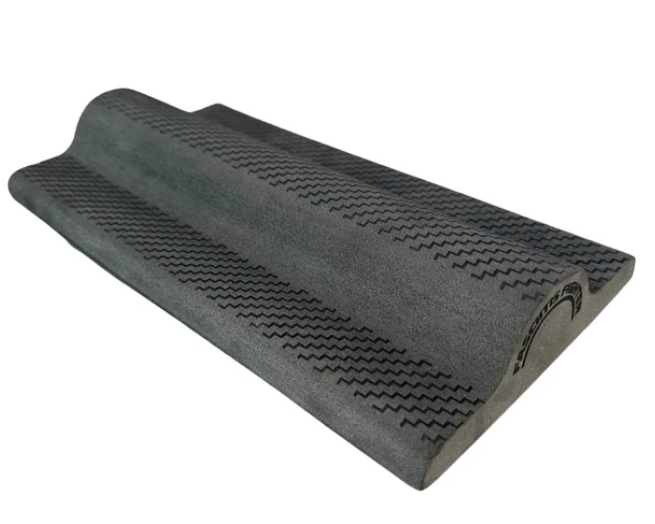
The “Round 2 Strength, Balance & Mobility Device” by the brand Fasciitis Fighter is a basic tool that allows you to apply a high load of force for a good stretch to your toes, foot arches, and ankles. You can either use it as a way to strengthen these areas (toe curls, calf raises, arch rolls, etc.) or to stretch them out. Foot health is an incredible important part of overall health (read more on that here), so it’s important to not neglect this often-forgotten-about area. I keep it under my standing desk at home and do a variety of stretches as I write (like I’m doing right now).
While you can probably use any small foam device to do this, I like that it’s sloped so that you can move your foot in different positions to apply different forces.
6. Foam Roller
Foam rolling is one of the most popular and widely researched mobility tools. A meta-analysis on foam rolling found small but notable benefits, particularly when used before exercise, such as a slight improvement in sprint performance (+0.7%) and flexibility (+4.0%), while post-rolling helps reduce muscle pain (+6.0%) and slightly enhances strength (+3.9%). Overall, the effects of foam rolling on performance and recovery are modest, but it’s most effective as a warm-up activity to boost flexibility and sprint performance.
The mechanism behind foam rolling is that it helps break up muscle adhesions (or "knots") and releases tight fascia. It's effective for areas like your quads, hamstrings, and IT bands. It’s also a great way to down-regulate after a workout
7. PSO Rite

If you’re dealing with tight hips or lower back pain, the PSO-Rite is a fantastic mobility tool to consider. This hard, specifically designed tool targets the psoas muscle, which is crucial for your ability to bend, twist, and maintain good posture. The psoas often becomes tight, particularly from prolonged sitting, and this can contribute to lower back pain and discomfort.
The PSO-Rite allows you to apply precise pressure to the psoas, helping to release tension and ease discomfort. Like most effective mobility tools, it helps you quickly find areas of discomfort—an indicator that you’ve hit the right spot. This targeted approach is key to relieving tightness and improving overall movement, making it a game-changer for back pain relief and hip mobility.
I even have a discount for you—use MINDBODYDAD50 to get 50% off!
