
Do Brain Games Actually Work For Improving Cognition?
"The more you use your brain, the more brain you will have to use."
—George Amos Dorsey
The promise of brain games is enticing: sharpen your memory, improve focus, and even stave off cognitive decline—all from the comfort of your couch. Apps and puzzles marketed as “brain training” have flooded the market, but do they really work? Can playing a few rounds of Sudoku or completing daily memory challenges improve your overall brain health?
Let’s break it down.

Brain Games: The Truth Behind the Hype
What Brain Games Get Right
Let’s start with the wins. Brain games excel at improving specific cognitive skills. Play a memory app daily, and you’ll likely notice gains in remembering sequences or recognizing patterns. These improvements are real but narrow, like working out one muscle group over and over. Your biceps may pop, but the rest of your body? Neglected.
And that’s the rub: while you might master a game, these skills rarely translate into real-world benefits like recalling where you parked the car or managing a complex project at work. They sharpen isolated abilities but fall short of delivering broader cognitive perks.
The Research: Mixed Results
Scientists have scrutinized brain games, and the findings are lukewarm. In 2014, researchers criticized claims, arguing that brain games lack solid evidence of improving overall brain function. They wrote that the “consensus of the group is that claims promoting brain games are frequently exaggerated and at times misleading."
While there are some studies that show benefits to brain games, these are few and often nuanced. For example, a 2013 study demonstrated that older adults who played a custom-designed video game, NeuroRacer, showed improvements in multitasking abilities and sustained attention. Similarly, a 2012 study found that elderly participants who played the brain training game Brain Age exhibited improved executive functions and processing speed after just four weeks. These benefits, however, were specific to the tasks trained and did not generalize to broader cognitive abilities.
Additionally, in 2019, researchers conducted a large-scale investigation into brain training efficacy, analyzing data from over 60,000 participants. They found no significant cognitive advantages for individuals who engaged in brain training compared to non-users, except for working memory and verbal scores among those who trained for over a year. This supports the idea that brain training may require extended timeframes to deliver limited benefits. However, they noted that other cognitive pursuits, such as board games or puzzles, were linked to broader performance gains across multiple cognitive domains.
The verdict? Brain games can help, but they’re far from the whole solution.
What Actually Works for Brain Health?
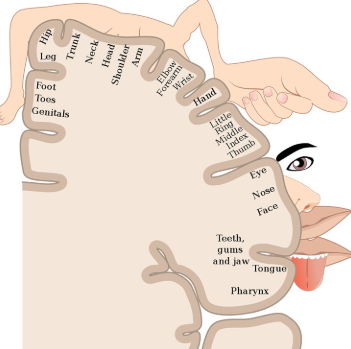
Homonculus
To truly impact your brain health, you need more than just mental exercises like Sudoku or math problems. These activities, while helpful, are akin to doing endless bicep curls in the gym; useful but far from comprehensive. To thrive, your brain needs complex motor and perceptual challenges, as evidenced by the homunculus map of the brain (see picture), which shows vast areas dedicated to movement and sensory input. As humans, we evolved for survival and reproduction, tasks requiring forethought, complex movements, and problem-solving. In this sense, brain health is less about numbers and words and more about engaging the diverse functions our brain evolved to perform.
Think of brain health like building muscle: stimulation (learning new things) acts as the protein, and effort (applying what you learn) is the exercise. Just as muscles weaken without use, the brain becomes less efficient when unstimulated. During formal education, we naturally experience constant learning and problem-solving—mental "progressive overload." But as we specialize in our careers, this dynamic exercise often shifts to a repetitive "same-route" routine, which may support work performance but falls short of overall brain fitness. The pattern worsens with retirement, as even the basic cognitive "workout" of daily tasks disappears, along with the social interaction, time management, and structure it provides. While common, this is preventable.
Here are the best ways to improve your brain health in lieu of brain games:
Learning. To challenge your brain enough, you must engage in new, challenging activities by stimulating the brain in ways that familiar tasks cannot. This is especially important when it comes to age-related decline. While brain games offer some benefits, true brain health requires embracing complex, motor-based activities and the learning process, including failure, to fully support cognitive development. Basically, you must be an amateur at something and fail often at doing it. While any new learning is good, these three areas have been shown to have the most significant impact.
Dancing: Dancing can reduce the risk of dementia by 76% and a meta-analysis showed it to improve memory, cognitive flexibility, visuospatial function, balance, and attention. This may be the most powerful version of a brain game thanks to the combination of physical movement, mental challenges, and social interaction.
Language: Learning a new language is another great way to challenge the brain with research showing that bilingual individuals may delay Alzheimer's and dementia symptoms by up to 4.5 years.
Instrument: Similarly, learning an instrument enhances memory and spatial-temporal skills, boosting neural plasticity.
2. Physical Activity. Physical activity, a.k.a. embodied cognition, is essential for cognitive sharpness, as the brain and body are deeply connected. The study Preventive Strategies for Cognitive Decline and Dementia: Benefits of Aerobic Physical Activity, Especially Open-Skill Exercise says it all: “Physical inactivity is highly associated with an increased risk of developing dementia.” Exercise, especially open-skill activities like tennis or badminton, as opposed to closed-skill activities like swimming or running, offers significant cognitive benefits by improving cardiovascular health, boosting neurotrophic factors, increasing hippocampal volume, and reducing inflammation. These open-skill activities also tend to be more social, which further improves brain health. While any movement helps, aim for the Minimum Effective Dose of Exercise—bonus points for including open-skill exercises and making it social. Furthermore, muscle function itself is a great predictor of cognition. While both endurance and resistance training are good for the brain, resistance training tends to have a leg up when it comes to cognitive health. You probably won’t see a very fit older person with muscle mass who has poor cognition but you often see the opposite.
Social Interaction. Social connections, whether through family dinners, clubs, or sports, boost brain health by promoting neurogenesis and strengthening neural pathways. Research shows that strong social ties reduce cognitive decline by 39% in older adults and lower the risk of dementia by 54%, while also being the key to a happy life. Furthermore, researchers found that lonely individuals showed a 54% higher risk of developing dementia over 10 years And then there was the longest study on human happiness, which revealed that strong social relationships are the single most important factor in living a happy life. It sounds so simple, but has such a profound impact. Start hanging out with friends and family more.
Know the Brain Shrinkers
Sleep Dysregulation: Quality sleep (7-9 hours) is essential for processes like synaptic pruning, which strengthen memory and cognitive function. Poor sleep, untreated sleep apnea, or restless leg syndrome can harm memory and focus, but addressing these issues—especially sleep apnea—can reverse many problems.
Certain Medications: Certain medications can negatively impact brain health and increase the risk of cognitive decline. Antihistamines like Benadryl and vertigo drugs like Meclizine impair memory due to anticholinergic effects, while bladder medications such as Ditropan may raise dementia risk by up to 50%. Long-term use of benzodiazepines, like those for anxiety, can increase Alzheimer’s risk by up to 84%, and antipsychotics such as Abilify may lead to Parkinson-like symptoms by blocking dopamine. Learn more here.
Mood Disorders and Depression: Depression often mimics dementia with symptoms like low motivation and mood. Therapy, psychological support, or medications can help restore cognitive function and improve quality of life.
Hyperglycemia and Insulin Resistance: Insulin resistance, closely tied to Alzheimer’s ("type 3 diabetes"), harms brain health. Watch for signs like abdominal fat, fasting glucose over 100, or HbA1c above 5.47, and address them early to protect cognition.
Nutrient Deficiencies: A diet rich in fruits, vegetables, and quality protein is key to brain health. Omega-3s boost memory, B vitamins slow brain atrophy, and polyphenols in berries can delay cognitive aging by years.
Understimulation: Your brain thrives on challenges and new experiences, but repetitive routines and passive activities like excessive TV watching or mindless scrolling can weaken neural pathways and accelerate cognitive decline. Limited social interaction or engaging in monotonous work without creativity or problem-solving further contributes to understimulation. To combat this, incorporate activities like learning a new skill, playing an instrument, or meaningful socializing to strengthen your brain and promote long-term cognitive health.
As the saying goes, “Use it or lose it. But challenge it to change it.”
Related:
