
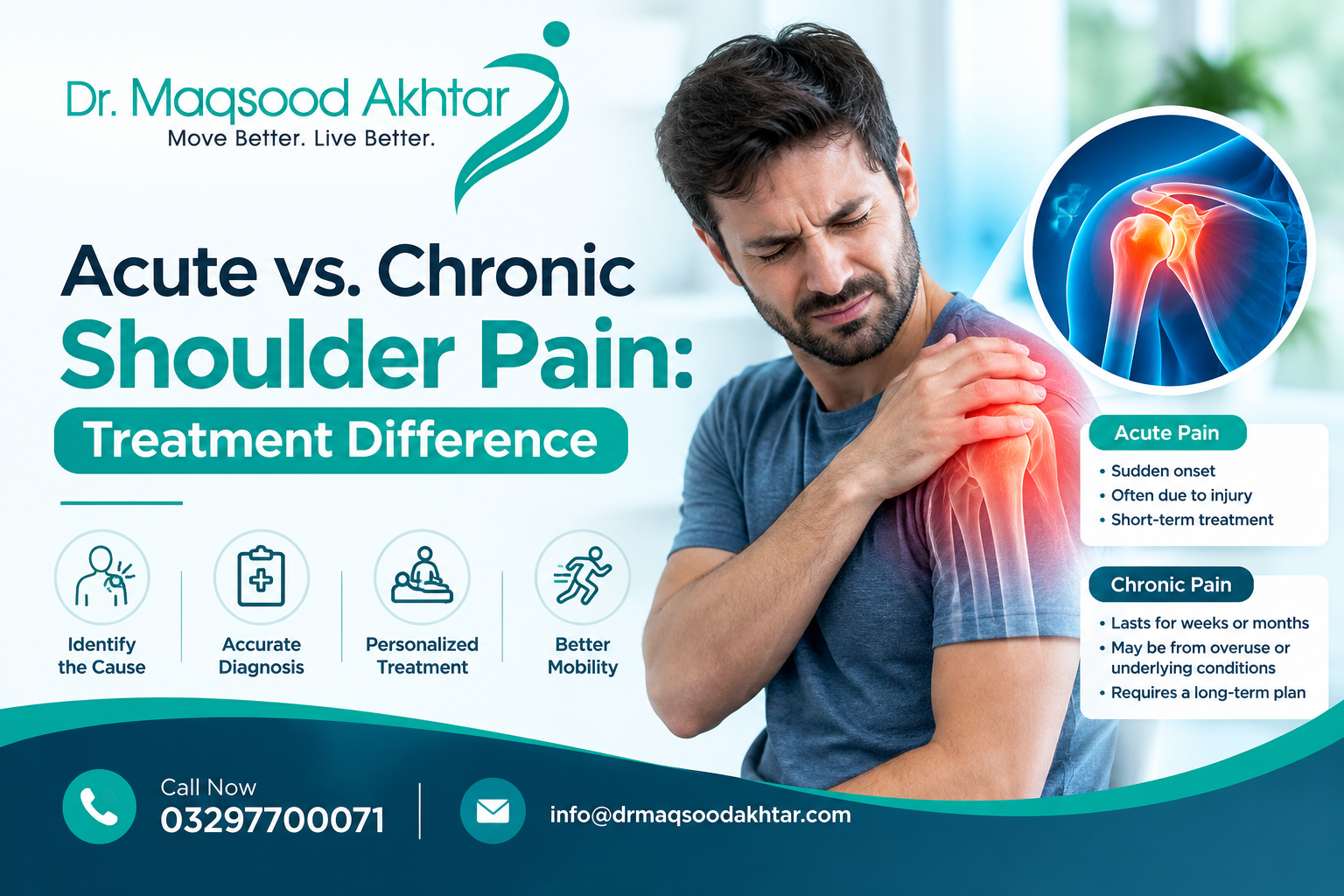
You use your shoulder for almost everything from getting dressed to carrying a bag. Shoulder pain is common and disrupts work, sleep, and everyday life. It can start suddenly after an injury or after a period of time because of inflammation, aging, or repetitive actions. Shoulder pain treatment depends on whether it is acute or chronic. To choose an appropriate treatment plan and recover safely, you should know about the differences between these two conditions.
Acute shoulder pain usually occurs following an injury or physical activity. On the other hand, chronic shoulder pain appears over a long period of time and can last for weeks or months. Beyond this basic difference, several aspects vary accordingly, including treatment options and recovery. Understanding how they differ makes the choice clearer.
What is acute shoulder pain?
The acute onset of shoulder pain refers to pain that comes on spontaneously and lasts for a limited amount of time. It usually occurs due to injuries, vigorous physical activities, or sudden movements.
Common causes include:
Muscle strain
Ligament sprain
Tendon injury
Falls
Athletic injury
Shoulder dislocation
Symptoms of acute shoulder pain
The symptoms can be:
Pain that starts suddenly
Inflammation
Discoloration
Sensitivity to touch in the shoulder
Problems with raising or rotating the injured arm
Pain while moving or touching the affected joint
Loss of strength after an injury
Some acute injuries are severe enough to need urgent care. Shoulder fractures, shoulder dislocations, or severe tendon tears are some examples.
What is chronic shoulder pain?
Chronic shoulder pain is the one that lasts for weeks or even months. It usually starts from an underlying condition, repetitive motions, age related changes, or an injury that has not fully healed. Chronic shoulder pain may appear constantly or from time to time depending on activity and position.
Some of the typical reasons for chronic shoulder pain include:
Frozen shoulder
Rotator cuff tendinopathy
Shoulder bursitis
Osteoarthritis
Repetitive strain injuries
Sometimes poor posture and prolonged working at a desk may cause shoulder pain.
Symptoms of chronic shoulder pain
The symptoms of chronic shoulder pain may be as follows:
Constant aching or recurrent pains
Shoulder stiffness and lack of flexibility
Increased pain when performing certain movements
Limited ability to reach overhead or behind the back
Reduced strength and inability to perform everyday activities
Shoulder pain affecting sleep
Management of acute shoulder pain
How acute shoulder pain is treated depends on the cause and how severe the injury is. Mild sprains can respond to conservative treatments, but fractures, dislocations, and severe tendon injuries may require immediate consultation with a specialist.
1. Rest and modification of activities
Painful activities such as carrying heavy loads, reaching above the head, or strenuous exercise should be avoided. Too much rest may also cause stiffening; therefore, moderation is crucial. Carefully moving the injured limb may be preferable once a serious injury has been ruled out.
2. Ice treatment
Apply an ice pack wrapped in a towel for about 15 to 20 minutes at a time. It can alleviate pain and inflammation following an injury. Don’t apply ice directly to the skin.
3. Pain reliever medication
Based on the patient's health status, the medical practitioner or pharmacist will advise on the most appropriate pain-relieving medicine. Anti-inflammatory drugs can work for some people, but they don’t work for everyone, especially those with particular health conditions.
4. Physiotherapy
Physiotherapy is considered if pain starts to decrease or if there is a need for rehabilitation due to the injury. A physiotherapist will help you with mobility exercises and recover strength without too much stress to the injured area.
5. Medical treatment of severe injuries
In case of severe injuries, there may be a need for imaging, joint reduction, immobilization, or even surgery. Treatment must be based on diagnosis, not only pain level.
Treatment for chronic shoulder pain
Chronic shoulder pain often needs a specific approach to treatment that will address both the symptoms and the root cause of the problem.
1. Physiotherapy and rehabilitation exercises
Physiotherapy is one of the treatment options that can be helpful for many forms of chronic shoulder problems. The therapy might involve:
Gentle stretches
Mobility exercises
Rotator cuff strengthening
Shoulder blade stabilization exercises
For instance, patients with frozen shoulders might need progressive mobility exercises, whereas those with rotator cuff tendinopathy would need progressive strengthening. The exercise regimen needs adjustment to the condition because the same exercises don’t apply to every form of shoulder problem.
2. Warm pack treatment
A warm pack can aid in relieving stiffness and increasing comfort prior to light movements. Warm packs can be very helpful for the treatment of certain persistent shoulder injuries, as long as they do not aggravate the problem.
3. Alterations in posture and exercise
Raising the working desk, taking regular movement breaks, and preventing painful repetitions can assist in reducing pain levels. If you engage in manual labor or train physically, you may need temporary changes in exercises and workload.
4. Medication and injections
In certain situations where pain hinders sleep and rehabilitation, a health care practitioner may prescribe medication. Where there is a need, an injection might help for a short while, depending on the underlying medical condition. An injection is not suitable for everyone, and you should go for it after a complete evaluation.
5. Surgery for certain medical conditions
Surgery can be used where there is a certain problem that leads to severe symptoms and nonsurgical treatment hasn’t improved the situation sufficiently.
When do you need to see a doctor?
Visit a doctor when your shoulder pain is:
Severe
Ongoing
Getting worse
Accompanied by weakness or limited movement
Pain that starts suddenly after falling or having an accident, swelling, deformity, or an inability to move the arm could be a sign of a more serious condition.
Go to an emergency room when:
Shoulder pain is accompanied by chest discomfort
Breathing difficulty
Sweating
Light-headedness
Fever
Redness
Heat
General illness along with shoulder pain might also necessitate urgent care.
Take a step toward shoulder pain relief
The causes and nature of the acute or chronic shoulder pain vary significantly, and so do the treatments for both. In some cases, the shoulder joint pain resolves after adequate treatment and rehabilitation. In others, you may need to receive shoulder pain treatment that incorporates physiotherapy, changes in lifestyle, medication, and other medical procedures.
Seeking professional consultation and timely diagnosis can help prevent possible complications. To get your shoulder checked, visit Dr. Maqsood Akhtar at our orthopedic clinic in Lahore.
Apart from this, your doctor may prescribe certain physical exercises and advise you to avoid activities that can exacerbate the condition. Proper posture should also be maintained throughout the process.
