
Sunlight is all around us, yet I think its importance to our health has been understated for far too long. Fortunately, that's been changing as more research highlights how much light exposure affects our sleep, energy, mood, and circadian rhythm.
I'm a big believer in getting natural sunlight first thing in the morning, but that's not always realistic. Between waking up early, daylight saving time changes, and dark winter mornings, getting enough light at the right time can be tough.
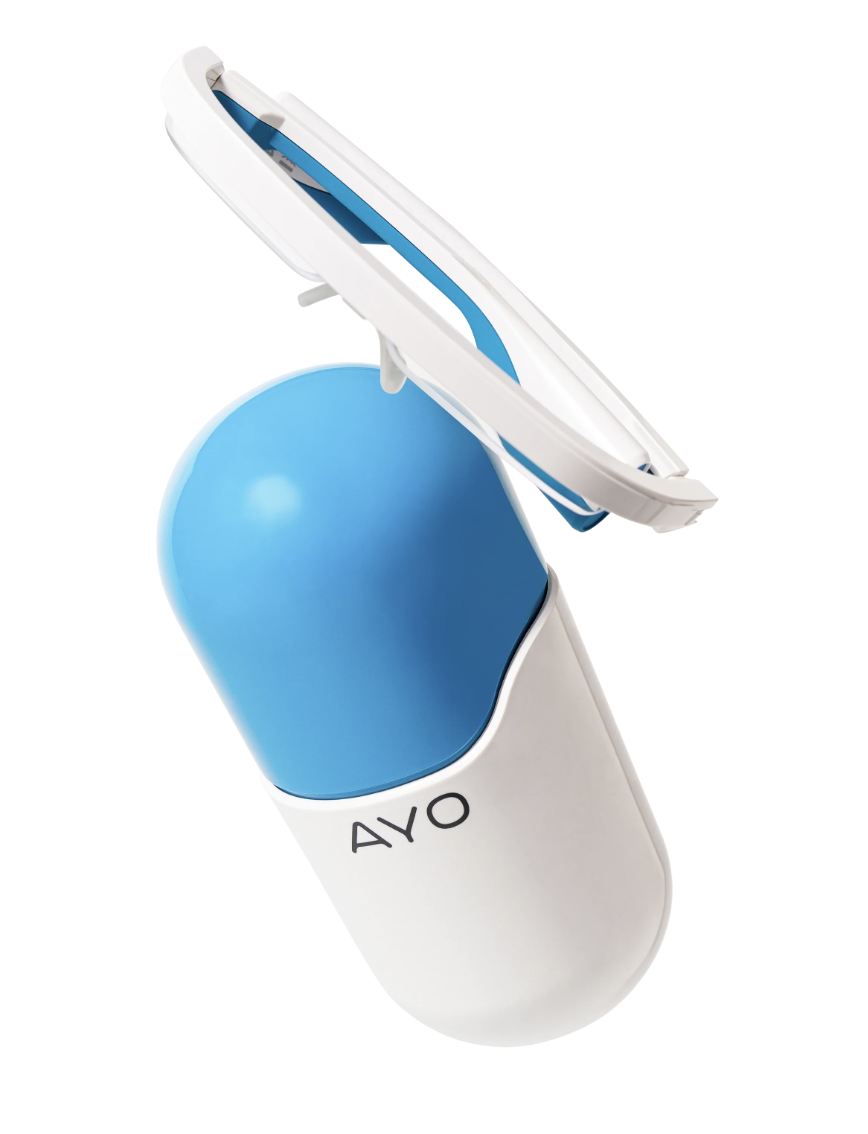
That's what caught my attention about AYO light therapy glasses. Instead of sitting in front of a traditional SAD lamp, you simply put on the glasses and go about your morning routine.
I've been testing AYO, and I really like them. They've been especially helpful with the transition out of daylight saving time and the shorter days of winter. In fact, I've liked them enough that I've put my SAD lamp away. They're lightweight, convenient, and easy to incorporate into my mornings.
I still prioritize natural sunlight whenever possible, but AYO has become a great alternative on those dark mornings.
In this review, I'll share my experience, look at the research behind light therapy, and discuss whether AYO is worth the $299 price tag.
The TLDR
AYO light therapy glasses are lightweight, wearable glasses that deliver blue-turquoise light to support your circadian rhythm, sleep, and morning alertness. They're comfortable, portable, and allow you to get your light exposure while going about your morning routine. The importance of light is understated but to support their claims, 2026 study involving 182 employees specifically tested AYO and found improvements in sleep, next-day alertness, and work-related outcomes. The drawback is the $299 price tag. It’s expensive and there’s no getting around that.
Personally, they've been especially helpful during daylight saving time changes and dark winter mornings. I like them enough that I've put my traditional SAD lamp away. They're one of my favorite additions to my morning routine. Well worth it. Highly recommended.
Durability: ⭐⭐⭐☆ ☆
Performance & Function: ⭐⭐⭐⭐☆
Price: ⭐⭐⭐☆ ☆
Value: ⭐⭐⭐⭐⭐
Overall: 4/5 ⭐⭐⭐⭐☆
(BRIAN)
AYO+ Light Therapy Glasses
Selling Points
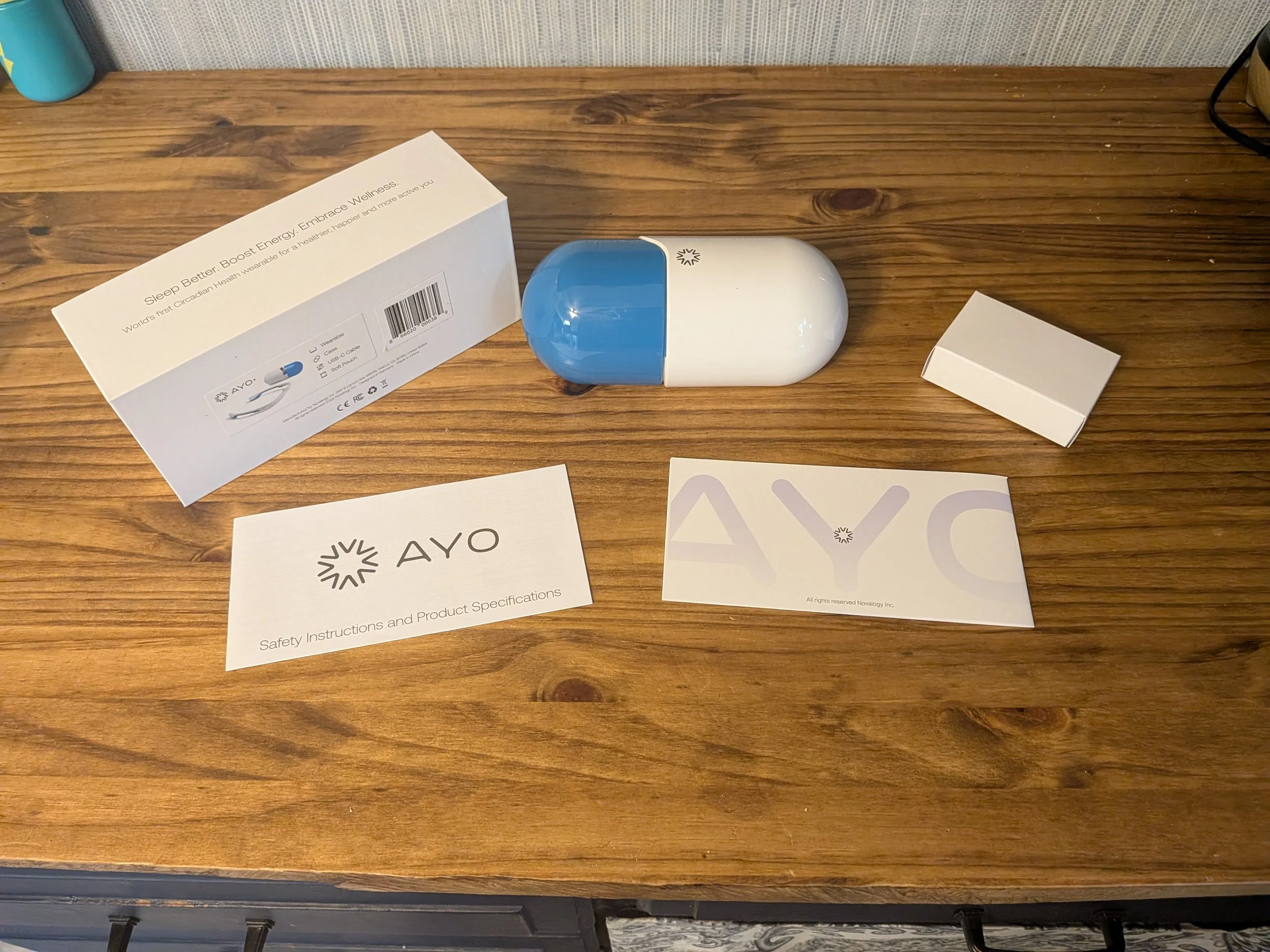
Portable Light Therapy: The biggest advantage is that you don’t have to sit in one place. You can wear AYO while making breakfast, brushing your teeth, working on a laptop, stretching, or doing other morning tasks.
Lightweight Design: AYO are pretty light, coming in at about 1.1 ounces (31 grams).
470nm Blue-Turquoise Light: The “glasses” delivers a targeted wavelength that falls near the range to which the circadian system is particularly sensitive.
Adjustable Intensity: The app allows you to select low, medium, or high intensity. You can also make finer adjustments between 10% and 100%.
Personalized App: The AYO Circadian Health app provides guidance based on your sleep schedule, goals, and daily routine. It includes programs for things like sleep timing, energy, jet lag, and shift work.
No Phone Required for Basic Use: You can use AYO without a smartphone. The app is mainly needed for personalized timing, session length, intensity controls, and the red light mode.
Red Light Therapy: The AYO+ also includes a separate 670nm red light mode. I like finishing my morning session with this feature, although the benefits of this particular mode are less established.
Compatible With Reading Glasses: I wear mine with reading glasses most mornings while working on my computer. They fit together surprisingly well.
No App Subscription: The AYO app is included with your purchase, with lifetime access and no monthly subscription fees. I appreciate that I don't have to pay extra to use all the features of a device I've already spent $299 on.
Drawbacks
Price: The standard White/Blue AYO+ costs $299, and the Carbon Black model costs $319. That’s a lot more than a basic 10,000-lux light box.
Default Startup Settings: I love that the glasses automatically turn on when opened, but they start in the default mode. I prefer 100% intensity followed by red light therapy, so I have to open the AYO app and adjust the settings each time. I'd love the option to save my preferred routine and have it start automatically.
Key Specs
Price: $299 for White/Blue; $319 for Carbon Black
Weight: 31 grams (1.1 ounces)
Blue Light Wavelength: Approximately 470nm
Red Light Wavelength: Approximately 670nm
Blue Light Irradiance: 125–250 µW/cm²
Standard Session: 20 minutes
Custom Session Length: 5–90 minutes through the app
Light Intensity: Low, Medium, High, or adjustable from 10%–100%
Battery Life: Approximately seven 20-minute sessions per charge
Charging Time: Approximately three hours
Charging Type: USB-C
App: iOS and Android; lifetime access included
Phone Required: No for basic use; yes for personalized programs and advanced controls
Eye-Safety Standards: IEC 62471, ANSI Z80.36, and ISO 15004-2
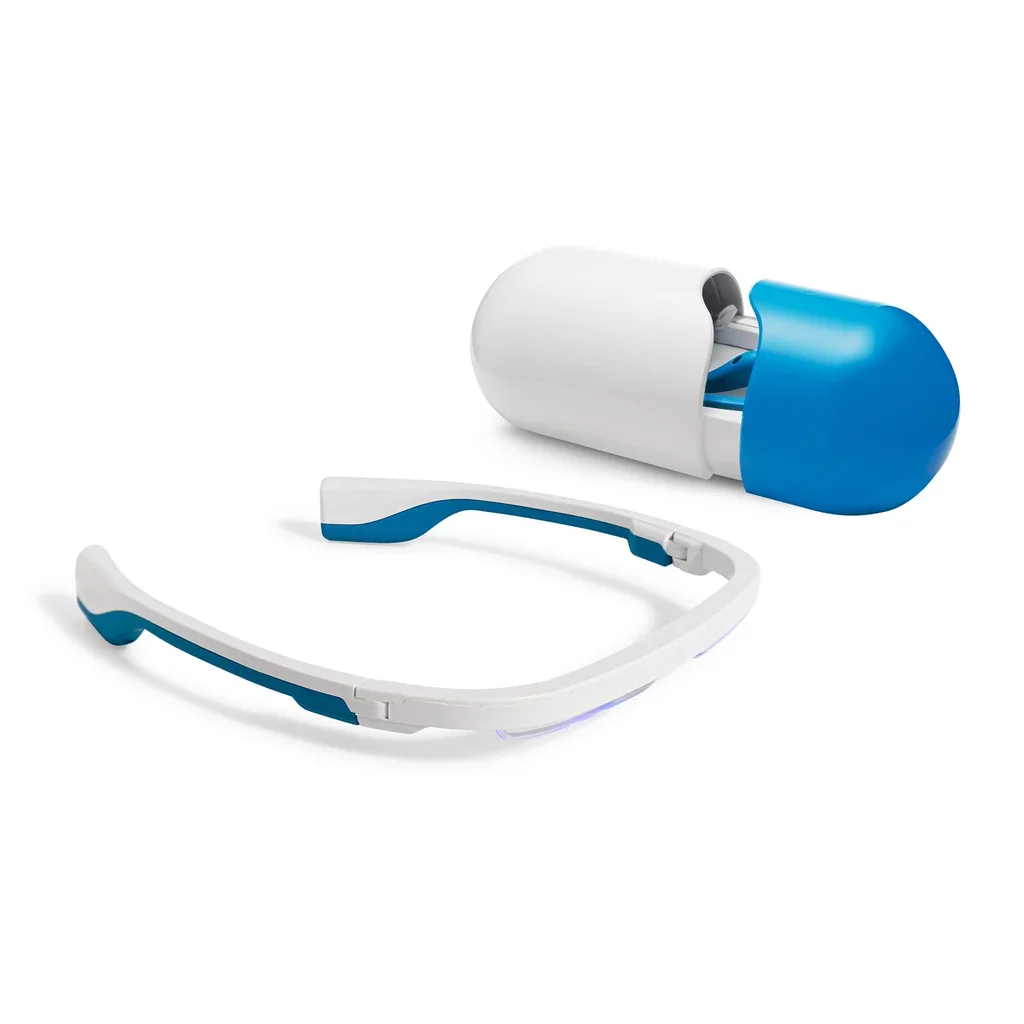
What’s Included: AYO+ glasses, protective case, soft pouch, USB-C cable, quick-start guide, manual, and lifetime app access
Warranty: One year outside the EU; two years in the EU
Trial Period: 60 days
Device Classification: Consumer wellness device; not a medical device
The Science
Light therapy has some interesting science behind it, especially when it comes to regulating our circadian rhythm. Here's what stands out about AYO:
Why AYO Uses 470nm Light: According to AYO, its blue-turquoise light is specifically designed to stimulate the cells in our eyes responsible for regulating our circadian rhythm. AYO explains that wavelengths between 460-490nm are particularly effective for this reason, which is why it uses ~470nm. The company also states that its maximum irradiance of 250 µW/cm² can provide a circadian stimulus comparable to a traditional 10,000-lux light box. That's an interesting distinction because the biological effects of light depend on more than how bright it appears to our eyes. Wavelength, intensity, duration, and timing all matter.
Circadian Rhythm: Specialized cells in our retinas contain melanopsin, a light-sensitive pigment that helps communicate light exposure to the brain's internal clock. These cells are particularly responsive to blue and blue-green wavelengths.
Sleep and Melatonin: Properly timed morning light exposure can help shift our circadian rhythm earlier, making it easier to feel alert in the morning and sleepy at night. Timing matters because bright light late in the evening can delay melatonin release.
Consistency: Light therapy works best when used regularly and at the appropriate time. AYO's wearable design makes it much easier to fit a session into a normal morning routine.
AYO-Specific Research: A 2026 randomized field experiment involving 182 employees tested AYO glasses for 30 minutes each morning. Compared with a 1% intensity control, full-intensity light improved reported sleep outcomes, which were associated with better next-day alertness, less mental fatigue, and improved work outcomes.
Additional Clinical Research: A separate study investigated AYO glasses as part of a personalized light therapy approach for fatigue. It adds to the research on wearable light therapy, although results shouldn't be generalized to everyone.
Red Light Therapy: AYO+ also includes a separate red light mode around 670nm. While red light is being investigated for several potential benefits, there is less direct clinical evidence supporting this particular AYO feature than its blue-turquoise circadian light mode.
Who Do I Recommend It For?
Anyone who feels sluggish during dark winter mornings
Anyone who deals with jet lag
Shift workers
People who spend most of the day indoors
Anyone who won’t consistently sit in front of a traditional light box
People who want to use light therapy while making coffee, reading, working, or getting ready
Tips
Use It at the Right Time: For most people trying to feel more awake and move their sleep schedule earlier, that means using it shortly after waking. Follow the app’s personalized timing rather than using it randomly.
Start With a Lower Intensity: Begin with a shorter session or lower setting if bright light tends to cause headaches, nausea, or eye strain.
Be Consistent: Use it at roughly the same time each day. Circadian routines generally work better when the timing is predictable.
Keep Your Eyes Open: You don’t need to stare at the lights, but your eyes must remain open for the light to reach the retina.
Pair It With an Existing Habit: Wear it while making coffee, brushing your teeth, stretching, eating breakfast, or checking email. This makes daily use easier to remember.
Don’t Ignore Natural Light: AYO is helpful when sunlight isn’t available, but it doesn’t need to replace getting outside when the weather and schedule allow it.
My Experience

For the last 7 or so years, I've pulled out my SAD lamp every October and used it through May. It helps with my mood, energy, and sleep, especially during those dark winter months when I'm waking up well before the sun comes up.
The problem has always been the inconvenience. With a traditional SAD lamp, you need to sit close enough to it for the light to be effective. That's easier said than done when you're trying to make breakfast, get ready for work, answer emails, or do anything else in the morning. I've tried positioning it near my computer, but I'm constantly moving around, so getting a consistent session in can be a pain.
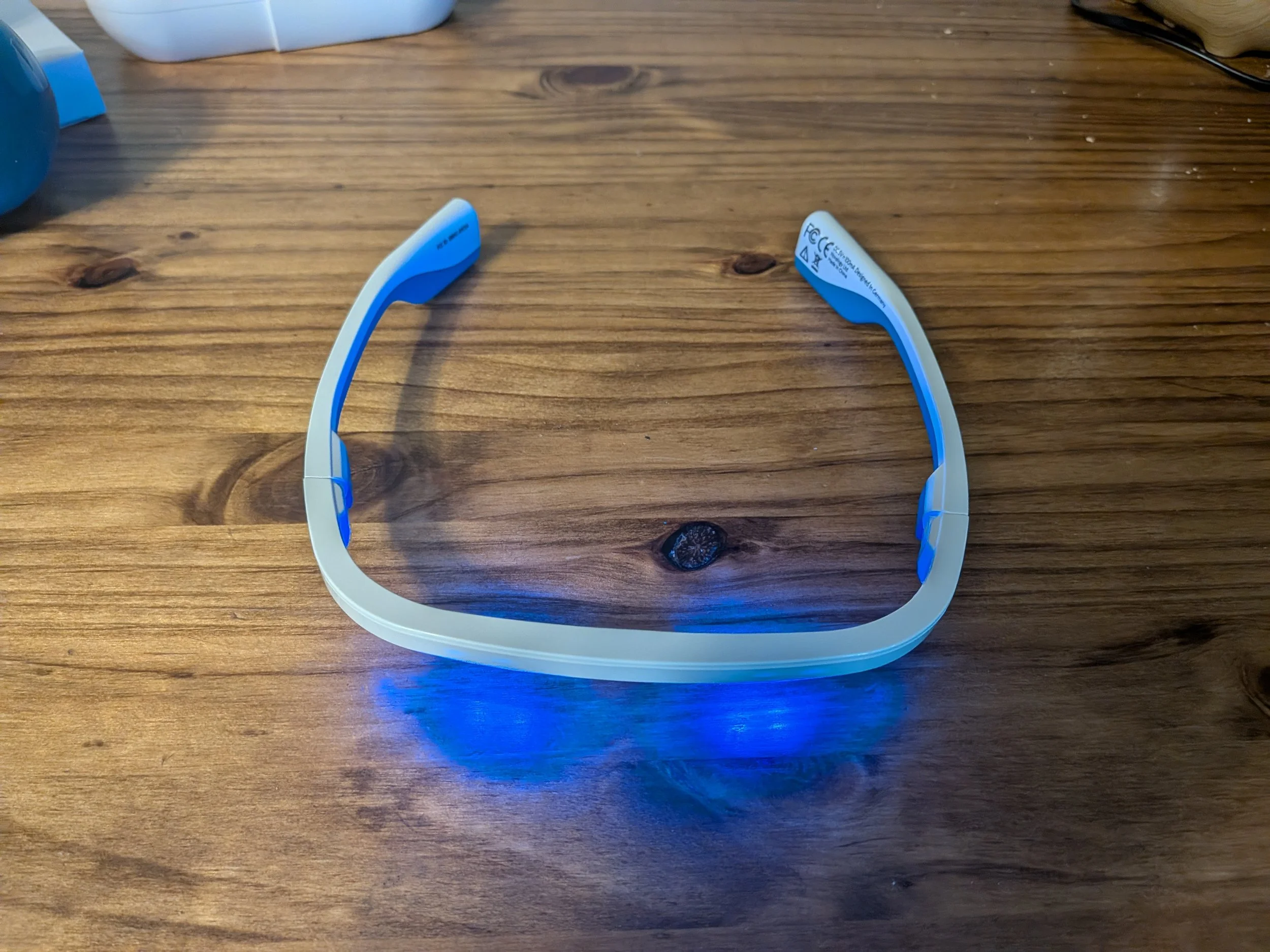
That's where AYO has been great. I just put the glasses on and go about my morning. They're incredibly light, comfortable, and I can even wear them with my reading glasses while working on my computer. I barely notice they're there.
I typically crank the intensity up to 100% for 25 minutes and finish with the red light mode. My one complaint is that the glasses automatically start at the default setting when opened. I love the automatic startup, but I wish I could save my preferred settings instead of having to open the app every morning.
I've especially appreciated them during the transition out of daylight saving time and the shorter days of fall and winter. In combination with my morning cup of coffee it’s a great pre-morning workout energy boost too and I’m going to start using them in the summer too for that reason.
I've liked them enough that I've put my SAD lamp away. I'll still get outside for natural sunlight whenever possible, but for those early, dark mornings and shorter days, AYO has been awesome. They're expensive, but considering how often I use them, I think they're well worth it.
To learn more about toxins, check out The Non-Toxic Living Guidebook: Hacks, Strategies, & Natural Products for Better Health. I wrote this comprehensive guide as a way to break down the complexity of toxins into a simple, easy-to-read format with practical tips and clickable links to the least toxic products I could find. Get your copy today and use the code MBD20 at checkout for a 20% discount. You can also get the Kindle eBook on Amazon.
