
9 Best Pea Protein Based Dog Food Brands That Get Taurine and Sourcing Right
Peas vaulted from humble veggie to headline villain when the FDA opened its dilated-cardiomyopathy (DCM) inquiry in 2018. Grain-free, legume-heavy labels hit every “do not buy” list, and worried owners dumped kibble. Fast-forward: the agency now states it “has not established a causal relationship” between any single ingredient and DCM and has paused new alerts while research deepens.
Science reinforces the nuance. A 2018 PLOS One study of 24 taurine-deficient Golden Retrievers reversed DCM after diet change plus taurine supplements—proof the danger is imbalance, not peas. Balanced modern formulas fix that gap. Each pick below tops up taurine, methionine, and L-carnitine and taps pea protein’s lysine and roughly two-thirds-of-chicken digestibility (PDCAAS). You gain allergy relief, sustainability perks, and—most importantly—a happier heart.
We’ll rank nine standout diets, unpack our safety-first scoring system, and show exactly what to scan on any label. Ready to find a pea-powered food you can trust? Let’s dive in.
Why pea-protein dog food deserves a second look
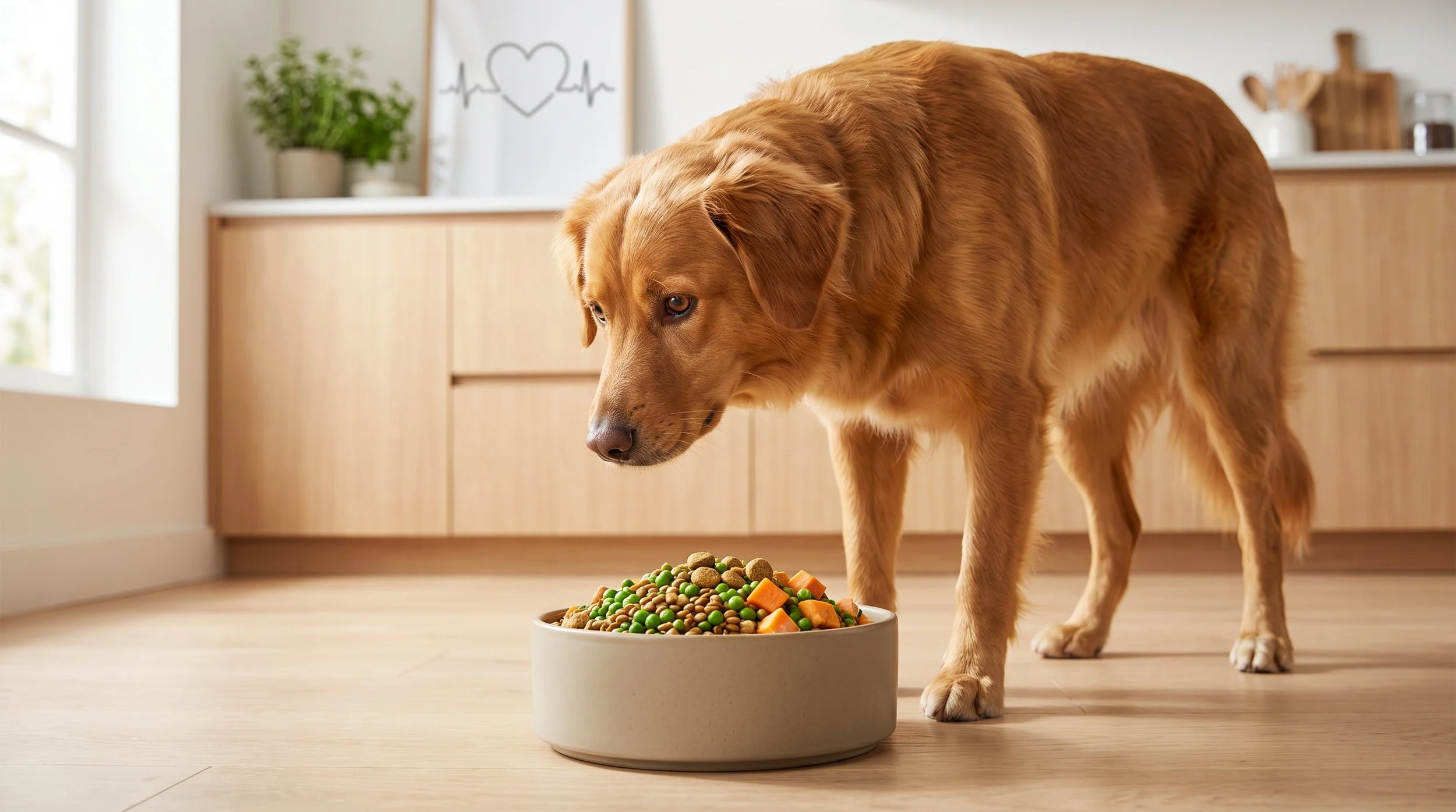
Pea protein sits at the crossroads of three big trends: allergy relief, sustainability, and grain-free marketing. You spot it high on labels because it offers a quick protein lift without the cost or the ethical baggage of meat.
Then the DCM headlines hit. Overnight, every bag with peas looked suspect. The FDA’s own wording matters: it has not proved peas cause heart disease; it simply flagged patterns worth studying. That nuance got lost, and fear spread faster than facts.
So what actually matters? Two things: the share of pulses in the recipe and the level of sulfur amino acids that drive taurine production. When formulators push pulses above roughly forty percent of the diet and skip extra methionine or cystine, taurine can slip. Low taurine stresses the heart, the real villain of the story.
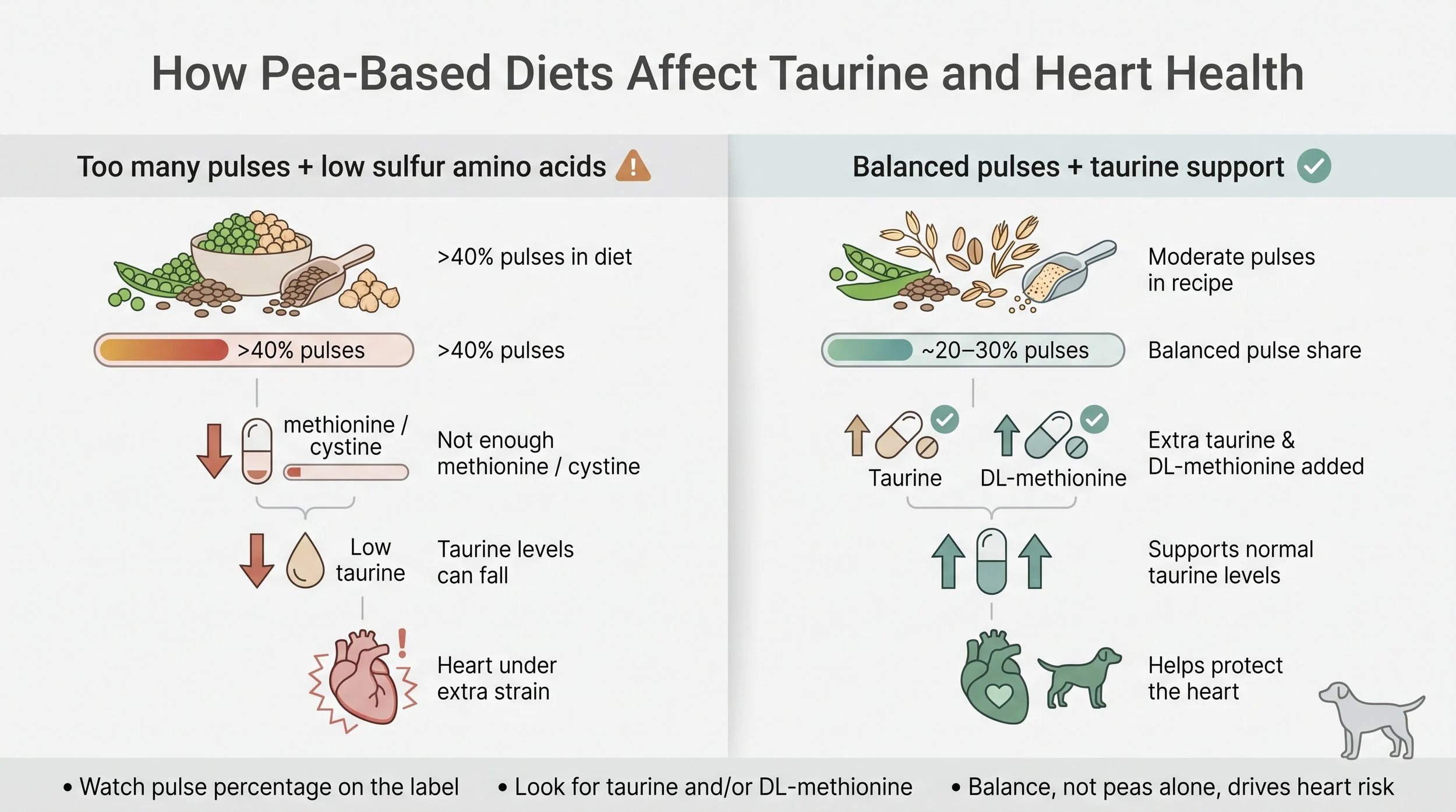
Modern pea-forward brands bridge that gap in two ways. First, they blend proteins. Pairing peas with yeast, grains, or soy rounds out the amino-acid profile. Second, they add pure taurine and DL-methionine, turning a potential shortfall into a safety net.
That safety net lets us enjoy real upsides:
Allergy control. Pea protein avoids common canine allergens such as beef, chicken, dairy, and wheat, giving itchy dogs a clean slate.
Digestibility near animal levels. Properly processed pea isolate reaches about eighty-eight to ninety percent usable protein, close enough that your dog’s body can’t tell the difference day to day.
Greener footprint. Peas fix nitrogen in soil, cutting fertilizer needs and greenhouse gas output compared with livestock. Replacing even one meal a day trims your dog’s carbon pawprint.
No ingredient is perfect. Legumes add more fiber than meat, so stools can bulk up during the first week of transition. Some picky eaters need a flavor topper until they adjust to the earthier taste. These are manageable wrinkles, not deal-breakers.
A University of Illinois feeding trial confirmed that Bramble’s plant protein was just as bioavailable as a premium chicken-based diet, with digestibility above eighty percent.
That proactive approach illustrates how a legume-based recipe can safeguard the heart while still cashing in on pea protein’s sustainability wins and allergy relief.
Bottom line: pea protein itself isn’t the problem; poorly balanced formulas are. Choose foods that publish taurine levels or clearly list taurine and methionine, and you give your dog the protein punch of peas without the cardiac gamble.
In the next section we’ll show you exactly how we separated the balanced winners from the risky pretenders.
How we chose the stand-out nine
We didn’t just grab the first vegan bags on the shelf and call it a day. We built a scoring sheet that puts heart safety first and fluff last.
Every candidate had to clear five non-negotiables before it even made the long list: AAFCO complete and balanced, pea protein in the top five ingredients, supplemental taurine or clearly published methionine levels, zero safety-related recalls, and transparent sourcing down to at least the country of origin.
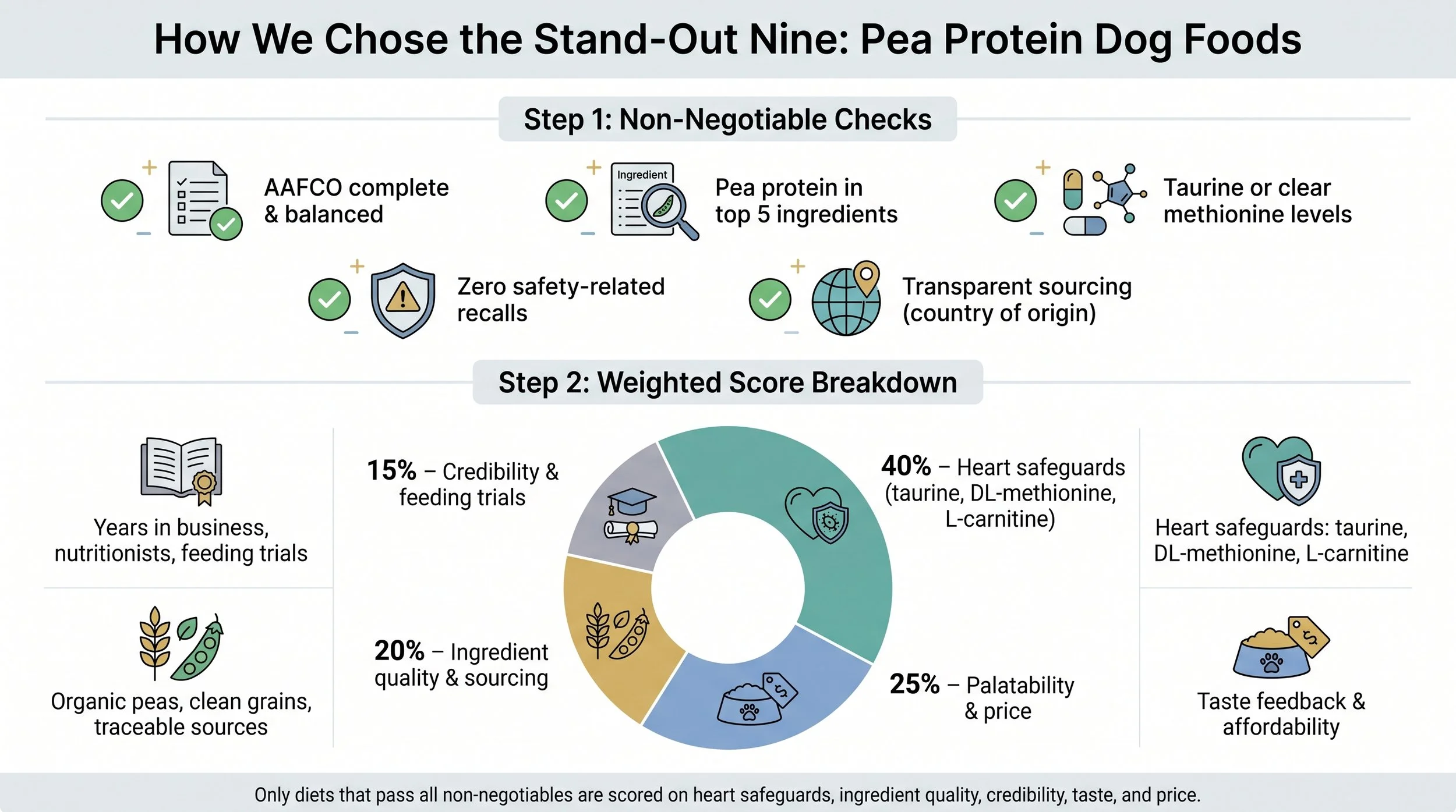
From there we weighted the details. Forty percent of the total score went to nutritional safeguards, namely taurine, DL-methionine, and L-carnitine on the label. Ingredient quality and sourcing claimed twenty percent, because organic peas and traceable grains beat mystery-bag concentrates every time. Credibility, measured by years in business, feeding trials, and staff nutritionists, earned fifteen percent. Palatability feedback and price split the remainder.
That framework trimmed dozens of options to a tight, trustworthy nine. In the next section we’ll start the countdown, beginning with the formula that checked every box and still tastes like a treat.
1. Bramble “The Cowbell” (fresh hypoallergenic hero)
Think of The Cowbell as a farmers-market stew served frozen at your door in tidy packs. Bramble starts with pea protein and lentils, then layers in sweet potato, carrots, and apples for slow-burn carbs and antioxidants. A board-certified veterinary nutritionist signs off on every batch, so taurine, DL-methionine, and L-carnitine hit levels that silence any DCM worry.
Because every ingredient is human-grade and gently cooked, dogs with chronic itch or IBD often see calmer skin and firmer stools within weeks. The same careful sourcing means the formula also qualifies as hypoallergenic dog food free from beef, chicken, dairy, soy, corn and wheat gluten while still meeting AAFCO complete and balanced standards.
The soft, pâté-like texture wins over seniors and picky small breeds. Yes, you’ll pay more than you would for kibble and you’ll need freezer space, but the payoff is a clean, complete diet that feels as fresh as home cooking.
2. Wild Earth Complete Protein Kibble (high-octane vegan crunch)
If your dog sprints instead of strolls, Wild Earth is the pick. The company cultures yeast in stainless-steel fermenters to create a clean, animal-free protein that rivals chicken for amino-acid balance. That yeast teams with pea and potato protein to reach a muscular thirty-plus percent crude protein, an impressive mark for a vegan kibble.
Cardiac safeguards sit front and centre. Taurine and DL-methionine pair with L-carnitine in every bite, so even large-breed athletes keep healthy echo readings. Yeast also supplies natural B-vitamins, supporting energy metabolism without heavy synthetic sprays.
Taste testing put this formula ahead of many meat kibbles thanks to a savoury umami coating. Owners report glossy coats and smaller stools after the first bag, proof the protein is doing its job instead of passing straight through.
The price tops grocery-store brands, yet you pay for lab-verified nutrition, long shelf life, and a thirty-day money-back taste guarantee. For active dogs, and for owners chasing a lower carbon pawprint, it is an easy win.
3. V-Dog Kind Kibble (budget-friendly old-timer)
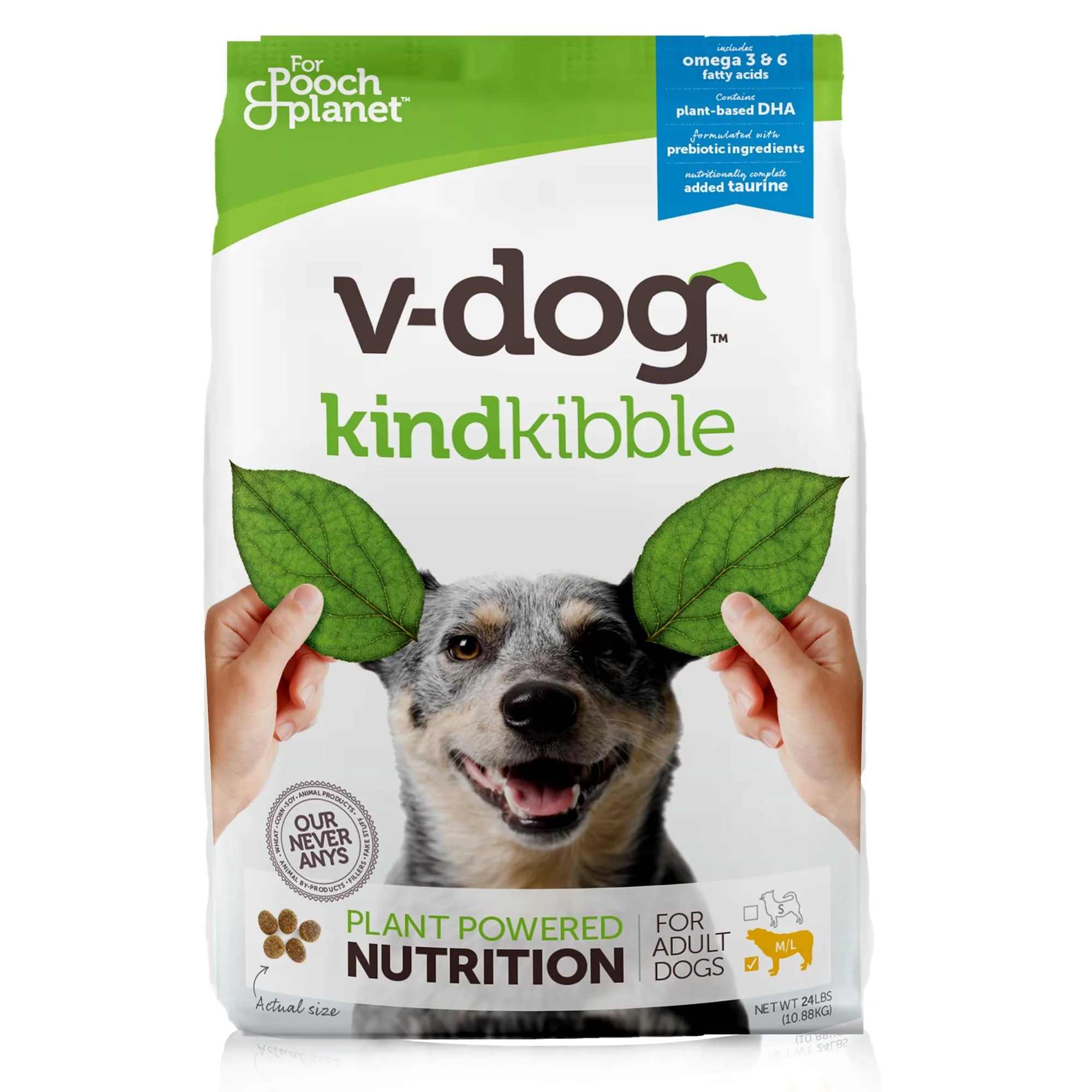
V-Dog has flown the vegan flag since 2005, well before plant-based eating hit the mainstream. That history shows in a recipe that is simple, stable, and kind to your wallet. Dried peas and pea protein lead the list, backed by brown rice and oats for slow energy, then fortified with taurine, DL-methionine, and L-carnitine to support the heart.
Protein sits at a steady twenty-four percent, plenty for daily adventures without overloading seniors or couch potatoes. Brewers yeast and a light probiotic blend help tame the extra fibre, so gas eases by the end of week one.
Owners praise the price: you get craft-level attention without gourmet mark-ups, especially in the twenty-pound bag. Dogs like the taste too; the crunchy triangles carry a mild herby aroma rather than the strong yeast punch of some newer startups.
If you want a proven meat-free diet that respects the grocery budget, Kind Kibble earns its spot in the pantry and in our top three.
4. Halo Garden of Vegan (dry + wet duo for picky palates)
Some dogs crave variety, and Halo meets that need with a crunchy pea-and-chickpea kibble plus a canned loaf that smells like Sunday stew. The texture switch keeps meals lively while you stay within one nutrient system instead of juggling brands.
Both formats rely on pea protein, then raise methionine with chickpeas and oatmeal. Taurine and L-carnitine sit on the ingredient list, so the heart boxes are ticked. The kibble holds a steady twenty percent protein, ideal for adult maintenance, and the wet food adds moisture for seniors or convalescent pups that ignore dry bowls.
Halo sources non-GMO vegetables and skips rice, corn, soy, and animal products, making it a safe choice for dogs with multiple sensitivities. Fibre runs a bit high, which can enlarge stools, though most owners say firmness returns after the first bag.
If you want grain-free vegan nutrition with the freedom to mix dry and wet without upsetting balance, Garden of Vegan delivers.
5. Natural Balance Vegetarian Formula (mainstream and mild)
Not every dog needs sky-high protein or exotic ingredients. Some simply need a gentle, meat-free diet the local pet store keeps in stock. That is where Natural Balance’s long-running Vegetarian Formula shines.
Brown rice, barley, and oats headline for easy digestion, while pea and potato protein lift the total to a steady eighteen percent. That moderate level suits seniors, couch-loving adults, and dogs recovering from GI upsets. Taurine and L-carnitine pair with flax-sourced omega-3s, so heart and coat stay supported without meat.
Because grains bring extra methionine, this recipe avoids the amino-acid dilution that troubles many grain-free legume diets. Fibre stays modest, kibble pieces stay crunchy yet manageable, and the flavour leans neutral, a perk for dogs that resist strong yeast or herb notes.
Price per pound undercuts most boutique vegan brands, and you can snag a bag at Petco on the way home. If you want a no-drama vegetarian option that fits both your budget and your vet’s comfort zone, Natural Balance is the safe, trusted pick.
6. Petcurean Gather Endless Valley (certified-organic confidence)
Endless Valley champions ingredient transparency. Every primary crop—peas, barley, oats, and lentils—bears an organic seal, so you dodge pesticide residue while your dog enjoys nutrients at their cleanest.
Protein lands at twenty-two percent, and quality outshines quantity. The legume and grain mix supplies complementary amino acids, then Petcurean adds taurine, DL-methionine, and lysine to protect the heart. Algal oil contributes pre-formed DHA, sparing fish while still feeding the brain.
Organic kibbles can struggle with taste, yet owners praise the lightly toasted aroma and small, easy-to-chew bites. The slightly higher fat keeps picky eaters interested and helps active dogs hold weight without a mountain of kibble.
You will pay boutique prices and may need to order online if local shops skip niche lines, but the payoff is unique: a vegan kibble that is both organic and nutritionally complete. If you value soil health as much as heart health, Endless Valley deserves a spot in the bowl.
7. Open Farm Kind Earth Plant Recipe (traceability on tap)
Open Farm built its reputation on showing you exactly where every chicken thigh or carrot in the bag was grown. Kind Earth carries that same transparency into vegan territory. Scan the lot code and your phone pulls up Canadian fava-bean farms, Midwest barley fields, and the facility that blended the batch within seconds.
Fava beans supply the protein punch, with oats and a touch of pea fibre rounding out texture and amino acids. By pairing legumes with ancient grains, the recipe lowers total pulse load and adds natural methionine, then boosts taurine and DL-methionine for good measure. Protein lands at twenty-two percent and fat at fourteen, an easy fit for healthy-weight maintenance without short-changing active dogs.
Because the diet includes grains, many owners switching from grain-free pea-heavy formulas notice smaller, firmer stools and less gas. The flavour leans malty rather than earthy thanks to the barley base, so picky noses warm up quickly, especially when you add a splash of warm water to release the aroma.
Price falls in the mid-premium lane, yet you receive more than kibble. You receive a traceability passport, a recyclable bag, and a company that publishes third-party sustainability audits. If you want a plant-based food with nothing to hide, Kind Earth delivers.
8. JustFoodForDogs Vegetarian (fresh you can cook at home)
If you ever wished you could serve your dog the same fresh ingredients you sauté for yourself—minus the onions—JustFoodForDogs hands you the roadmap. The Vegetarian recipe arrives fully cooked and frozen or as a DIY kit complete with a veterinary nutrient blend. Tofu, quinoa, sweet potatoes, and leafy greens are visible in every scoop.
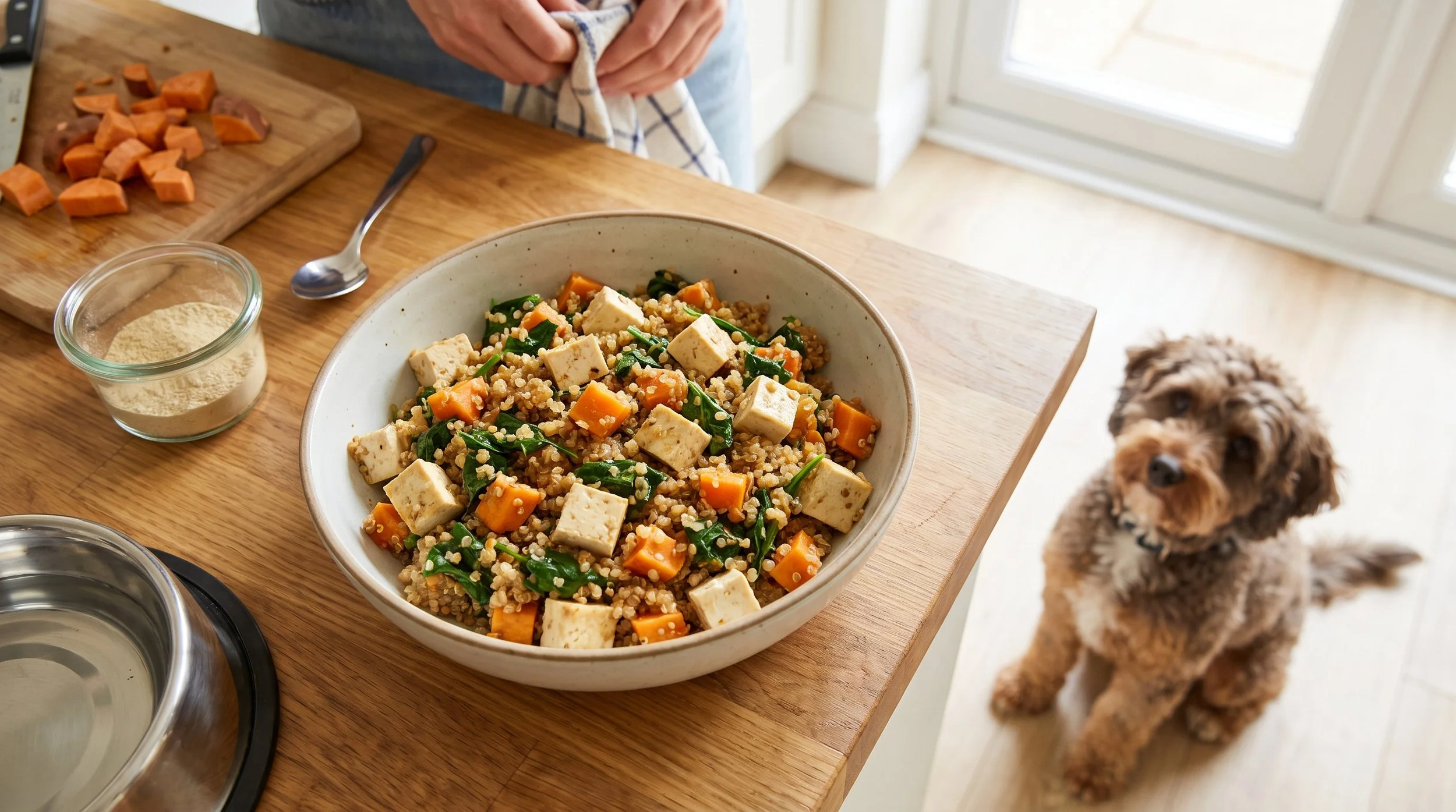
That see-through approach pays off for sensitive guts or missing teeth. Moisture sits near seventy percent, so hydration tags along with each bite, and the soft texture slides down easily. Fresh tofu supplies a complete plant amino profile; quinoa and nutritional yeast back it up. The nutrient mix adds precise doses of taurine, DL-methionine, and B-vitamins, so homemade never means half-baked.
Veterinary teaching hospitals use these diets in elimination trials because the company publishes digestibility studies and batch analyses. You will spend extra time thawing packs or simmering the DIY pot, and the freezer will claim shelf space, yet the reward is a diet as close to home cooking as it gets without the nutrient-math headache. For guardians who see mealtime as part of the bond, JFFD’s Vegetarian formula turns the kitchen into the happiest room in the house.
9. Freely Vegetarian Recipe (limited-ingredient peace of mind)
When a dog reacts to half the pantry, less really is more. Freely keeps its vegetarian kibble to a lean list: dried egg and pea protein cover amino needs, brown rice steadies digestion, and a short vitamin mix completes the profile.
Egg earns its spot by supplying methionine and cystine in near-ideal ratios, then Freely adds taurine to protect the heart. That combo lets the brand use fewer total ingredients without risking an amino gap.
Because the recipe skips common triggers such as chicken, beef, soy, corn, and dairy, vets choose it for elimination trials. Owners like the mild aroma and the firm, easy-to-clean stools. A fully vegan canned partner stands ready if your dog cannot handle egg yet still needs a pared-back formula.
Availability is mostly online, but the price lands mid-shelf, making it simple to test during diagnostic diets. For pups that break out when a label lists more than ten items, Freely’s vegetarian line offers calm skin, calm guts, and calm minds.
FAQ: clearing up the remaining doubts
Do peas actually cause heart disease?
Short answer: no. The FDA has found patterns worth watching, not a smoking gun. Trouble starts when formulas push legumes sky-high and skip the sulfur amino acids dogs need to make taurine. The balanced foods in our list fix that gap with smart blending and direct taurine.
Will my dog get enough protein from plants?
Absolutely. Dogs need amino acids, not steak. Pea, yeast, soy, and the egg in Freely cover the profile, and every pick here meets or exceeds AAFCO’s protein bar for adult dogs. Plant diets usually bring more fibre and fewer saturated fats, two quiet wins for long-term wellness.
How do I switch without stomach drama?
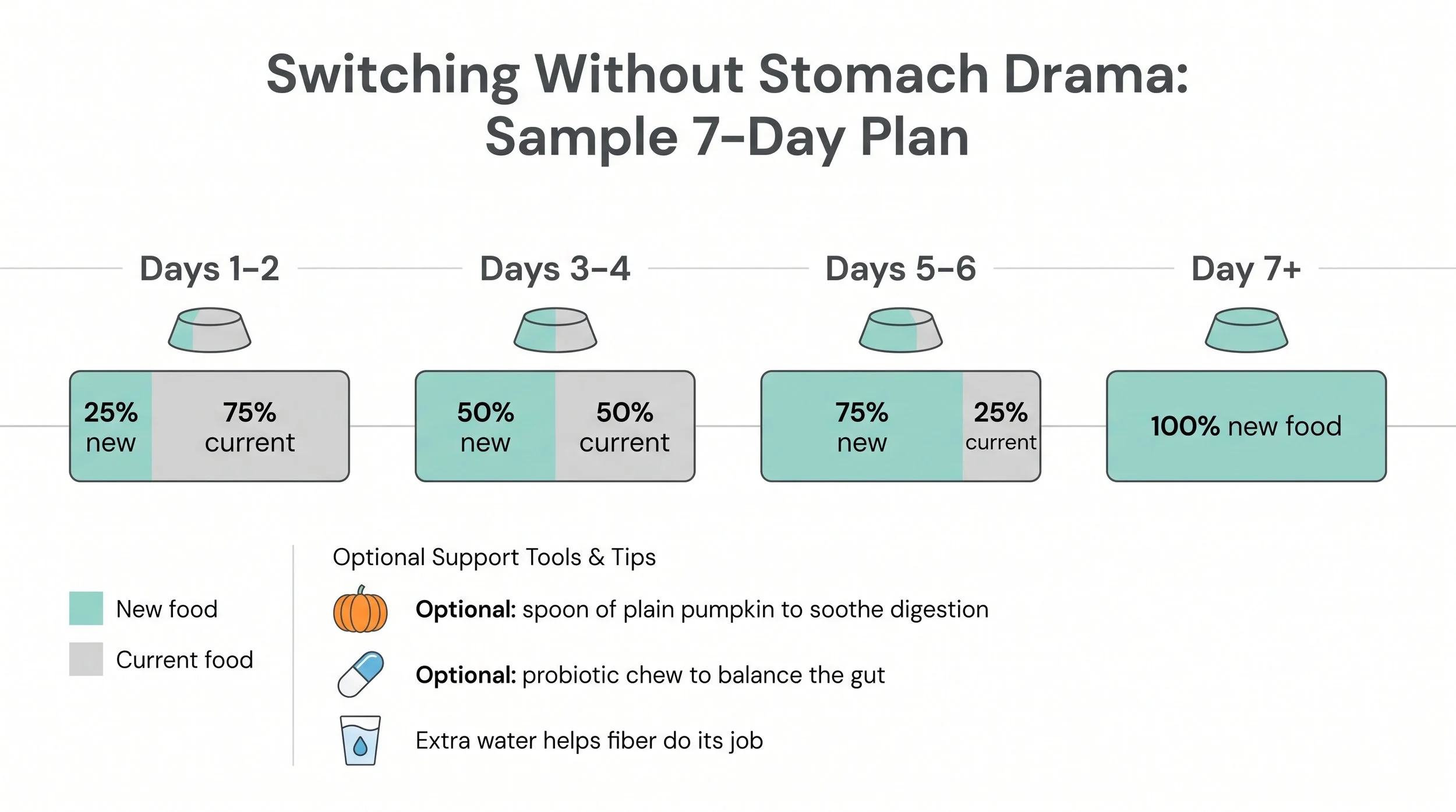
Go slow. Mix twenty-five percent new food with seventy-five percent current food for two days, then keep nudging the ratio every forty-eight hours. A spoon of plain pumpkin or a probiotic chew smooths the gut transition, and extra water helps fibre do its job.
Do I still need supplements?
Not if you stay with the brands above. They already include taurine, DL-methionine, B-vitamins, and often L-carnitine. Adding more can upset the balance. The only extras most vets bless are omega-3 capsules for joint support in arthritic dogs.
Is pea protein safe for puppies?
Most formulas here are for adults. Growing bodies have tighter calcium and energy margins, so wait until your pup is twelve months, unless a veterinary nutritionist advises otherwise, before going fully plant powered.
What about gas and big stools?
Some fibre-fed flatulence is normal during the first week while gut bacteria adjust. Stools may stay larger, but that bulk often helps express anal glands naturally. If softness lingers, cut treats, add warm water to meals, and give the diet a full month before judging.
Conclusion
Armed with these answers and nine solid food options, you can shop with confidence and silence the “what ifs” for good. Your dog’s heart, skin, and waistline will thank you.
