
Bubble Tea and Health: Sugar, Caffeine, Toppings, and Smarter Choices
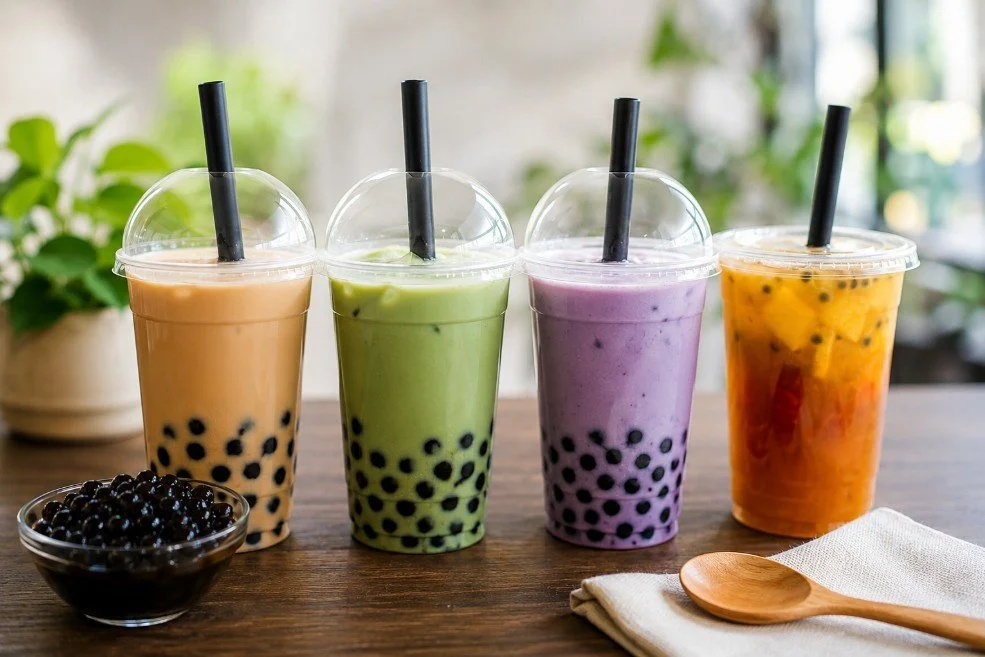
Bubble tea is one of those drinks that is difficult to place into a simple “healthy” or “unhealthy” category. A cup can begin with black tea, jasmine, green tea, or oolong, but it can also include milk, fruit syrup, tapioca pearls, pudding, jelly, foam, and plenty of added sweetness. Two drinks from the same shop may therefore have completely different nutritional profiles even though both are called bubble tea.
That is why it makes more sense to look at the individual parts of the drink rather than judge the whole category. The most important variables are usually the base, sweetness, toppings, serving size, and caffeine. Once you understand those pieces, ordering bubble tea becomes much easier without turning a fun drink into a nutrition project.
Start With the Base
The liquid underneath the toppings matters more than many people realize. Traditional bubble tea may use black tea, jasmine tea, green tea, or oolong, while modern shops also serve matcha, coffee, fruit drinks, taro-style beverages, and fresh-milk drinks that may contain no traditional tea at all.
A strong tea base can contribute enough flavor that the drink does not have to rely entirely on syrup. Black tea adds body, jasmine brings floral aroma, and roasted oolong can give a milk tea a deeper, nuttier character. If you want to understand how different tea bases, toppings, and drink styles work together, boba.guide is a useful place to explore the category in more detail.
The base also tells you whether caffeine is likely to be present. Black tea, green tea, oolong, jasmine, matcha, and coffee-based drinks can all contain caffeine, while some fresh-milk, herbal, and fruit-based options may not. The color of the drink is not a reliable clue, so asking what the actual base is can be more useful.
Sugar Is Usually the Biggest Variable
Many bubble tea shops let customers choose a sweetness level, which makes sugar one of the easiest parts of the drink to adjust. Depending on the shop, you may see options such as full sweetness, 75%, 50%, 30%, or no added sugar.
Those percentages are not standardized across every store, but they are still helpful within a particular shop. If you normally order full sweetness, trying one level lower can be an easy experiment. You may find that the tea becomes easier to taste and the drink still feels sweet enough because the toppings already contribute sugar.
That last point is important. Tapioca pearls are commonly served in syrup, while popping boba, jellies, pudding, fruit preparations, and brown sugar sauces can also add sweetness. Choosing “50% sugar” for the tea does not necessarily mean the entire drink contains half the sugar of the original version.
The practical approach is simple: keep the parts you actually enjoy and reduce the ones you barely notice. If tapioca pearls are your favorite part, keep them and consider lowering the sweetness of the liquid instead.
Toppings Are Part of the Drink, Not Decoration
Traditional black tapioca pearls are the topping most closely associated with bubble tea, but modern menus may offer crystal boba, aloe, coconut jelly, grass jelly, pudding, popping boba, red bean, and milk foam.
Each topping changes both the flavor and texture of the cup. A black milk tea with tapioca feels very different from the same tea with aloe or no topping at all. Adding several toppings can also push a drink further toward dessert territory, especially when those additions are already sweetened.
There is nothing wrong with that if it is what you want. The useful question is whether every topping is actually improving the drink. One topping you genuinely enjoy is often more satisfying than automatically adding three just because the menu allows it.
Serving Size Can Matter More Than Changing the Recipe
Bubble tea shops often make larger sizes look like a better deal, but a bigger cup generally means more tea, milk, syrup, toppings, and potentially caffeine. If your favorite drink is rich and sweet, ordering a smaller size may be more satisfying than stripping away the ingredients that made you want it in the first place.
A smaller brown sugar milk tea still tastes like brown sugar milk tea. A low-sugar version without pearls, milk, or the flavor you enjoy may technically be lighter but can feel like an entirely different drink.
This is one of the easiest ways to think about balance. You do not always need to redesign the recipe; sometimes you simply need less of the same recipe.
Caffeine Is Easy to Forget
Because bubble tea often looks like a colorful dessert drink, caffeine can be easy to overlook. Traditional tea bases still contain it, and matcha or coffee-based drinks can provide even more depending on the recipe.
The amount varies widely because shops use different brewing methods, tea concentrations, and serving sizes. A large milk tea is not the same as drinking the same volume of straight brewed tea because milk, ice, syrup, and toppings also take up space. At the same time, some shops brew very concentrated tea so the flavor remains noticeable after dilution.
For adults who are sensitive to caffeine, timing may matter more than the drink itself. A black milk tea in the afternoon may be fine while the same order late in the evening could interfere with sleep. If caffeine matters to you, check the base rather than guessing from the appearance.
Bubble Tea for Kids Requires a Little More Attention
Bubble tea can be a fun family treat because children enjoy choosing flavors and toppings, but parents should pay attention to both the beverage base and the texture of the toppings.
A fruit-flavored drink is not automatically caffeine-free. Many fruit teas are made with green, jasmine, or black tea before fruit flavor is added. Fresh milk drinks or clearly caffeine-free bases may be better options when that matters.
Traditional tapioca pearls also deserve some caution with younger children. They are large, chewy, slippery, and usually consumed through a wide straw. Very young children may be better off without large tapioca pearls, while older children should sit down, chew properly, and be supervised rather than drinking them while running around.
The good thing about bubble tea is that the experience does not depend on one specific topping. A child can still enjoy a milk or fruit drink without traditional black pearls.
Fruit Tea Is Not Automatically the Lighter Option
Fruit tea often looks healthier because it is bright, clear, and does not contain creamy milk. But appearance can be misleading. Fruit drinks may contain purées, concentrates, flavored syrups, popping boba, or sweetened jelly.
That does not make fruit tea a poor choice. A lightly sweetened jasmine or green tea with fruit can be refreshing and flavorful. The point is simply that “fruit” should not automatically be translated as “low sugar.”
The same questions work here as with milk tea: Can the sweetness be adjusted? Is the tea still noticeable? Are the toppings already sweet? Do you actually need several of them?
Milk Choices Do Not Need to Become Complicated
Whole milk, oat milk, soy milk, almond milk, and non-dairy creamers all behave differently in bubble tea. There is no universal “best” option because nutrition and flavor vary between products.
The quantity matters too. A small amount of milk can soften a strong tea while still allowing the tea flavor to remain obvious. A large amount of milk can turn the tea into a background note.
Choose the milk that suits your dietary needs and tastes good with the tea rather than assuming one category is always superior. If you want a more tea-forward drink, reducing the quantity slightly can sometimes make a bigger difference than changing the type of milk.
Making Bubble Tea at Home Makes the Choices Obvious
Preparing bubble tea at home is useful because every part of the drink becomes visible. You brew the tea, cook the pearls, add the syrup, pour the milk, and decide how much ice goes into the cup.
That makes experimentation easy. Try two identical drinks with different amounts of syrup. Use a stronger tea base with the same amount of milk. Taste the pearls on their own before adding them and notice how much sweetness they contribute. Try a jasmine tea with a lighter topping and compare it with a rich black milk tea.
You may discover that you prefer stronger tea, fewer toppings, or less sweetness than the default recipe at a shop. Or you may discover that the rich version is exactly what you like. Either result is useful because the goal is understanding your preferences rather than following an arbitrary definition of the perfect drink.
The Takeaway
Bubble tea is too customizable to judge as one single food. A simple tea with a light topping and a large brown sugar milk drink with several additions may share the same category while being completely different experiences.
For most people, the main things worth noticing are straightforward: the base, sweetness level, number of toppings, serving size, and caffeine. Parents also need to think about whether a drink contains caffeinated tea and whether chewy toppings are appropriate for a child.
None of this means bubble tea needs to be stripped down until it stops being enjoyable. If tapioca is your favorite part, keep it. If you love milk tea, order milk tea. If you want a rich dessert-style drink occasionally, it can simply be treated as a treat.
The most practical approach is not to optimize every cup. It is to understand what you are ordering, keep the parts you genuinely enjoy, and stop adding ingredients simply because they are available.
