
Staying Loose on the Road: A Practical Recovery Routine for Business Travelers
Business trips are hard on the body. Long flights, cramped seats, unfamiliar beds and back-to-back meetings add up, and the stiffness often shows up in the neck, shoulders and lower back before you have even unpacked. For parents who also want some energy left when they get home, recovery on the road matters as much as the schedule.
Start moving before you land
You do not need a gym to stay loose in transit. On a flight, stand and walk the aisle when it is allowed, and do simple ankle circles and shoulder rolls in your seat. Drink water steadily instead of waiting until you feel thirsty, and go easy on alcohol and heavy meals, which can make sleep and stiffness worse.
Protect your sleep first
Hotel rooms are rarely set up for good rest. Keep the room cool and dark, try to go to bed at a similar time each night, and get some daylight soon after waking to help your body clock adjust to a new time zone. Even a few extra hours of decent sleep can make the next day's meetings feel easier on the body.
Build short movement breaks into the day
Five minutes between meetings is enough to make a difference. Try a standing hip flexor stretch, a chest opener against a doorway, and a few slow neck turns. If a meeting can happen while walking, take it. A short walk after dinner also helps loosen the hips and back after a long day of sitting.
Eat and hydrate with a plan
Travel food tends to be convenient rather than balanced. Aim for protein at breakfast, add a piece of fruit or a vegetable where you can, and carry a water bottle so hydration does not depend on the next coffee break.
When hands-on recovery can help
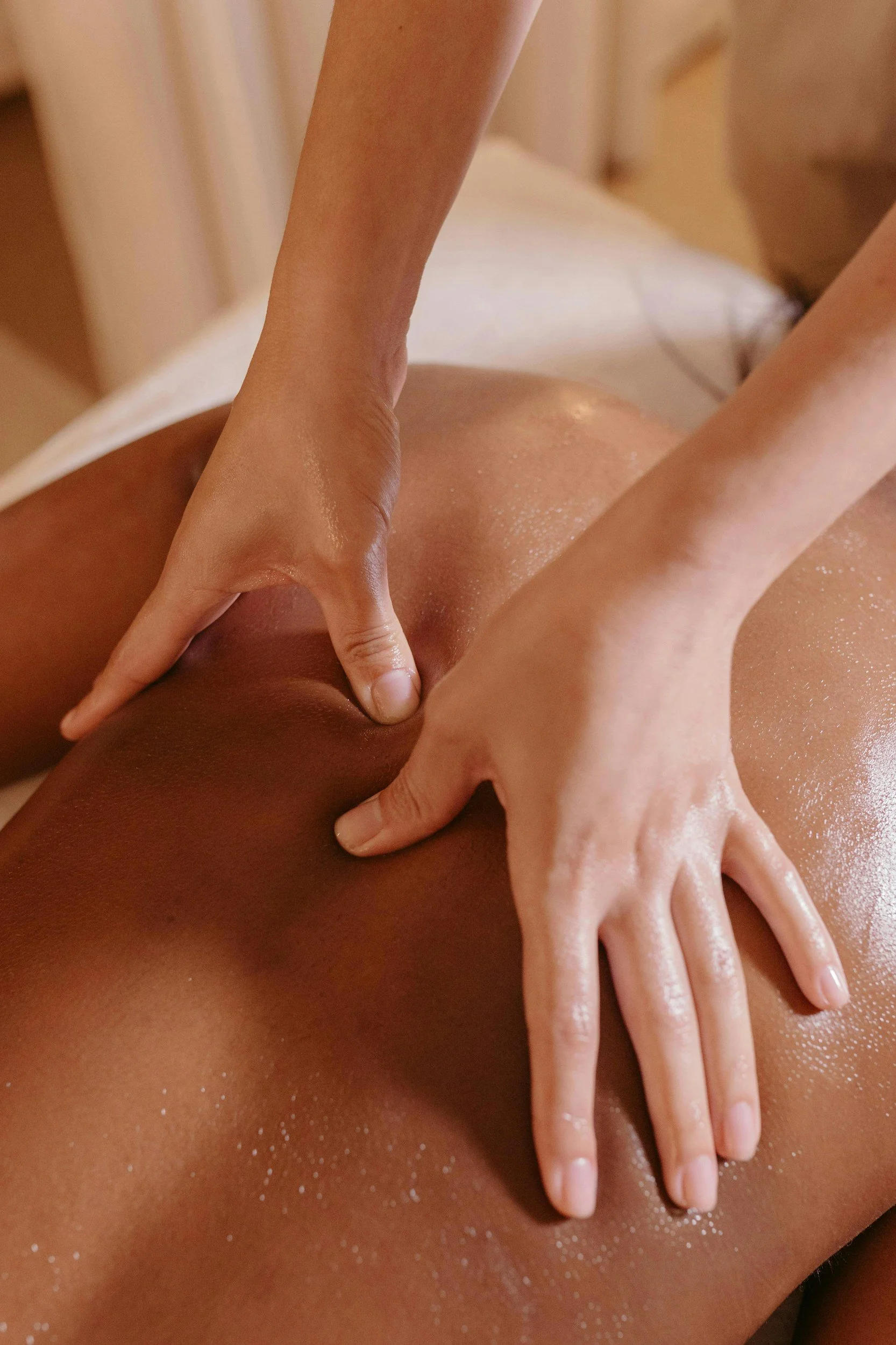
Some travelers add massage to their routine to unwind after a heavy schedule. In many cities you can book a therapist to come to your hotel room instead of traveling to a studio, which can be convenient after a long day. In Seoul, for example, services such as Dalbit Care publish information by neighborhood, so visitors staying in districts like Songpa can see what is described for the area where they are staying. Whichever option you choose, ask up front about arrival time, session length, payment and cancellation, check reviews from more than one source, and be clear about your boundaries at the start. Massage is not suitable for everyone, so if you have an injury, a medical condition or are pregnant, talk with a clinician before booking.
Know when to get checked
Soreness that fades in a day or two is normal. Pain that keeps getting worse, numbness or weakness in a leg or arm, or any change in bladder or bowel control needs prompt medical attention, not another stretch.
A small routine goes a long way
You cannot control the flight schedule or the hotel bed, but you can control a handful of habits: move often, protect your sleep, eat and drink with a plan, and ask good questions before you book any service. Repeat them on each trip and recovery starts to feel like part of the work rather than something you squeeze in afterward.
