
Home Gym Setup Ideas for Small Apartments and Tight Budgets
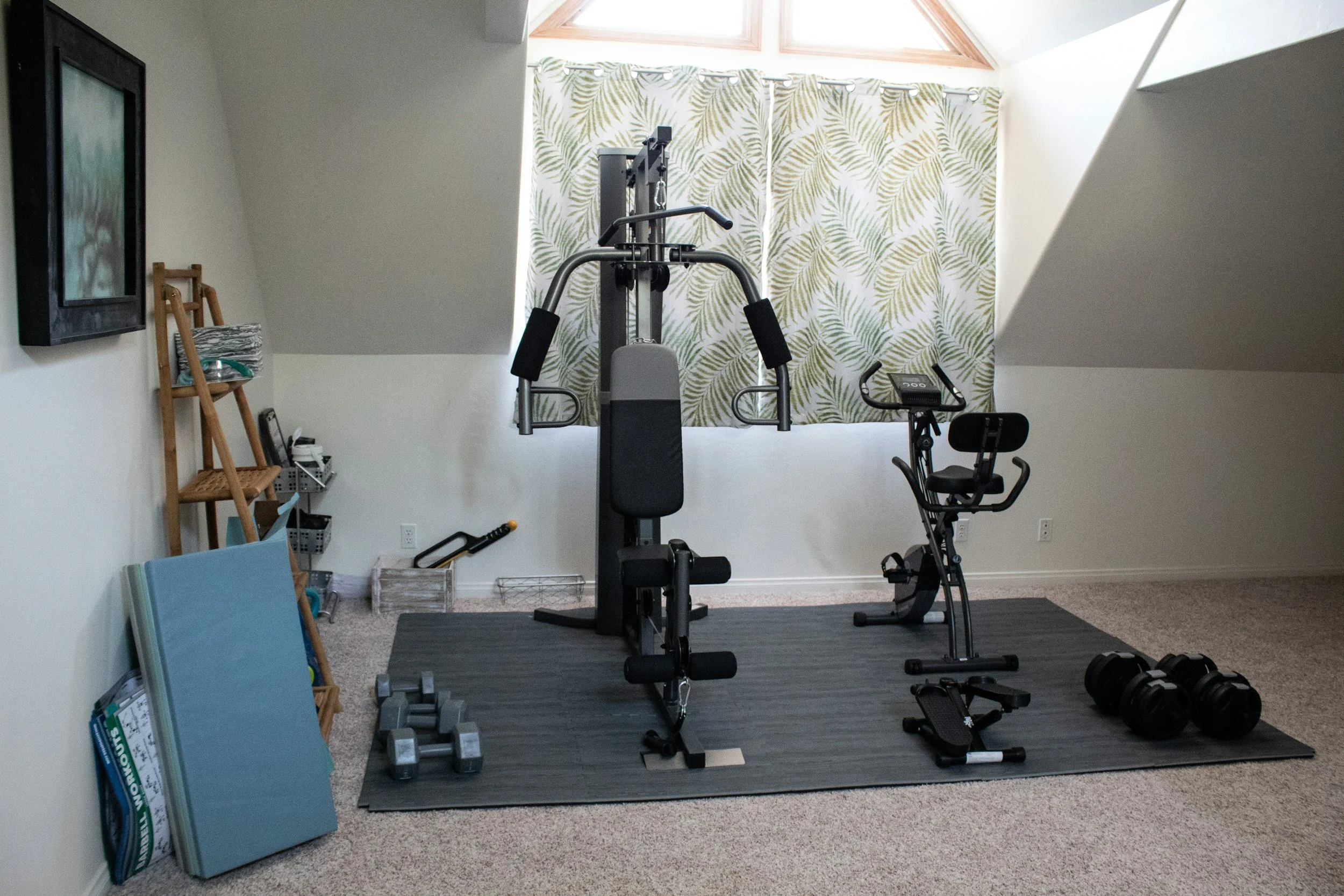
You can build a functional home gym in a corner of a studio apartment for somewhere between 200 and 500 francs, and it will cover strength, conditioning and mobility without a single machine. The trick is choosing equipment that loads multiple movement patterns instead of one, and storing it vertically or under furniture so the space reverts to being a living room when you are done. Adjustable dumbbells, a pull-up bar, a mat and a set of resistance bands already handle roughly 80 percent of what a commercial gym offers a general fitness trainee.
What actually limits most apartment setups is not floor area but ceiling height, noise transfer to the flat below, and the honest question of whether you will use the thing after week three. A 2.4 metre ceiling rules out overhead pressing while standing on a raised platform and makes jump rope awkward. Concrete floors in older Swiss buildings handle dropped weight better than the timber joists in a converted attic, and that single structural fact should shape your buying list more than any workout programme.
How much space does a home gym actually need?
Two square metres is enough for a full session if the equipment is chosen well. That is roughly the footprint of a yoga mat plus half a metre of clearance on either side, which most people can find between a sofa and a wall. You need enough room to lie flat with arms extended overhead, and enough to lunge forward without hitting furniture, and those two constraints define the box.
Where people go wrong is buying a bench or a rack before testing whether the space works. Measure the diagonal of your usable floor area, because lateral movements and lunges eat more room than people expect. Then measure your ceiling from floor to fixture, not floor to slab, since a low-hanging lamp becomes the real limit when you press a dumbbell overhead. Anything under 2.3 metres means you should plan your programme around seated and half-kneeling pressing.
Storage is the second half of the equation. A vertical dumbbell stand takes a 40 by 40 centimetre footprint. A doorway pull-up bar disappears entirely when removed. A folding bench slides under a bed frame if the frame sits at least 20 centimetres off the floor, which is worth checking before you order. If a piece of equipment cannot be stored out of sight in under a minute, it becomes visual clutter, and visual clutter in a small flat is what eventually makes people give up and cancel.
What equipment gives the best return on a small budget?
Adjustable dumbbells are the single highest-value purchase for apartment training. A pair that spans 2 to 24 kilograms per hand replaces roughly fifteen fixed pairs and costs a fraction of the shelf space. Expect to pay between 150 and 400 francs depending on the mechanism, with dial-based systems sitting at the upper end and spinlock plates at the lower. Spinlock is slower to change but far cheaper and nearly impossible to break.
Resistance bands are the cheapest useful thing you can own. A set of loop bands and one long band with handles costs under 50 francs and covers rowing, pressing, assisted pull-ups and almost all rehab and warm-up work. They also travel, which matters if you split time between cities or spend weeks at your parents' place. The downside is that band tension is hard to track week to week, so progressive overload becomes guesswork unless you pair them with something measurable.
A doorway pull-up bar runs 30 to 80 francs and handles vertical pulling, which is the one movement pattern that is genuinely difficult to replicate with dumbbells alone. Check your door frame depth and whether it is solid or hollow-core before ordering, because leverage bars need a proper architrave to push against. For anyone building out a corner from scratch, it is worth checking a general Swiss retailer such as pandaloo.ch alongside the specialist stores, since mats, bands and smaller accessories often sit at noticeably lower prices outside the dedicated fitness channel.
A thick mat is not optional if anyone lives below you. Ten millimetres of high-density foam or a horse stall mat cut to size absorbs most of the impact noise from dropped dumbbells and floor work. Budget around 40 to 120 francs, and treat it as the item that protects your relationship with your neighbours rather than your joints.
Which setup suits which type of apartment?
A studio under 40 square metres works best with a pure floor-and-doorway setup. Adjustable dumbbells, bands, a mat, a pull-up bar, nothing that stands permanently. Everything lives in a cupboard or under the bed, and you train in the space between the kitchen counter and the sofa. Total outlay sits comfortably under 400 francs.
A one-bedroom with a dedicated corner can justify a folding bench and a heavier dumbbell range, pushing the budget toward 700 or 800 francs. The bench unlocks proper incline pressing and supported rows, and a folding model stands upright against a wall at about 25 centimetres deep. This is also the tier where a kettlebell or two starts to make sense, since swings and carries need a bit more clearance than a studio typically offers.
Shared flats change the calculus entirely. Equipment stored in common areas causes friction, so anything you buy should fit inside your own room. Attic and top-floor conversions bring the ceiling problem, while ground-floor flats with concrete slabs are the best-case scenario and can handle heavier loading with much less noise anxiety. If you rent, avoid anything that needs drilling into walls or ceilings, since a wall-mounted rack is a deposit dispute waiting to happen.
Does a cheap home gym actually produce results?
For most people the answer is yes, and the reason has little to do with equipment. Research on training adherence consistently suggests that convenience is one of the strongest predictors of whether someone keeps training past the six-month mark, and removing a twenty-minute commute from each session changes the maths considerably. Three imperfect sessions a week at home beats two perfect ones at a gym you drive to.
The honest limitation is loading. Once you can press 24 kilogram dumbbells for sets of ten, an apartment setup starts to constrain progress on the lower body in particular, because squats and hinges respond to load in a way that bands and moderate dumbbells cannot fully replicate. Most people take eighteen months to two years to reach that point, and many never do, which makes the constraint theoretical for a large share of buyers.
What a small setup does exceptionally well is maintenance and consistency. It handles mobility work on days you feel terrible, a fifteen-minute session when your schedule collapses, and the kind of low-friction training that accumulates over years. A gym membership at 80 to 120 francs a month pays for a full apartment setup in roughly four months, and the setup does not expire.
Before buying anything, train for two weeks using only bodyweight in the exact spot you have chosen. You will learn whether the ceiling is too low, whether the neighbour complains, whether you actually walk over to that corner on a Tuesday evening. That fortnight costs nothing and tells you more than any review will.
If it works, buy the dumbbells first and add one item every few months as you identify what is genuinely missing rather than what looks complete in a photograph. The gyms that get abandoned are almost always the ones assembled all at once, in a single enthusiastic order, before anyone knew what they would actually use.
Today’s clinical practice is all about gentle techniques and supportive environments that make each visit relaxed and comfortable. Patients can comfortably keep their scheduled checkups, protect their natural teeth, and enjoy the lifelong benefits of a healthy, beautiful smile with trusted relationships with local dental specialists.
