
How Advanced Imaging Technology Improves Early Diagnosis
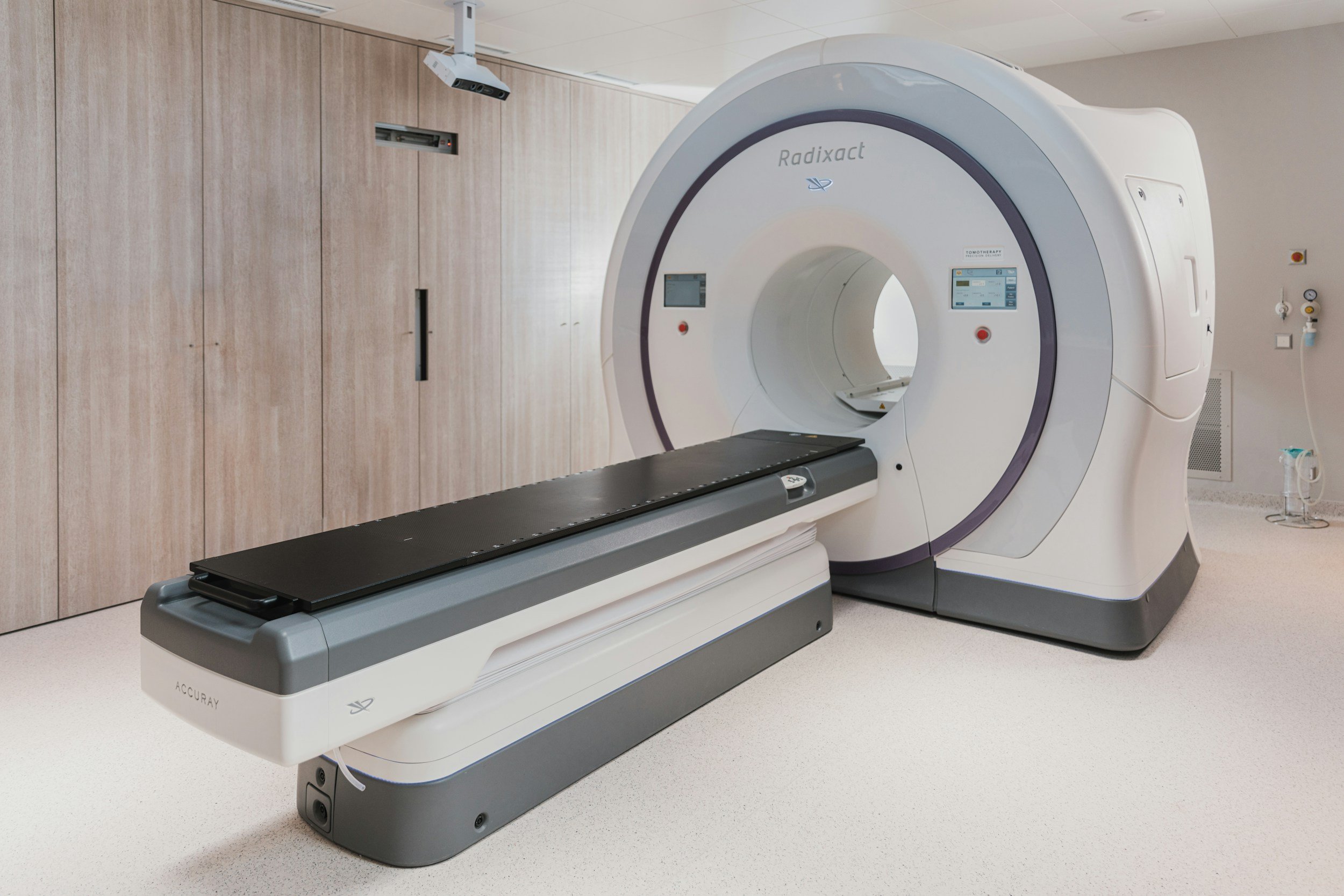
Catching a disease early can genuinely change everything. Not in a dramatic, overstated way, in a very real, clinical sense. The gap between a manageable condition and a life-altering one often comes down to timing. That's why advanced imaging technology has quietly become one of medicine's most consequential developments.
Hospitals and independent imaging centers alike are leaning harder into early diagnosis, and the results are reshaping patient outcomes in ways that feel, honestly, a little extraordinary.
The Evolution of Diagnostic Imaging and Why It Matters Now
This didn't happen in a decade. The road to today's imaging capabilities stretches back well over a century, built on compounding breakthroughs that each pushed clinical visibility a little further.
From Röntgen's X-Ray to AI-Driven Scanning
Wilhelm Röntgen changed medicine forever in 1895. Then came CT in the 1970s, MRI in the 1980s, PET imaging through the 1990s, and 3D tomosynthesis more recently. Every step added resolution, depth, and diagnostic confidence.
In states like Utah, patients frustrated by insurance delays and opaque pricing have started exploring self-pay and direct-to-consumer imaging. Centers like taylor mri have responded by offering fast scheduling, clear upfront costs, and accessible early imaging that doesn't require navigating a bureaucratic maze first. Proactive healthcare shouldn't feel like a privilege, and that kind of model makes it feel far less daunting.
Today's frontier? AI interpretation, radiomics, and molecular imaging are tools helping radiologists detect patterns that the human eye alone simply cannot catch.
Purpose-Built Modalities for Early Detection
Different imaging tools solve different problems. CT prioritizes speed and structural detail. MRI delivers unmatched soft tissue contrast. PET/CT exposes metabolic activity, catching malignancy at the cellular level before symptoms emerge. Hybrid systems, PET/MRI, for example, combine both functional and anatomical data in one session.
Newer-generation scanners are also producing sharper images at meaningfully lower doses. For patients requiring repeated monitoring, that matters enormously.
Those breakthroughs didn't just rewrite history. They built the technical foundation that today's specialists depend on, systems purpose-designed to catch what earlier tools were simply blind to.
AI and Machine Learning Are Reshaping Diagnostic Imaging
Here's where things genuinely accelerate. According to SNS Insider, by 2025, more than 35% of newly installed imaging systems worldwide will carry integrated AI capabilities, and those systems are projected to improve diagnostic accuracy by 20%. That's not a rounding error. That's clinically significant change.
Deep learning algorithms can flag subtle anomalies in seconds. Automated volumetric tools track tumor evolution with a precision that manual measurement can't reliably replicate. When integrated with PACS and EHR systems, AI creates faster reporting pipelines and fewer missed findings, meaning radiologists spend less time hunting and more time interpreting.
With AI amplifying diagnostic precision at scale, the real-world benefits of imaging technology extend well beyond faster reads. They ripple through clinical decisions, treatment timelines, and ultimately, patient lives.
What Imaging Technology Actually Does for You
Across demographics and clinical settings, the tangible impact of the benefits of imaging technology is hard to argue with. It's smarter, faster, and safer than anything medicine has had before.
Speed and Accuracy That Clinicians Can Actually Use
A deep learning MRI reconstruction approach reduced average acquisition time by 32.3% versus standard protocols, without sacrificing image quality. Shorter scans mean faster answers, lower patient anxiety, and more agile clinical decision-making.
Same-day scans and 24-hour reporting are increasingly standard. Automated protocols are cutting false positives and negatives, which matters enormously when a misread scan delays critical treatment by weeks.
Imaging That Feels Less Like an Ordeal
Speed benefits clinicians. But for the patient in the waiting room? What matters is the experience itself. Low-dose CT protocols, open MRI designs, and silent MRI sequences have transformed scanning for claustrophobic patients, children, and elderly individuals who might otherwise avoid the procedure entirely. Less invasive imaging also reduces the downstream need for exploratory surgeries and unnecessary biopsies.
The Financial Case for Catching Things Early
There's a compelling cost argument here, too. Diagnosing cancer at Stage 1 versus Stage 3 dramatically reduces downstream treatment expenses. Medicare and a growing number of private insurers are expanding reimbursement for preventive imaging, an institutional acknowledgment that early scans genuinely save money over time.
Breakthrough Applications Across High-Stakes Specialties
The financial logic is compelling, but nothing illustrates advanced imaging technology's value quite like what it's achieving inside specific clinical disciplines right now.
Oncology: Finding Tumors Before Patients Feel Anything
Whole-body MRI is being deployed for high-risk patients to detect metastatic spread before a single symptom surfaces. Combined with liquid biopsy data, imaging creates a molecular-level picture of cancer risk, catching disease years earlier than conventional screening approaches.
Cardiology: Revealing Silent Heart Disease
CT angiography and coronary calcium scoring give cardiologists a clear view of arterial plaque development long before a cardiac event occurs. AI-based plaque analysis adds still another layer, identifying vulnerable plaques that standard imaging tends to underestimate.
Neurology: Detecting Subtle Brain Changes Early
Functional MRI, Diffusion Tensor Imaging, and MR spectroscopy are redefining early diagnosis for Alzheimer's, multiple sclerosis, and movement disorders. These tools catch structural and metabolic changes years before noticeable cognitive decline, creating genuine intervention windows.
What's Coming Next in Diagnostic Imaging
Choosing the right imaging solution today matters. But the next wave of diagnostic imaging techniques promises to blur the boundary between diagnosis and outright prediction.
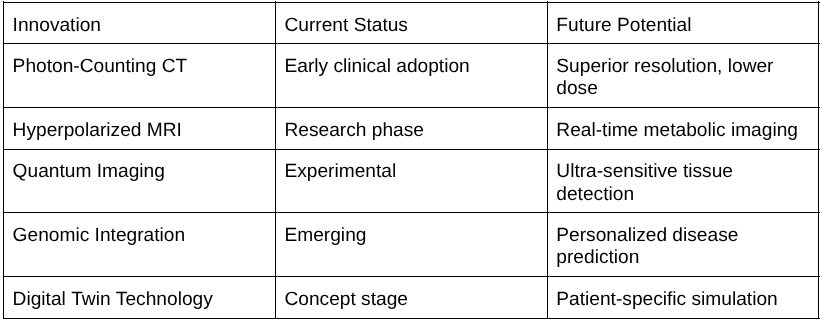
AI-driven predictive analytics are already being piloted for population health management. Genomic integration could eventually allow imaging to anticipate disease risk before any physical change occurs at all.
Frequently Asked Questions
How does AI improve early disease detection through imaging?It analyzes thousands of images rapidly, surfaces patterns radiologists might miss, and supports faster, more confident clinical decisions, without replacing human expertise.
Can advanced imaging detect disease before symptoms appear?Yes. Whole-body MRI, PET/CT, and AI-enhanced scanning have identified cancers, cardiac blockages, and neurological changes in patients who felt entirely healthy at the time.
Is early diagnostic imaging covered by insurance?Coverage varies. Medicare increasingly covers preventive imaging for high-risk populations. Transparent self-pay models have also made early scanning far more accessible for patients without strong insurance coverage.
Are there meaningful risks with modern imaging techniques?Most are very safe. Low-dose CT and non-contrast MRI protocols minimize radiation and chemical exposure substantially. Always discuss any concerns with your ordering physician before scheduling.
Why This All Matters to You
Advanced imaging technology isn't a back-office clinical detail. It's a genuine lifeline for patients who need answers before symptoms escalate into crises. From AI-powered scanning to open MRI designs built with comfort in mind, medical imaging advancements are making early detection faster, more accurate, and more human-centered than ever before.
Here's the honest takeaway: the best time to ask questions about your health isn't when something already feels wrong. Don't wait for symptoms to prompt action. The tools to catch problems early exist. Use them.
Related:
