
How Creative Fitness Trends Are Transforming the Way People Exercise
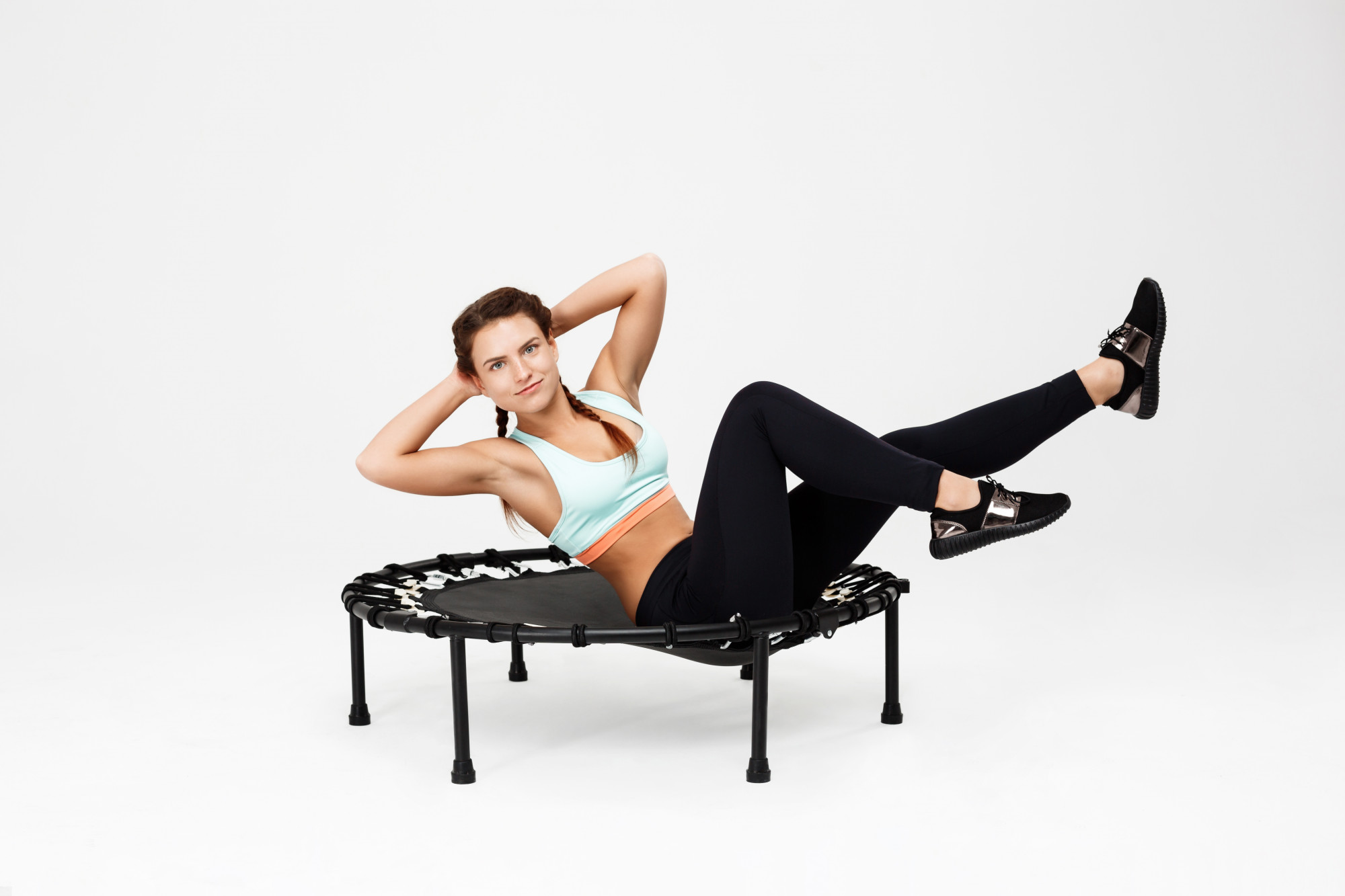
Let's be honest, working out has had a branding problem for years. The idea that exercise means suffering through a treadmill at 6 AM in a fluorescent-lit gym? People are done with it. And honestly, good riddance. More folks are swapping rigid routines for movement they genuinely look forward to, and the numbers back this up.
The CDC reported that 26.2% of adults in the U.S. were still inactive in 2024, which suggests the barrier isn't laziness; it's boredom. That's exactly why mini trampolines for exercise have started showing up in living rooms everywhere. It's fun, it's joint-friendly, and you don't need a gym membership to use one.
This guide covers everything: the science, the gear, the workouts, and how to buy smart.
The New Era of Playful, Creative Fitness
Something genuinely interesting is happening in fitness culture right now. The old model, grind harder, suffer more, earn your results, is losing ground fast. Social media, the home workout explosion, and a collective craving for stress relief have pushed bounce classes, dance cardio, and hybrid formats from quirky niches to genuinely mainstream habits.
Now that you can see why so many people are abandoning stiff gym routines for something more human and enjoyable, it's worth digging into the bigger picture, what's actually fueling this shift, and why it feels so different from every other "fitness trend."
What Makes a Workout Actually Addictive
Four things, honestly: novelty, rhythm, visible progress, and community. When a workout checks all four boxes, you stop watching the clock. That's a big reason why people who get into rebounders trampoline workouts tend to stick with it way longer than they ever did with a stationary bike collecting dust in the corner.
The fitness world is clearly moving toward movement that feels good, and the question is what specifically keeps people showing up, day after day, without being dragged there.
Why Low-Impact Doesn't Mean Easy
Here's a myth worth killing quickly. A rebounder trampoline for adults absorbs serious joint impact, but it doesn't go easy on your cardiovascular system. Compared to running, your knees get a break. Compared to sitting on the couch, your heart rate very much does not.
Rebounding Exercise as a Flagship Creative Fitness Trend
Rebounding exercise is bouncing on a small, purpose-built trampoline, spring or bungee-based, designed specifically for adult fitness. Not backyard fun. Not the thing your kids jump on after school.
A mini trampoline for exercise is engineered with specific mat tension, frame integrity, and load capacity that a recreational trampoline simply doesn't have. Knowing how to choose the best rebounder trampoline, build a real routine, and fold it into your life is what separates results from good intentions.
Science-Backed Benefits Beyond Just Burning Calories
The benefits genuinely go deeper than cardio. Regular bouncing supports lymphatic circulation, sharpens your balance, and helps maintain bone density, three things that matter more and more as you get older. The mood lift is real, too, which is honestly one of the biggest reasons people stick with it.
Research shows that over 56% of gym users say their membership helps them follow medical advice and manage a health condition. Approachable, enjoyable formats like rebounding make showing up consistently feel a lot less like a sacrifice.
Why a Rebounder Trampoline for Adults Is a Completely Different Animal
A rebounder trampoline for adults is built for controlled, vertical movement. No aerial tricks. No belly flops. The frame is sturdier, the mat tension is calibrated for specific weight ranges, and many models use bungee cords instead of metal springs, quieter, gentler, and far more apartment-friendly.
Throwing a backyard trampoline into your living room and calling it fitness? That's not just ineffective, it's genuinely risky.
Choosing the Best Rebounder Trampoline for Your Space and Goals
Finding the best rebounder trampoline means getting honest about your space, your body, and what you actually want from it.
A solid fitness trampoline for home doesn't need to cost a fortune, but it does need to clear some basic bars for safety and durability. Here's what really matters when you're comparing options.
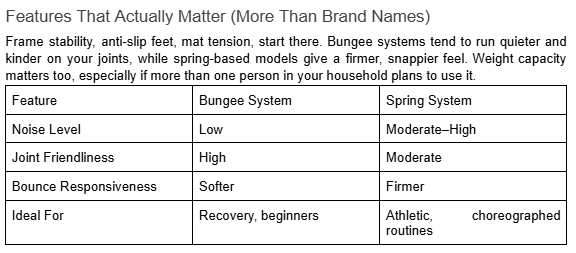
Features That Actually Matter (More Than Brand Names)
Frame stability, anti-slip feet, mat tension, start there. Bungee systems tend to run quieter and kinder on your joints, while spring-based models give a firmer, snappier feel. Weight capacity matters too, especially if more than one person in your household plans to use it.
Setting Up a Fitness Trampoline for Home
A 40-inch diameter fits comfortably in most apartments. If you've got more room, a 48-inch model gives you room to actually move.
Laying a thick mat underneath cuts vibration and saves your floors. A foldable rebounder trampoline is a solid pick if space is tight, though fixed studio-quality models tend to hold up better over time.
Affordable Rebounder Trampoline Options That Won't Let You Down
An affordable rebounder trampoline doesn't mean cutting corners; it means buying with the right checklist in hand.
Look for a minimum weight rating of 250 lbs, strong reviews around noise and stability, and confirmation that replacement parts are actually available. Mid-range models that hit these marks are genuinely all people need for daily use at home.
Creative Ways to Use a Mini Trampoline for Exercise at Home
Versatility is honestly one of the best things about a mini trampoline for exercise. It can be a calm morning warm-up, a strength-focused session, or a full-blown cardio party set to your favorite playlist, depending entirely on what you bring to it.
Energizing Morning Bounce Rituals
Five to ten minutes in the morning, gentle health bounce, side steps, arm reaches, does something remarkable for your circulation without demanding anything brutal from your body.
Beginners: start barefoot, keep movement small, focus on breathing. You're waking up, not competing.
Low-Impact Strength and Sculpting Sessions
The unstable surface of a rebounder turns everyday moves, squats, lunges, and core work into something your flat floor simply can't replicate.
Add light resistance bands around the trampoline, and you've got upper-body work built into a 20-minute session with zero extra equipment required.
Rhythm-Based Cardio Flows for Music Lovers
Matching bounce patterns to music tempo turns exercise into something that barely feels like exercise. A basic sequence, health bounce, twist, ski, jumping jack, run through a 130–150 BPM playlist can keep your heart rate up for a solid 25-minute cardio session. Trust me, the time flies.
Recovery, Mobility, and Lymphatic Reset Sessions
On lighter days, gentle rebounding is one of the best tools you've got. Slow ankle circles, hip sways, soft knee bends, all of it support lymphatic movement and joint mobility without piling on physical stress. It's basically the gentlest possible active recovery.
Safety, Form, and Keeping Your Fitness Trampoline for Home in Good Shape
Keeping sessions safe on a fitness trampoline for home starts with form and extends all the way to how you store and maintain the thing. Both matter more than people realize.
Foundational Technique for Confident Bouncing
Neutral spine, soft knees, engaged core, eyes forward, four cues that cover most of the basics. The gap between a "health bounce" (feet barely leaving the mat) and high-impact jumping is significant, and most people are better off spending more time in the lower range, especially starting out.
Common Mistakes That Lead to Discomfort
Landing on locked knees and skipping rest days are the two biggest culprits. For footwear, thin and flexible beats thick-soled athletic shoes most of the time, though barefoot is totally fine for gentle sessions once you're comfortable with the mat surface.
Care, Maintenance, and When to Replace Things
Check your bungees or springs every few weeks for uneven tension or visible wear. Wipe the mat down regularly, keep it out of direct sunlight, and replace worn parts quickly so you're not compromising bounce quality. A well-maintained rebounder, like those from Leaps & Rebounds, which backs its products with a lifetime warranty, can genuinely last for years.
Frequently Asked Questions
1. Is rebounding exercise really better than walking for overall fitness?
Rebounding exercise is more intense than walking for the same time investment. It raises heart rate faster, recruits more muscle groups simultaneously, and layers in balance training that walking doesn't touch. Walking is more approachable for absolute beginners, but rebounding delivers more comprehensive fitness in shorter sessions.
2. How long should someone bounce on a mini trampoline for exercise to see results?
Start with 10-minute sessions three times a week. Most beginners notice improved energy and better balance within four to six weeks. Move up to 20–30-minute sessions five days a week, and you'll start seeing real cardiovascular and body composition changes.
3. Can older adults safely use a rebounder trampoline for adults at home?
Yes, with the right setup. A rebounder with handlebars adds confidence and stability, and pairing that with an anti-slip mat and low-intensity bouncing makes it safe for most older adults; that combination also makes it a strong contender as the best rebounder for seniors when balance support is a priority. Anyone managing balance disorders, osteoporosis, or recent injuries should get medical clearance first.
4. Does a fitness trampoline for home actually help with lymphatic drainage?
Gentle, rhythmic bouncing creates repeated shifts in gravitational force that support lymphatic fluid movement. It's not a medical treatment, but consistent light rebounding is recognized as a practical way to support circulatory and immune system health.
5. Can someone lose weight using only an affordable rebounder trampoline without a gym?
Absolutely, when paired with a reasonable diet and actual consistency. An affordable rebounder trampoline used for 20–30 minutes daily creates a meaningful calorie deficit. Weight loss comes from showing up, not from how much you spend on equipment.
6. Are mini trampolines safe for small apartments and upstairs neighbors?
Bungee-based models produce very little vibration. A thick rubber mat underneath absorbs most of what's left. Keep sessions at moderate intensity, bouncing, not jumping, and you'll have a perfectly neighbor-friendly workout setup in most apartments.
Which creative fitness trends pair best with rebounding for full-body results?
Strength training, yoga, and short mobility flows are a natural fit. Rebounding handles your cardio and balance; strength training builds muscle; yoga and mobility work keep your joints healthy long-term. Together, they make a genuinely well-rounded weekly routine.
Related:
