
How to Treat Menopause Insomnia: A Complete Guide to Better Sleep

Hot flashes get most of the attention when menopause is discussed. But for many women, it is the sleep disruption that does the most sustained damage to daily life. Menopause insomnia is not simply difficulty falling asleep: it is a complex, hormonally driven shift in the entire architecture of sleep that can persist for years if left unaddressed. This guide explains why menopause disrupts sleep at a biological level and lays out a practical, layered approach to treating it effectively.
Why Menopause Causes Insomnia
Menopause insomnia is not a single problem with a single cause. It is the product of several overlapping hormonal changes that affect sleep from multiple directions simultaneously.
Estrogen Decline
Estrogen plays a direct role in regulating serotonin and melatonin production. As estrogen levels fall during perimenopause and menopause, the brain's ability to produce and regulate these sleep-critical compounds is compromised. Lower estrogen is also associated with increased sleep fragmentation, reduced REM sleep, and decreased slow-wave deep sleep, meaning the hormonal decline affects not just how easily you fall asleep but the restorative quality of the sleep you do get.
Progesterone Loss
Progesterone is a natural sedative. It enhances the effect of GABA, the brain's primary calming neurotransmitter, producing a mild anxiolytic and sleep-promoting effect throughout the reproductive years. When progesterone levels drop sharply in menopause, this built-in sedative effect disappears. Women who have always been good sleepers often notice their first significant sleep difficulties at perimenopause, when progesterone begins its most rapid decline.
Hot Flashes and Night Sweats
Vasomotor symptoms are the most immediate and disruptive physical cause of menopause insomnia. A single moderate hot flash raises core body temperature by one to two degrees Celsius and activates the sympathetic nervous system in a way that is physiologically identical to a stress response. Women who experience frequent night sweats can be pulled out of deep sleep multiple times per night, preventing the sustained sleep stages that produce genuine restoration.
Cortisol and Mood Changes
The hormonal changes of menopause also dysregulate the HPA axis, the system governing cortisol production. This can result in elevated evening cortisol that delays sleep onset, as well as increased anxiety and depressive symptoms that compound the difficulty of both falling and staying asleep. Insomnia and mood disturbance in menopause reinforce each other in the same way anxiety and insomnia do in the general population.
Sleep Hygiene Adjustments Specific to Menopause
Standard sleep hygiene advice applies here, but menopause requires several modifications that go further than the general recommendations.
Cool the bedroom more aggressively. The standard recommendation of 18 to 20 degrees Celsius is not cold enough for women experiencing night sweats. Aim for 16 to 18 degrees and use a fan or cooling mattress pad to enhance airflow. Keeping a cool damp cloth nearby for hot flash management reduces the physiological activation that accompanies each episode.
Switch to moisture-wicking sleepwear and bedding. Waking in damp clothing compounds the discomfort of night sweats and makes returning to sleep significantly harder. Bamboo, merino wool, and technical moisture-wicking fabrics maintain dryness better than cotton, which retains moisture against the skin.
Maintain a rigidly consistent sleep schedule. When hormones are destabilized, the circadian rhythm loses some of its natural anchoring. A consistent wake time, even on weekends and after difficult nights, is the single most effective behavioral tool for maintaining circadian stability during menopause.
Eliminate alcohol and reduce spicy food. Both are established hot flash triggers. Alcohol additionally disrupts REM sleep and produces an anxiety rebound as it metabolizes, compounding the sleep disruption it initially appears to relieve.
Exercise and Physical Activity
Exercise is one of the highest-impact interventions available for menopause insomnia, with benefits that extend across all the primary mechanisms driving it.
Aerobic exercise, practiced consistently at moderate intensity, has been shown in multiple studies to reduce the frequency and severity of hot flashes over a period of several weeks. It also reduces cortisol, increases adenosine-driven sleep pressure, and promotes the deep slow-wave sleep stages that menopause most significantly disrupts. Thirty to forty-five minutes of moderate aerobic activity five days a week is the evidence-supported minimum for meaningful benefit.
Yoga and tai chi have emerged in the research literature as particularly valuable for menopausal women. Both reduce perceived hot flash severity, improve sleep quality scores, and address the anxiety component of menopause-related insomnia through their combination of movement, breathwork, and mindfulness. A 2012 study published in Menopause found that women who practiced yoga reported significantly better sleep quality and fewer nocturnal awakenings than control groups.
Strength training is often overlooked in sleep discussions but has been shown to improve sleep architecture in postmenopausal women specifically, increasing the proportion of restorative slow-wave sleep. Two to three sessions per week of resistance training produce cumulative sleep benefits that complement those of aerobic exercise.
Dietary Changes That Support Better Sleep
Dietary adjustments cannot replace medical or behavioral intervention, but they can meaningfully reduce hot flash frequency and support the nutritional foundations of sleep.
Phytoestrogens. Soy products, flaxseed, chickpeas, and lentils contain isoflavones and lignans that weakly mimic estrogen activity in the body. Regular consumption may help moderate the hormonal fluctuations that trigger vasomotor symptoms and sleep disruption, particularly for women in early menopause.
Magnesium-rich foods. Almonds, dark leafy greens, pumpkin seeds, and dark chocolate support GABA activity, muscle relaxation, and cortisol regulation. Magnesium deficiency is associated with both insomnia and increased anxiety, and menopause provides no protection against this deficiency.
Tryptophan-containing foods. Turkey, eggs, dairy, and sunflower seeds provide the amino acid precursor to serotonin and melatonin. Consuming these in the evening alongside complex carbohydrates supports melatonin synthesis at a time when estrogen decline is already reducing it.
Timing and avoidance. Caffeine should stop by 2pm. Large meals within three hours of bedtime raise core body temperature and impair sleep onset, both effects compounded by menopausal physiology.
Mind-Body Techniques
The psychological and neurological dimensions of menopause insomnia respond well to structured mind-body practices that produce measurable physiological changes relevant to both the hormonal and behavioral components of sleep disruption.
Paced breathing for hot flash onset. Slow, controlled breathing at approximately six breaths per minute activates the parasympathetic nervous system and has been shown to reduce the perceived intensity and duration of hot flashes when applied at onset. Practiced regularly, it also lowers baseline sympathetic arousal.
Mindfulness meditation. A 2011 study in Menopause found that mindfulness-based stress reduction significantly reduced sleep disturbance, hot flash-related daily interference, and anxiety scores in menopausal women after eight weeks of practice. Twenty minutes of daily practice is sufficient to produce meaningful results within four to six weeks.
CBT-I (Cognitive Behavioral Therapy for Insomnia). CBT-I is the gold standard treatment for chronic insomnia and is particularly effective for menopause-related insomnia. It addresses the hyperarousal and maladaptive sleep beliefs that develop after prolonged sleep disruption and produces durable results that persist after treatment ends.
Acupuncture. Emerging clinical evidence suggests acupuncture may reduce hot flash frequency and improve subjective sleep quality in menopausal women. The evidence base is still developing, but the risk profile is low and early clinical response has been consistently positive.
Supplement and Transdermal Support
Hormonal changes during menopause affect not only sleep directly but also the digestive and metabolic environment in which supplements are absorbed. When estrogen and progesterone levels are fluctuating significantly, gastrointestinal motility and absorption efficiency can be unpredictable, making the bioavailability of oral supplements less consistent than under stable hormonal conditions.
Key Ingredients for Menopause Insomnia
Melatonin is particularly important in the menopause context because estrogen plays a role in its natural production. As estrogen declines, melatonin production often declines with it, meaning the body's internal signal for sleep onset becomes weaker precisely when sleep is already most disrupted. Magnesium glycinate supports GABA activity, reduces muscle tension, and helps regulate elevated cortisol. L-theanine addresses the anxiety dimension without sedation, and valerian root combined with passionflower has both traditional and emerging clinical support for menopausal sleep disruption.
Why Transdermal Delivery Matters in Menopause
Transdermal patches deliver active compounds continuously through the skin and into the bloodstream throughout the night, bypassing the digestive system and its menopause-related variability entirely. Unlike a single oral dose that peaks and fades, a patch maintains consistent delivery from application through to morning, providing support at every stage of the night including the second-half awakenings that are particularly characteristic of menopause insomnia.
Finding the Right Sleep Patch
Thesleep patches from The Friendly Patch are designed for exactly this kind of sustained, transdermal overnight support. Applied before bed and worn through the night, they provide consistent delivery of sleep-supportive compounds without requiring you to time pills or manage absorption under unstable hormonal conditions.
Medical Options Worth Discussing With Your Doctor
For women whose menopause insomnia is severe or whose quality of life is significantly impaired, self-directed strategies alone may be insufficient. These medical options are worth an informed conversation with your doctor.
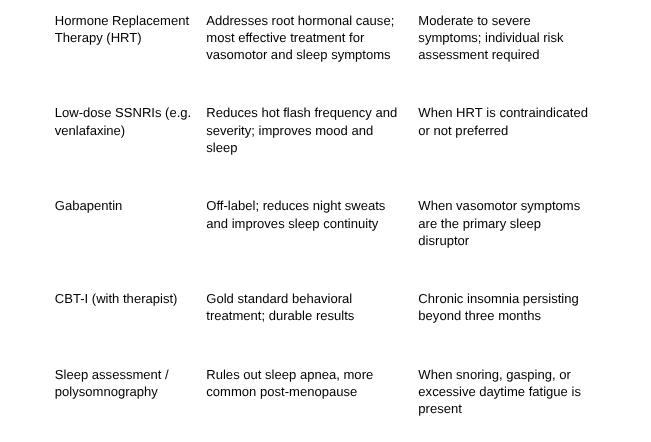
It is worth noting that sleep apnea becomes significantly more prevalent after menopause due to changes in upper airway muscle tone and fat distribution. If your insomnia is accompanied by loud snoring, gasping episodes, or severe daytime fatigue that does not improve with the strategies above, a sleep study is an important diagnostic step before assuming the problem is purely hormonal or behavioral.
Conclusion
Treating menopause insomnia effectively requires approaching it from multiple angles at once. No single strategy addresses all the overlapping hormonal, physiological, and behavioral mechanisms driving the problem. Start with your sleep environment, your movement habits, and your evening routine. Add nutritional and supplement support to build on the behavioral foundation. And if the disruption is severe or persistent, pursue the medical conversation your symptoms warrant. For sustained overnight nutritional support without the absorption uncertainty of oral supplements, explore The Friendly Patch sleep collection. Better sleep during menopause is not just possible. For most women, with the right approach, it is achievable.
