
Why Does Your Body Feel Like It’s Running on Empty? It Might Be Insulin Resistance
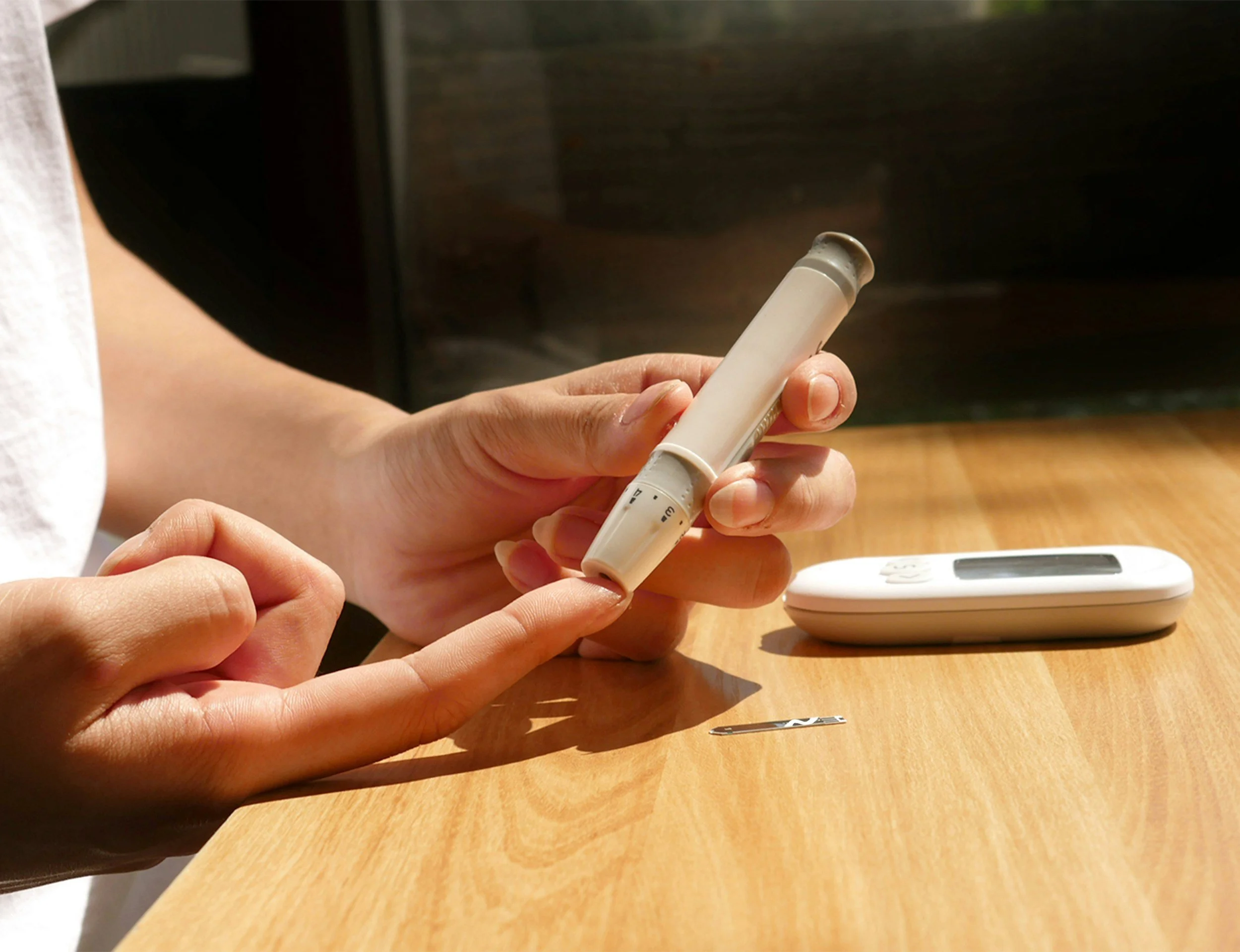
Why Does Your Body Feel Like It’s Running on Empty? It Might Be Insulin Resistance
You wake up tired. You eat breakfast and feel sluggish an hour later. Your waistline keeps expanding despite the fact that you are not eating dramatically differently than you did five years ago. Your doctor says your blood sugar is “borderline” but nothing to worry about yet.
These are not signs of ageing. They are often early signals of insulin resistance — and most men have no idea it is happening until it has already been affecting them for years.
What Is Insulin Resistance?
Insulin is a hormone your pancreas releases every time you eat, particularly when you consume carbohydrates. Its job is to act like a key — unlocking your cells so glucose (sugar from food) can enter and be used as fuel.
When you develop insulin resistance, your cells stop responding properly to that key. Glucose cannot get in efficiently, so it stays in your bloodstream. Your pancreas responds by producing more insulin, trying harder to push the glucose through. For a while, this compensates. But eventually the system begins to break down — and the effects reach every part of your body.
The Energy Problem
The most immediate and frustrating effect is chronic fatigue that does not respond to sleep.
Here is what is happening: when your cells are insulin resistant, they are not getting glucose efficiently even though glucose is present in your blood. Your cells are starving while the fuel sits outside the door. Your brain, which runs almost entirely on glucose, is the first to feel this — hence the brain fog, the mid-afternoon crashes, the inability to concentrate even after a full night’s sleep.
Many men reach for coffee, energy drinks, or more carbohydrates to push through. This temporarily raises blood glucose, which provides brief relief — but it also spikes insulin further, worsening the underlying resistance over time.
The Weight Problem
Chronically elevated insulin is one of the most powerful fat-storage signals in the human body.
Insulin’s secondary job, after shuttling glucose into cells, is to signal the body to store excess energy as fat — particularly around the abdomen. When insulin levels are perpetually high (as they are with insulin resistance), your body is in near-constant fat-storage mode, even at moderate calorie intake.
This is why men with insulin resistance often notice that the same diet that maintained their weight at 30 no longer works at 40. It is not simply a slowing metabolism — it is a hormonal shift that actively promotes abdominal fat storage. And visceral fat (the fat around your organs, not just under your skin) is both a symptom and a driver of insulin resistance — it worsens the resistance, which increases insulin, which stores more fat. The cycle is self-reinforcing.
The Long-Term Stakes
Left unaddressed, insulin resistance progresses. The path is well-documented:
Insulin resistance → prediabetes → type 2 diabetes. But diabetes is not the only destination. Chronically elevated insulin and glucose damage blood vessels, contributing to cardiovascular disease. They drive inflammatory processes linked to certain cancers. They disrupt testosterone production — relevant to men specifically, since low testosterone and insulin resistance have a bidirectional relationship, each worsening the other.
None of this is inevitable. Insulin resistance is one of the most reversible metabolic conditions that exists — but only if you catch it early enough.
How Do You Know If You Have It?
Symptoms are unreliable on their own because they overlap with dozens of other conditions. The only way to know is to test.
The standard clinical approach uses fasting glucose and HbA1c, but these often miss early insulin resistance entirely — they measure the downstream effect (blood sugar) rather than the upstream cause (insulin function). More sensitive approaches include fasting insulin levels and the HOMA-IR calculation, which measures the ratio of fasting glucose to fasting insulin to estimate how much resistance is present.
If you want to understand what these tests involve and what your numbers actually mean, DiabetesKnowledgeHub.com has a detailed guide on the insulin resistance test that walks through each method, what to ask your doctor, and how to interpret results.
What Actually Reverses It
The research on this is clear and, for once, practical:
Reduce refined carbohydrates. Not necessarily eliminate — but significantly reduce. White bread, sugary drinks, processed snacks, and refined grains spike insulin repeatedly throughout the day. Replacing them with whole grains, vegetables, legumes, and protein reduces the insulin demand on your system.
Strength training. Skeletal muscle is the body’s primary site of glucose uptake. Building muscle increases the number of glucose transporters available, improving insulin sensitivity directly. Even two sessions per week of resistance training produces measurable improvements.
Walk after meals. A 10–15 minute walk after eating reduces post-meal glucose spikes significantly. This is one of the simplest and most evidence-backed interventions available.
Reduce abdominal fat. This is both a cause and an effect — losing even 5–7% of body weight improves insulin sensitivity substantially in most people.
Sleep. A single night of poor sleep reduces insulin sensitivity by 25% in healthy adults. Chronically poor sleep is both a cause and an amplifier of insulin resistance.
The Earlier You Act, the Easier It Is
Insulin resistance takes years to develop and can take years to fully reverse — but meaningful improvement happens quickly once the right changes are in place. Men who catch it at the prediabetes stage and make moderate lifestyle changes have a very high rate of returning to normal insulin function.
The men who struggle are the ones who waited for a formal diabetes diagnosis before taking it seriously. By that point, years of damage have accumulated and the pancreas itself may be compromised.
You do not need to wait for a diagnosis. If you are tired, carrying weight around your middle, and feel like your body is not responding the way it used to — get tested. The information is available, the interventions are straightforward, and the window to act effectively is open right now.
