
How MR-LINAC Is Changing Cancer Treatment at Hisar Intercontinental Hospital
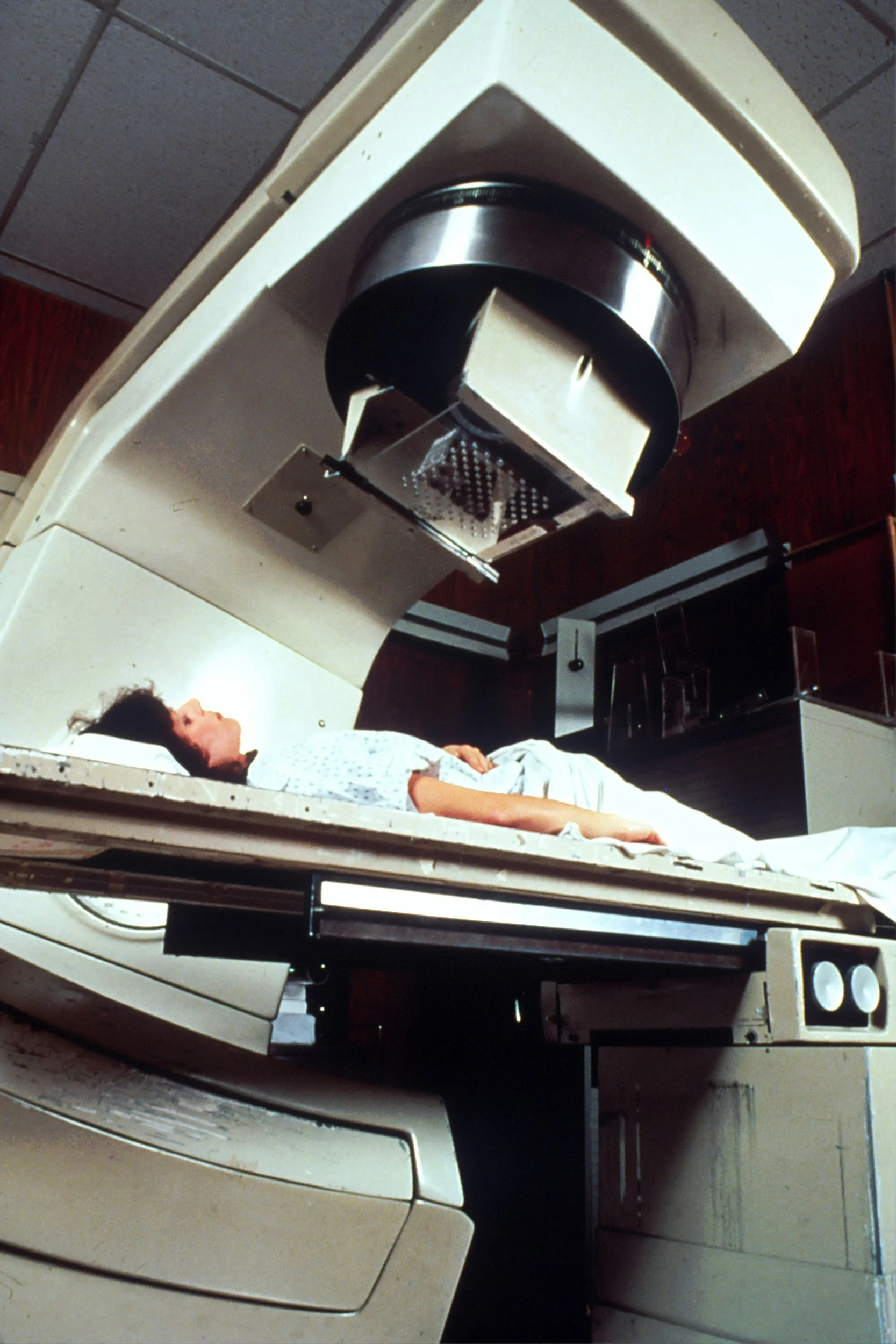
Radiation therapy plays an important role in treating many cancers. However, delivering radiation requires careful planning. Tumors can move during breathing, while nearby organs may change position between treatment sessions. These changes can affect the area receiving radiation.
Doctors need to target the tumor while limiting radiation exposure to surrounding healthy tissues. This becomes challenging when tumors lie close to sensitive organs and also matters when the treatment area changes during a session.
What if doctors could use MRI-based imaging to see the treatment area while delivering radiation? Magnetic resonance linear accelerator technology, known as MR-LINAC, offers this approach. Hisar Intercontinental Hospital in Istanbul offers this technology as part of its radiation oncology services.
What Is MR-LINAC?
MR-LINAC combines two technologies in one treatment system:
Magnetic resonance imaging (MRI): Produces detailed images of soft tissues, helping doctors distinguish tumors from nearby organs.
Linear accelerator (LINAC): Delivers high-energy radiation to treat cancer cells.
Traditional radiation therapy also uses advanced imaging and planning methods. However, MRI provides strong soft-tissue contrast, which can be useful when tumors are difficult to distinguish from surrounding structures.
By combining MRI with radiation delivery, MR-LINAC allows doctors to monitor the treatment area during radiation sessions. This approach is called magnetic resonance-guided radiation therapy (MRgRT). Research published in Radiation Oncology explains its potential role in image-guided and adaptive cancer treatment.
Why Imaging During Radiation Treatment Matters
Radiation treatment plans rely on scans taken before treatment begins. Additional imaging helps verify patient positioning and the treatment area. Yet the body's internal anatomy does not always stay the same.
For example, breathing can move tumors in the chest. Changes in bladder filling or bowel contents can also affect nearby organs. These movements may be important when treating tumors near sensitive structures.
MR-LINAC provides MRI-based images around and during treatment delivery. This allows the clinical team to assess changes in the tumor's position and surrounding anatomy.
When clinically appropriate, doctors can use these images to adapt the treatment plan. This process is called adaptive radiation therapy.
Potential benefits include:
Better visualization of tumors and nearby soft tissues
Assessment of movement during radiation delivery
Opportunities to adjust treatment as anatomy changes
Support for individualized radiation planning in selected patients
These capabilities do not guarantee better outcomes for every patient. Their value depends on the cancer, treatment goals, anatomy and available clinical evidence.
What Happens During MR-LINAC Treatment?
The exact process depends on the patient's diagnosis and treatment plan. A typical MR-guided radiation workflow may involve the following steps.
Patient positioning: The patient lies on the treatment couch in the position required for radiation delivery.
MRI imaging: The system captures images of the treatment area and surrounding organs.
Treatment verification: The team reviews the images against the planned treatment.
Radiation delivery: The linear accelerator delivers the prescribed radiation dose.
Image monitoring: The team monitors relevant anatomical changes during treatment.
Treatment adaptation: When indicated, the team may revise the plan using updated images before continuing.
Not every patient requires an adapted plan at every session. The radiation oncology team determines the appropriate workflow based on clinical needs.
Which Cancers May Benefit From MR-Guided Radiation?
MR-LINAC may be useful when soft-tissue visibility or tumor movement creates a treatment-planning challenge. Researchers have studied its use across several cancer types, including prostate, pancreatic and other abdominal cancers.
However, the evidence and suitability vary by cancer and clinical situation. The technology is not automatically the best option for every tumor.
MR-guided radiation may deserve consideration when:
A tumor lies close to sensitive organs
Breathing motion affects the treatment area
Internal anatomy changes between sessions
MRI provides useful information that other imaging methods may not show as clearly
Adaptive radiation could help address changes in the treatment area
The medical team must assess whether these potential advantages are relevant to an individual patient's case.
MR-LINAC vs Conventional Radiation Therapy
Both approaches can play important roles in cancer treatment. The main difference lies in their imaging capabilities and potential for treatment adaptation.
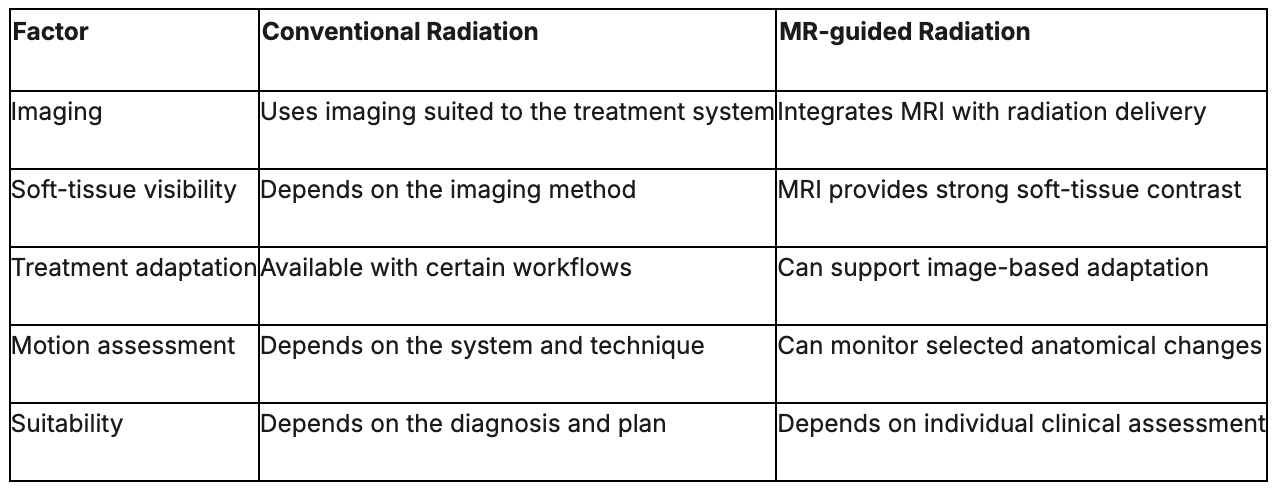
Conventional radiation remains an effective treatment option for many patients. MR-LINAC offers additional capabilities that may be valuable in selected cases. The appropriate choice depends on clinical evidence and individual treatment requirements.
MR-LINAC at Hisar Intercontinental Hospital
Hisar Intercontinental Hospital lists the Elekta Unity 1.5 Tesla MR-LINAC among its radiation oncology technologies. According to the hospital's official technology information, this system combines MRI with a linear accelerator.
The integration supports imaging-guided radiation treatment, including visualization of the treatment area during delivery. This can help clinicians assess anatomical changes when managing selected tumors.
Access to MR-LINAC gives patients another technology to discuss with their radiation oncology team. However, the equipment alone does not determine the best treatment. Medical expertise, careful planning and appropriate patient selection remain essential.
What Does MR-LINAC Mean for International Patients?
Patients traveling to Istanbul for cancer treatment should not choose a radiation system based on technology alone. First, determine whether MR-guided radiation suits their diagnosis and treatment goals.
The medical team may need to review:
Pathology and biopsy reports
Recent MRI, CT or other relevant imaging
Tumor location and stage
Previous surgery, chemotherapy or radiation therapy
Current medical history and medications
The proposed radiation dose and treatment schedule
International patients can ask the hospital to review their records before making travel arrangements. This helps establish whether MR-LINAC, conventional radiation or another approach warrants consideration.
Questions Patients Should Ask About MR-LINAC
Patients discussing MR-LINAC with their doctors should ask:
Is MR-LINAC appropriate for my specific cancer?
Why would MRI guidance help in my case?
Could conventional radiation offer a suitable alternative?
Would adaptive radiation be necessary?
How many sessions might I need?
Which medical records and scans should I provide?
What limitations or side effects should I understand?
The answers depend on the diagnosis, treatment plan and individual health factors. Patients should also discuss expected benefits, possible side effects and alternative treatments with their clinical team.
Making an Informed Treatment Decision
MR-LINAC brings MRI-based imaging and radiation delivery together in one system. Its ability to show soft tissues during treatment can help clinicians assess anatomical changes and adapt radiation when appropriate.
At Hisar Intercontinental Hospital, the Elekta Unity 1.5 Tesla MR-LINAC provides an option for patients undergoing radiation oncology assessment. However, not every cancer requires this technology, and no system can eliminate all treatment risks.
Patients considering treatment at Hisar can request a medical review of their diagnosis, pathology reports and imaging. The radiation oncology team can then assess whether MR-LINAC or another radiation approach suits their individual needs.
