
Red Light Therapy Sauna Frequency: Goal-Based Schedule for Skin, Pain & Recovery
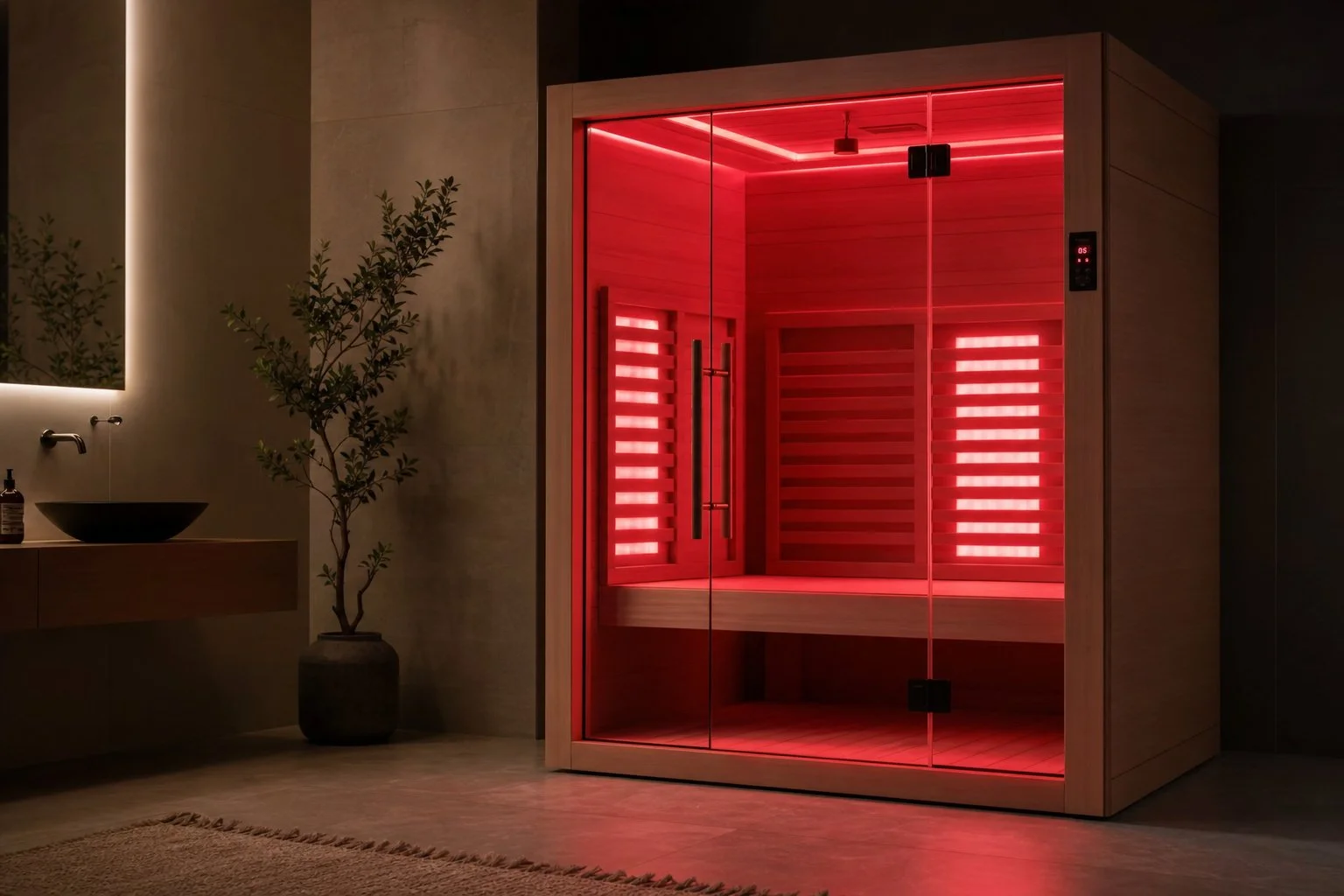
If you’ve been scrolling through wellness forums or locker room chatter, you’ve heard about the latest hybrid gadget: the red light therapy sauna. It’s neither your grandparent’s wood-fired sauna nor a standalone red light panel. It’s a combination unit that bathes you in specific wavelengths of light while gently warming you up. And the first question everyone asks is the same — how often should I use this thing?
The short answer is 3 to 5 times a week for general wellness, but the answer depends entirely on your specific goal. Research and clinical experience suggest that frequency is a dial you turn based on what you’re trying to repair, recover, or rejuvenate.
Key takeaways
For most healthy adults, 3–5 sessions per week at 15–25 minutes is the general wellness sweet spot, but goal-specific frequencies range from daily for acute injuries to 3–4 times weekly for hair growth.
The Arndt-Schulz rule applies here: too little light does nothing, but too much can actually inhibit the cellular repair you're after — you need 4–10 J/cm² for skin and 20–50 J/cm² for targeting deeper muscle and joint tissue.
Consistency beats intensity every time: three shorter sessions per week that you actually stick with will outperform two marathon sessions you eventually skip.
What Is a Red Light Therapy Sauna?
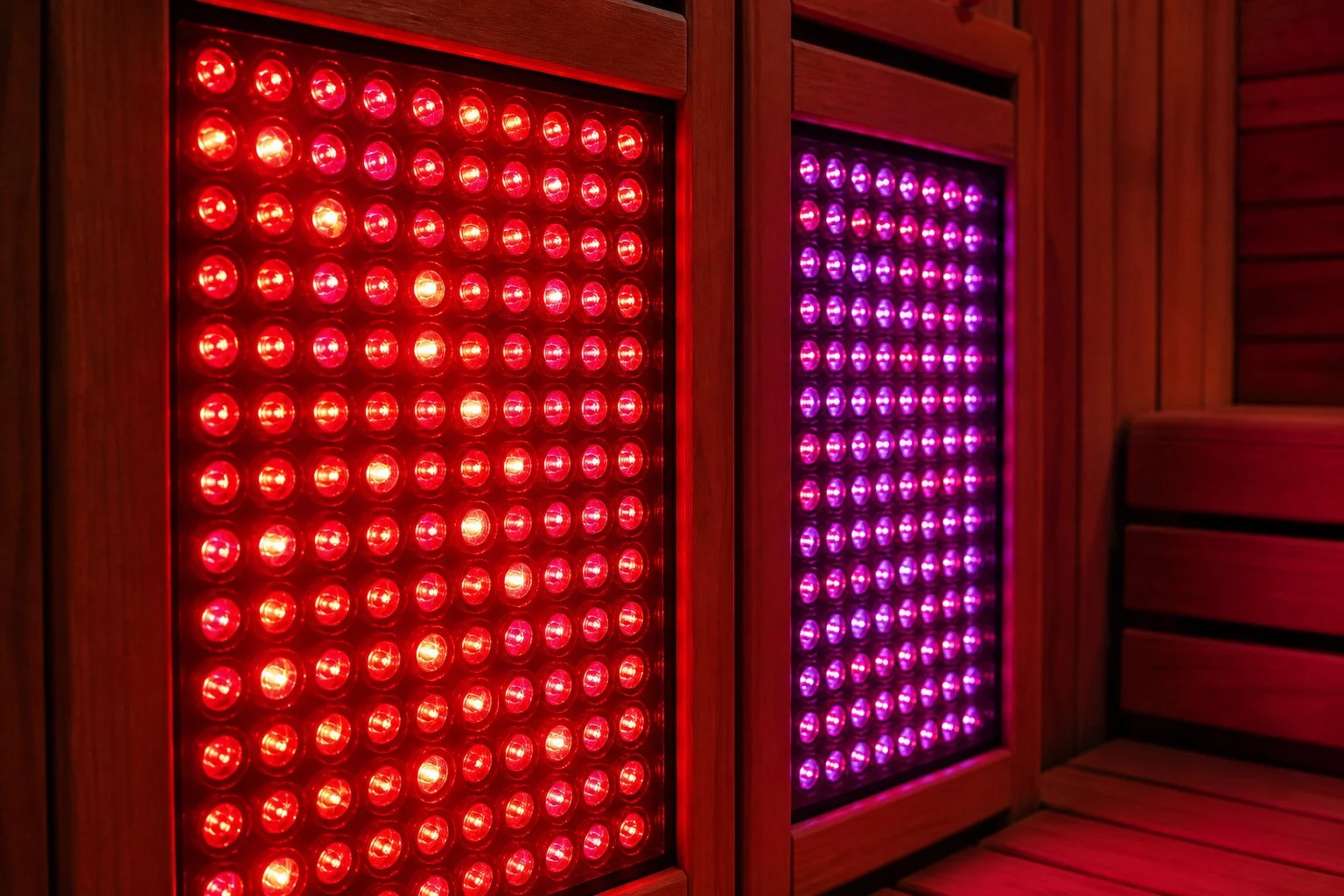
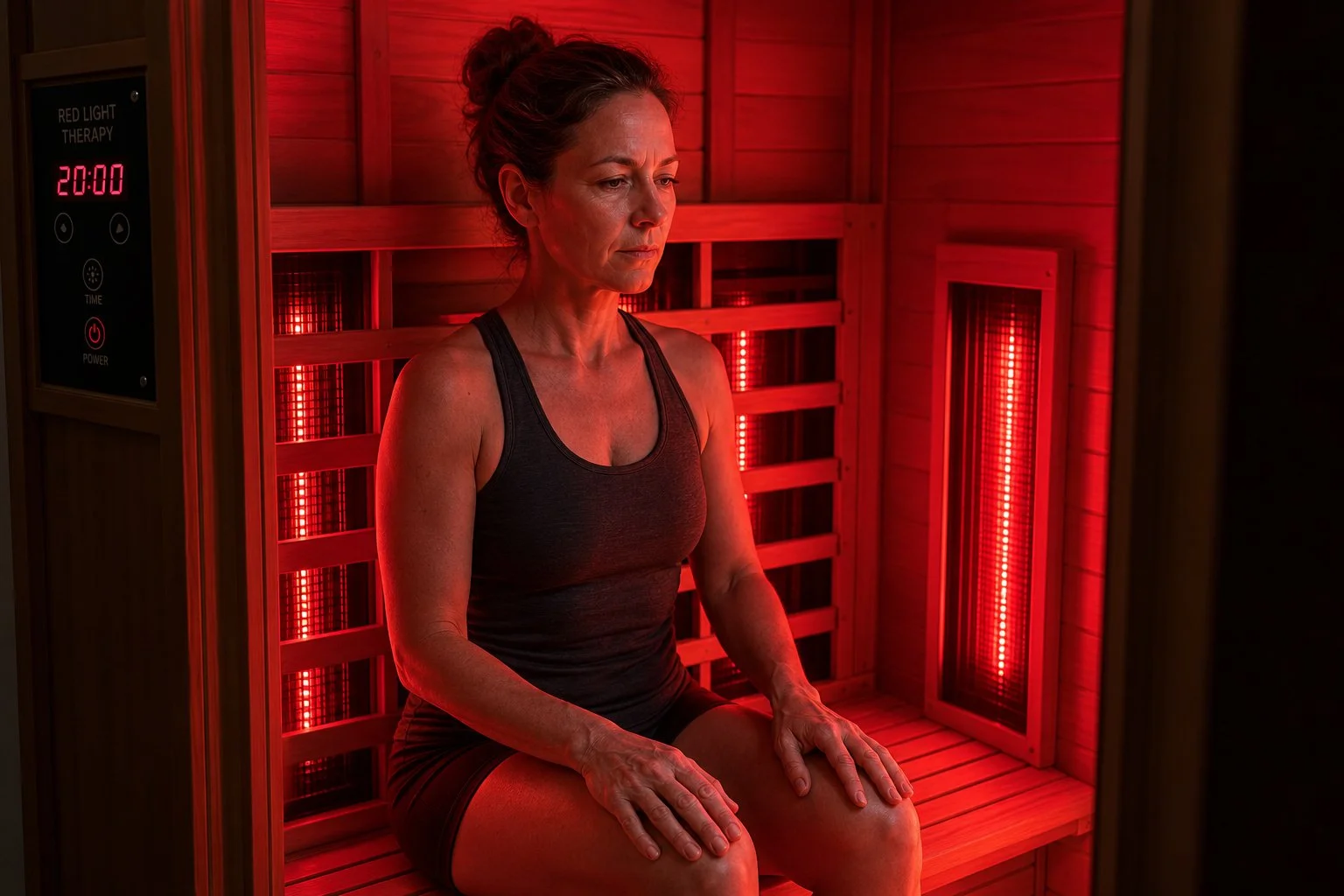
It helps to understand what you're stepping into. A red light therapy sauna is a hybrid device that combines two different mechanisms: medical-grade red light (630–660nm) and near-infrared light (810–850nm) with gentle infrared heat. Unlike a traditional sauna that cranks the air temperature up to 190°F, these units operate at 110–140°F. The panels heat your body directly rather than just the air around you, which is why you can tolerate longer sessions—and SaunaCloud manufactures their own infrared saunas with integrated red light panels to match this exact approach.
The red (630–660nm) and near-infrared (810–850nm) wavelengths each target different depths in your body.
This combination is the insight. The heat dilates your blood vessels — a process called vasodilation — increasing blood flow, which improves light penetration to deeper tissues. Better circulation means the light penetrates deeper into your tissues. Near-infrared can reach up to 5 centimeters into the body, while general infrared penetrates about 1.5 inches.
Meanwhile, the red light is working on a different level: it triggers photobiomodulation. That's the fancy term for light hitting your mitochondria, boosting ATP production, and giving your cells a power boost for repair.
As physical therapist Vivian Eisenstadt puts it, infrared panels "heat your body before heating the air." Because you're getting both mechanisms in one session, you can do shorter, more frequent sessions than you could with a traditional sauna alone.
How Often Should You Use It?
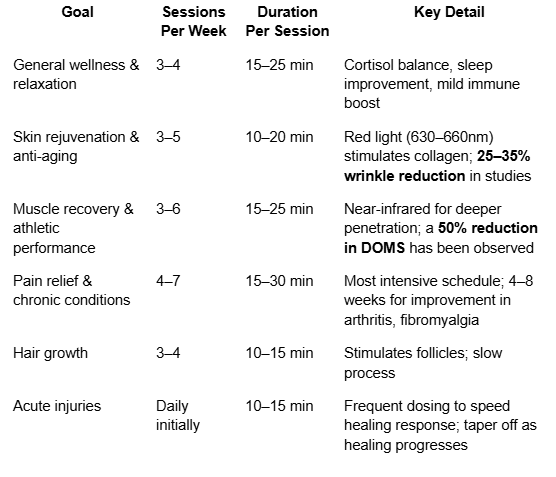
Here is the answer you came for. The table below gives you the frequency, session length, and rationale for each common goal. This is the reference you'll want to bookmark.
General wellness and relaxation
If your goal is simply to feel better, reduce stress, and sleep more deeply, 3–4 sessions per week at 15–25 minutes is your entry point. The heat helps lower cortisol, your primary stress hormone, and induces a mild, artificial fever to boost immunity. Relaxation and mood shifts are noticeable after the first few sessions.
Skin rejuvenation and anti-aging
This is where consistency matters. The red light wavelengths (630–660nm) are the ones that stimulate collagen production, and studies have shown a 25–35% reduction in wrinkles with regular use. You want 3–5 sessions per week at 10–20 minutes. Clean skin before your session.
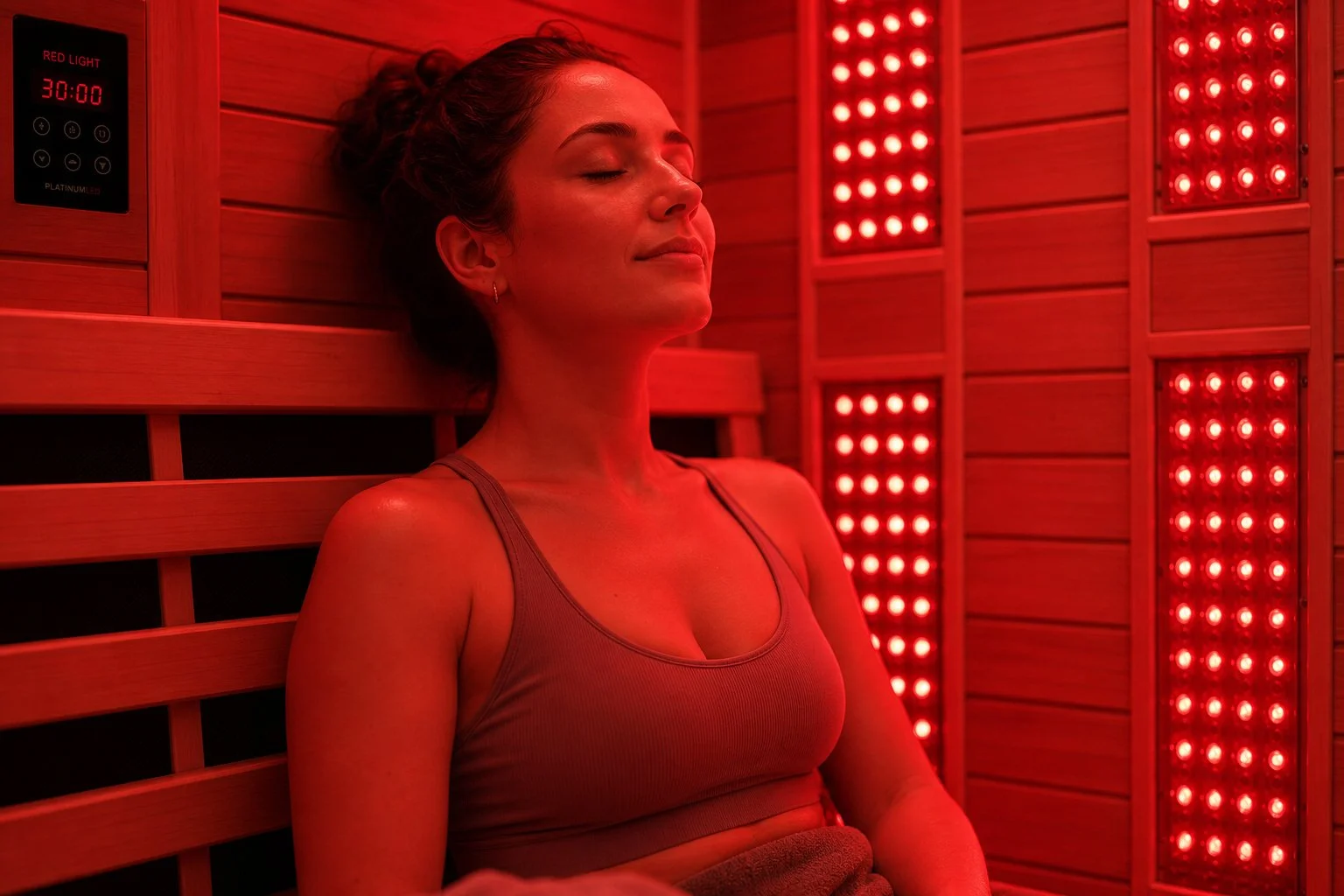
Three to four sessions a week at 15–25 minutes is the sweet spot for lowering cortisol and boosting mood.
Any lotion, sunscreen, or makeup can block the light from penetrating, so you may wonder how often you should see a dermatologist? For most adults without specific concerns, a yearly full-body check is recommended.
Muscle recovery and athletic performance
If you're training hard, this is the protocol that gets athletes' attention. Near-infrared (810–850nm) penetrates deeper than red light, reaching muscle tissue and even joints. Muscle recovery improvements can appear within 1-2 weeks, with a reduction of up to 50% in delayed-onset muscle soreness has been reported. The sweet spot is 3–6 sessions per week, 15–25 minutes, ideally post-workout.
Pain relief and chronic conditions
This is the most intensive schedule — you're using the sauna almost like a daily treatment. For conditions like arthritis, fibromyalgia, and muscle spasms, the recommendation is 4–7 sessions per week at 15–30 minutes. The dosing is higher here: 20–50 J/cm² for deeper tissue effects. Expect to commit for 4–8 weeks before noticing improvement in chronic pain.
Bottom line: For chronic pain, treat the sauna like a daily medicine dose — 4–7 sessions weekly at 15–30 minutes, with improvement expected after 4–8 weeks.
Beginner to Advanced — A Progressive Protocol
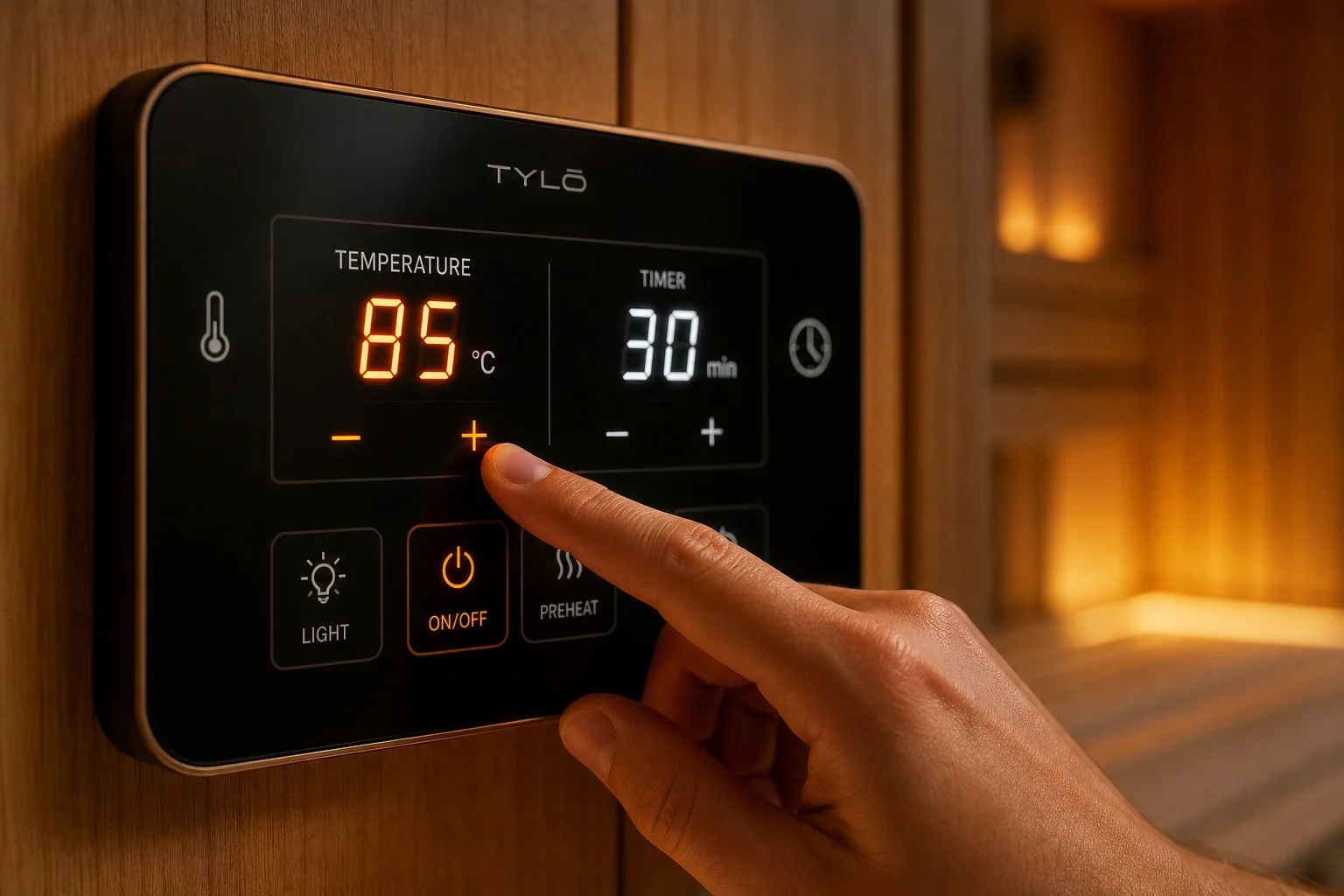
The most common mistake new users make is jumping in at maximum temperature and longest session, feeling dizzy, and concluding the sauna "doesn't work for them." The structured progression prevents this, aligning with the latest insights on infrared sauna market trends.
Start at 110–130°F for 10–15 minutes in your first weeks, then gradually increase as your body acclimates.
Level 1: Beginner (Weeks 1–4)
You're not here for results yet. You're here to acclimate. Stick to non-consecutive days at 2–3 sessions per week, 110–130°F, for 10–15 minutes. Your body needs to learn how to handle the heat and the light stimulus simultaneously, and the infraredsaunas community can help you gauge that process.
Level 2: Intermediate (Weeks 5–8)
Once you feel comfortable throughout the session and recover quickly afterward, move to 3–4 sessions per week at 130–145°F for 15–25 minutes. This is where most people settle, and it's the point at which the best sales conversations don't start with features but with understanding your specific goals.
Level 3: Advanced (Week 9+)
At this level, you're in the 4–7 session per week range at 135–150°F for 20–30 minutes. Daily use is possible for some goals, particularly pain management. Advanced users sometimes incorporate contrast therapy — heat first, then a cold plunge for 2–3 minutes, repeated 2–3 cycles, but this requires caution for anyone with cardiovascular conditions.

Red light wavelengths stimulate collagen production, and studies show a 25–35% reduction in wrinkles with regular use.
The Science of Dosing — Why Shorter Sessions Win
Red light therapy follows a biphasic dose-response curve. That's a scientist's way of saying there's a sweet spot, and you can overshoot it. The Arndt-Schulz rule explains it plainly: minimal effective doses stimulate healing, but excessive doses can inhibit cellular repair.
This is why shorter, more frequent sessions (15–20 minutes) outperform rare marathon sessions (45 minutes or longer). Your cells respond better to regular, mild stimulation than to occasional extreme exposure. Think of it as hormesis — the principle that small, manageable stressors make your body stronger. Three 15-minute sessions per week that you do will always beat one 45-minute session you dread.
How Long Per Session?
If you just want the quick-reference numbers, here they are by goal:
Skin: 10–20 minutes
Muscle recovery: 15–25 minutes
Pain relief: 15–30 minutes
General wellness: 15–25 minutes
Hair growth: 10–15 minutes
Regardless of your goal, 45 minutes is the recommended maximum for any single session. Longer isn't more effective — it increases the risk of overheating and dehydration. Keep the panel 6–24 inches from your body; follow the manufacturer's guidance for your specific device, because closer isn't always better.
Safety, Hydration, and When to Stop
This section is the most actionable part of the entire article. The specific hydration protocol makes the difference between a session that leaves you feeling great and one that leaves you dizzy.
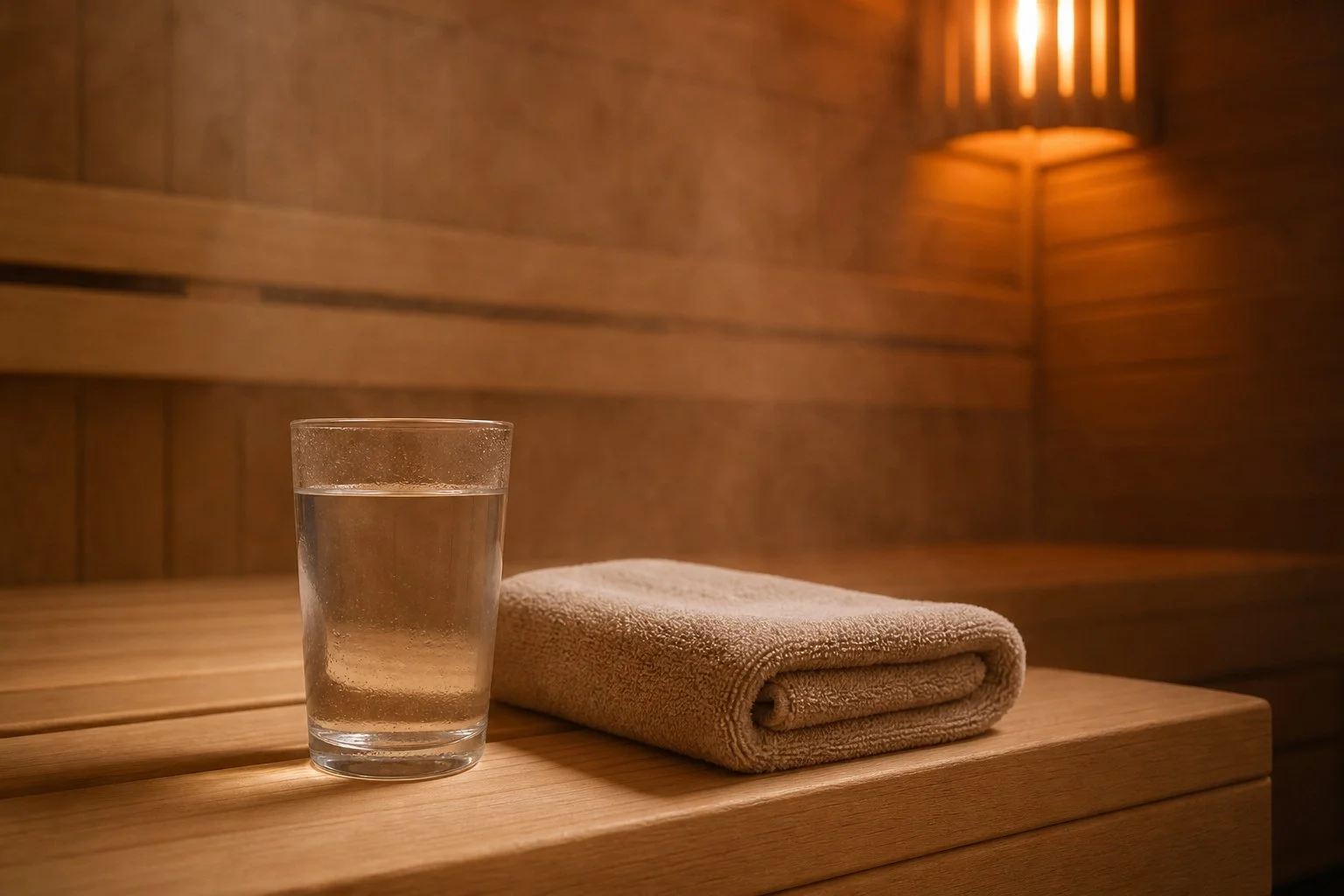
Drink 16–32 ounces of water 1–2 hours before your session, then rehydrate with another 16–24 ounces after.
Hydration protocol
A common mistake is drinking a ton of water right before your session, which leads to discomfort and interrupted sessions. Spacing it out works better. Drink 16–32 ounces of water 1–2 hours before you step in. Keep water handy during longer sessions.
Then rehydrate with another 16–24 ounces within 30 minutes after. Electrolytes can help if you're sweating heavily.
Contraindications and medications
This isn't for everyone, and that's fine. If you're pregnant, have heart disease, or have high or low blood pressure, talk to your doctor before using a red light therapy sauna. The same goes if you have a photosensitive condition like lupus or porphyria, or if you take photosensitizing medications like St. John's Wort or certain antibiotics — the light can trigger reactions.

Near-infrared light reaches deep muscle tissue, and athletes report up to 50% less soreness with consistent sessions.
Signs to stop immediately
These are non-negotiable. If you feel dizzy, nauseous, have chest pain, or notice signs of heatstroke — fever of 104°F or higher, confusion, racing heart — stop immediately and cool down. Don't push through. Also be aware that late, hot sessions can leave some people feeling wired at bedtime, so adjust your timing accordingly.
Red light therapy itself is safe for daily use. It doesn't emit UV rays, so you don't have to worry about sun damage or skin cancer risk. The FDA clearance on these devices means they're considered low-risk — not that they're proven effective for every condition, but that they're safe to use. Importantly, red light therapy saunas do not emit UV radiation and are not associated with skin cancer risk; the wavelengths used (630–660nm and 810–850nm) are entirely outside the UV spectrum, and the FDA has cleared these devices as low-risk for general use.
Results Timelines — What to Expect and When
Here's the timeline so you don't get discouraged and quit too early. The quickest win is relaxation and mood improvement — you'll feel that after your first few sessions. Skin glow and texture improvements show up after 2–4 weeks of consistent use. Muscle recovery improvements can appear within 1–2 weeks.
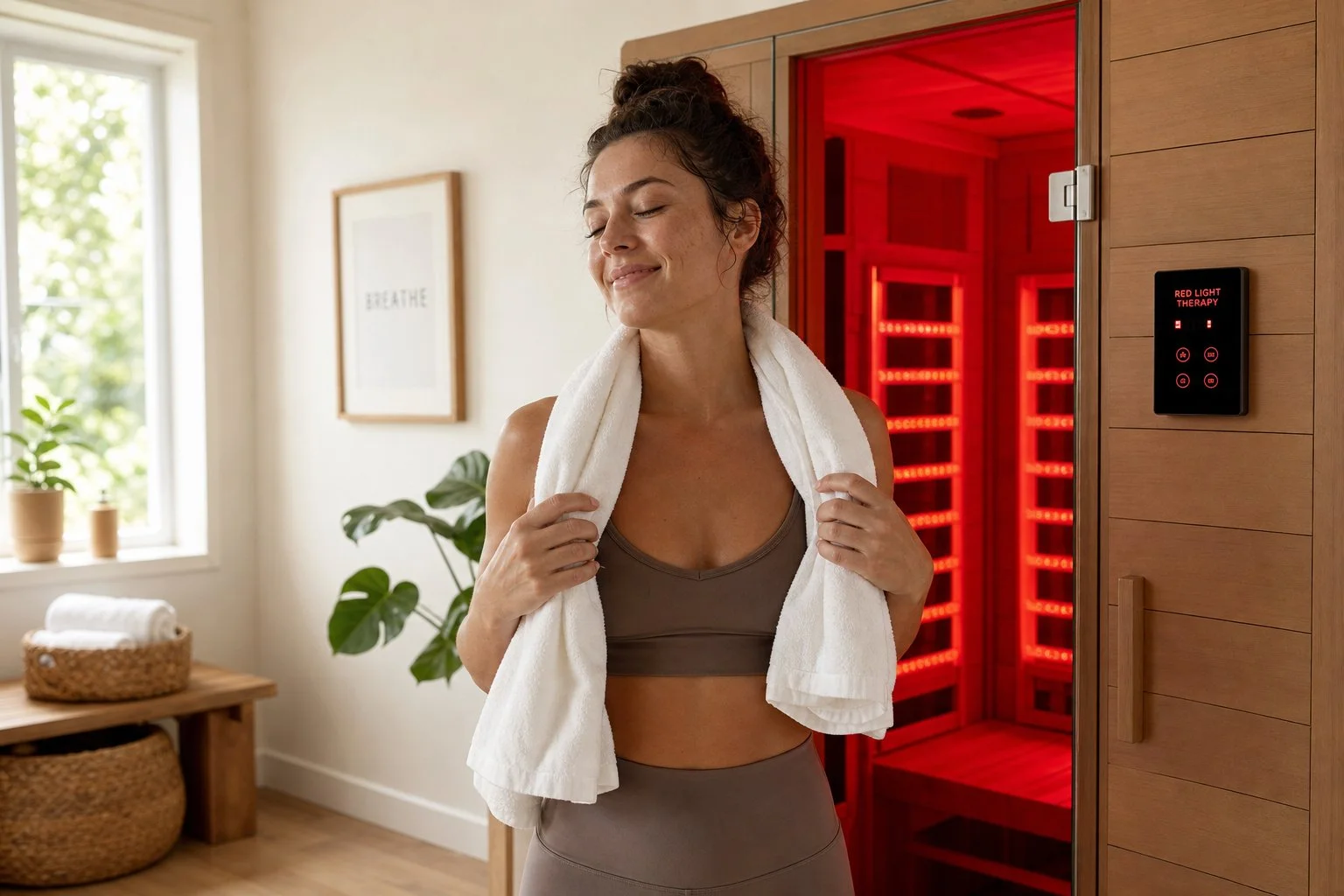
The quickest win is relaxation and mood improvement — you'll feel that after your first few sessions.
For chronic pain and joint comfort, you're looking at 4–8 weeks of consistent use before you notice change. Skin results timeline: 1-2 weeks subtle glow, 6-12 weeks noticeable changes. A landmark study followed 2,300 people for 20+ years and found that 4-7 sessions per week reduced sudden cardiac death risk. That's not a causation claim, but it's evidence that frequent, consistent use supports long-term health.
Why Red Light and Heat Work Better Together
The synergy is straightforward: heat dilates your blood vessels, which improves light penetration to deeper tissues. At the same time, the red light is working on cellular repair and collagen production. Two different processes, one session. Because the ambient temperature is lower (110–140°F versus 190°F), you experience less heat stress and can do 3–5 sessions per week compared to the 1–2 you'd manage in a traditional sauna.
If you want to experiment with contrast therapy, the protocol is simple: sauna heat first (15–20 minutes), then cold plunge (2–3 minutes), and repeat 2–3 cycles with at least a few minutes between transitions. Know that the rapid temperature change can stress your heart, so if you have any cardiovascular conditions, skip the cold plunge.
Sample Weekly Schedules for Real Life
Here's how the science translates into routines. Pick the one that fits your life.
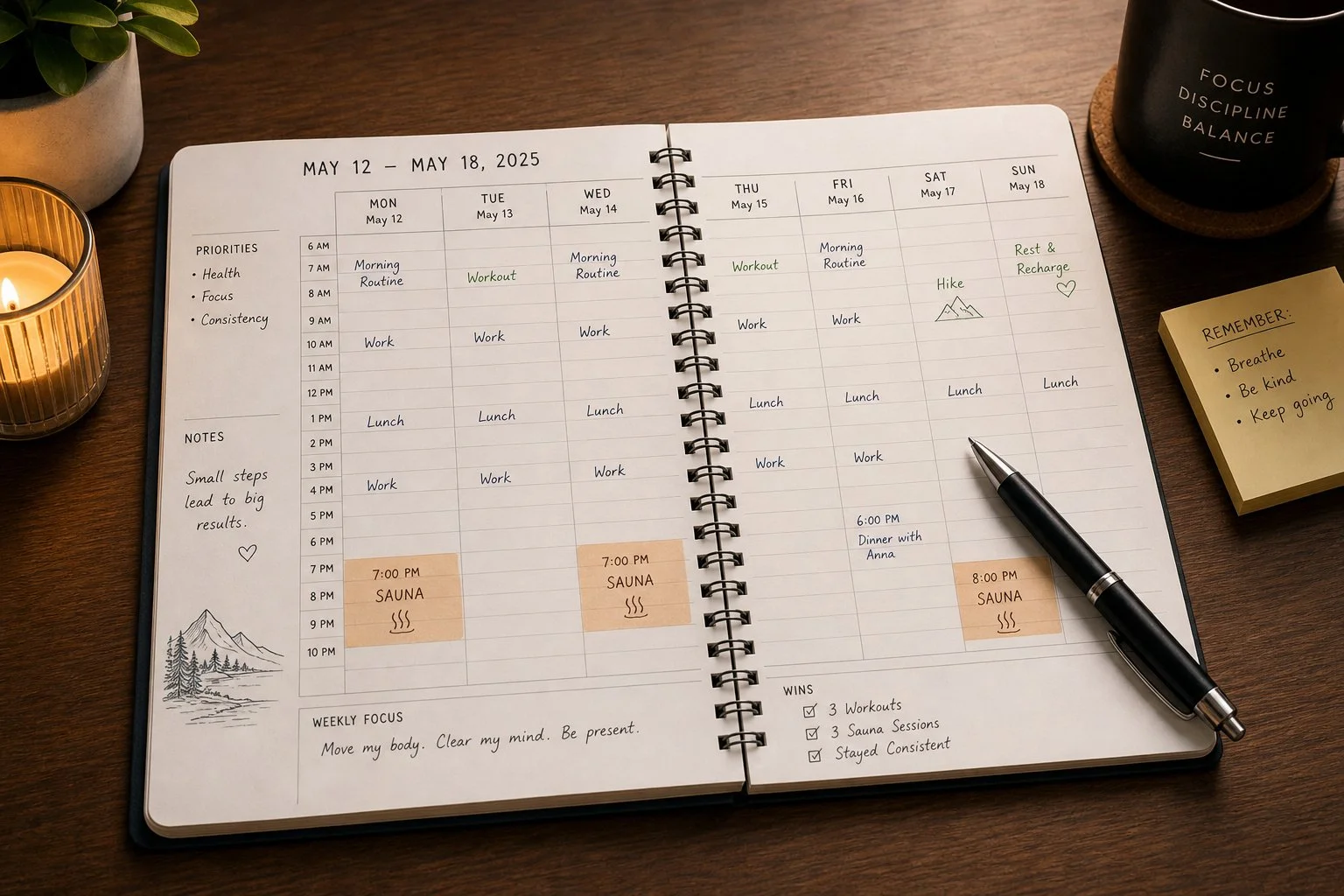
Three 15-minute sessions you actually stick with will always outperform one marathon session you dread.
Busy Professional
3 times per week, 20-minute evening sessions at 125–135°F. Keeps the commitment manageable without interfering with your work or sleep schedule.
For chronic conditions like arthritis, treat the sauna like a daily medicine dose — 4–7 sessions weekly at 15–30 minutes.
Fitness-Focused
4–5 times per week, 15–25 minute sessions post-workout at 130–145°F. Ties recovery directly to your training so you don't forget.
Skin & Glow Focus
4 times per week, 15–20 minute sessions at 110–125°F with clean skin. The lower temperature keeps the focus on the light therapy.
Sensitive Beginner
2–3 times per week, 10–12 minute sessions at 110–120°F on non-consecutive days. The goal is acclimation, not results.
Choosing the Right Red Light Therapy Sauna for Frequent Use
If you're planning to use this thing 4–7 times per week, device quality matters. Low-EMF design is critical for safe daily use — poorly shielded units can cause headaches and fatigue with frequent exposure. Look for medical-grade LEDs with stated wavelength ranges (red: 630–660nm, near-infrared: 810–850nm) and full-spectrum infrared that covers near, mid, and far bands.
Your Protocol Starts Now
The most important variable isn't how long each session lasts. It's how consistently you show up. Three 15-minute sessions per week that you do will outperform marathon sessions you skip. Identify your primary goal, start at the beginner level for that goal, and commit to at least 3 sessions per week for 4 weeks. After that, you'll have enough experience to adjust the dials — frequency, duration, temperature, based on how your body responds.
You can do this, and now you know exactly how.
Frequently Asked Questions
How long should you sit in a red light therapy sauna per session?
Session length depends on your goal: 10–20 minutes for skin, 15–25 minutes for muscle recovery, 15–30 minutes for pain relief, and 10–15 minutes for hair growth. Regardless of your goal, 45 minutes is the recommended maximum for any single session — longer isn't more effective and increases the risk of overheating and dehydration.
What's the difference between red light therapy and a traditional sauna?
A traditional sauna heats the air to around 190°F, while a red light therapy sauna operates at 110–140°F and heats your body directly using infrared panels. The red light sauna also delivers specific wavelengths of red and near-infrared light that trigger photobiomodulation — boosting cellular energy production and collagen synthesis, so you get both heat therapy and light therapy in one session.
