
Tummy Tuck After Pregnancy: What Mothers Should Know
Pregnancy reshapes your body in ways that catch most women completely off guard. You do everything right, you eat well, you exercise, you give your body time to bounce back, and still, that loose skin lingers. The belly pouch refuses to budge. Your midsection looks nothing like it used to, and no amount of planks or caloric restriction seems to change that reality.
Here's the truth: you're not failing. You're dealing with structural changes that go well beyond what lifestyle modifications can reverse. It's no surprise, then, that tummy tuck after pregnancy has seen a dramatic surge in demand. More than 170,000 procedures were performed across the United States in 2023 alone, marking a staggering 37% increase from pre-COVID-19 rates. Thousands of mothers are asking the same questions you are. You're in good company.
Post-Pregnancy Body Challenges: Skin Laxity, Muscle Separation, and Fat Deposits
What happens to your body during pregnancy isn't just weight gain. The structural damage runs much deeper, and understanding it honestly is the first step toward figuring out what kind of help you actually need.
Why Diet and Exercise Often Fall Short
Stretched abdominal skin doesn't regain elasticity once it's lost. That's simply how tissue biology works. And separated abdominal muscles, a condition formally known as diastasis recti, don't knit themselves back together through crunches or Pilates sessions, no matter how dedicated you are.
If you're a mother in the Philadelphia area weighing your options, scheduling a tummy tuck Philadelphia consultation with a board-certified surgeon like Dr. David A. Bottger gives you access to genuinely personalized guidance, the kind grounded in years of surgical experience and a real understanding of post-pregnancy anatomy.
The Reality of Diastasis Recti
Diastasis recti correction doesn't get nearly enough attention in mainstream postpartum conversations, and that's a shame. When the two halves of your rectus abdominis muscle split along the midline, the core loses its structural foundation. Physical therapy helps. Targeted exercises can reduce some of the gap. But they rarely close it completely, and living with an unrepaired separation affects far more than your appearance.
Surgery remains the most reliable way to genuinely restore what pregnancy altered. Once you understand why stretched skin, separated muscles, and persistent fat deposits resist even the most disciplined fitness efforts, the logic behind abdominoplasty after pregnancy becomes much clearer.
Transformative Results of Mommy Tuck Surgery
Mommy tuck surgery isn't simply about removing skin. It reconstructs the abdominal wall's structural foundation, tightens the underlying musculature, and reshapes the entire midsection in ways that no non-surgical intervention comes close to replicating.
Functional Gains That Go Beyond the Mirror
This is where a lot of women are genuinely surprised. A randomized clinical trial found that standard abdominoplasty with diastasis recti correction was associated with measurable improvements in low back disability and health-related quality of life at one-year follow-up. Better posture, stronger core engagement, even relief from urinary stress incontinence, these aren't theoretical benefits. Real women report them after surgery.
More Than a Cosmetic Choice
Think about what core instability actually does to your body over time. It forces compensation patterns. Your lower back overworks. Your posture suffers. Your pelvic floor takes on an extra load it wasn't designed to carry alone. Addressing all of that surgically isn't vanity, it's a functional investment in your long-term physical health.
The results are compelling. But achieving them depends on one factor that's easy to overlook entirely, timing.
Best Timing for Abdominoplasty After Pregnancy
Most board-certified surgeons recommend waiting 6 to 12 months postpartum before seriously pursuing abdominoplasty after pregnancy. Hormonal levels need to normalize, tissues need adequate healing time, and your weight should be stable for several months leading up to surgery.
Why Patience Actually Pays Off Here
Rushing into an operating room before your body has fully stabilized puts both your safety and your results at risk. Breastfeeding cessation is particularly important because hormonal fluctuations during nursing directly impact tissue quality and healing capacity. And if you're even considering expanding your family further, most surgeons will strongly encourage you to complete that chapter first. Future pregnancies can undo surgical results entirely, which defeats the purpose.
Once timing is genuinely right, the next decision becomes choosing which type of tummy tuck after pregnancy best matches your specific anatomy and goals.
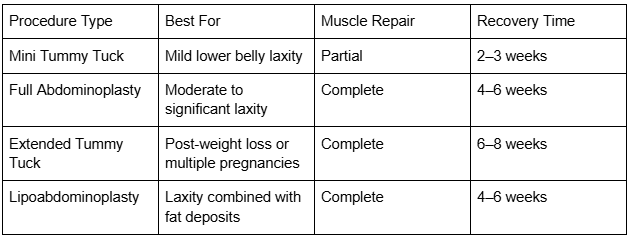
Types of Tummy Tuck After Pregnancy
No two postpartum bodies are identical. The right procedure depends on how much skin laxity exists, the severity of muscle separation, and what your broader body contouring goals actually look like.
Mommy Makeover Options Worth Considering
Combining procedures in a single surgical session can dramatically improve overall outcomes. Research published in 2023 confirmed that combined surgery proved not to be inferior in terms of patient safety, while the treatment group showed considerable superiority in body-image perception and overall patient satisfaction. Pairing a tummy tuck with breast surgery or liposuction delivers more balanced, comprehensive post-pregnancy body contouring results all within one recovery window.A mommy makeover is not a single standardised operation, and the procedures included should reflect the patient's anatomy, concerns, medical history and future plans. Those researching mommy makeover surgery in Houston can review how tummy tuck breast surgery and liposuction may be combined, while a qualified consultation can help determine whether a combined approach or separate procedures may be appropriate.With the right procedure chosen, the natural next focus becomes recovery.
Post-Surgery Recovery Roadmap
Recovery from post-pregnancy body contouring surgery is far more manageable than most people anticipate. The majority of mothers are moving gently within 24 to 48 hours post-op, though full activity takes considerably longer to safely resume.
Swelling, Scarring, and Setting Realistic Expectations
Swelling diminishes significantly around the 4 to 6 week mark, but final results often take several months to fully emerge. Scars are typically strategically placed low, along the bikini line, and fade substantially over time with proper care. Wearing your compression garment consistently during early recovery isn't optional. It genuinely matters for minimizing swelling and supporting tissue as it heals.
Understanding what recovery actually feels like is empowering. But what you do before surgery shapes the outcome just as powerfully.
Pre-Op Preparation Essentials
Reaching a stable weight, stopping smoking at minimum six weeks prior to surgery, and finishing breastfeeding are non-negotiable prerequisites. Equally critical arrange reliable childcare support for at least the first two weeks of recovery. This is one area where underestimating your needs can seriously affect both your healing and your stress levels.
Choosing a Surgeon You Genuinely Trust
Board certification matters. A strong patient portfolio matters. Transparent consultations where your surgeon actually listens matter enormously too. Ask specifically about technique details, like whether progressive tension sutures are used for a drain-free recovery experience. These details directly shape how comfortable your healing process will be.
Solid preparation sets everything else in motion. But protecting your results long-term requires equal intentionality afterward.
Supporting Long-Term Results Through Lifestyle
Sustaining the gains from mommy tuck surgery comes down to consistency. Balanced nutrition, progressive core-strengthening exercises introduced gradually, and a thoughtful skincare routine all contribute to outcomes that genuinely last.
Can You Become Pregnant Again After a Tummy Tuck?
Physically, yes, it's possible. But another pregnancy can re-stretch repaired muscles and skin, potentially reversing everything that was surgically restored. Research shows the mean time between abdominoplasty and a subsequent pregnancy was 3.75 years. If completing your family first isn't an option, at a minimum, have that conversation candidly with your surgeon before proceeding.
What Mothers Are Really Asking About Post-Pregnancy Tummy Tucks
How common is a tummy tuck after pregnancy?
Postpartum abdominoplasty, or tummy tucks after pregnancy, has become extremely common, now one of the most popular procedures for new mothers, and is included in most "mommy makeover" plans. However, getting a tummy tuck immediately postpartum is not recommended, especially if you delivered via C-section.
Is it okay to lose 20 lbs after a tummy tuck?
This is unique to each individual, as genetics plays a large role in how your body accommodates extra fat and skin. If someone who's had a tummy tuck loses ten, twenty, or even thirty pounds after their procedure, their skin may shrink nicely enough to maintain their results.
Will insurance cover a tummy tuck after pregnancy?
Standard cosmetic tummy tucks are rarely covered by insurance. However, if diastasis recti correction is documented as medically necessary, particularly when causing back pain or functional impairment, partial coverage may be possible. Always verify with your provider before assuming costs.
Taking the Next Step Toward Feeling Like Yourself Again
Pregnancy is extraordinary. Genuinely. But the changes it leaves behind don't have to become permanent fixtures in how you feel every time you look in the mirror. Tummy tuck after pregnancy, whether pursued on its own or as part of a broader post-pregnancy body contouring plan, offers a medically grounded, lasting path back to a body that actually functions and feels like yours again.
The emotional and physical benefits are real. The techniques available today are safer and more refined than ever before. If you're ready to explore what's possible for your specific situation, a consultation with a board-certified surgeon is the most important single step you can take toward moving forward with genuine confidence.
