
Moving Heavy Loads, Lighter Hearts: A Dad's Guide to Denver Relocations
Denver gets a fresh coat of snow one day and blazing sunshine the next. It's a city that doesn't warn you. And if you're a dad about to move your family into it, that unpredictability can feel a little too familiar.
Relocating with a family is not just a logistics problem. It's a full-body sport, balancing the weight of a sectional sofa with the weight of keeping everyone calm, on schedule, and actually looking forward to the new chapter.
This guide covers:
How to handle heavy furniture and specialty items without wrecking your back or your floors
Denver neighborhood intel that genuinely matters for families
How to keep the emotional side of the move from derailing the practical side
TL;DR
Plan at least 8 to 12 weeks out. Denver family moves reward early preparation above everything else.
Heavy items need the right equipment. Disassemble what you can, use dollies and moving straps, and know when to bring in professionals.
Denver has distinct neighborhood personalities. Match your choice to your kids' age, school priorities, and commute reality.
Keeping your kids emotionally involved in the move reduces stress on everyone, including you.
Hiring a licensed, insured mover removes the biggest risk factor from a family relocation.
Why Denver Moves Demand a Unique Strategy
Denver is not a standard metropolitan city to move into. At 5,280 feet above sea level, the air is thinner, which means physical exertion hits harder than expected. This matters more than most moving guides acknowledge.
Lifting a 200-lb armoire at sea level is taxing. Doing it at altitude, with less oxygen per breath, is a different sport entirely. Dads planning a DIY move in Denver need to factor this in when planning crew size, pacing, and break frequency.
Beyond the altitude, Denver's weather is genuinely unpredictable. According to the National Weather Service, the city can swing from 60°F sunshine to a full snowstorm within the same afternoon. Planning your move-in date around a Denver weather forecast alone won't cut it. Build buffer days into your timeline and treat weather flexibility as a non-negotiable part of the plan.
The Real Weight Isn't Always the Furniture
Every dad knows that moving day is less about boxes and more about managing a dozen emotional fires at once. The kids are unsettled. Your partner is anxious. And you're the one directing the crew, answering questions, and somehow not losing the box labeled "important documents."
The emotional load is real, and ignoring it makes the physical job harder.
Here's what actually works for family moves:
Talk to your kids before the move, not on move day. Give them a concrete role: packing their own room, choosing items for an "open first" box, or decorating their box labels with markers. Involvement reduces anxiety.
Keep routines intact as long as possible. Breakfast time, bedtime, after-school activities. Familiarity becomes the anchor when everything else is in flux.
Designate a "safe zone" on move day: a room or corner where the kids and any pets are set up with entertainment, snacks, and familiar items. This keeps them away from hazards and gives you mental breathing room.
Give yourself permission to feel it too. Dads often absorb the family stress silently. Delegating more to the moving crew, taking a short walk, or simply sitting down for five minutes is not slacking.
The American Psychological Association recognizes that major life transitions like relocation rank among the most psychologically taxing events adults experience. Knowing this doesn't make it easier, but it makes your reaction to it far more manageable.
Your Denver Dad Moving Checklist
There is a direct relationship between how early you start planning and how calm move day actually feels. Here is a practical timeline built specifically for family relocations.
10 to 12 Weeks Out
Research Denver neighborhoods based on school zones, commute distance, and outdoor access
Get on childcare and school waitlists early (Denver Public Schools uses a SchoolChoice enrollment system requiring advance research)
Request quotes from licensed, insured moving companies
Start decluttering room by room, because less volume equals a lower moving cost
6 to 8 Weeks Out
Confirm your moving company and lock in the date
Begin packing items used infrequently: seasonal decor, books, spare linens
Transfer school and medical records to the new location
Notify utility providers, banks, insurance carriers, and the DMV of your address change
2 to 4 Weeks Out
Pack room by room with color-coded labels (blue for bedrooms, red for kitchen, green for garage)
Disassemble large furniture pieces that require it
Build an "open first" box per family member with 48-hour essentials: change of clothes, toiletries, phone charger, comfort item
Confirm elevator reservations or parking access with your building if applicable
Moving Week
Charge all devices the night before
Pack each child's comfort kit separately: favorite toy, snacks, a small blanket, something familiar
Walk through every room with a checklist before the truck leaves
Arrange childcare or designate a trusted person as a "kid supervisor" specifically for move day
Moving Heavy Items Without Ending Up in Urgent Care
Heavy furniture is where DIY moves most often go sideways. A misjudged corner, a missed step, or an overconfident lift is all it takes. Here is how to approach heavy items the right way.
Measure Everything First
Before anything gets lifted, measure the furniture and measure every doorway, hallway, and stairwell it needs to pass through. Nothing slows a move down like discovering a sectional sofa won't clear a 30-inch doorway after three people have already picked it up.
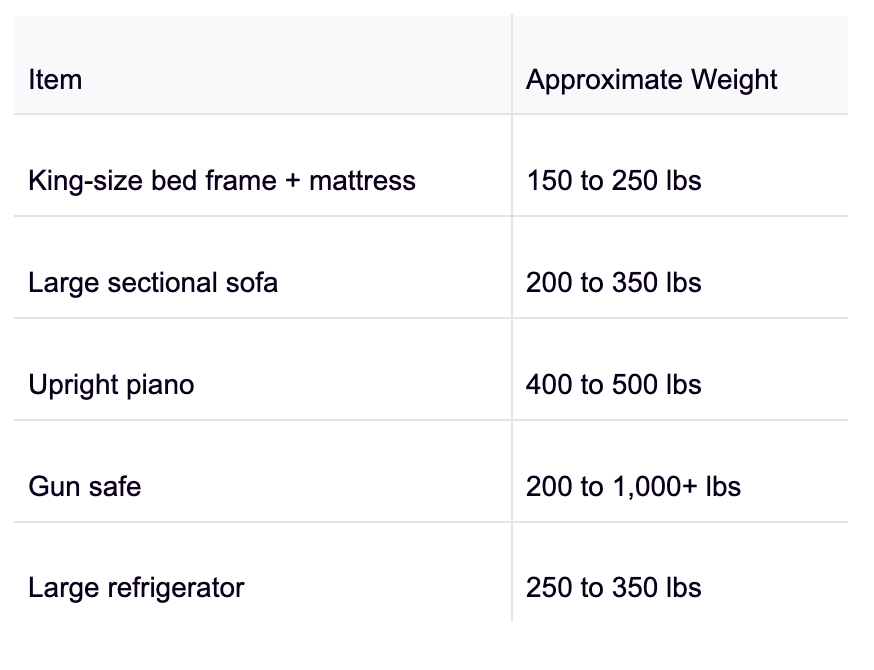
A quick reference for common heavy items:
Use the Right Equipment
Never attempt a heavy furniture move without proper tools. The right equipment protects your body, your floors, and the item itself.
Furniture sliders: Place under the legs of heavy pieces and glide across hardwood or tile without scratching. Roughly $10 to $20 and worth every dollar.
Moving straps: Distribute weight across your legs and shoulders instead of your lower back. Essential for stair moves.
Dollies and hand trucks: A four-wheel dolly handles wide, bulky pieces. A hand truck is better for stacked or tall items.
Moving blankets and stretch wrap: Protect surfaces during transport and keep disassembled hardware organized.
Disassemble Before You Lift
Take apart anything that comes apart. Bed frames, sectional sofas, tables with removable legs, shelving units. Store all hardware in labeled zip-lock bags and tape them directly to the furniture piece they belong to. This reduces weight, protects door frames, and makes reassembly at the new home much faster.
Proper Lifting Technique
Bend at the knees, not the waist. Keep the load close to your body. Drive the lift from your legs, not your back. Move your feet when you need to turn direction. Never twist mid-carry.
For stairways: the stronger person stands at the bottom when carrying upward, and at the top when carrying downward. The top person controls the descent and sets the pace.
Know When to Call In a Professional
For anything over 200 lbs, for specialty items like pianos, pool tables, large safes, or fine art, or for moves involving multiple floors and tight entry points, bringing in trained professionals is not admitting defeat. It's the smart play.
The risk of personal injury or damage to a high-value piece far outweighs the cost of a specialty crew. Pianos and pool tables, in particular, require specific disassembly knowledge and equipment that goes well beyond general moving experience.
Choosing the Right Denver Neighborhood for Your Family
Denver is a collection of distinct communities with very different personalities. Getting this decision right before the move saves you the headache of a second relocation within two years.
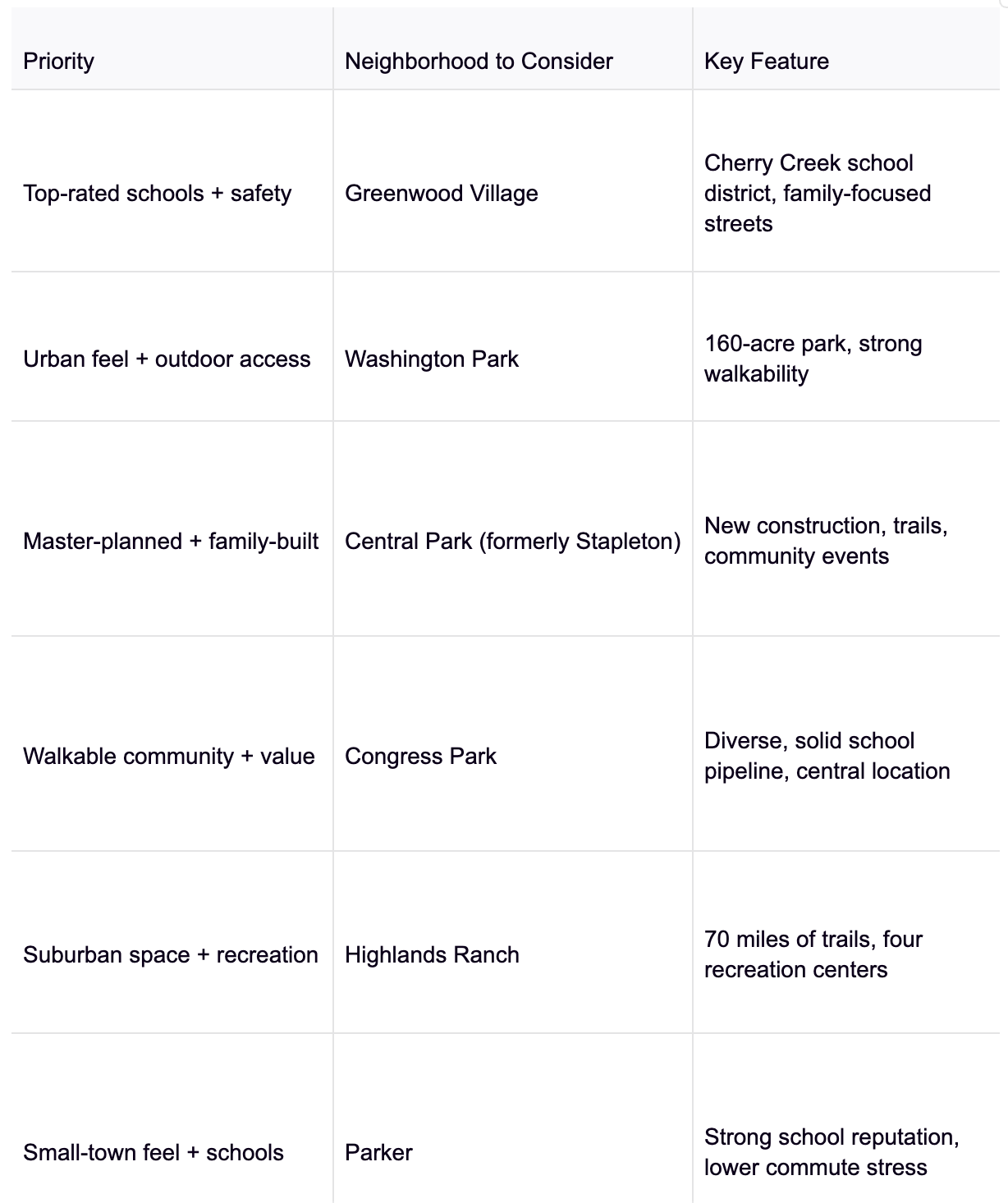
Pro tip: Do not just drive through a neighborhood on a Saturday afternoon. Walk it on a weekday. Test the school drop-off route during morning traffic. See what the park looks like at 4 PM. The on-the-ground reality tells you far more than any ranking list.
What a Full-Service Denver Mover Actually Takes Off Your Plate
If you have been managing every item on this guide's checklist yourself, here's the honest question worth asking: should you be carrying all of it alone?
For complex family moves, especially those involving specialty items, multi-floor access, or a tight scheduling window, working with a full-service professional moving company changes the entire shape of the day.
Move 4 Less is a Denver-area professional moving company operating since 2004 with over 150,000 completed moves across residential, commercial, and specialty categories. For families relocating in and around Denver, Move 4 Less offers:
Residential moving services for houses, condominiums, apartments, and townhomes
Specialty moving services for pianos, pool tables, safes, and fine art
Packing and unpacking services coordinated around your move plan
Short-term and long-term storage, including climate-controlled and vaulted storage options
Labor-only assistance for families who have their own truck but need trained hands for loading and unloading
Pre-move assessments and written estimates so move day holds no surprises
Move 4 Less holds a ProMover certification, carries BBB accreditation, and operates under federal license USDOT #1251663. Their Denver location sits at 1030 W Ellsworth Ave, Suite E, Denver, CO 80223, reachable at (720) 575-4988.
Here's what one Denver customer experienced firsthand:
"Ivan, Martin, and another Ivan moved me today within Denver. They were friendly, professional, and fast. They were very careful with all my items and did more than I expected. Two big thumbs up five stars all the way!!!" – Eric Person (https://maps.app.goo.gl/FnHtfhY2r5cJiVkw5)
Denver Is Worth Every Box You Carry
Over 300 days of annual sunshine, world-class outdoor access, strong school options, and a community culture built around being active and staying connected. Denver rewards the families who commit to it.
The move is just the threshold. Here's what carries you across it well:
Start early and plan in detail. The 10- to 12-week head start pays dividends all the way to move day.
Respect heavy items. Measure everything, use the right equipment, and hire specialty crews for the big pieces.
Involve your kids from the beginning. Their buy-in smooths friction on every other front.
Choose your Denver neighborhood based on your actual daily life, not just an online ranking.
The goal isn't a perfect move. It's a move your family looks back on and says they handled it together.
FAQs
How far in advance should I book movers for a Denver family relocation?
Booking 8 to 12 weeks in advance is the recommended window, especially for summer moves when demand peaks significantly. Earlier bookings give you better access to full-service options including packing support, storage coordination, and specialty item handling.
What heavy items typically need a specialty moving crew in Denver?
Pianos, pool tables, heavy safes, and fine art generally require specialty handling with purpose-built equipment and trained crews. Attempting these without the right experience substantially increases the risk of property damage or serious injury.
Does Denver's altitude actually affect the effort needed to move?
Yes, it does. At 5,280 feet above sea level, there is measurably less oxygen per breath. Heavy lifting fatigue sets in faster than it would at sea level. If you are planning a DIY move, increase your crew size, build in more rest breaks, and stay well-hydrated throughout the day.
How do I keep kids calm and cooperative during a Denver relocation?
Give them a specific job before and during the move, such as packing their own room or building a personal "open first" comfort kit. On move day, set up a designated space with snacks and entertainment. Re-establishing consistent meal and bedtime routines quickly after the move makes the biggest difference in the adjustment period.
What should I prioritize when choosing a Denver neighborhood for my family?
Focus on school district quality, proximity to parks and outdoor activities, commute time to your workplace, and neighborhood safety ratings. Visiting at different times of day, especially during the school drop-off rush and weekday afternoons, gives you a far more accurate read than any online review.
