
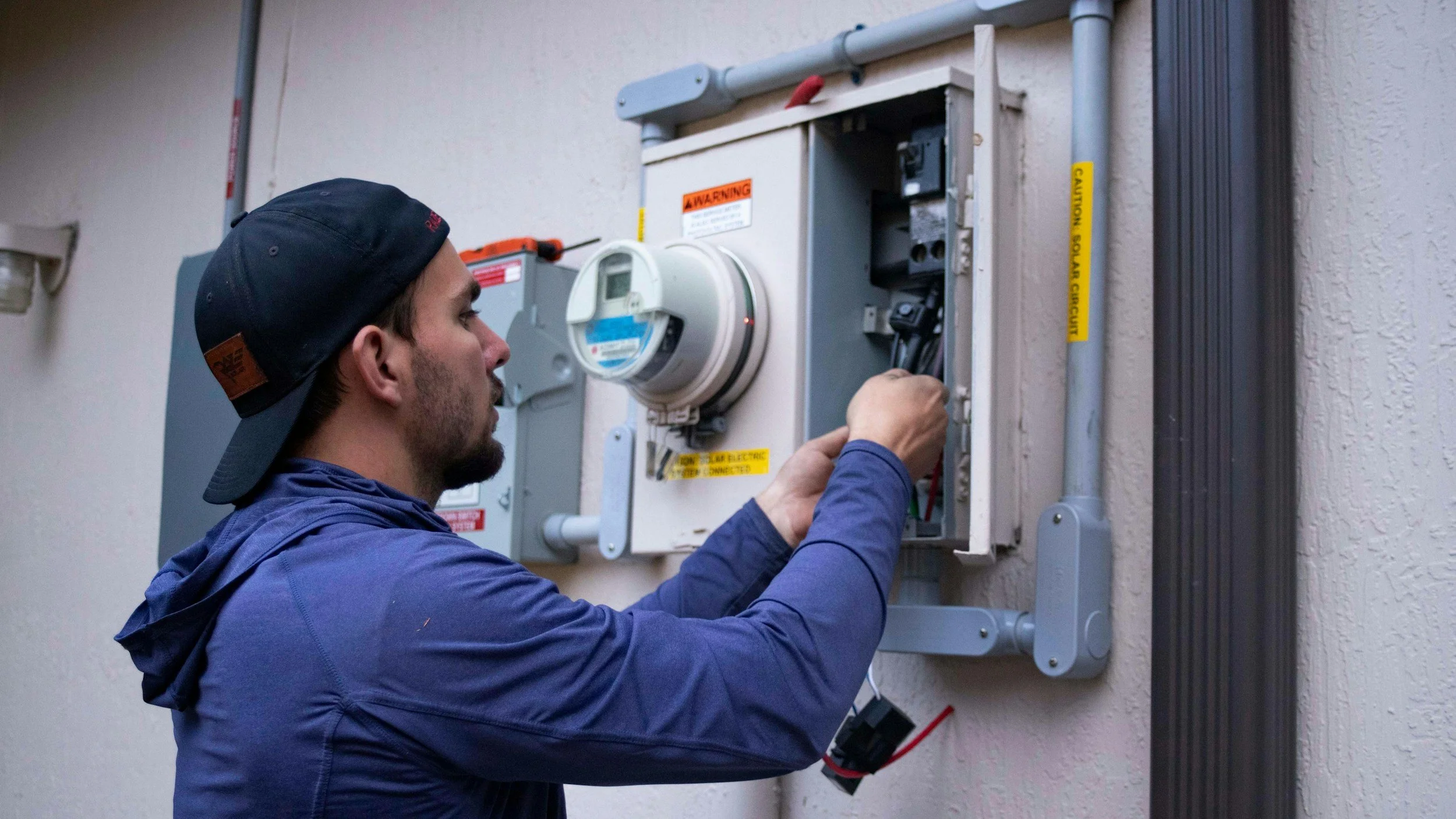
It is November 2026, the furnace is running again, and the garage is crowded with space heaters, holiday lights and chargers nobody unplugged. Many dads keep a running list of things to fix before winter, and electrical items slide to the bottom because nothing looks wrong. This Q&A, offered by Veteran Electric KC, a Kansas City electrician, sorts the hazards worth fixing now from the ones that can wait. The goal is a house that lets you rest.
For context on who is answering: Veteran Electric KC is a veteran-owned and operated licensed electrician founded in 2025 by Nathan Bowman and based in North Kansas City, Missouri, serving homes and businesses across the Kansas City metro on both sides of the state line. Its website lists residential electrical repairs, panel upgrades, lighting installation, generator and EV charger installation, surge protection, home rewiring and electrical inspections, along with 24/7 emergency service.
Which electrical hazards should a dad fix in the house right now?
Start with anything that heats, trips, buzzes or smells. Those signs mean electricity is doing something it was not designed to do, and they deserve attention before any cosmetic project on the list. Winter raises the stakes because heaters, lighting and cooking all add load while the house is sealed up tight. Here is the short version:
Outlets or switch plates that feel warm or look discolored
Breakers that trip again after you reset them
A burning or hot-plastic smell near the panel or an outlet
Lights that flicker or dim when a large appliance starts
Extension cords or power strips doing a permanent job
The first four belong to a licensed electrician. The last one is yours to fix this weekend, usually by moving a heater or appliance to a better location, unplugging what you do not use, and retiring any cord that is frayed or hot to the touch.
Why does electrical safety belong on a wellness list?
Because background worry is a real cost, even when nothing ever goes wrong. A house you only half trust asks for low-level attention every night: the odd smell, the breaker that keeps tripping, the space heater you keep eyeing before bed. Fixing the cause turns vague unease into a closed task, the same way a physical or a dentist visit does.
Most wellness habits for dads revolve around sleep, movement and stress. A home that is not quietly adding to the stress load supports all three. It also protects the routines you are building, since a morning workout or a calm evening does not survive a tripped main breaker at midnight.
What can you check yourself in ten minutes?
A slow walk-through with a flashlight covers most of it. Press the test button on the ground-fault outlets in the kitchen, bathrooms and garage, feel the switch plates after the dishwasher or dryer has run, glance along cords for cracks, and listen near the panel for buzzing. Write down what you notice and when it happens, because patterns help an electrician find the cause faster.
Warm outlet sign: Loose or overloaded connection, Stop using it, call an electrician
Repeated tripping sign: Overloaded or faulty circuit, Unplug loads, call an electrician
Flickering lights sign: Loose connection or heavy load, Log when it happens, book an inspection
Permanent extension cord sign: Too few outlets in the room, Plan added outlets with a pro
In plain terms, a warm outlet, a breaker that keeps tripping and lights that flicker all point to a connection or circuit problem that needs a licensed professional, while a permanent extension cord is a sign the room needs more outlets than it has.
Do the panel and surge protection really matter?
Yes, because they sit at the center of everything else in the house. The National Electrical Code, published as NFPA 70 by the National Fire Protection Association, is revised on a three-year cycle, and the 2023 edition is the most recent full edition adopted in many jurisdictions. Since the 2020 edition, section 230.67 of the code has required a surge-protective device for services supplying dwelling units, including when a service is replaced.
That requirement reflects how much sensitive electronics a modern household runs. Veteran Electric KC states on its website that whole-home surge protectors are hardwired at the panel and typically rated 50kA to 80kA. UL 1449 is the UL safety standard for surge protective devices, so it is the marking worth looking for on any protector you consider.
On the panel itself, the company recommends 200-amp service for most homes and installs 100, 200 and 400 amp services. It says most panel upgrades finish in a single day, and that it coordinates the meter disconnect and reconnect with Evergy, the electric utility serving most of the Kansas City metro.
When is it a weekend project, and when does it need a licensed electrician?
Swapping a cover plate, resetting a ground-fault outlet, changing a bulb and tidying cords are weekend jobs. Anything inside the panel, any new circuit and any fault that keeps coming back should go to a licensed professional. Much of that work requires a permit and an inspection, which is part of what you are paying a professional to handle.
Veteran Electric KC says it pulls the permit and books the inspection as part of the job, starts every job with an estimate, and gives the price in writing before work begins. It does not quote a flat rate sight unseen. That written-first habit is a fair test for any contractor you are weighing, veteran-owned or not. The About page names Integrity, Precision, Service and Excellence as the company's values, which is a reasonable standard to hold anyone working inside your walls to. Its named service areas include Kansas City, Gladstone, Liberty, Kearney, Smithville, Platte City, St. Joseph and Lee's Summit, among others, so a local call is usually possible for homes across the metro.
What about EV chargers and garage circuits?
Treat a charger as its own project instead of an add-on to an existing outlet. NEC Article 625 covers electric vehicle charging equipment and treats EV charging as a continuous load, so the branch circuit is sized at 125 percent of the charger's rated load. That sizing rule is the reason a charger plugged into whatever outlet happens to be nearby is a poor plan, and why the panel's capacity gets checked first.
The same thinking applies to a garage workshop, a chest freezer or a new heater. Each addition draws from the same panel, so a dad who adds loads one at a time without a look at the whole system may be building the warm-outlet problem he is trying to avoid. An inspection looks at that whole picture at once, which is more useful than patching one symptom after another and wondering what is next.
A calmer house by spring
Pick one item from the list this week, whether that is the warm outlet, the stubborn breaker or the cord that has been doing a permanent job. Electrical work rewards small, early fixes, and each one removes a little more background noise from your evenings. A house you trust is one of the quieter wellness upgrades available, and it tends to pay off in the same place the rest of your habits do: sleep.
