

Addiction can affect more than one person. It can affect a father's health, his children, his partner, and his whole family. A father who is trying to stop using drugs or alcohol may feel stress, guilt, fear, or sadness.
Recovery is not only about stopping drug or alcohol use. It also means caring for mental health, learning healthy ways to handle stress, and building better family ties. With treatment, therapy, and support, fathers can learn to manage hard feelings and work toward a healthy life.
Family support can also help during recovery. A safe home, honest talks, and help from loved ones can make a big difference. But fathers need care for their own health, too. With the right addiction treatment and mental health care, dads in recovery can work toward a better future for themselves and their families.
Need Help Now?
If you or someone you love is facing a mental health or substance use crisis, help is available. In the United States, call or text 988 for crisis support. Call 911 if someone is in danger or needs urgent medical help.
How Addiction Can Affect Fathers and Their Families
Drug and alcohol use can affect how a father feels, thinks, and acts. It can also change how he treats his partner and children. Some fathers may find it hard to stay calm, keep promises, or take part in family life.
Addiction may lead to:
Mental Health Problems: Stress, fear, sadness, and guilt may become harder to handle.
Family Problems: Drug or alcohol use may lead to fights, poor talks, and loss of trust.
Money Problems: Spending money on drugs or alcohol may make it hard to pay bills and buy food.
Parenting Stress: A father may find it hard to care for his children or take part in their daily lives.
Feeling Alone: Shame or fear of being judged may cause a father to stay away from family and friends.
Poor Physical Health: Long-term drug or alcohol use can affect sleep, energy, and overall health.
These problems do not mean a father cannot change. Recovery gives him a chance to care for his health, fix family ties, and make safer choices.
Why Mental Health Matters During Addiction Recovery
Mental health is an important part of addiction recovery. Some fathers may deal with depression, anxiety, or past trauma while also facing drug or alcohol problems. Others may feel stress from work, money, or family life. These problems can make recovery harder. They may also make it harder to stay away from drugs or alcohol.
The Substance Abuse and Mental Health Services Administration (SAMHSA) calls it a co-occurring disorder when a person has both a mental health condition and a substance use disorder. These two problems may need care at the same time.
Fathers with both conditions may need therapy, medicine when needed, and care from trained health workers. This type of care is also called dual diagnosis treatment. Good mental health care can help fathers deal with stress, understand their feelings, and manage cravings. It can also help them build healthy habits and improve family ties.
Mental Health and Addiction Recovery: U.S. Data
Data from SAMHSA and the Centers for Disease Control and Prevention (CDC) show how mental health and drug or alcohol problems can affect adults and families.
21.2 million adults: In 2024, about 21.2 million U.S. adults had both a mental illness and a substance use disorder. This figure comes from SAMHSA's 2024 National Survey on Drug Use and Health (NSDUH). It shows why some people need care for both problems.
52.9% of health center visits: In 2023, 52.9% of health center visits by adults with opioid use disorder also had a mental health diagnosis.
36.3% and 33.8%: The same CDC report found that 36.3% of these visits had a mood disorder diagnosis. Another 33.8% had an anxiety disorder diagnosis.
These last three figures are based on health center visits, not all adults with opioid use disorder. They come from the CDC National Center for Health Statistics, Health Center Visits by Adults With Opioid Use Disorder: United States, 2023.
Common Mental Health Challenges Fathers May Face
Recovery can bring many changes. Fathers may feel happy, worried, or sad as they work through treatment and rebuild family ties.
Some common challenges include:
1. Guilt and Shame
Fathers may feel bad about past actions or how addiction hurt their families. They may wish they had made better choices. Therapy programs can help fathers talk about these feelings and focus on making better choices.
2. Stress and Anxiety
Worries about money, work, family, and staying sober can cause stress and fear. Healthy habits and help from others can make these feelings easier to handle.
3. Depression and Loneliness
Some fathers may feel sad, tired, or alone during recovery. They may lose interest in things they once enjoyed.
Talking to a mental health worker or joining a support group can help. Fathers who have these signs should speak with a doctor or therapist.
4. Fear of Relapse
Fathers may worry about using drugs or alcohol again. A relapse prevention plan can help them spot triggers and know when to ask for help.
5. Pressure to Handle Everything Alone
Some fathers may feel that asking for help makes them weak. They may hide their feelings because they think they must solve every problem on their own.
But asking for help is a healthy step. Fathers can learn more about men's mental health and find safe ways to handle stress and hard feelings.
Mental Health and Addiction Recovery for New Fathers and Single Dads
Becoming a father can bring joy, but it can also bring new stress. New and expectant fathers may worry about money, work, family needs, and caring for a baby, especially when dealing with addiction or a mental health problem.
New and Expectant Fathers
A new baby can change daily life, bringing less sleep, more tasks, and new worries about family care. Talking with a therapist or someone they trust can help fathers manage stress and care for their own health. For fathers dealing with substance use, addiction treatment for fathers can also provide support as they adjust to parenthood and work toward recovery.
Paternal Depression and Men's Mental Health
Depression can affect fathers, too, and signs may include sadness, anger, tiredness, poor sleep, loss of interest, or trouble focusing. Fathers who notice these signs should talk to a doctor or mental health worker about care, which may include therapy or medication; learn more about men's mental health and treatment.
Custody and Child Welfare Concerns
Some fathers may worry about losing custody of their children or being apart from them because of past drug or alcohol use. They can speak with a qualified lawyer about their rights and talk with their care team about treatment, while keeping in mind that treatment does not promise a certain result in a custody or child welfare case.
Single Fathers in Recovery
Single dads may need to work, care for their children, pay bills, and attend treatment, which can make recovery harder. Trusted family, friends, and support groups may help with child care and daily tasks, while a care team can help plan treatment around their needs.
How Fathers Can Take Care of Their Mental Health During Recovery
Fathers need to care for their minds and bodies while working toward recovery. Parenting in addiction recovery can bring extra stress, but simple daily steps can help fathers build healthy habits, support their families, and stay on track.
1. Talk to a Mental Health Professional
A therapist or counselor can help fathers understand their feelings and mental health needs. They can also teach ways to manage stress, anger, guilt, and drug or alcohol cravings. Treatment may include one-on-one therapy, group therapy, family therapy, addiction counseling, or medication when needed.
2. Build Healthy Daily Habits
Healthy habits can help fathers feel better and stay focused during recovery. They can get enough sleep, eat healthy meals, drink water, and take short walks. Making time to rest and following a daily plan can also support their health.
3. Join a Support Group
Support groups give fathers a safe place to talk with others who have faced drug or alcohol problems. They can share their stories and learn from people who understand what recovery can feel like. These groups can also offer support during hard days and help fathers feel less alone.
4. Learn Healthy Ways to Handle Stress
Fathers can learn simple ways to manage stress during recovery. They can take walks, listen to music, write down their feelings, or talk with someone they trust. Slow breathing can also help them feel calmer when they are upset or worried.
5. Set Small and Clear Goals
Recovery takes time, so fathers do not need to change everything at once. They can start with small goals, such as going to therapy, keeping family plans, and avoiding people or places linked to past drug or alcohol use.
How Fathers Can Support Their Families During Recovery
A father's addiction recovery can affect the whole family. His children and partner may feel hurt, scared, or unsure about what will happen next.
Fathers can support their families by showing love, being honest, and making healthy changes. Their words and actions can help build trust over time.
1. Be Honest With Loved Ones
Fathers should talk openly with their families about their recovery and the steps they are taking to get better.
2. Listen to Their Children's Feelings
Fathers should listen to their children's worries, remind them that addiction is never their fault, and help them feel safe.
3. Spend Time Together
Simple activities like eating meals, reading books, playing games, or taking walks can help fathers build stronger family bonds.
4. Keep Promises and Build Trust
Fathers can rebuild trust by being honest, keeping promises, and being there for their children.
5. Respect Family Feelings and Boundaries
Fathers should give family members time and space to heal and consider family therapy to help them talk about past hurt.
The Role of Family Support in Addiction Recovery
Family support can help fathers feel loved and cared for during addiction recovery. But addiction can also affect children and other people at home. A 2019 CDC report found that 9.7% of U.S. children aged 5–17 had ever lived with someone who had an alcohol or drug problem. This data came from the National Health Interview Survey and was reported in NCHS Data Brief No. 416.
This figure is based on 2019 data. It is not a current yearly estimate. It shows that drug and alcohol problems can affect the whole family, not only the person using them. Family members can help by learning about addiction, joining family support groups, and building healthy daily habits.
Fathers may also need help from doctors and therapists. Loved ones may need their own counseling or support groups to care for their mental health. We Level Up offers a family support program that helps loved ones learn about addiction, talk about their concerns, and find ways to support recovery.
How Fathers Can Support Their Children During Recovery
A father's recovery can help build stronger family ties. Children need love, care, and a safe home. Fathers can support them by taking care of their health, speaking with kindness, and making good choices. They should take responsibility for their actions and set clear rules at home.
Asking for help and spending time with their children can also help build trust. Fathers should listen when their children share their thoughts or fears. They should also remind their children that addiction is not their fault.
How Family Therapy Can Help Fathers and Their Loved Ones
Addiction can cause fights, stress, and hurt feelings at home. It can also make it hard for family members to trust each other or talk about their problems. Family therapy gives fathers and their loved ones a safe place to talk, share their feelings, and learn to understand each other better.
A trained therapist can help families listen, speak with care, set healthy rules, and build trust over time. Fathers can also learn how to support their loved ones and take part in family life during recovery. Each family member may need time to heal, and no one should feel forced to forgive before they are ready.
Creating a Relapse Prevention Plan
Recovery can have hard days. Stress, cravings, family problems, and contact with people linked to past drug or alcohol use may raise the risk of relapse.
A relapse prevention plan helps fathers prepare for these moments.
A plan may include:
Know the Triggers: Notice people, places, feelings, or events that may lead to drug or alcohol use.
Find Healthy Ways to Cope: Use safe habits, therapy skills, and help from trusted people.
Stay in Treatment: Attend therapy and medical visits as advised.
Avoid Risky Situations: Stay away from places or people linked to past substance use when possible.
Know Who to Call: Keep the contact details of a doctor, therapist, or trusted support person.
Ask for Help Early: Talk to the care team when cravings or stress become hard to manage.
Treatment Options for Fathers During Addiction Recovery
Every father has different needs during addiction recovery. Some may need medical help when they stop using drugs or alcohol. Others may need a live-in program with daily care and support.
A doctor or treatment team can help choose the right level of care. The choice may depend on drug or alcohol use, health needs, mental health, and risk of withdrawal.
The table below explains common types of addiction treatment.
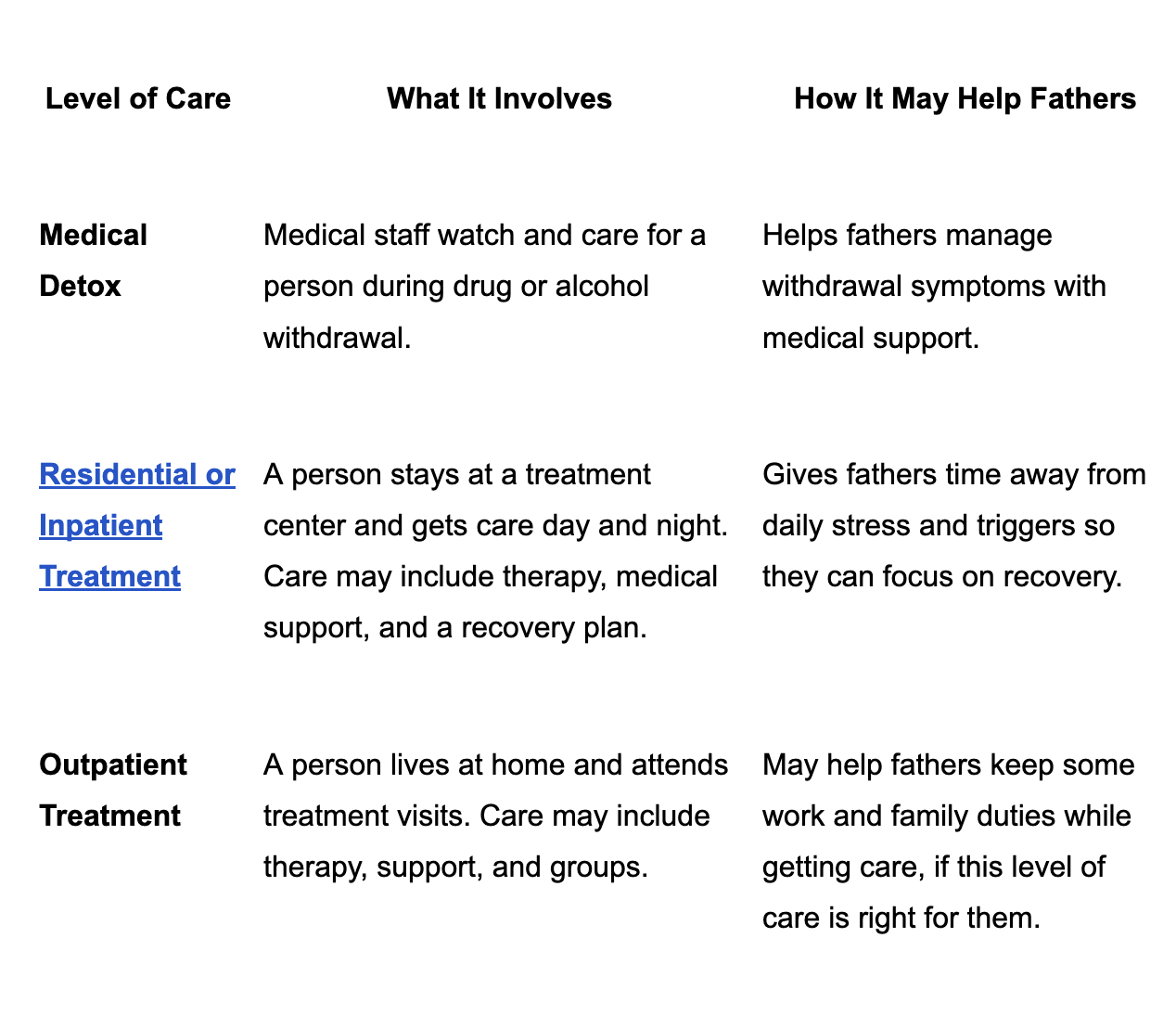
Other Types of Recovery Support
Some people may also need other types of care during recovery.
Relapse Prevention: Helps people spot triggers, manage cravings, and plan what to do during hard times.
Medication-Assisted Treatment (MAT): Uses medicine and counseling for some substance use disorders, especially opioid use disorder. A doctor decides if this care is right for the person.
We Level Up treatment availability: We Level Up offers medical detox and inpatient or residential treatment. PHP, IOP, and outpatient levels of care are not currently offered as standard services. Programs and services may vary by location. Contact the admissions team to learn what care is available. To learn more about treatment settings, read our guide to inpatient vs. outpatient rehab.
Understanding Treatment Costs and Insurance
The cost of addiction treatment can worry fathers who need to care for their families. Work, child care, bills, and other needs can make it hard to plan for treatment. Costs may depend on the type of treatment, how long care is needed, the services provided, the treatment center, and health insurance coverage.
Health insurance may help pay for some addiction and mental health care, but each plan has its own rules and limits. Fathers can ask the treatment team about covered services, deductibles, other costs, payment plans, treatment length, and how care may affect work and family duties. We Level Up can help people check their insurance benefits. Visit our insurance verification page to learn more about possible coverage.
When Should Fathers Seek Professional Help?
Fathers should talk to a health professional when drug or alcohol use starts to affect their health, work, or family life. They should also seek help if they have strong cravings, cannot stop using, or find it hard to manage daily stress. Getting help early can make it easier to understand their needs and find the right support.
Other signs include feeling sad or worried most days, having trouble sleeping, getting angry more often, avoiding family and friends, missing work or family duties, or using drugs or alcohol to cope with hard feelings. These changes can affect both the father and his loved ones. A doctor or mental health worker can check his needs, discuss treatment options, and help him take the next steps toward recovery.
Get Help for Mental Health and Addiction at We Level Up
Addiction can be hard for fathers and their families. But they do not have to face it alone. With the right care, fathers can work on their mental health, build healthy habits, and improve family ties. We Level Up offers addiction and mental health treatment for adults who need help. Care may include medical detox, inpatient or residential treatment, therapy, and support for people with both mental health and substance use problems.
Each treatment plan is based on the person's needs. Services may vary by location. If you or someone you love needs help, call (844) 597-1011 to speak with our team and learn about care options. You can also verify your insurance to learn about possible coverage.
Visit our treatment locations to learn more about care in Florida, California, Texas, Washington, and New Jersey.
FAQs About Fathers, Mental Health, and Addiction Recovery
1. How can fathers take care of their mental health during addiction recovery?
Fathers can care for their mental health by going to therapy, joining support groups, getting enough sleep, eating well, and talking with people they trust.
2. How does addiction affect a father's family?
Addiction can lead to stress, money problems, fights, and loss of trust. It may also affect how a father cares for and spends time with his children.
3. Can fathers rebuild trust with their children after addiction?
Yes. Trust can grow over time through honest talks and steady actions. Fathers can start by keeping promises, spending time with their children, and following their recovery plan.
4. Why is family support important during addiction recovery?
Family support can help fathers feel less alone and more willing to keep working on recovery. Loved ones may also help with healthy routines and family therapy.
5. Can family therapy help fathers in recovery?
Yes. Family therapy can help fathers and loved ones talk about their feelings, work through problems, and build better ways to support one another.
6. Can fathers recover from addiction and become better parents?
Yes. With treatment, support, and healthy changes, fathers can work toward recovery and build stronger family ties. Progress takes time, and each person's path is different.
7. What should a father do if he fears relapse?
He should contact his therapist, doctor, or recovery support person. He can also review his relapse prevention plan and stay away from people or places linked to past substance use.
8. How can children support a father in addiction recovery?
Children should not be expected to take care of a parent's recovery. Adults and health workers should provide the needed support, and children can share their feelings with a safe and trusted adult.
Educational Note: This article is for general information only. It does not replace medical advice, diagnosis, or treatment. Addiction and mental health needs differ from person to person. Speak with a qualified health professional to learn about the right care options.
Sources and References
Substance Abuse and Mental Health Services Administration (SAMHSA). (2025). Key Substance Use and Mental Health Indicators in the United States: Results From the 2024 National Survey on Drug Use and Health.
National Center for Health Statistics (NCHS), CDC. (2025). Health Center Visits by Adults With Opioid Use Disorder: United States, 2023.
National Center for Health Statistics (NCHS), CDC. (2021). Disparities in Stressful Life Events Among Children Aged 5–17 Years: United States, 2019.
National Institute on Drug Abuse (NIDA). Common Comorbidities With Substance Use Disorders.
Substance Abuse and Mental Health Services Administration (SAMHSA). TIP 63: Medications for Opioid Use Disorder.
