
How Parents Can Support Better Study Habits at Home
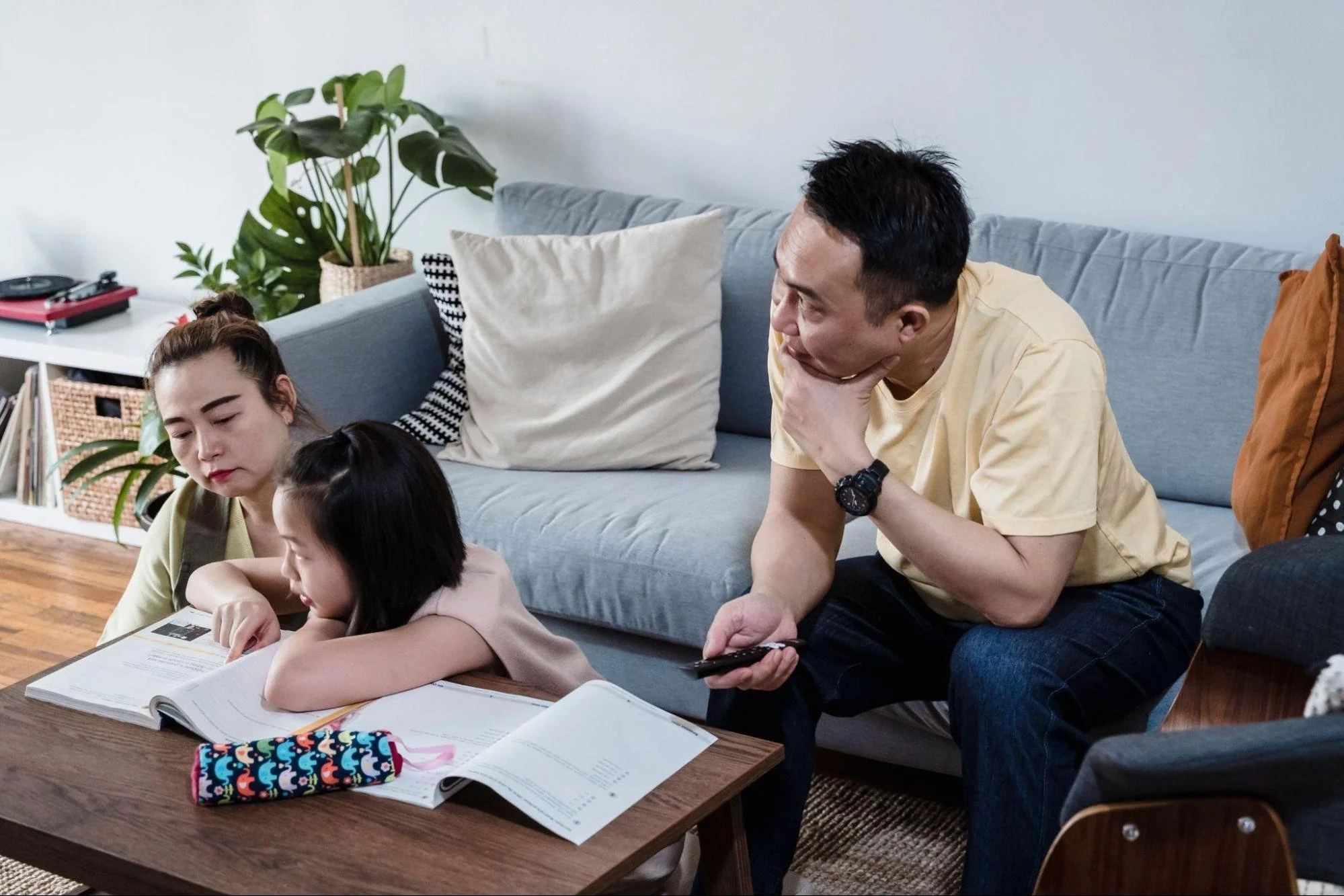
Most parents have experienced the same strange moment.
A child spends six hours "doing homework" and somehow finishes almost nothing. The desk is occupied, the laptop is open, notebooks are scattered around the room, yet very little learning actually happens. It is easy to assume the problem is laziness. Sometimes it is not. Sometimes the child simply has never learned how to study.
Schools teach mathematics, literature, science, and history. They rarely teach students how to manage their attention, organize information, or recover after losing focus. Those skills often develop through trial and error, and many children never receive clear guidance.
That leaves parents in a difficult position. They want to help, but they do not want to become a second teacher.
During late-night searches for academic advice, some parents come across discussions involving KingEssays. In many cases, they are not looking for shortcuts. They are trying to understand why homework has become a daily battle and whether there is a better way to support learning at home.
The challenge is that study problems rarely begin with the assignment itself. They often begin long before a textbook is opened. Distractions build up. Routines disappear. Small frustrations accumulate until every homework session feels heavier than it should.
Many adults remember experiencing something similar when they were students. Sitting at a desk for hours created the appearance of productivity, yet very little information actually stayed in memory.
Parents sometimes underestimate how common this experience is. A child who struggles with studying is not necessarily struggling with intelligence.
At the same time, many parents type phrases such as write my papers into search engines while searching for solutions to academic stress. What they usually need is not someone to complete an assignment. They need a practical system that helps a child develop confidence, consistency, and independence.
The Home Environment Matters More Than Many People Think
There is a tendency to focus on grades because grades are easy to measure. A report card arrives, numbers appear, and everyone reacts.
The environment behind those numbers receives less attention.
A student who studies at a noisy kitchen table surrounded by constant interruptions is working under different conditions than a student with a predictable routine and a quiet space. Intelligence remains the same. The circumstances do not.
Creating a productive home learning environment does not require a dedicated study room or expensive furniture. In many cases, small adjustments create significant changes:
Consistent study hours
Limited phone access during homework
Good lighting
A comfortable chair
Necessary materials within reach
These details seem ordinary. Their cumulative effect is not.
Researchers at the American Psychological Association have repeatedly highlighted the relationship between environmental distractions and reduced concentration. Children often underestimate how much their surroundings influence performance.
Why Motivation Is Often Overrated
Parents frequently ask how to motivate a child. It is a reasonable question, but perhaps not the most useful one. Motivation is unreliable. It appears and disappears without warning. Some mornings a student feels ambitious. Other days even opening a textbook feels exhausting.
Successful learners tend to rely less on motivation and more on routine. An educational coach might compare studying to brushing teeth. Most people do not wake up inspired to brush their teeth. They simply do it because it belongs to the structure of the day.
The same principle applies to effective study habits. When studying becomes attached to a predictable schedule, less mental energy is spent deciding whether to begin.
What Study Habits for Students Actually Look Like
Many adults use the phrase study habits for students without defining what those habits are.
In practice, strong study habits are surprisingly simple.
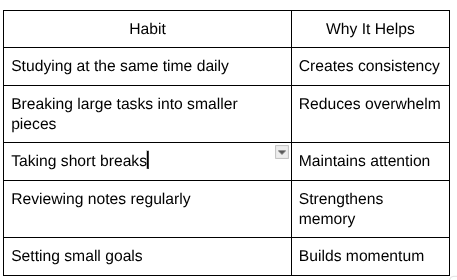
None of these habits appear revolutionary. That is partly the point. Parents sometimes search for dramatic solutions when steady, repetitive behaviors produce the largest long-term improvements.
The Problem With Constant Supervision
A curious pattern appears in many households. The more closely parents monitor every assignment, the less ownership students sometimes feel over their own learning. Of course, younger children need support. A seven-year-old cannot be expected to independently manage deadlines.
Teenagers are different. By adolescence, excessive supervision can accidentally send a message: "You are not capable of managing this yourself." That message often remains unspoken, yet children understand it.
A healthier approach involves gradual responsibility. Instead of asking, "Did you finish your homework?" every evening, parents might ask: "What is your plan for finishing it?" The difference sounds small. It is not. One question checks compliance. The other develops thinking.
How to Help Your Child Study Without Taking Over
Many parents struggle with the balance between support and control. Understanding how to help your child study starts with recognizing that learning belongs to the student, not the parent. Helpful parents often focus on process rather than outcomes.
For example:
Instead of:
"Why did you get a B?"
They might ask:
"How did you prepare for this test?"
Instead of:
"You need to study harder."
They might ask:
"What part felt most difficult?"
These conversations encourage reflection rather than defensiveness. Interestingly, educational researchers from Harvard Graduate School of Education have emphasized that curiosity-driven discussions often create stronger learning behaviors than criticism.
Students become more willing to examine their own habits when they do not feel judged.
The Hidden Role of Boredom
Modern children live in an environment built around stimulation. Videos start instantly. Notifications arrive constantly. Entertainment never feels more than a few seconds away. Studying cannot compete with that. And perhaps it should not.
One overlooked skill is learning to tolerate boredom. Reading a chapter that feels dull. Reviewing formulas repeatedly. Revising an essay for the third time.
These experiences are not exciting. Yet they are essential.
Some of the strongest academic performers are not necessarily more intelligent than their peers. They are simply more comfortable doing things that feel temporarily uninteresting.
Parent Involvement in Education Looks Different Than It Used To
The phrase parent involvement in education often brings certain images to mind: parent-teacher meetings, volunteering at school events, helping with homework.
Those actions still matter. But involvement today also includes something less visible. It includes modeling behavior.
Children notice whether adults read books. They notice whether adults finish projects. They notice whether adults abandon tasks when they become difficult. Parents teach attitudes toward learning long before they discuss academic success.
A household where curiosity is visible often produces children who remain curious. Not always. Human beings are more complicated than that. Still, the influence is difficult to ignore.
What Children Really Carry Into Adulthood
Many conversations about education eventually return to grades. That makes sense. Grades are tangible. Yet years later, few adults remember specific test scores. They remember whether they learned persistence. They remember whether they could solve unfamiliar problems. They remember whether they developed confidence in their ability to learn new things.
Parents sometimes underestimate the importance of those outcomes because they are harder to measure. A child who learns how to recover from mistakes may gain something more valuable than a perfect report card.
The goal is not to create students who never struggle. The goal is to create students who know what to do when they struggle. That distinction changes everything.
Perhaps that is where better study habits truly begin. Not with a planner, a schedule, or a grade, but with a quiet belief that improvement is possible, even when progress feels frustratingly slow.
