
Avoiding Moving-Day Injuries: A Raleigh Dad's Guide (2026)
Nearly 1 in 5 people get injured during a move. Back strains, sprained ankles, pinched fingers, and heat exhaustion top the list, and most of them happen in the first few hours of the job.
If you're moving in or around Raleigh this year, the heat alone can turn a manageable Saturday into a dangerous one. Add heavy furniture, a tight staircase, and a six-year-old underfoot, and the stakes climb fast.
This guide covers:
Pre-move preparation that most people skip (and later regret)
Safe lifting techniques and the right gear to protect your back
Raleigh-specific hazards like summer heat and how to plan around them
Let's get into it before moving day does a number on you.
TL;DR
Nearly 1 in 5 movers sustain an injury: most from overexertion and improper lifting
Warm up, dress right, and clear your path before you pick up a single box
Bend at the knees, lift with your legs, and never twist while carrying a load
Raleigh summers are brutal: start early, hydrate constantly, and watch for heat exhaustion
Know when to hand it off to a professional crew to protect your body and your belongings
Why Moving Day Sends So Many People to Urgent Care
Moving looks like a physical task. It is a physical task. But most people treat it like an afternoon project when it's closer to a full athletic event.
The American Chiropractic Association reports that back strains are the most common moving-day injury, and the Bureau of Labor Statistics identifies overexertion from moving as one of the leading causes of injury in the U.S. overall. The problem isn't just lifting heavy things. It's lifting heavy things repeatedly, while tired, in a hurry, without proper technique or equipment.
Common moving-day injuries include:
Lower back strains and herniated discs from improper lifting
Ankle sprains and falls from tripping over boxes or cords
Pinched fingers and hand injuries from furniture edges and door frames
Heat exhaustion from working outdoors in peak temperatures
Knee strain from repeated squatting without support
Knowing what goes wrong is the first step to making sure it doesn't go wrong for you.
Before You Lift a Single Box
The most common mistake on moving day is skipping the prep and jumping straight into loading. That's how you pull something in the first ten minutes.
Stretch and Warm Up First
Treat moving day like a workout, because that's exactly what it is. Give yourself 10 minutes before the crew arrives or before you start loading.
Focus on:
Hip flexor stretches to protect your lower back during lifts
Shoulder rolls and chest openers to loosen up for carrying wide loads
Hamstring and calf stretches to reduce the risk of falls and ankle rolls
Gentle torso rotations to prep your spine for repeated bending
Cold muscles tear. Warmed-up muscles flex.
Dress for the Job, Not the Weather
Flip-flops are a common moving-day choice and one of the most common reasons for dropped boxes and turned ankles. Closed-toe, rubber-soled shoes with ankle support are non-negotiable.
Beyond footwear:
Wear fitted clothing. Baggy shirts get caught on furniture handles and edges.
Use work gloves. They improve grip and protect your fingers from edge impacts.
Consider a back support belt for heavy lifting stretches, especially if you already have lower back history.
Lightweight, breathable fabrics matter in Raleigh's summer heat; more on that below.
Clear Your Path Before Anything Moves
Walk both your current home and your new one before moving day. Every doorway, staircase, tight hallway, and threshold is a potential injury point when you're moving with limited visibility around a large box.
Remove rugs, extension cords, pet toys, and anything else on the floor. Mark tight corners with painter's tape if needed. If there are stairs, identify where breaks and rest points will be in advance.
The Right Way to Lift Heavy Items
This is where most of the injuries happen, and where most of the advice falls flat. "Lift with your legs" is the right idea, but it's not enough detail to actually execute safely under pressure.
Here's the full breakdown:
Step 1: Assess before you grab. Check the weight, size, and grip points of the item. If it's awkward, bulky, or too heavy for one person, stop and get help or get equipment.
Step 2: Position correctly. Stand close to the item with your feet shoulder-width apart. Never reach out and pull toward yourself while lifting.
Step 3: Squat, don't bend. Lower yourself by bending at the knees and hips, keeping your back straight. Your spine should be in a neutral position the whole time.
Step 4: Grip firmly, then drive up through your legs. Keep the item as close to your body as possible as you rise. Your arms hold; your legs do the work.
Step 5: Never twist while carrying. If you need to change direction, move your feet. Rotating your torso while under a load is the single most common cause of serious back injury during a move.
Step 6: Lower the same way you lifted. Squat back down under control. Don't drop or bend at the waist to set something down.
For items that are genuinely too heavy to lift safely alone, use a two-person carry with clear verbal communication. Decide in advance who counts down, who leads, and where you're setting it down.
Essential Equipment That Prevents Injuries
The right tools do more for your back than perfect technique ever will. If you're doing a DIY move in Raleigh, rent or borrow these before moving day.
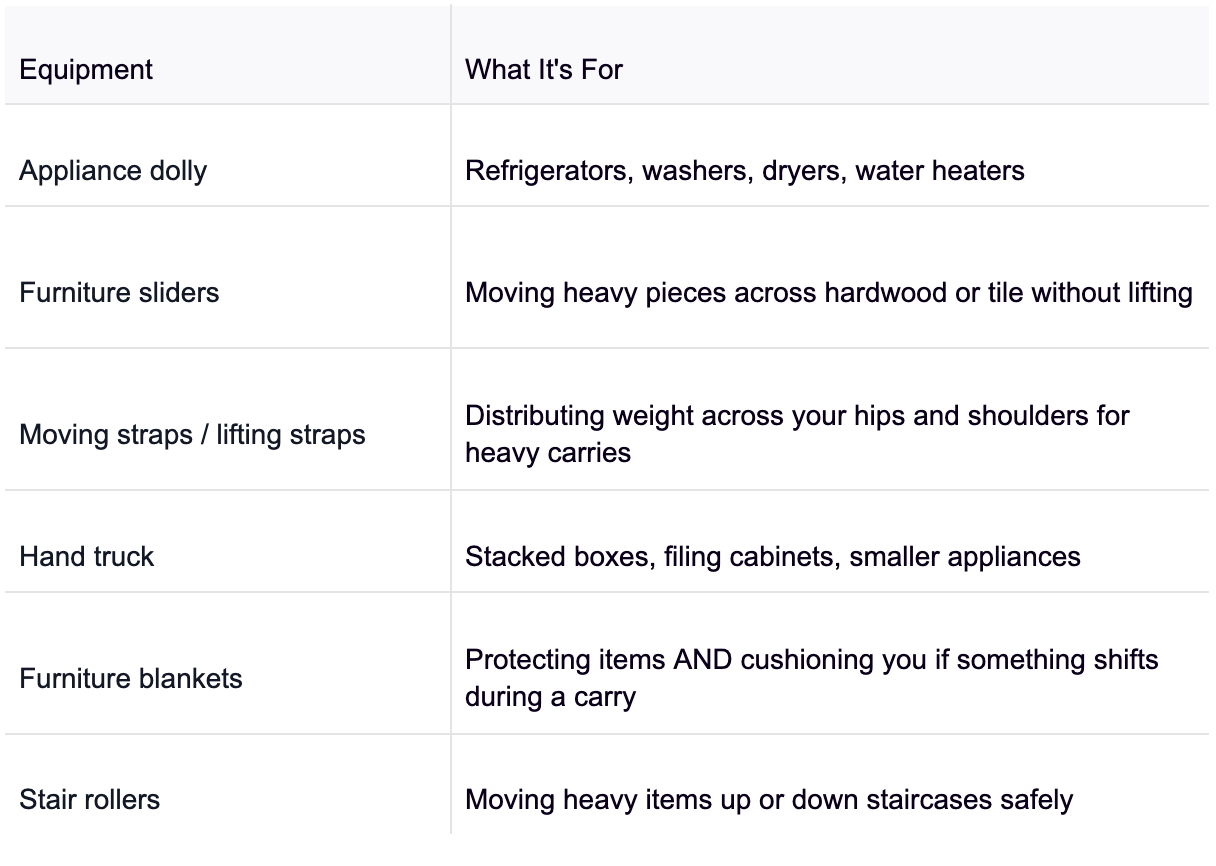
Using a dolly for appliances alone can eliminate some of the highest-risk lifts in any move. A 250-pound refrigerator is a two-person injury waiting to happen without one.
Raleigh Summer Heat: A Real Risk on Moving Day
Raleigh sits in central North Carolina, and summers here are not forgiving. Temperatures regularly climb into the 90s between June and September, with humidity that makes it feel significantly hotter. If you're moving during peak season, heat isn't just uncomfortable. It's a genuine health risk.
According to the North Carolina Department of Health and Human Services, heat exhaustion symptoms include heavy sweating, dizziness, nausea, muscle cramps, and pale or clammy skin. If those symptoms show up, stop immediately, move to a cool space, and hydrate. If they escalate to confusion or loss of consciousness, that's heat stroke and requires emergency care.
Here's how to plan around Raleigh's heat on moving day:
Start early. Begin loading by 7 or 8 AM. Try to have the truck loaded and on the road before noon, when temperatures peak.
Hydrate before you're thirsty. By the time thirst kicks in, you're already behind. Keep water accessible and drink consistently throughout the day.
Avoid caffeine and alcohol on moving day. Both accelerate dehydration.
Take indoor breaks every 45 to 60 minutes. Five minutes in an air-conditioned space can reset your body temperature significantly.
Check the forecast a few days out. If a heat advisory is issued, adjust your schedule or seriously consider professional help for the heavy outdoor work.
The physical demand of loading and unloading a truck compounds heat risk fast. Fatigue from heat makes technique break down, which is when injuries spike.
Keeping Kids Safe on Moving Day
Moving with kids adds a layer of complexity that most safety guides skip. As a dad, you're managing a physical job and making sure little ones aren't running into danger zones at the same time.
The honest truth: moving day and young children are a difficult combination. If at all possible, arrange for kids under 8 to be with a family member or friend for the heaviest part of the day.
If that's not possible, here's how to manage it safely:
Create a designated kid zone in one empty, already-loaded room or the new home's cleared space. One adult stays with them.
Never let children near the moving truck ramp or any area where large items are being carried.
Keep them hydrated and shaded if they're outside. Children are more vulnerable to heat illness than adults.
Don't leave kids in a parked vehicle even for a few minutes. Temperatures inside a parked car rise dangerously fast.
Pack a day bag for each child with snacks, a water bottle, a small activity, and a change of clothes. It reduces the number of times you need to stop and search through boxes mid-move.
Older kids (10+) can be genuinely helpful by carrying light boxes, managing doors, and supervising younger siblings. Give them real tasks with real responsibility. It keeps them engaged and out of the high-risk zones.
When DIY Becomes a Liability
There's a point where the DIY move stops saving you money and starts costing you more: in medical bills, in damaged belongings, in lost time, and in sheer physical wear on your body.
Heavy appliances, multi-floor homes, tight stairwells, and large estates are real variables that change the risk profile of a DIY move significantly. So does moving in peak Raleigh summer heat or relocating across a long distance.
Coastal Carrier Moving & Storage, established in 1985, has served Raleigh and the broader Carolinas for over 40 years with fully trained, insured, 100% in-house crews. No day laborers. The team handles appliances with professional dollies, padded straps, and floor protection, and coordinates disconnection and reconnection where required. Their residential moving service covers the full scope from packing, loading, transportation, unloading, and optional unpacking. So the heavy lifting, quite literally, is handled.
For families navigating a complex move, the peace of mind is part of the value.
"We had the best moving team! Jarbas, Blaine, Jimmy, Trevor, Bobby, and Andrew were all extremely efficient, strong, and careful in handling our most challenging contents. Lots of laughter, compassion, and optimistic attitudes made our difficult move less stressful. The office manager, Matt gave us accurate estimates and great communication throughout the process. We highly recommend Coastal Carrier and this team!" Amanda Fountain (source)
Transparent flat-rate pricing and free no-obligation quotes make it easy to weigh the cost against what you'd spend on rental equipment, supplies, and the risk of an ER visit.
Moving Right Is Worth the Extra Effort
A successful moving day comes down to decisions made before the truck arrives. Prep your body, clear your paths, use the right equipment, and respect the Raleigh heat.
Key takeaways to carry with you:
Warm up your body and clear your space before loading begins; skipping prep is where most injuries start
Lift with your legs, keep loads close, and never twist while carrying, no matter how minor the item seems
Start moves early in Raleigh summers and hydrate well before you feel thirsty
Keep kids in a designated safe zone with a dedicated adult, away from heavy-carry areas and truck ramps
The goal isn't just to get your stuff from Point A to Point B. It's to get yourself there too, without a pull back or a week of regret.
Frequently Asked Questions
What are the most common moving-day injuries?
Back strains are the most common moving-day injury, followed by sprained ankles, muscle pulls, and pinched fingers. Most injuries result from improper lifting technique, overexertion, or tripping over obstacles in the path.
How do I lift heavy furniture without hurting my back?
Squat with your knees bent and back straight, keep the item close to your body, and drive upward through your legs. Never bend at the waist or twist your torso while under a load. For very heavy items, use a dolly or moving straps and work with a partner.
Is it safe to move in the summer heat in Raleigh?
It can be, with the right precautions. Start early in the morning before peak heat, hydrate consistently throughout the day, take indoor breaks every 45 to 60 minutes, and watch for signs of heat exhaustion like dizziness, nausea, or muscle cramps.
What moving equipment should I rent for a DIY move?
An appliance dolly, hand truck, furniture sliders, and lifting straps cover most of the high-risk scenarios in a residential move. These tools reduce the load on your back and significantly lower injury risk for heavy or awkward items.
When should I hire professional movers instead of doing it myself?
If your move involves heavy appliances, multiple floors, a large estate, or a long-distance relocation, professional movers reduce both physical risk and the chance of damage to your belongings. It's also worth considering during peak Raleigh summer heat, when overexertion risk is at its highest.
