
Placing your father in a nursing home is not a failure. But trusting that everything is fine without staying watchful might be. In a study of more than 2,000 nursing home residents, 95% reported either experiencing neglect themselves or witnessing another resident being neglected. That figure does not describe worst-case scenarios. It describes how common care failures actually are.
Neglect is not always a dramatic, visible event. It builds quietly through missed meals, ignored wounds, and shifts too short-staffed to reach everyone. Knowing what to look for is the most important thing a son can do.
This guide covers:
Physical and behavioral signs that point to nursing home neglect
How to tell real neglect apart from normal aging
How to document concerns, report them, and understand your legal options
The hardest part is not what you see. It is knowing what it means.
TL;DR
Neglect is usually gradual, not sudden. Look for patterns across multiple visits, not just isolated moments.
Physical red flags include bedsores, unexplained weight loss, recurring infections, and consistent hygiene failures.
Behavioral changes like withdrawal, fear around staff, or unusual silence deserve serious attention.
Documentation matters from day one. Dates, photos, staff responses, and care plan records all build a picture.
California law provides strong protections for nursing home residents, including the right to report and pursue legal remedies.
Neglect Does Not Always Show Itself
Most families imagine neglect as something obvious and immediate. A fall that gets ignored. An injury nobody explains. The reality is slower and quieter.
A resident loses weight over several weeks. Bedsores develop because staff lack time to reposition him regularly. Hygiene slips because there are simply not enough aides on shift. These patterns do not come with explanations. Facilities rarely volunteer them. That means families have to notice them.
According to elder abuse research published in a peer-reviewed journal, neglect may be the most common form of elder mistreatment in institutional care settings. It is also the least reported. Studies suggest that for every reported act of caregiver neglect, approximately 57 go undocumented. That gap puts families on the front line.
Physical Warning Signs to Watch For
Injuries, Bedsores, and Weight Loss
Injuries happen. But repeated or unexplained injuries, especially in unusual locations or without a documented incident, demand answers. Broken bones, bruises, and cuts that staff cannot account for are not minor concerns.
Pressure ulcers (bedsores) are widely considered preventable with proper repositioning, hydration, and wound care. A Stage 2 or higher bedsore on a resident who has been in a facility long enough to have an established care routine is not an unfortunate side effect of aging. It is a care failure.
Sudden or significant weight loss is another concrete signal. When a resident consistently misses meals, receives inadequate nutrition, or is not helped to eat, the evidence appears on his body before it appears in a chart.
Hygiene Failures and Unsanitary Conditions
Your father should not smell of urine when you arrive. His room should not have soiled linens or dirty clothing sitting for days. These are not minor oversights. They point directly to failures in basic caregiving.
Walk through the facility with your eyes fully open. Notice whether common areas are clean, whether residents appear groomed and dressed, and whether conditions change noticeably when you visit unannounced. Persistent odors and poor sanitation are not just unpleasant. They are evidence.
Medication Errors and Recurring Infections
Missed medications, incorrect dosages, or signs of overmedication such as unusual drowsiness or sedation are serious red flags. So are recurring infections, including urinary tract infections, pneumonia, or skin infections that keep returning.
A single infection does not automatically indicate neglect. But recurring infections can point to systemic hygiene failures or consistently inadequate wound care. The pattern is what matters, not just the individual episode.
Behavioral and Emotional Red Flags
Neglect is not exclusively physical. When a resident's emotional needs go ignored or dismissed, it causes real harm, and it is often harder to see.
Watch for:
Sudden withdrawal from activities or people he previously enjoyed
New anxiety, fearfulness, or agitation, especially around specific staff members
Reluctance to speak freely when staff are present
Emotional flatness or depression that feels out of character
Complaints about being left alone, unheard, or ignored for long periods
Emotional neglect often involves isolation, dismissal, and the absence of meaningful human contact. When a facility routinely leaves residents in their rooms with no engagement, activity, or interaction, that is neglect, even without a bruise in sight.
Neglect vs. Normal Aging: The Distinction That Matters
This is where many families second-guess themselves. Your father is older. His health has changed. So how do you know when something is neglect and not simply aging?
Here is a practical comparison to help:
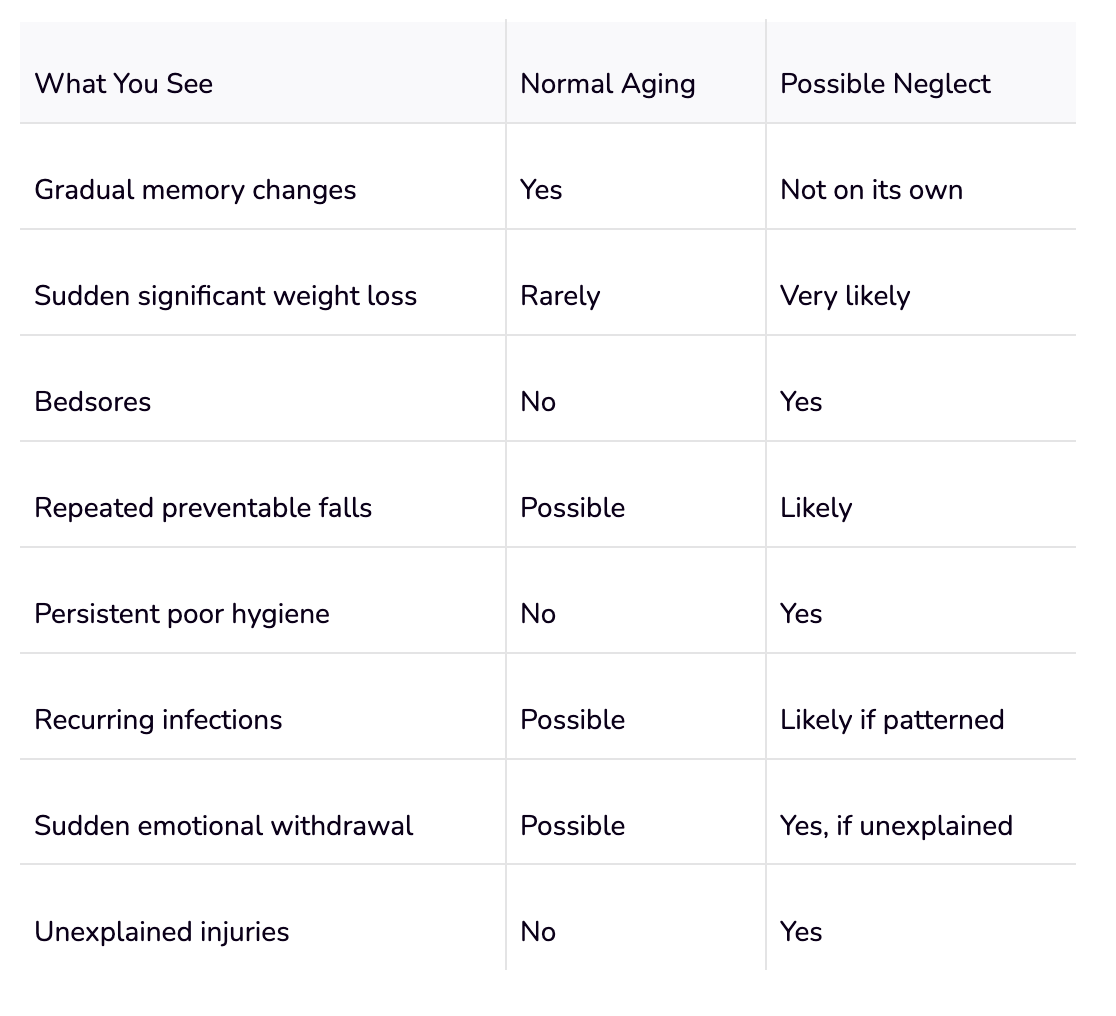
The key distinction is sudden versus gradual and explained versus unexplained. Normal aging is slow and consistent. Neglect surfaces as a noticeable shift, a worsening condition, or a pattern the facility struggles to account for.
What Understaffing Looks Like Up Close
Understaffing is one of the most common root causes of nursing home neglect. A facility stretched too thin cannot give every resident the care they need, and the gaps reveal themselves.
Watch for these operational red flags:
Staff who seem rushed or unable to answer basic questions about your father's current care
Long delays in response to call lights or requests for assistance
High staff turnover, with unfamiliar faces appearing on every visit
Vague or inconsistent answers about care routines, schedules, or specific incidents
Residents left unsupervised in common areas for extended periods
How to Document What You Observe
Documentation is not about preparing for litigation on day one. It is about building a record that tells a coherent story if patterns emerge.
Start a written log. Include:
The date and time of every visit
What you observed: physical condition, hygiene, room cleanliness, behavior
What you asked staff and exactly what they said in response
Any incidents, injuries, or changes in condition
Names or descriptions of staff present
Take photos when appropriate. Unexplained injuries, bedsores, sanitation problems, and other visible concerns should be photographed with timestamps. Keep copies of care plans, discharge papers, and any written communications with the facility.
When you raise a concern with management, note the date, the name of the person you spoke with, and their response. A dismissive or inconsistent response is itself part of the record.
Reporting Neglect in California
You do not need certainty to report. Reporting triggers an investigation that can uncover what you cannot see on your own.
In California, families have several official options:
California Long-Term Care Ombudsman Program: Advocates specifically for nursing home and assisted living residents. Ombudsmen investigate complaints, work with facilities, and help resolve care issues.
California Department of Public Health: Licenses and inspects nursing homes. A complaint can trigger a formal inspection with findings added to the public record.
Adult Protective Services: Handles elder abuse and neglect reports, including those inside facility settings.
Emergency services (911): If your father is in immediate danger, do not wait.
The California Attorney General's Office also provides guidance on elder abuse reporting, including complaint procedures and state resources available to families.
Understanding Your Legal Options in California
California offers some of the strongest legal protections for nursing home residents in the country. The California Elder Abuse and Dependent Adult Civil Protection Act provides specific remedies for residents harmed by abuse or neglect in care facilities, including enhanced damages and attorney's fees in qualifying cases.
Families navigating these situations sometimes work with civil litigation attorneys who focus on elder abuse and nursing home negligence. Berman & Riedel, a San Diego-based firm that represents victims of nursing home neglect throughout California, handles cases involving inadequate care, pressure ulcers, medication failures, falls, infections, and wrongful death in long-term care settings.
Their process involves detailed investigations, medical record reviews, facility audits, and consultations with geriatricians, forensic nurses, and wound care specialists. The firm operates on a contingency fee basis, meaning clients do not pay attorney fees unless the firm wins their case.
Here is what one client shared about working with the firm on a nursing home neglect matter:
"Bill and his team at Berman & Riedel are absolutely incredible. They believed in our case when others did not, and put in the hard and honest work to lead it to a successful outcome for our family. They came highly recommended to us, and we can't help but do the same!" – allan pat (Google Review)
Understanding your legal rights does not mean committing to litigation. It means knowing what options exist so you can make an informed decision for your father.
What He Cannot Say, You Must See
Nursing home neglect survives because residents often cannot advocate loudly for themselves. As a son, your presence, attention, and willingness to ask hard questions fill that gap.
Physical signs like bedsores, weight loss, and poor hygiene are concrete and documentable. Do not rationalize them away without getting a clear explanation from the facility.
Behavioral and emotional changes are just as important as physical ones. Sudden withdrawal, unexplained fear, or new anxiety are legitimate red flags, not just mood shifts.
Start documenting from your first concern. A written record with dates, photos, and staff responses becomes critical if you need to escalate.
California law gives families real tools to act. The ombudsman program, state regulatory agencies, and civil litigation are all available options when care failures cause harm.
If your father cannot advocate for himself, the most valuable thing you can do is stay informed, stay present, and stay willing to push for answers.
FAQs
What is the legal definition of nursing home neglect in California?
Nursing home neglect in California refers to a facility's failure to provide care, supervision, or basic needs that results in harm or a serious risk of harm to a resident. The California Elder Abuse and Dependent Adult Civil Protection Act covers these claims and provides specific legal remedies, including enhanced damages in qualifying cases.
Can nursing home residents with dementia experience neglect?
Yes. Residents with dementia often struggle to communicate mistreatment, which makes neglect harder to detect but no less serious. Physical signs, behavioral changes, and patterns in care records become especially important when a resident cannot clearly describe what is happening.
Are bedsores always a sign of neglect?
Not in every case, but pressure ulcers are widely considered preventable with appropriate repositioning, nutrition, hydration, and wound care. A Stage 2 or higher bedsore developing without a documented care explanation is a strong indicator of inadequate care.
What should I do if the facility dismisses my concerns?
Document the conversation, including who you spoke with, the date, and what was said. If the facility does not respond satisfactorily, escalate to the California Long-Term Care Ombudsman Program or the California Department of Public Health. You can also consult an elder abuse attorney to evaluate whether a legal remedy exists.
How long do I have to file a legal claim for nursing home neglect in California?
California elder abuse claims have a statute of limitations, but the timeframe depends on the specific facts of the case. Consulting an attorney as early as possible is the most reliable way to understand whether your family still has the right to pursue a claim.
