
Raising Kids in a Drinking Town: Rebuilding a Social Life That Doesn't Run on Beer (Copy)
My daughter learned to do a cartwheel on the artificial turf behind a taproom in Miramar. There was a cornhole set, a taco truck, a bin of scooters somebody had donated, and about forty adults holding pints while roughly fifteen kids ran themselves into the ground.
Great afternoon. I'd do it again. But I remember driving home and doing the arithmetic on how many weekends had that exact shape, and the number was uncomfortable. Nobody decided this. It accumulated, one reasonable Saturday at a time, and San Diego makes that easy, because here the brewery isn't the alternative to the family outing. It is the family outing.
Why This City Makes It Sneakier Than It Looks
Somewhere in your late thirties, the scaffolding for friendship falls away. No dorm, no team, no shared shift where you saw the same handful of people weekly without arranging it. What fills the gap is whatever requires no organizing or explanation.
In a lot of towns that means a bar, and a bar is at least honest about what it is. Ours are better dressed. Play structure, a dog, a food truck, the whole thing framed as being for the kids, so you never quite register it as drinking. You register it as parenting. That's the part that got me.
The Three Places It Actually Comes From
When I worked out where the volume came from, it was three things on repeat. Kid stuff first, meaning taproom afternoons plus the beach day where somebody brings a cooler. Then work, which here is a patio in North Park with clients. Then the lazy one, the driveway or the in-laws or the neighbor out there every Friday regardless.
No single afternoon looked like anything. Two beers here, three there. The repeating does it, and it stays invisible because it's spread across three parts of your life that never compare notes.
Why "I'll Just Have Less" Falls Apart
You're deciding in a place engineered to wear the decision down. The cue's there, the supply's twenty feet away, somebody's already handed you one, and turning down the next costs a small awkwardness you pay every half hour again for four hours.
Willpower loses out most of the time, and I don't think it says much about anybody. It's environmental. Which is oddly encouraging, since environments are easier to redesign than personalities.
First, Is It Actually the Calendar?
All of that assumes the schedule is driving it. For some people it won't be, and that's worth settling before you spend three months rearranging weekends for nothing.
How Often vs. What For
How often is the obvious question. It's also the less useful one.
The better question is what the drink is doing for you. A beer marking the end of something, work finishing, kids finally down, isn't the same as a beer handling a feeling you'd otherwise sit in. The second isn't automatically a disorder. It's the one that grows, because feelings turn up more reliably than parties.
The Stuff That Deserves a Real Conversation
Some patterns are worth being straight with yourself about. Needing more to get where you used to get. Drinking before things rather than after. Shaving the number down when someone asks. And trying to cut back and finding you didn't, the heaviest one, because that's the gap between a habit you've got and one that's got you. If stopping causes shaking, sweating, or real agitation, that's a doctor's problem, not a scheduling one. None of this is a diagnosis, only a clinician makes one of those.
What Getting Help Actually Looks Like
Less dramatic than most of us picture. Care runs across a range of intensities, and outpatient programs exist precisely for people who can't disappear for a month, built around evenings and working weeks so the job and the school run carry on. Directories covering markets like drug and alcohol treatment in San Diego let you sort by level of care and insurance before talking to anybody. A first call is an assessment. You aren't signing up for anything.
Rebuilding the Thing
If none of that applied, the calendar really is the issue, and you want the smallest change that kills the default rather than a whole new life. The same principle this site applies to training volume. Do one thing.
One rule I'd insist on: put something in before you take anything out. Strip the drinking without replacing the company, and you've built yourself a quieter, lonelier week, which is the fastest route back to where you started.
Add Something Before You Take Anything Away
You want one recurring commitment that structurally can't involve alcohol. Recurring matters more than what it is. One-off plans need fresh motivation every time, and motivation is what you've got least of.
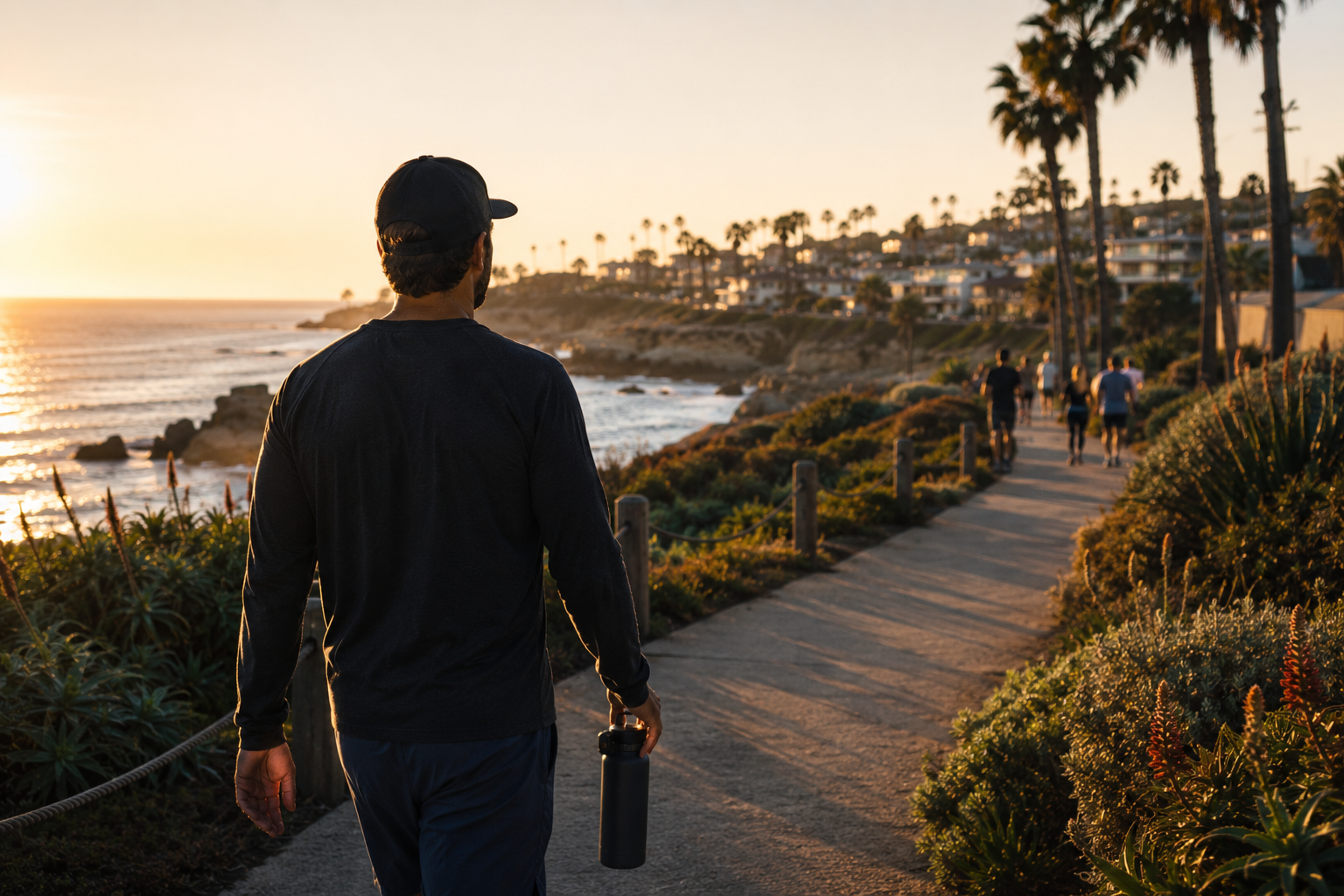
City Parks and Recreation runs adult sports leagues out of rec centers across the city, which solves most of this: fixed night, a roster that notices when you're not there, nowhere to buy a drink. If a league feels like too much, a standing early walk with a weighted pack does the same job and counts as actual training. It only has to exist and repeat.
Change the Container
Most of the time you don't turn anything down. You just suggest first. Propose a time, breakfast instead of afternoon. Or a format, something in the water, something the kids come to. Either rules out alcohol without you announcing a thing about your drinking.
Have a Boring Answer Ready
Somebody always asks. The answers that work are dull and short and end the conversation instead of starting one. Driving. Early surf. Off it this month. You're not trying to win the exchange, you're trying to be out of it in four seconds. The awkwardness is nearly all in the first few times, then it goes.
The House Part
Where to Look Locally
County Behavioral Health Services keeps a plain-language page on substance use support, and the Access and Crisis Line runs 24/7 for anyone in the county, emergency or not. Worth bookmarking even if it isn't for you. Half the value is being the guy who knows the number when a friend finally says something.
What to Tell Your Kids
Something short and true, pitched at whatever age they are. They clock the change either way, and a sentence of explanation goes down better than a house quietly running differently for no stated reason.
Anyway. Back to the turf behind the taproom. Nobody there was doing anything wrong, and I've no ambition to become the guy who doesn't drink. I'd just rather my weekends didn't default to it, which turns out to be a much smaller thing to fix. Put one repeating, alcohol-free thing in the calendar this week. That's the whole move.
