
Simple Ways Parents Can Support Early Childhood Development

Early childhood is a busy period when children learn, explore, and make sense of their surroundings. Parents have plenty of opportunities to support that growth through simple everyday interactions.
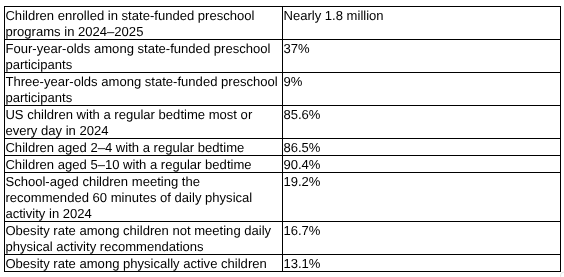
Even small daily changes in home routines significantly influence a child's early developmental trajectory. Federal survey data from the National Institute for Early Education Research shows that state-funded preschool programs enrolled nearly 1.8 million children during the 2024–2025 school year. Among these participants, 37% were 4-year-olds and 9% were 3-year-olds receiving structured early learning.
This broad participation underscores how essential early skill building is for young learners across the country. And such early learning and development should start at home and continue for as long as the child needs it.
You do not need elaborate activities or expensive educational toys to encourage healthy development. Often, ordinary moments at home can become valuable learning experiences for young children.
With patience and consistency, these simple adjustments help children develop essential skills effectively. Here’s how.
Create a Caring Environment Where Development Starts at Home
Children learn many of their earliest social and emotional lessons through everyday experiences with their families. The way you respond to their questions, feelings, mistakes, and discoveries can shape their confidence.
Try giving your child your full attention during conversations, even when their stories seem small. Listening carefully shows children that their thoughts matter and encourages them to communicate more openly.
A predictable home environment can also help young children understand expectations and feel more secure. Simple routines around meals, sleep, play, and cleanup can provide useful structure.
Establishing structured daily routines at home supports children's emotional stability and overall well-being. A report by the CDC National Center for Health Statistics revealed that 85.6% of US children had a regular bedtime most days or every day in 2024. Regular bedtimes were reported for 86.5% of children aged 2 to 4 years compared to 90.4% of children aged 5 to 10 years.
Consistent daily schedules help young children feel secure and function better during daytime activities. At the same time, leave room for your child to make age-appropriate choices throughout the day.
Professional support can also happen within familiar surroundings when children need help with behavioral concerns. For children with autism spectrum disorder (ASD), applied behavior analysis (ABA) can address specific developmental and behavioral challenges.
Bright Home ABA notes how compassionate ABA therapy helps children build meaningful skills at home. Such professional services support your entire family at every step of the journey. A functional behavior assessment can help identify why certain behaviors happen and inform individualized ABA goals.
Through early intervention, ABA therapy can support communication, social skills, independence, and other developmental needs.
Turn Everyday Conversations Into Opportunities For Learning
Young children learn language constantly, especially when adults make ordinary conversations interesting and engaging. You can support this process without turning your home into a classroom.
Talk about what you are doing while cooking, shopping, cleaning, or getting ready together. Explain unfamiliar words naturally and encourage your child to describe what they notice. When your child asks questions, avoid giving extremely quick answers whenever possible. Instead, ask follow-up questions that encourage them to think, explain, and make connections.
Reading together offers another simple way to strengthen language and early literacy skills. Let your child choose books sometimes, then discuss characters, pictures, events, and unfamiliar words.
You can also pause during stories and ask what might happen next. These small conversations encourage children to make predictions and express their ideas clearly. Songs, rhymes, and playful conversations can make language practice feel enjoyable rather than demanding. Repetition also helps children become familiar with sounds, words, sentence patterns, and meanings.
Most importantly, remember that meaningful communication involves more than teaching vocabulary. Giving children time to respond helps them develop confidence while learning how conversations work.
Make Play A Regular Part Of Your Child's Day
Play may look like simple entertainment, but it gives children countless opportunities to practice important developmental skills. Through play, children experiment, solve problems, communicate, and understand relationships.
Try offering different kinds of play instead of relying on one favorite activity every day. Building blocks can encourage planning, while pretend games can strengthen creativity and social understanding. Physical play matters just as much for young children who are still developing coordination and body awareness. Running, climbing, dancing, throwing, and balancing can make movement enjoyable.
Active physical play is essential for developing motor skills and overall childhood health. Data from the Health Resources and Services Administration indicates that only 19.2% of school-aged children met the recommended 60 minutes of daily physical activity in 2024. Children missing out on daily physical movement had higher obesity rates (16.7%) compared to active peers (13.1%).
Movement activities give young children essential practice with physical coordination and spatial awareness.
You can join these activities without controlling every part of the experience. Following your child's ideas allows them to practice decision-making while discovering their own interests.
Pretend play can be particularly useful because children often recreate situations they encounter throughout everyday life. Playing doctor or grocery store can introduce useful social concepts. Board games and simple puzzles can also teach children how to follow instructions and handle frustration. Keep activities appropriate for their age and adjust expectations when necessary.
Remember that children do not need perfectly planned activities to benefit from play. Sometimes, giving them safe materials and enough time creates the richest learning experience.
Give Children Room To Explore And Solve Problems
Children need opportunities to experiment because discovering answers independently can strengthen confidence and problem-solving skills. Parents can support this process without immediately fixing every difficulty.
According to educator Anna Kozera, mistakes are not just allowed; they are essential lessons that build a child's skills. Solving these natural puzzles teaches critical problem-solving.
When your child encounters a small challenge, pause before stepping in with the solution. Ask questions that encourage them to consider what they might try next. For example, you might ask how they could reach a favorite toy. You could also encourage them to find another way when their first attempt fails.
Mistakes should become normal parts of learning rather than reasons for embarrassment or criticism. Responding calmly can help children become more comfortable trying unfamiliar things.
Outdoor exploration provides another excellent setting for curiosity and discovery. Nature walks, playground visits, and simple outdoor games can introduce children to new sights and experiences.
Give your child opportunities to notice differences, ask questions, and investigate their surroundings. You can encourage curiosity by wondering aloud instead of always providing immediate explanations.
It is also helpful to recognize effort rather than praising only successful results. Comments about persistence can teach children that learning often requires patience and repeated attempts.
FAQs
How does reading aloud to toddlers improve early brain and language development?
Reading aloud exposes toddlers to new words, sounds, sentence patterns, and ideas that strengthen early language development. It also encourages listening, attention, memory, and understanding while helping children connect words with pictures and experiences. Regular shared reading can build vocabulary and support the communication skills children need for later learning.
What role does imaginative play have in early childhood physical and cognitive growth?
Imaginative play allows children to explore ideas, solve problems, and practice making decisions through enjoyable everyday activities. Pretending to cook, build, or care for toys can strengthen coordination while encouraging creativity, planning, and flexible thinking. It also supports social development as children practice communication, cooperation, emotional expression, and understanding different perspectives.
How can parents encourage language and communication skills in babies and toddlers?
Parents can encourage communication by talking frequently, responding to sounds, naming familiar objects, and describing everyday activities. Singing songs, reading books, and asking simple questions can introduce vocabulary while encouraging children to listen and respond. Parents should also give children time to communicate, celebrating gestures, sounds, and emerging words without correcting every attempt.
Key Statistics on Early Childhood Development, Routines, and Physical Activity
Supporting early childhood development does not require complicated schedules or specialized activities throughout every part of the day. Your everyday interactions can provide many valuable opportunities for children to learn and grow.
Create a caring environment where children feel listened to, respected, and comfortable expressing themselves. Pay attention to your child's individual needs instead of expecting development to follow exactly one predictable path. Some children may benefit from additional professional guidance when particular developmental or behavioral concerns arise.
The most important thing is remaining patient and involved as your child develops new abilities. Your encouragement can help make learning feel safe, enjoyable, and meaningful during these important early years.
