
The Family Road Trip Skills Every Dad Should Teach His Kids
A family road trip gives you plenty of time to teach your kids some useful skills. You can show them how to watch the road, handle sudden changes, and follow a simple emergency plan.
These lessons work best during normal trips. Your child can practice without the stress of a real problem. Start with small habits and adjust them as your child gets older.
You can start with small habits. Ask your child to spot signs during a drive. Practice sharing your location before a trip. Talk through what they should do if you need to stop suddenly.
The goal is simple. Your kids should know what to notice, what to say, and what to do. Those skills can help them handle unfamiliar situations on the road.
Help Kids Pay Attention to the Road
Your child spends hours inside the car during a long trip. Use that time to build road awareness. Point out traffic lights, crossings, road signs, cyclists, and nearby vehicles.
Older kids can practice describing where they are using nearby signs or landmarks. Your child can lose focus quickly during a trip when something inside the car grabs their attention.
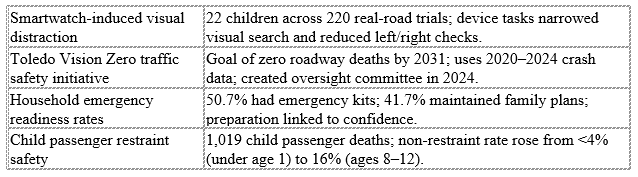
That shift can affect how they scan their surroundings near roads. A 2024 study in Accident Analysis & Prevention tested 22 children across 220 real-road crossing trials.
Children using smartwatches crossed more slowly and showed a narrower visual search. They also focused on a smaller area around the crossing than children without smartwatch distractions.
Distracted children also scanned left and right fewer times. Image viewing and simple arithmetic caused greater distraction than listening to stories or answering calls.
So, give your child a simple habit to follow. Ask them to put devices away and scan the full area before crossing. You’re teaching them to notice where traffic might come from.
Try this during normal drives. Ask your child to name one change after each major turn. Keep the questions short and focused.
Show Kids How to Handle an Unexpected Stop
Your child won’t know every answer when something goes wrong. They can still learn what to do first.
Teach them to stay calm, listen to you, and avoid moving toward traffic. Older kids can learn your phone number and how to describe their surroundings. Local road-safety efforts can give you useful examples to discuss with them.
For instance, the City of Toledo aims to bring roadway deaths down to zero by 2031. Toledo’s Vision Zero work uses fatal and serious-injury crash data from 2020 through 2024.
The city also created a Vision Zero Committee in 2024. These efforts show how communities can identify risks and improve road safety. That focus can also help families think through what to do when a trip goes wrong.
A serious crash can leave parents sorting through medical care, insurance issues, and other decisions. Zoll & Kranz, LLC notes that it can also create financial strain and uncertainty about what comes next.
If a crash does occur, a Toledo auto accident lawyer can explain your legal options. This can help you understand what to do next while caring for your family. Before a trip, agree on a few rules for unexpected stops.
Your child should know where to wait and who to listen to. A simple plan can help them respond without waiting for you to explain each step.
Give Kids a Task in the Emergency Plan
Your child should know their role during an emergency. Start with a few steps they can remember. Younger kids can learn where to stay and whom to follow. Older kids can learn how to call you and share basic details.
Show them where you keep emergency supplies, too. A 2024 survey published in Disaster Medicine and Public Health Preparedness examined emergency preparation among 278 Honolulu parents.
Researchers looked at whether parents had an emergency kit and a family emergency plan. The study found that parents who needed help preparing were less likely to have an emergency kit. They were also less likely to have a family emergency plan.
These findings show why families should prepare before an emergency happens. Doreen Thomann-Howe, LCSW, of the American Red Cross, makes a similar point. She notes that preparation can help protect loved ones when emergencies happen.
Put that advice into practice at home. Assign age-appropriate tasks to each child. One child might know where the first-aid kit sits. An older child might know how to call you or share your location.
Review the plan before longer trips, especially when you travel somewhere unfamiliar. Update each child’s role as they grow.
Make Safe Passenger Habits Part of Every Trip
Build safe passenger habits into every drive. Start with seat belts and the right restraint for your child’s age and size. Your own habits matter, too. Buckle up before you start the car and avoid any distracting activities while driving.
Encourage your kids to speak up when they feel unsafe or notice a problem. The Centers for Disease Control and Prevention (CDC) data show why these habits matter as children grow.
In 2023, 1,019 child passengers aged 14 and younger died in U.S. motor vehicle crashes. More than 161,000 children were injured that year. The CDC also found that restraint use typically decreases as children get older.
In 2023 observations, fewer than 4% of children under 1 were unbuckled. That figure rose to 16% among children aged 8 to 12. Keep checking these habits as your child gets older. Make safety checks part of your departure routine.
Ask older kids to check that everyone is buckled before you leave. This gives them a small role in keeping the family safe. Review these habits before longer trips and after your child moves to a new restraint.
Frequently Asked Questions
How can I prepare my child for a long road trip?
Before leaving, explain what the journey will look like and what your child can expect. Let them help choose snacks, activities, or planned stops. A simple preview can make the trip feel familiar. It also gives your child a chance to ask questions before you’re already on the road.
What items should children pack for a family road trip?
Let your child pack a small bag with items they’ll actually use during the journey. Include a book, headphones, water bottle, comfort item, and any needed medication. Older children can check their own bags before leaving. This builds responsibility without giving them too much to manage.
How often should you take breaks when traveling with children?
Plan breaks around your child’s age, comfort, and needs rather than following a rigid schedule. Young children may need more frequent stops for movement, food, or bathroom breaks. Older kids may manage longer stretches. Watch for signs of fatigue, restlessness, or discomfort and adjust your plans when needed.
Road Safety and Family Travel Data at a Glance
These Skills Are Worth Taking on the Road
A road trip can give your kids skills they’ll use long after the vacation ends. They can learn to watch their surroundings, follow a plan, and speak up when something feels wrong.
Keep these lessons simple and practice them during everyday drives. Adjust them as your child gets older and more independent. Give them clear actions they can remember under pressure.
When a trip takes an unexpected turn, those habits can help your child know what to notice, who to listen to, and what to do next.
