
Why Early Success Matters When Choosing a Child’s First Musical Instrument
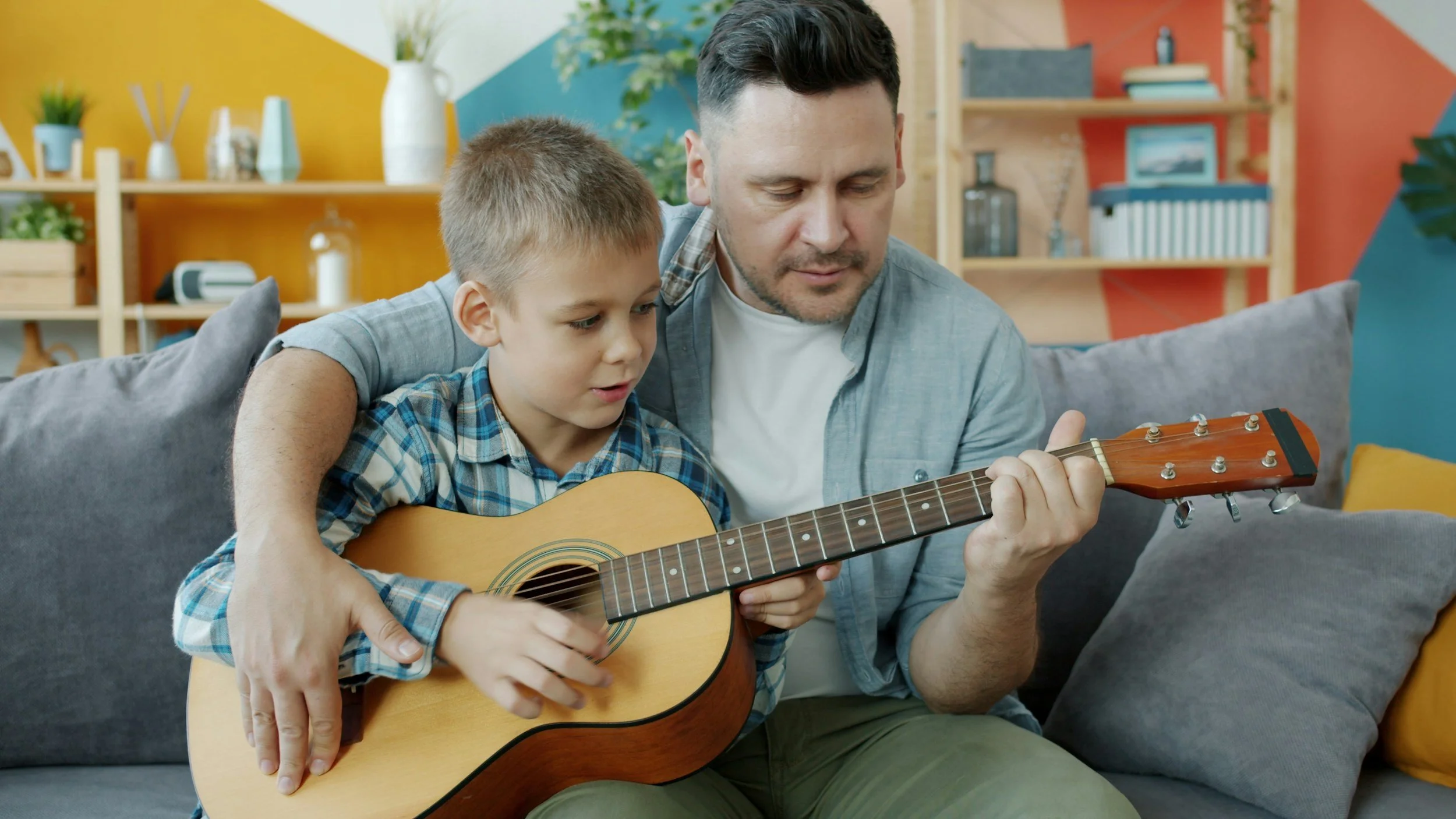
Choosing a child’s first musical instrument often starts with a familiar question: piano, guitar, violin, or drums?
But for a young beginner, there may be a more useful question to ask first:
How quickly can this child experience the feeling of actually making music?
Adults tend to think about learning an instrument in terms of long-term skills. Children experience it much more immediately. They pick something up, try it, listen to what happens, and decide whether they want to try again.
That makes the first few minutes with an instrument surprisingly important.
A first instrument does not need to be effortless. But it should give a child enough early success to create curiosity rather than frustration.
The “I Did It!” Moment Matters
Watch a child successfully do something new and there is often a very recognizable moment.
They look up.
They smile.
Sometimes they announce it:
“I did it!”
That small moment matters because it changes the activity from something an adult is asking them to do into something they have discovered they can do themselves. With music, that might mean tapping out a recognizable melody, finding a rhythm that sounds good, or realizing that different notes can be combined intentionally. For an experienced musician, these may seem like tiny accomplishments. For a child holding an instrument for the first time, they are the beginning of musical confidence.
The goal at this stage is not mastery. It is giving the child a reason to pick the instrument up again.
Why Traditional First Steps Can Feel Difficult
Many traditional instruments ask beginners to manage several new skills at once.
A child may need to learn where to place their fingers, how much pressure to use, how to hold the instrument, what a written note means, and how that note corresponds to a particular sound. None of those skills are inherently bad. Learning them is part of becoming a musician. But they do create what could be called an entry barrier.
For an older child who has actively chosen to learn an instrument, that challenge may be motivating.
For a four-, five-, or six-year-old who is simply exploring music, too many instructions before the first satisfying result can make an instrument feel like work before it feels like play.
This is why a beginner-friendly musical instrument should not only be judged by how much a child can eventually learn from it.
It is also worth asking how easily the child can begin.
A Good First Instrument Makes Cause and Effect Obvious
Young children learn through experimentation.
Hit something and hear what happens. Try another note. Repeat a pattern. Play it faster. Play it softer.
Simple percussion instruments are especially good at making this relationship obvious because the action and result are closely connected. Steel tongue drums are one example. Striking a tongue produces a defined musical tone, so even free experimentation can sound musical.
Some instruments take this idea a step further by simplifying how the notes themselves are organized.
For example, Sounds of Silence designs steel tongue drums specifically with young beginners in mind. Instead of arranging the eight numbered notes in the scattered layout commonly seen on many tongue drums, the notes are organized sequentially from 1 through 8. Children can then match those numbers to simple song sheets and begin attempting recognizable melodies without first learning traditional musical notation.
That design decision illustrates a useful principle for choosing any first instrument:
Remove unnecessary difficulty without removing the opportunity to learn.
Familiar Music Changes the Experience
There is a meaningful difference between making a pleasant sound and realizing, “I know that song.”
Recognition gives children feedback.
If a child follows a short sequence and suddenly hears the beginning of a melody they recognize, they do not need an adult to tell them whether they succeeded. The music itself tells them.
That can make numbered or color-supported song systems useful during the earliest stage of musical exploration. They provide enough structure to help a beginner produce an intentional result while still allowing plenty of room for free play.
Over time, children can move between the two naturally.
They might follow a song, change it, invent a rhythm, repeat a favorite group of notes, or simply explore what the instrument can do.
That is still musical learning.
Playing and Learning Do Not Have to Be Opposites
Parents sometimes feel they have to choose between an educational musical activity and simple play.
For young children, the distinction is not always useful.
Free musical play encourages children to notice differences in pitch, rhythm, volume, repetition, and pattern. Structured playing introduces another skill: following a sequence toward a recognizable result.
Research into childhood music training has also explored its relationship with executive functions such as inhibitory control, working memory, and cognitive flexibility. Recent reviews and meta-analyses have reported positive effects in these areas, although the broader literature on transfer from music training to unrelated cognitive or academic skills is mixed. In other words, music is worth offering children primarily because it is music, not because an instrument needs to promise a particular developmental outcome.
For a beginner, the best environment may therefore include both structure and freedom.
Give them a way to succeed, then give them room to explore.
The First Instrument Does Not Have to Be a “Forever” Instrument
Another useful shift is to stop treating the first instrument as a major commitment.
A four-year-old does not need to choose the instrument they will still be playing at fourteen.
The first instrument has a simpler job.
It can teach a child that music is something they can make, not only something they hear.
That is why accessibility matters so much at the beginning. An instrument that produces a rewarding result quickly can act as a doorway. Later, that child may become interested in piano, percussion, guitar, violin, singing, or something entirely different.
The early win did its job if it made them curious about what comes next.
Look for a Short Path Between Trying and Succeeding
When choosing a first musical instrument for a young child, consider a few practical questions:
Can the child produce a pleasant sound without complicated technique?
Can they understand the basic layout without constant adult instruction?
Is there a simple way to play something intentional or recognizable?
Can they also experiment freely without worrying about making mistakes?
Will the instrument still offer something interesting after the first day?
These questions shift the focus away from finding the “best” instrument in general and toward finding an instrument that fits the way a young beginner actually learns. For some children, that will be a keyboard. For others, it may be a ukulele, xylophone, hand percussion instrument, or beginner-friendly tongue drum.
The specific instrument matters less than the experience it creates.
Let the First Experience Feel Like Music
There will be plenty of time later for technique, notation, lessons, practice routines, and correction.
The beginning can be different.
A child can tap a note.
Then another.
Follow a few numbers.
Recognize the melody.
And look up with that unmistakable expression:
“I did it.”
That feeling may be one of the most valuable things a first musical instrument can give them.
For more ideas on helping children take their first steps into making music, see beginner-friendly musical instruments for kids
