
Stitch by Stitch: Why More Dads Are Picking Up Embroidery for Their Mental Health
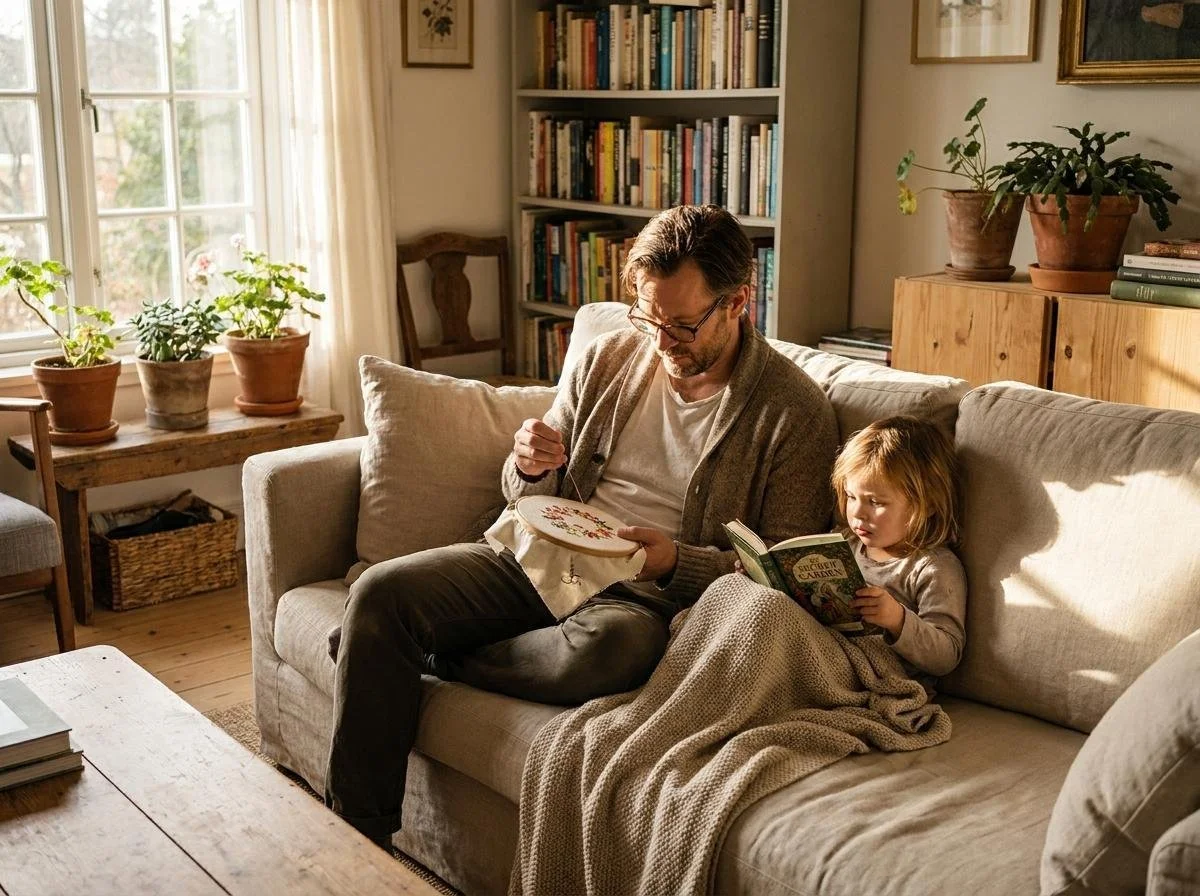
The average dad’s day doesn’t leave much room for decompression. Work deadlines, school drop-offs, evening routines, and the constant mental load of running a household stack up in ways that are hard to put down at night. Gym sessions, pickup sports, and a drink with friends all require scheduling, commuting, and energy most fathers simply don’t have left by 8 pm.
A growing body of research points to a different kind of tool. One that fits between meetings, travels in a bag, and requires no membership, no equipment setup, and no prior experience. Hand embroidery is gaining traction not as a craft hobby but as a portable, evidence-backed mindfulness practice that works with a dad’s lifestyle rather than against it.
The Mental Health Case for Hands-On Hobbies
The Equimundo “State of the World’s Fathers 2026” report surveyed 8,000 parents across 16 countries and found that half of the world’s fathers feel unsupported by society in their caregiving roles. Nearly 4 in 10 say they don’t trust government representatives to address their needs. Those numbers point to something deeper than schedule fatigue: a systemic lack of accessible mental health support designed for how fathers actually live.
Traditional coping mechanisms don’t always fit. The gym needs an uninterrupted block of time. Sports leagues require consistent evenings. Drinking with buddies works for some but not for every dad’s recovery style or budget. A growing number of fathers are filling the gap with hands-on hobbies that engage the senses and demand focused attention. If you’re looking for an entry point that removes every barrier, a complete embroidery book kit includes pre-printed fabric pages, needles, a threader, scissors, and thread in one portable package. Nothing extra to buy, nothing to set up. Just open the book and start stitching.
What the Research Actually Says About Needlecraft and Mental Health
The evidence behind needlecraft as a mental health tool is stronger than most people realize. A 2024 scoping review published in Issues in Mental Health Nursing examined 25 peer-reviewed studies on the impact of needlecraft on mental health. The findings, led by Le Lagadec and colleagues, clustered around four themes: mental well-being, social connection, sense of purpose, and self-identity. Calming, stress management, and meditative flow states were the most commonly reported outcomes. Participants described crocheting as “as effective as meditation.”
Martha Stewart’s article on the health benefits of sewing and embroidery, updated in January 2026, draws on insights from art therapist Emily Davenport and UCLA neurologist Dr. Rhonda Voskuhl. Just 15 to 20 minutes of daily stitching triggers the relaxation response, lowering heart rate and reducing stress hormones. That’s a shorter time commitment than a single episode of a show.
A June 2025 WBUR feature covered textured embroidery stitches being used as wearable anxiety tools across Massachusetts, with workshops selling out repeatedly. The textured stitches approach taps into proprioception, the body’s awareness of its own position, to calm the fight-or-flight response.
Why Embroidery Specifically Works for Dads
The research is convincing on its own, but embroidery maps onto a father’s daily reality in ways that other mindfulness practices don’t.
Low time commitment: Most embroidery designs can be completed in roughly 10 minutes. That’s a single coffee break, not a scheduled hour. You don’t need to warm up, cool down, or shower afterward.
Portability: A stitch book kit slips into a laptop bag or glove compartment. You can stitch during a lunch break, in a parking lot while waiting for a kid’s practice to end, or on a park bench. Unlike a gym session or a woodworking bench, it goes where you go.
Screen-free decompression: The Michaels 2025 Creativity Trend Report found that online searches for embroidery kits increased 170 percent year over year, while portable craft searches surged 269 percent. The same creativity trend report highlighted the rise of “emotional support crafts,” activities chosen specifically for their calming effect.
Tangible accomplishment: Finishing a stitch design provides visible progress in a way that scrolling never does. That small finished patch is proof that you did something with your hands today.
MindBodyDad’s article on the therapeutic side of model building explores a similar principle, showing how hands-on hobbies for mindfulness create a sense of accomplishment through focused manual work. Embroidery operates the same way with a lower barrier to entry.
Getting Started: What You Need to Begin Stitching
The biggest obstacle for most dads considering a new hobby is supply acquisition. You need to research what to buy, figure out where to get it, spend money on individual items, and verify they work together. Embroidery book kits eliminate that entire process.
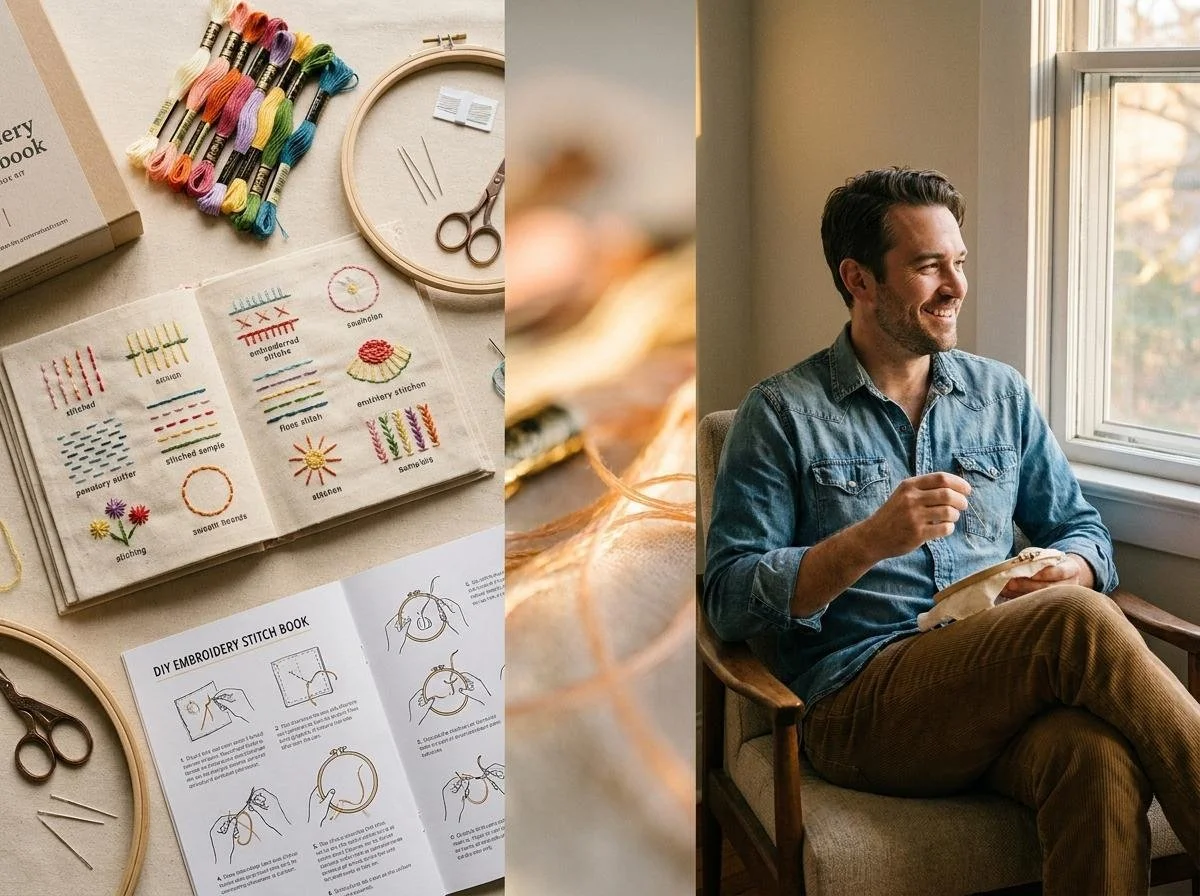
A modern stitch book comes with pre-printed fabric pages, a needle, a threader, scissors, and assorted thread colors. Designs are already printed on the fabric pages, so there’s no pattern drawing or tracing required. Progressive difficulty levels mean beginners start on simple shapes and work their way up to more complex designs as their skills develop.
The Punchora kit includes over 60 designs spread across fabric pages, each designed to be completed in roughly 10 minutes. The book format keeps everything organized and portable. You don’t need a dedicated craft space or storage system. The book closes and goes back into a bag or onto a shelf.
The broader trend of dads returning to hands-on hobbies suggests that the real barrier wasn’t interest. It was friction. Embroidery kits remove that friction by packaging everything into a single product that requires zero setup.
Making Embroidery Part of Your Dad Routine
The hardest part of starting any new practice is building the habit. The advantage of embroidery is that it doesn’t require habit stacking or calendar blocking. Here are ways to fit it into an existing schedule without adding another obligation.
Keep your kit in your go bag: Stitch during lunch breaks, waiting room moments, or while your kid is at a lesson. The portability means you don’t have to plan around it.
Use the last 15 minutes before bed: Swap phone scrolling for stitching as a wind-down ritual. The repetitive motion signals your nervous system to shift from daytime activation to rest.
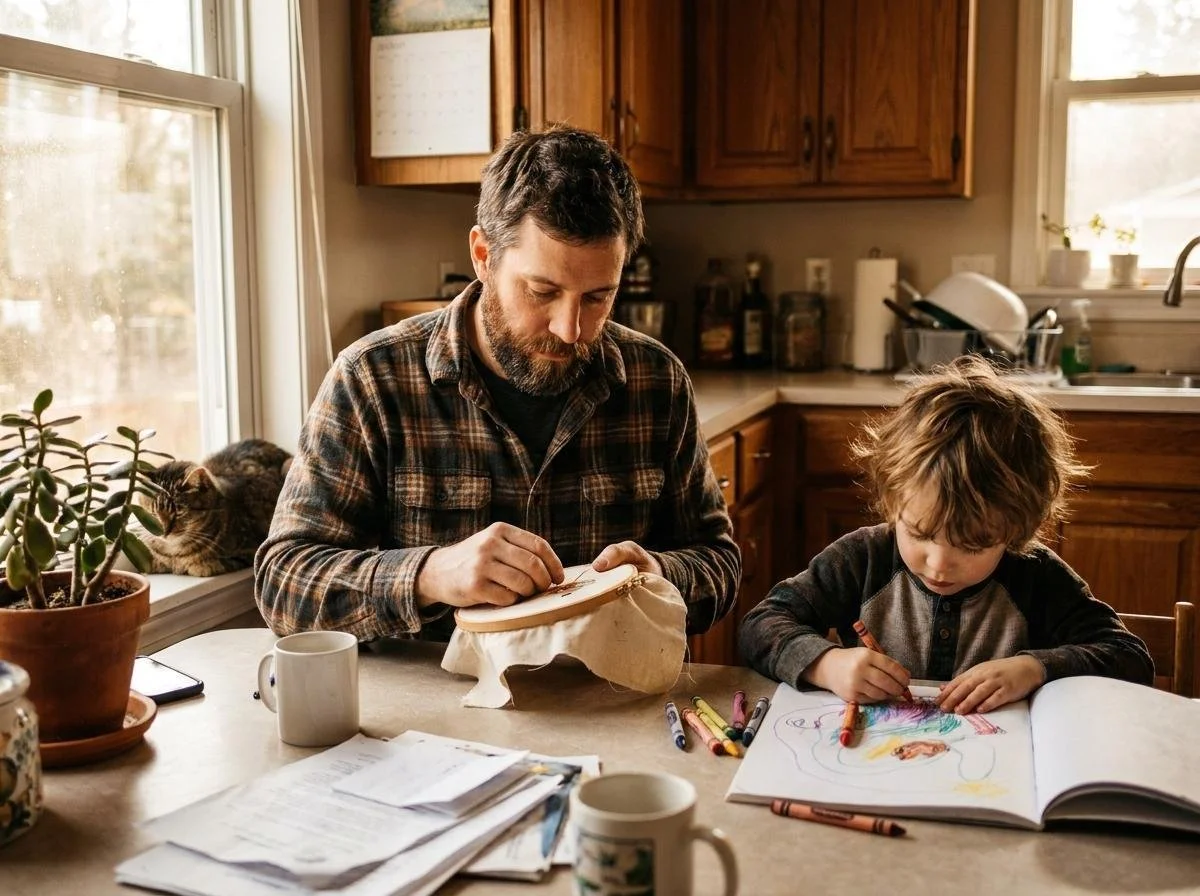
Let kids participate: Young children can pick colors or trace simple shapes for you to stitch. Older kids can learn basic stitches themselves. It becomes shared quiet time instead of the solo time you have to carve out.
Pair stitching with passive media: One stitch session per week while listening to a podcast or audiobook turns the activity into something you look forward to rather than another item on your list.
MindBodyDad’s article on finding balance through gardening makes a similar argument about mindful hobbies for dads: the best practices are the ones that integrate into your existing rhythm, not the ones that require you to build a new one around them. Embroidery follows the same logic with an even lower time commitment.
Embroidery Is for You, Not Just for Craft People
If there’s a mental block keeping most dads from trying embroidery, it’s the perception that it belongs to someone else. It’s a grandparent’s hobby or something marketed exclusively to women. That perception is out of date. The demand data says otherwise: embroidery kit searches are up 170 percent, and the global embroidery market was valued at roughly $4 billion in 2024, with a projected growth rate of 5.5 to 6.9 percent through 2031.
The research says embroidery works. The logistics say it fits. The only thing standing between most dads and an accessible mental health tool is a willingness to pick up a needle and try. No special skills required. No studio needed. Just a book, a thread, and 10 minutes.
