

During the summer months in Florida, your electricity bill will become one of the largest monthly payments you make as your air conditioning will be running from May through October. Fortunately, Florida ranks third in the USA for solar capacity! There are approximately 22,550 MWdc of solar currently installed according to the Solar Energy Industries Association.
Solar is a large investment so it is important to know the facts. This article will cover eight benefits of solar for Florida homes. From cost, payment options and whether your home is suitable.
1. Smaller Electric Bills Every Month
Air Conditioning is normally the largest electricity draw in a Florida home. This means that during the hot, sunny afternoons, the solar panels on your roof will be producing the most power!
For example, if a family in Brandon are currently paying around $220 per month for their electricity then with a correctly sized system their bill could reduce to between $30-$50. The majority of this would be fixed costs with a small amount of night time electricity. How much you save with solar will depend on how much electricity you use, but also how much shading you have, roof pitch and system size.
Tampa has fantastic weather throughout most of the year. Long sunny days can last well into the fall. During summer there may be some stormy weather which can reduce output for an hour or so but rarely will it completely ruin a whole days output.
Payback in Florida often falls between 7 and 12 years, depending on system price, financing, and local power rates. Any written estimate from a solar company Tampa homeowners consider should list system size, price, and estimated payback in plain numbers that you can compare side by side. Size matters. A right-sized design usually pays back faster, since extra panels add cost without much added value.
2. Shielding Your Budget From Rate Hikes
Florida energy prices are constantly fluctuating depending on natural gas prices and storm repairs. Over recent years your bill has increased, however once you own the panels a lot of your electricity bill will be a fixed cost for 25 years+! One of the largest financial benefits of solar is having predictable pricing.
3. Florida Net Metering Credits
On sunny days, you will probably be creating extra power. If you go for Net Metering, you can use this in a way that can create benefits in Florida by:
Using it to gain credits against your bill (normally at full retail cost).
Using your credits during times of less sun or high usage periods.
At the end of the year any credits left will be paid out to you, however the rate will be much lower.
Net metering is one of the best things about using solar panels in Florida. However, if you have an oversized system you will be getting paid very little for your excess power. It is best to check with your utility what they currently offer.
4. Tax Exemptions and Incentives That Still Apply
State Exemptions From Sales and Property Taxes
Florida gives homeowners two state tax breaks on solar:
No state sales tax on panels, inverters, and other solar equipment
Your property tax bill does not grow from the value a system adds to the house
Where the Federal Tax Credit Stands Today
Many sites still quote a 30% federal credit, but that residential credit ended for homeowner-owned systems installed after 2025. Rules shift, so confirm your eligibility with a tax professional.
5. Higher Home Value Without Higher Property Taxes
Homes that cost less to run attract higher offers, and research hints that panels you own often lift the sale price by a modest amount. Florida's exemption keeps that added value off your property tax bill. An owned system transfers to the next occupant with the house, whereas a leased one means the buyer takes over the agreement or the seller settles it early.
6. Backup Power and Storm Resilience
Here is what surprises many people: most solar panels Florida homeowners install shut off in a blackout. Grid-tied systems stop sending power when the grid fails, which protects line crews.
The U.S. Department of Energy says homes can keep the lights on through outages by pairing solar with storage. A typical home battery can run a fridge, lights, fans, and Wi-Fi overnight, though central air drains it fast.
7. Durable and Low-Maintenance
There are no moving parts. Most will come with a 25 year warranty. Occasionally you will want to hose down any pollen or leaf build up. After large storms you should check your panels. Your monitoring application will also alert you if there are any sudden dips. You may need to replace your inverter once during the systems lifetime.
8. Cleaner Air and Reduced Carbon Footprint
Due to Florida having a high proportion of natural gas generation in its grid, you will reduce emissions associated with your home by producing every kilowatt-hour of electricity on your roof. Clean air is a bonus!
Paying for Panels: Buying Outright, Borrowing, or Leasing
Who owns the panels and who can claim tax perks depends on whether a Florida buyer pays cash, takes a loan, or signs a lease or power purchase agreement (PPA).
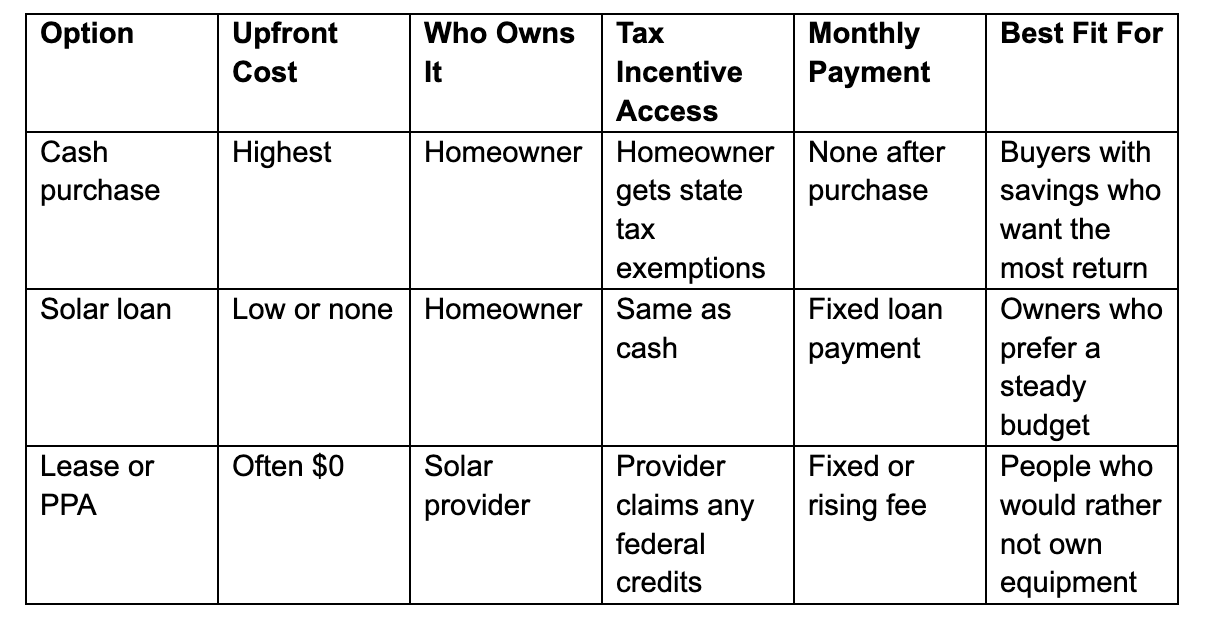
A $0-upfront lease looks easy, but read the total cost, yearly price increases, and contract length, which often runs 20 years or more.
Does Your House Suit a Solar Installation?
Check a few basics before collecting quotes:
Roof age: a roof past about 15 years may need replacing first.
Shade: trees blocking afternoon sun will cut your output.
Direction: roofs facing south or west usually produce the most.
Electric panel: an older main panel may need an upgrade.
HOA rules: Florida law limits how far an HOA can block solar.
Final Thoughts on Solar for Florida Homes
Those looking to stay in the property long-term with a good sunny roof will gain the most benefit from going solar in Florida. The main benefits will be cheaper bills and stable rates. If you are worried about interruptions then maybe a battery would be a good option.
Make sure you have 12 months of electricity bills to sign any documents, know how long your roof is and speak to a professional about any tax issues. After this you can easily compare quotes and know if it will give a good return on your plans.
Frequently Asked Questions
Are there any taxes or added value to my home?
Solar equipment is free of state sales tax. There will be no added value to your home from your solar equipment. There are also state incentives and federal laws. For more information speak to your tax specialist.
On average how long will my investment last?
A large amount of homeowners in Florida will have a payback period between 7-12 years. This will vary depending on you, your roof system, shading, finances and usage. Many panels will have a 25 year warranty. Once the system has paid for itself you will save money on your bills for years to come.
Can I have hurricane proof panels installed on my roof?
Yes they can be if installed correctly. In Florida there are strict guidelines for wind loading due to the building regulations. A high quality panel should have been tested for high winds and hail. Ensure you employ a licensed contractor, check your insurance covers your equipment and ensure your roof is in a good condition.
