
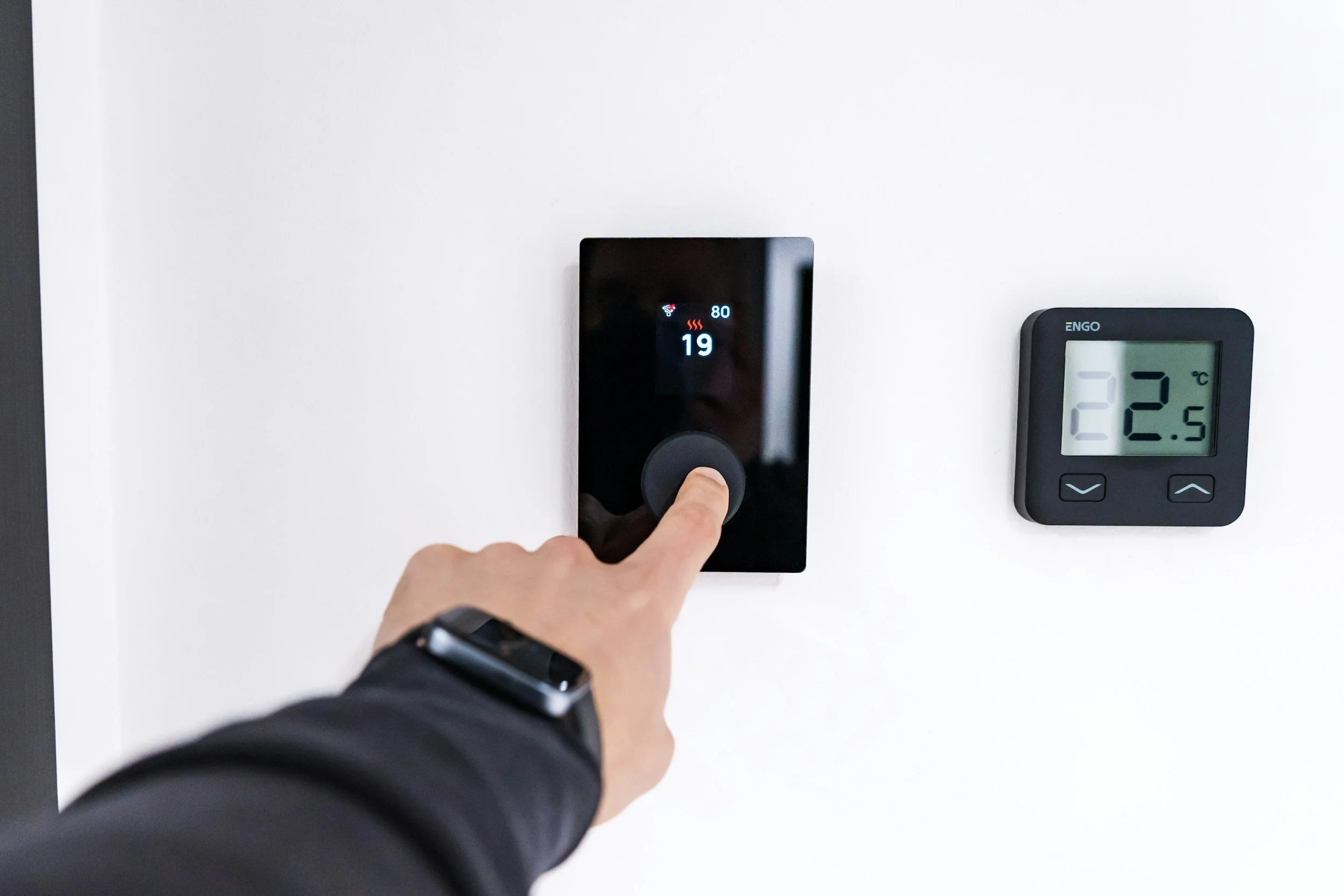
The first really cold morning is usually when you discover which bedroom never warms up or that the garden hose is still attached. Both are easier to deal with on a quiet Saturday than while everyone is getting ready for school. Set aside half an hour before the next cold snap and walk through the house in the same order your family uses it.
Check the Rooms Where Everyone Sleeps
Run the heat and visit each bedroom with the doors in their usual nighttime positions. If one room feels colder than the others, check whether a bed, laundry basket, or rug covers a supply register or return grille. Move it and see whether the room feels different that evening. For a forced-air system, check when the filter was last changed and follow the equipment manual for the replacement type and schedule.
Write down what you notice if the same room stays cold, the system shuts down repeatedly, or the thermostat never reaches its setting. Record the time of day and which rooms are affected. Those details can help a technician understand what happens during your family’s normal routine. If you’ve heard of Home Rangers in Ambler, the company also has a dedicated heating and plumbing service page for nearby Horsham Township.
Find the Water Shutoff Before You Need It
Ask another adult in the house to point out the main water shutoff. If either of you has to guess, locate it together and take a photo. Move storage bins out of the way and save the photo in a shared household album. A simple label on the valve can also help someone find it quickly during a leak.
Disconnect garden hoses before freezing weather. If an attached garage contains water supply lines, keep the garage door closed during a freeze. Pay particular attention to pipes near exterior walls and in unheated areas. If a faucet suddenly produces only a trickle on a freezing morning, check whether other fixtures are affected and contact a plumber if you suspect a frozen pipe you can’t locate or reach.
Test the Alarms With the Kids Home
Use the test buttons on smoke and carbon monoxide alarms and tell children before you start so they know why they’re hearing the sound. The U.S. Consumer Product Safety Commission recommends testing alarms monthly and placing carbon monoxide alarms on every level of the home and outside sleeping areas. Follow the manufacturer’s instructions for battery changes and replacement dates.
Show kids where the family meets outside if an alarm goes off. For younger children, a concrete spot such as the neighbor’s front steps is easier to remember than “somewhere out front.”
Leave a Short Note for the Next Cold Snap
Put three things in a shared phone note or on the fridge: the water shutoff location, the heating or plumbing number you’d call, and any room or fixture you want to recheck during the next freeze. Add the date you tested the alarms. When the weather turns, everyone has the same information, even if the person who normally handles repairs is at work.