
Best ABA Software for Managing Clinical and Administrative Workflows
Running an ABA practice means juggling insurance billing, real-time data collection, and HIPAA compliance, all at once. The best ABA software should make that easier, not add another layer of difficulty. After reviewing dozens of platforms across clinical capability, billing accuracy, and workflow design, a clear pattern emerged: most practices struggle most with session note timeliness and claims denials, both of which the right software can directly address. This guide covers five platforms worth serious consideration.
How the picks were chosen
Each platform was assessed using publicly available information, including feature breakdowns from official websites, reviews from review platforms, and documented case studies. Only options with a clear track record serving healthcare therapy practices made the final list. See the full research breakdown
Theralytics - Best for clinical practices prioritizing real-time data clarity
TherapyPMS - Best for ABA and therapy practice management
CentralReach - Best for autism and IDD therapy practices and special education institutions
Rethink Behavioral Health - Best for ABA clinics and pediatric therapy providers
Ensora Health - Best for therapy practices and mental health providers seeking integrated EHR and practice management
Why ABA Software Is Worth the Investment
Managing an ABA practice without purpose-built software is a bit like running a billing department without a ledger. Insurance prior authorizations alone can eat up hours of staff time every week, and without clean data, claims denials pile up fast.
Real-time data collection during therapy sessions is another pressure point. When session notes are incomplete or delayed, clinical decision-making suffers and progress reporting to insurers becomes unreliable.
The right ABA software changes that equation. Platforms built for behavioral health bring the kind of structure that keeps session note completion rates high and claims acceptance rates healthy.
That directly affects average revenue per authorized hours, since approved claims get processed faster and fewer hours go unbilled. From what practitioners consistently report, specialized software pays for itself relatively quickly once billing accuracy improves.
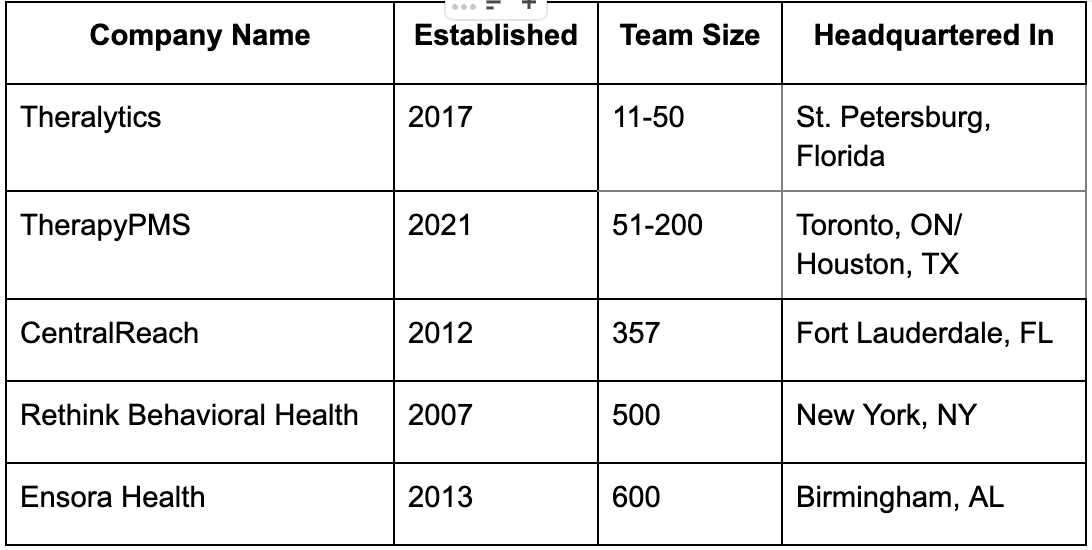
ABA Software Comparison Table
Note: All data in this table is sourced from review platforms and the official websites of the listed companies.
1. Theralytics - Best for Real-Time Clinical Data and Workflow Optimization
What Problem Does Theralytics Solve?
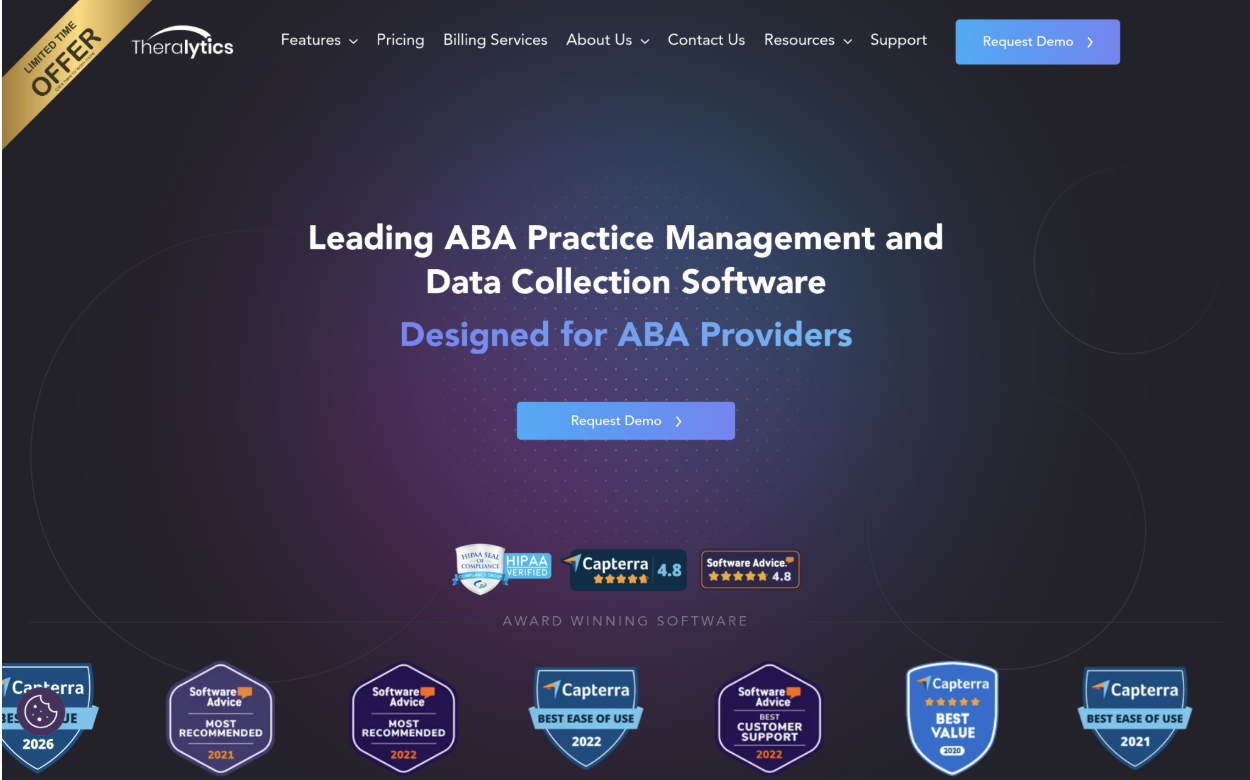
Theralytics takes on one of the messiest problems in ABA practice management: the gap between clinical work and back-office operations. BCBAs, supervisors, and clinicians share data in real time, so nothing falls through the cracks between a session and a billing cycle. Automated progress monitoring and graphing cut the manual documentation burden by a meaningful amount. The platform covers scheduling, billing, and clinical workflows within a single interface, which means fewer systems to manage and less time spent reconciling data across tools.
What's Theralytics' Edge in ABA Software?
Theralytics ties clinical data directly to operational workflows, which means progress updates don't have to be manually re-entered into billing or scheduling tools. That kind of live synchronization is rare in ABA platforms and directly supports faster, more accurate claims submissions.
The Review Roundup:
Theralytics earns consistent praise for making clinical insights accessible quickly, particularly around automated graphing that saves BCBAs measurable time each week. Users also point to its intuitive design as something that shortens setup considerably (not always the case with enterprise ABA tools). The platform's SOC 2 Type II certification and offline-capable data entry give practice owners real confidence around data security and continuity.
2. TherapyPMS - Best for ABA and Therapy Practice Management
What Problem Does TherapyPMS Solve?
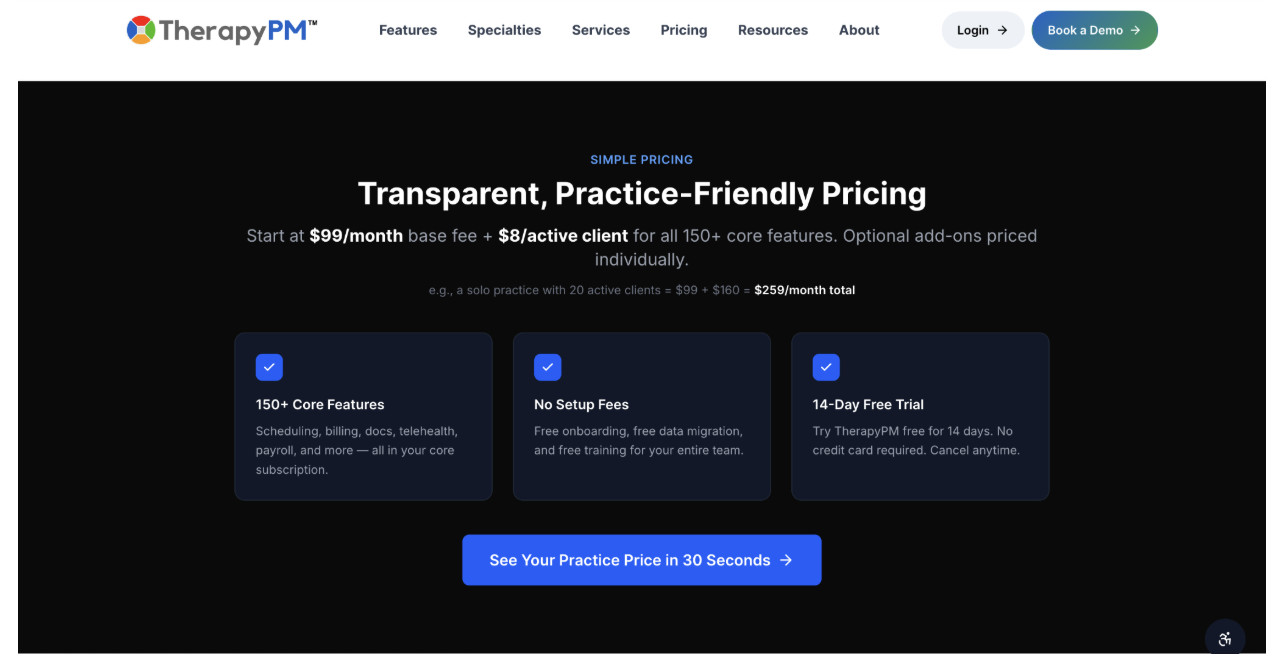
TherapyPMS addresses the full administrative stack for therapy practices, from credentialing through to billing and accounts receivable. The platform covers ABA alongside occupational therapy, speech therapy, mental health, pediatric therapy, and physical therapy, which makes it a practical fit for multi-specialty clinics. With a reported 99% reimbursement success rate across more than 500 clinics in the United States and Canada, the billing side of the platform is clearly where it earns its keep. SOC-2, HIPAA, and GDPR compliance round out the compliance picture.
What's TherapyPMS' Edge in ABA Software?
TherapyPMS was built exclusively for therapy professionals, so the billing logic and compliance frameworks reflect real-world payer rules rather than generic medical billing assumptions. That specialization tends to translate into fewer claim errors and smoother prior authorization workflows for ABA-specific billing codes.
The Review Roundup:
Feedback from clinics points to strong satisfaction around billing outcomes and ease of credentialing workflows. The platform's multi-specialty support gets mentioned positively by practices that operate across therapy disciplines. The 99% reimbursement claim is an ambitious number, but the breadth of clinics trusting the platform suggests there's real substance behind it.
3.CentralReach - Best for Autism and IDD Therapy Practices
What Problem Does CentralReach Solve?
CentralReach is the largest platform in this space by a clear margin, serving more than 4,000 ABA practices and over 200,000 professionals. The platform pulls together practice management, clinical data collection, scheduling, care team coordination, and billing into one system. What makes CentralReach stand apart is cari, their own AI trained on over a billion data points in partnership with more than 40 BCBAs. For practices managing large caseloads across multiple locations, that kind of AI-assisted scheduling and care planning can make a real operational difference.
What's CentralReach's Edge in ABA Software?
CentralReach is one of the few platforms that combines clinical data collection, practice management, and a marketplace product set for autism and IDD care under a single roof. The scale of their user base means their AI tools are trained on a depth of real-world ABA data that smaller platforms simply can't match.
The Review Roundup:
CentralReach has earned 40-plus industry awards, including recognition from Deloitte and Inc. Magazine, which shows they're credible at an enterprise level. Users at larger multi-location practices tend to get the most out of the platform's depth. Smaller practices sometimes note the learning curve, but the payoff in clinical reporting and billing accuracy tends to be worth it.
4.Rethink Behavioral Health - Best for ABA Clinics and Pediatric Therapy Providers
What Problem Does Rethink Behavioral Health Solve?
Rethink Behavioral Health brings a clinician-first approach to ABA software, with a library of more than 1,500 customizable care plans and a mobile app built for real-time data collection during sessions. The Medical Necessity Assessment tool has completed over 23,000 assessments with an 87% average clinician agreement rate, which is the kind of specificity that matters when you're justifying treatment plans to payers. The platform also integrates staff training directly into the workflow, so clinical competency doesn't sit in a separate system.
What's Rethink Behavioral Health's Edge in ABA Software?
Rethink is used by more than 500 ABA organizations worldwide, and their clinical credibility is backed by the largest published ASD dataset available in behavioral health software. That foundation means the care plans and assessment tools reflect genuine clinical evidence rather than just operational convenience.
The Review Roundup:
Users consistently highlight the depth of Rethink's clinical programming library as something that reduces treatment planning time noticeably. The Medical Necessity Assessment tool gets called out as a time-saver during insurance reviews. Practices that fully build out their care plan library inside the platform tend to see the biggest gains in therapist-to-client ratio management.
5.Ensora Health - Best for Therapy Practices and Mental Health Providers
What Problem Does Ensora Health Solve?
Ensora Health serves over 200,000 individual providers across more than 28,000 practices through two purpose-built platforms: TheraNest for mental health and Fusion for rehabilitation therapy. Their revenue cycle management service, Ensora RCM, layers on top of both. The platforms were built with direct input from solo providers, care teams, and administrators, so the feature set reflects what actually creates administrative drag in day-to-day practice. Pricing starts at $29 per month with no setup fees (genuinely rare in this space), which makes it accessible for smaller or solo practices.
What's Ensora Health's Edge in ABA Software?
Ensora Health's dual-platform structure means practices get tools built for their therapy type rather than a one-size-fits-all EHR. Their planned deployment of AI tools for clinical tasks like therapy notes and treatment plans positions them well for the next phase of administrative reduction in behavioral health.
The Review Roundup:
Ensora has earned G2 Leader status for mental health software, and Fusion landed in the G2 Top 50 Healthcare Software list for rehabilitation therapy, which builds trust across both practice types. Users tend to call out the pricing transparency and the low barrier to entry as standout qualities. For smaller therapy practices that need built-in billing without enterprise-level complexity, Ensora is one of the more practical picks on this list.
Selection Framework: How Each Pick Was Evaluated
The goal of this research was to identify ABA software platforms that genuinely serve the clinical and operational needs of behavioral health practices. Here's how the evaluation process worked.
Where to Source Your Information
The starting point was building a longlist from multiple independent sources. Therapy-specific software directories, professional association resources, and review platforms were all used to surface candidates. Case studies published by the platforms themselves, along with third-party feature breakdowns, helped fill in the picture of what each tool actually does day-to-day versus what their marketing pages claim.
Filtering Candidates Down to Finalists
From the initial longlist, platforms without verifiable real-world usage in ABA or behavioral health settings were removed. Review patterns were analyzed closely, looking for consistency across multiple sources rather than a handful of outlier ratings. Platforms with limited documentation of their compliance posture or billing capabilities were deprioritized, since those are non-negotiable in this space.
Accuracy Assessment of Selected Items
For each finalist, the claims made on official websites were cross-referenced against independent user reviews and publicly available case study data. Where a platform claimed specific metrics, such as reimbursement rates or assessment accuracy, those figures were checked for corroboration across multiple independent sources. Platforms where major claims couldn't be reasonably verified were held to a higher standard before inclusion.
Industry Standing Check
Beyond feature comparisons, each platform's standing in the broader behavioral health and healthcare technology space was assessed. Industry award recognition, mentions in professional publications, and evidence of original research or published datasets were all considered. Platforms with a documented record of peer engagement, such as BCBA advisory partnerships or published clinical studies, were treated as stronger candidates.
Real-World ABA Software Evidence
The final check focused on real-world evidence specific to ABA use cases. This included dedicated service pages for ABA-specific workflows, verified reviews from BCBAs and practice owners, and case studies showing measurable outcomes in clinical or operational performance. Platforms with thin or generic evidence for ABA-specific functionality were noted, and that context was reflected in how they were positioned within the final list.
Choosing the Right ABA Software: A Quick Guide
Picking the right ABA software comes down to matching the platform's strengths to the specific pressures your practice faces, whether that's billing accuracy, session documentation speed, or multi-location coordination.
Industry/Domain Experience: Look for platforms built for ABA or behavioral health, not general medical EHRs that have added therapy features. Purpose-built tools tend to reflect actual payer rules and BACB ethics code requirements.
Features and Capabilities: Check whether the platform covers your full workflow: data collection, scheduling, billing, and caregiver portal access. Gaps in any of these areas usually show up as manual workarounds for your staff.
Pricing Structure: Understand how pricing scales with your practice size. Some platforms charge per clinician, others per client, and a few charge flat rates. Setup fees and add-on costs can change the real number significantly.
Results Measurement: The platform should make it easy to track session note completion rates, treatment goal mastery, and claims acceptance rates. If reporting requires manual exports, that's a red flag.
Industry Knowledge and Compliance: Confirm that the software meets HIPAA and payer compliance standards, and check whether it supports Medicaid billing if that's part of your payer mix.
Wrapping Up
Choosing ABA software is really a decision about where your practice loses time and money. Billing errors, late session notes, and scheduling gaps all have a direct cost. The platforms covered here each address different parts of that problem, with varying depth and scale. As payer requirements grow more specific and caseloads increase, practices that invest in the right tools now will be better positioned to deliver consistent clinical outcomes without burning out their clinical teams.
