
Preface
The best sensory toy fits the child using it. Some children enjoy textured surfaces; others prefer movement they can repeat at their own pace. Nexbie 3D printed fidget toys offer tactile and mechanical options worth comparing with familiar choices such as soft balls, modeling dough, and simple puzzles. This guide explains what to look for, how to introduce a toy, and how to judge whether it belongs in your family's routine. Start with the child's preferences and the intended setting.
What Makes a Toy Sensory?
A sensory toy invites exploration through experiences such as touch, sight, sound, or movement. A textured figure and a squeezable ball provide different kinds of input, even when both occupy the hands. The label covers a broad range of objects, so it does not tell you whether a particular child will enjoy a product.
Think about the action first. Does the child like pressing, rotating, stretching, arranging, or tracing? Then consider intensity and control. Predictable movement may appeal to one child, while another prefers soft texture without moving parts. Introduce one option at a time so you can notice what attracts interest and what feels uncomfortable.
Sensory Toy Types Worth Considering
1. Mechanical Fidgets for Repeated Movement
Mechanical fidgets offer actions such as turning or rotating. Nexbie's 3D Printed Gem Cube Fidget Toy is described on its product page as a PLA toy with interlocking gears and rotating corners. Its listed size is 80 by 80 by 80 millimeters. Compare that size with the child's grip and the space where it will be used.
Try a few gentle movements together, following the product's directions. Notice whether the resistance, sound, and grip are comfortable. Avoid forcing a mechanism beyond its intended range. A toy that is entertaining during a break may be too absorbing during another task, so assess it in the situation you actually have in mind.
2. Articulated Figures for Touch and Imagination
An articulated figure combines movable sections with a recognizable character. A child might arrange it in a curve, compare its surface with another object, or include it in a story. Nexbie's 3D Printed Articulated Dragon connects this kind of hands-on exploration with a fantasy theme. Check the current listing and age guidance for the exact model before choosing it.
Let the child explore at their own pace. Describe a movement only when it helps: “This section bends when you move it gently.” Do not require them to touch a surface they dislike. Movable joints also need inspection, especially after rough handling. Put away any figure with a damaged section or a newly exposed sharp edge.
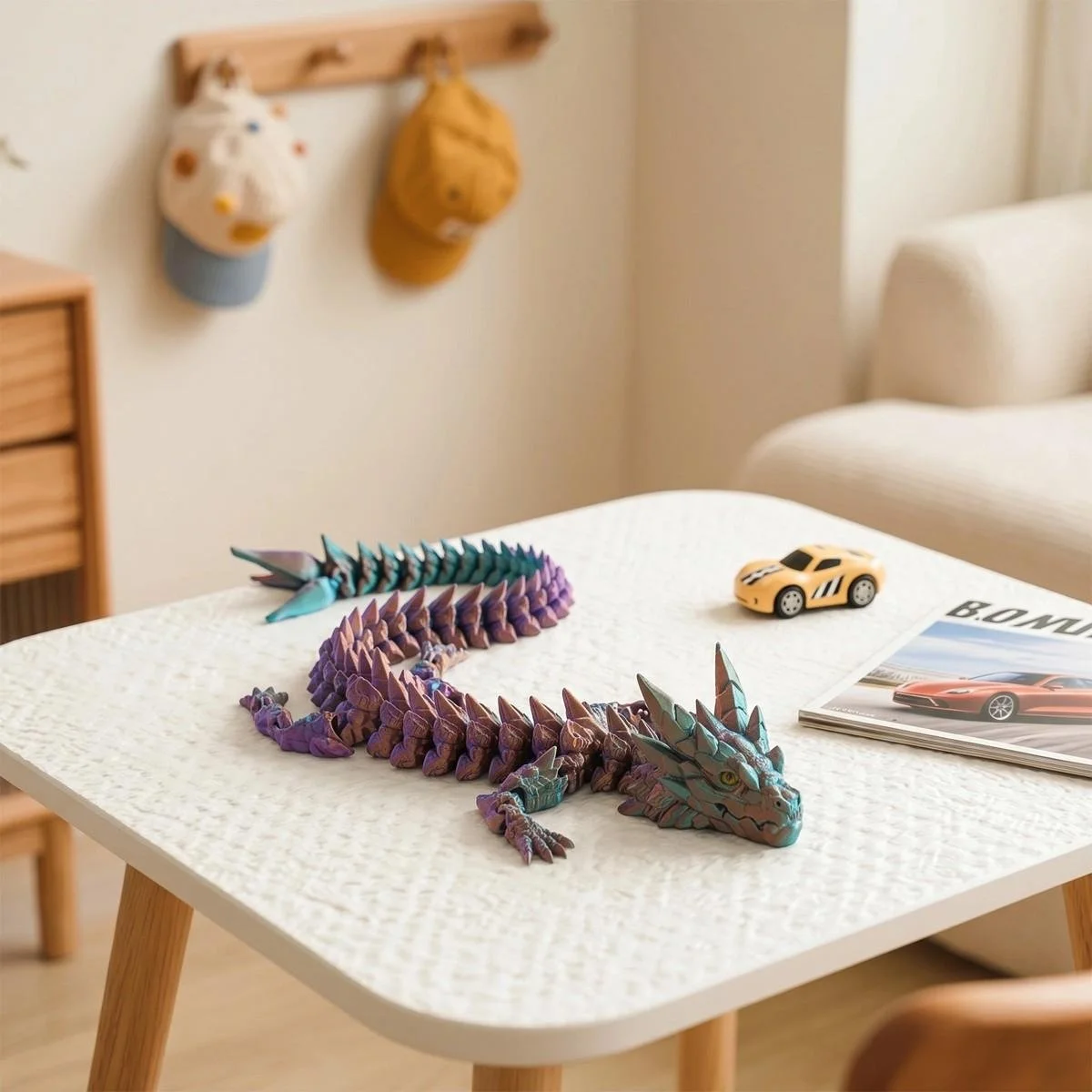
An articulated dragon combines a fantasy character with movable sections.
3. Soft Toys for Squeezing
A soft ball or suitable squeezable toy offers pressure through the hands. Compare firmness and size rather than assuming softer is always better. Some children enjoy noticeable resistance, while others prefer an easy squeeze. Check the outer surface regularly and follow cleaning instructions. A damaged item that leaks material should come out of use immediately.
4. Modeling Materials for Making and Changing
Age-appropriate dough or similar modeling materials invite rolling, flattening, and shaping. Begin with a small amount on a washable surface. A child who dislikes direct contact may prefer using a roller or another suitable tool. Keep materials separate from food and follow their labeling. There is no need to introduce stronger textures before the child wants them.
5. Puzzles for Deliberate Hands-On Play
A puzzle offers controlled handling, visual comparison, and the physical experience of fitting pieces together. Nexbie's Snoopy wooden puzzles provide a different activity from continuous fidgeting. Choose the puzzle's size and difficulty carefully, especially when small pieces are involved. For a short session, sorting one section may be more suitable than attempting the entire picture.
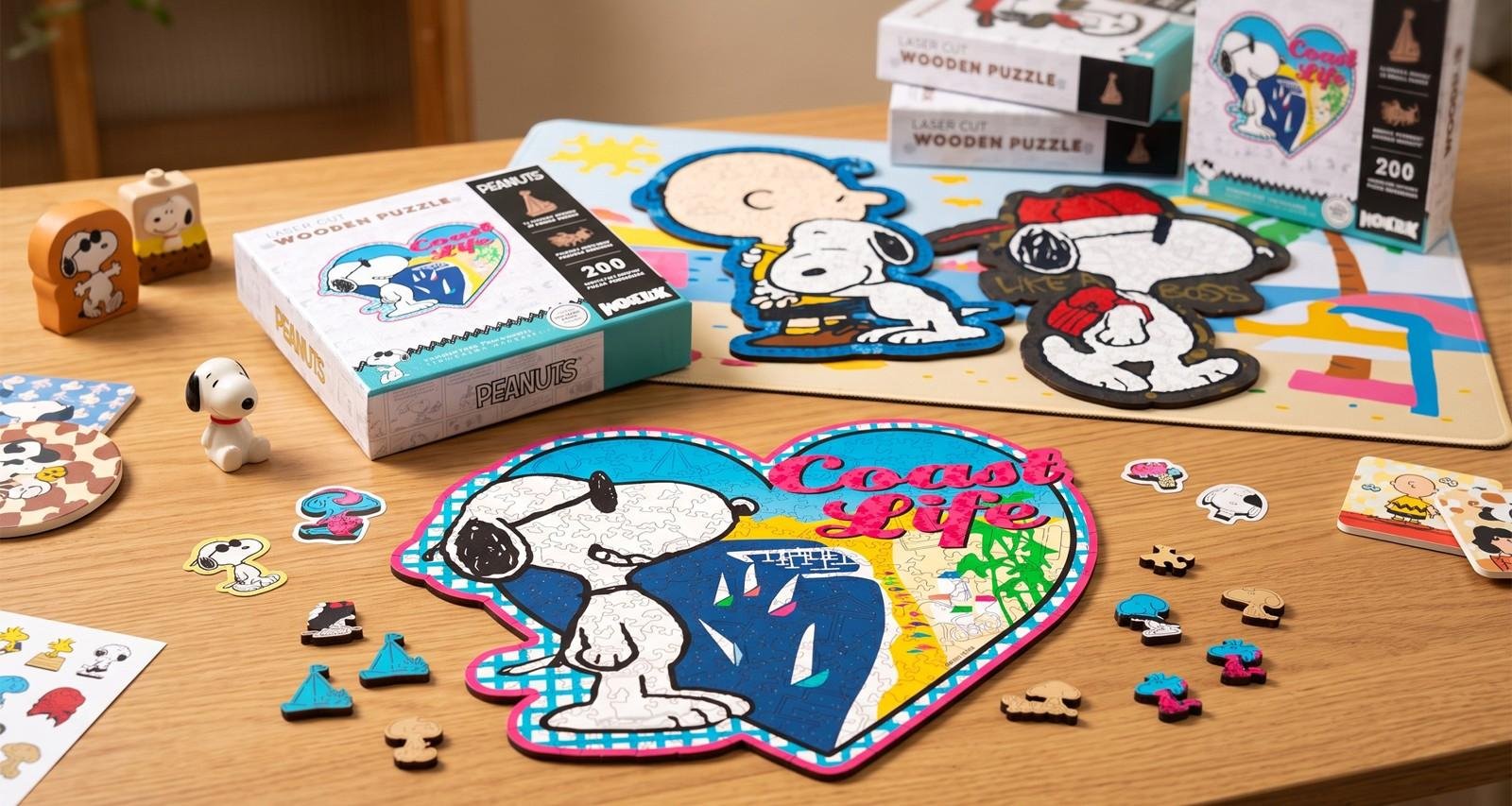
Snoopy wooden puzzles offer a setting for shared assembly and conversation.
Choose for the Child and the Setting
Check Safety and Practical Fit
Read the manufacturer's age recommendation, warnings, materials information, and care guidance for the specific item. A general description such as “3D printed” does not establish suitability. Examine small components, moving gaps, and surface condition. Consider whether younger siblings can reach the toy after play. Storage is part of choosing a product that works comfortably at home.
Think about cleaning and supervision as well as appearance. A toy with intricate moving parts may need a different care routine from a plain washable ball. Follow the maker's instructions instead of assuming every item tolerates soaking or heat. If key safety information is missing, ask the seller before purchasing for a child.
Match the Environment
A clicking mechanism may suit a playroom but interrupt a shared reading space. An intricate figure may be enjoyable at home yet inconvenient to carry. Decide whether you want a dedicated play activity, a brief hands-on break, or a small object for waiting. If school use is intended, discuss classroom expectations with the teacher first.
Introduce One Toy and Observe
Offer the toy without insisting that it must feel calming. Demonstrate a safe action, then let the child decide whether to continue. Ask simple questions about comfort when useful. Watch for enjoyment, frustration, fatigue, or a wish to stop. Changing to a different activity is a reasonable response, even when the product was chosen carefully.
For use alongside listening or another task, observe that task directly. Is the child still following the conversation, or has the toy become the main activity? Adjust accordingly. Enjoyment alone does not establish improved attention, and a fidget should not be presented as a guaranteed treatment. Persistent difficulties deserve individualized guidance rather than stronger product promises.
Keep a Small, Useful Selection
Once you find an appealing option, resist adding several similar toys immediately. Try it on different days and notice whether the child returns to it voluntarily. Store it where it can be found easily, with clear boundaries for use and cleanup. A small rotation might include one movable figure, one soft object, and a puzzle for longer play. There is no requirement to cover every texture or sensation. Retire choices that frustrate the child, and revisit preferences as interests change. The most useful collection is one that actually gets used comfortably in your home.
Conclusion
Choosing a sensory toy means matching an action, texture, and level of challenge to a real child. Nexbie fidgets, articulated dragons, and wooden puzzles offer different ways to explore. Start with one suitable option, follow its guidance, and let the child's response determine what stays in the routine. Keep their preferences in view.
