
Convenient Recovery Solutions for Busy Lifestyles
Here's the honest truth: recovery doesn't get canceled because you're busy, it just gets delayed until your body forces the issue. Between back-to-back calls, school pickups, and a task list that seems to multiply overnight, taking care of yourself falls last. But burnout doesn't announce itself. It just quietly compounds.

The encouraging part? Convenient recovery solutions don't demand a cleared calendar or an expensive retreat. With the right busy lifestyle recovery tips, meaningful recovery happens in the margins of your day, and the difference shows up in your energy, your focus, and frankly, your mood.
Smart Physical Recovery Methods Built for Real Schedules
Let's be clear: you don't need a dedicated rest day or a gym block to recover properly. The most effective quick physical recovery methods right now are built for people exactly like you, people with real constraints and zero patience for fluff. North America is already leading this shift. Mobile wellness services hit USD 842.4 million in 2024 and are on track to nearly double by 2030. That's not a wellness trend; that's a market responding to genuine demand from people who need recovery to work around their lives.
Micro-Recovery Moves You Can Do Between Meetings
Three minutes. Hip circles, shoulder rolls, and a slow forward fold. Done between calls, that brief sequence reduces accumulated muscle tension and signals your nervous system to downshift. Micro-breaks aren't indulgent, they're strategic.
Recovery Hacks Worth Knowing: High Impact, Minimal Time
Some recovery hacks for busy people sound like luxuries until you realize they genuinely fit within a lunch break. Many targeted sessions run just 30 to 45 minutes, which makes high-quality recovery achievable even on a compressed schedule.
Concierge Recovery: IV Therapy at Home
For professionals who want measurable results without adding a commute or a waiting room to their day, iv therapy at home has become a genuinely compelling option. Rapid hydration and targeted nutrient delivery happen directly in your space, no travel, no waiting, no scheduling gymnastics. Sessions typically finish within 30–60 minutes and integrate cleanly alongside other quick physical recovery methods you're already using.
Mobile Recovery Tools That Deliver Quickly
Percussion massage guns address muscle soreness in minutes. Guided stretching apps build routines around your specific body and available time. Portable compression sleeves reduce inflammation during a commute. None of these requires significant commitment, just consistent, intentional use.
These tools amplify results when your day-to-day habits are already supporting recovery in the background.
Time-Saving Recovery Strategies for People Who Can't Afford to Slow Down
Efficient recovery is about intentionality, not volume. Time-saving recovery strategies work because they ask less of you, just a more deliberate application of what you already have.
Stack Recovery Onto Existing Habits
Calf stretch while brushing your teeth. Three deep belly breaths before you open your inbox. These require nothing extra, no equipment, no time block, no calendar entry. They simply ride alongside things you're already doing, which is precisely why they stick.
Mental Recovery Is Physical Recovery
Cognitive overload and physical fatigue share the same currency. Even fifteen minutes away from screens, a short walk, quiet journaling, a breathing exercise, meaningfully reduces the mental load your body is carrying. It doesn't need to be elaborate to be effective.
Plan Recovery Like You Plan Meetings
One scheduled light session per week, a walk, a stretch, even a designated rest window, changes the dynamic entirely. When it's on the calendar, it happens. When it's not, it doesn't. A simple tracker, even handwritten, keeps you honest.
Nutrition That Actually Speeds Recovery
What you eat in the 30–60 minutes after high-stress or physical output genuinely matters. Greek yogurt with berries, a handful of almonds, a banana with peanut butter, simple protein-and-carb combinations do the job efficiently. Anti-inflammatory options like tart cherry juice, walnuts, and leafy greens work quietly in the background, reducing soreness before it fully sets in.
Smarter Sleep Without Sleeping More
A 20-minute power nap, properly timed, not at 5 PM, is well-documented in research as a legitimate performance and recovery tool. Consistent wake times anchor your circadian rhythm, and small environmental shifts like blackout curtains or a slightly cooler room temperature meaningfully improve sleep depth. Quality over quantity, always.
The goal is weaving these into what you're already doing, not adding a whole new routine.
Sometimes, though, small habits aren't enough. That's when targeted solutions earn their place.
Lifestyle Adjustments That Make Recovery Sustainable
Real recovery isn't a single session, it's the sum of small daily decisions. The right habits create a baseline where your body recovers continuously, not just when you carve out dedicated time.
Keeping Cortisol in Check
Stress is one of the most underestimated recovery disruptors. Box breathing or 4-7-8 breathing practiced during transitions, before a meeting, at a stoplight, measurably reduces cortisol without adding anything visible to your day.
Weekend Recovery Without Losing the Weekend
An extra 60–90 minutes of sleep on weekends, combined with reduced screen time and solid hydration, restores baseline energy effectively. Not sleeping until noon, just a modest, deliberate extension. It works.
Morning Sunlight Beats a Second Coffee
Ten minutes of natural light exposure in the morning supports circadian signaling, boosts mood, and sets up better sleep later. It costs nothing and outperforms most supplements for sustained daily energy.
Finding What Actually Fits Your Situation
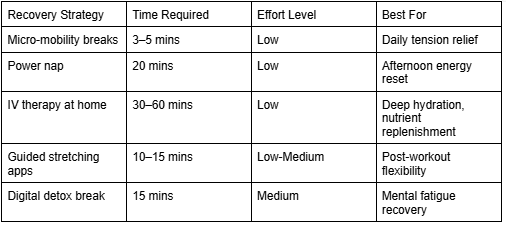
Not everything here belongs in your routine. Here's a practical reference:
Start With the Foundation
Sleep consistency, hydration, and regular movement are non-negotiable, full stop. Everything else, including IV therapy, recovery tech, or structured planning, layers meaningfully on top of that base. Skip the foundation, and the add-ons lose their impact.
Track and Adjust Honestly
Check in weekly. How's your energy? Soreness? Mental clarity? These are your real-time feedback signals. If something isn't moving the needle after two weeks, swap it out. Recovery is personal, and what serves you in one season may not serve you in the next.
Frequently Asked Questions
What are the 7 R's of recovery?Recognition, Responsibility, Resilience, Relationships, Reflection, Routine, and Renewal. These principles support long-term healing, behavioral change, and daily accountability within a structured, meaningful framework.
What micro-recovery practices work fastest when I'm stretched thin?Box breathing, a five-minute mobility sequence, and a protein-rich snack after exertion. These three reduce inflammation, reset your nervous system, and support muscle repair without any meaningful time cost.
Can weekend recovery genuinely reset energy without hurting productivity?Yes. An additional 60–90 minutes of rest, combined with reduced screen exposure and light movement, restores baseline energy without undermining Monday. Quality of rest matters more than raw hours.
What's the bare minimum recovery protocol that actually delivers results?Consistent sleep timing, daily hydration, and at least one three-minute movement break per day. Done consistently, these outperform infrequent, longer sessions that rarely happen on schedule.https://brbridge.org/substance-use/recovery-is-not-linear-what-the-path-can-look-like/
How frequently should IV therapy at home be scheduled for real benefit?Most people find iv therapy at home sessions once monthly sufficient for maintaining results. Those managing heavier physical or cognitive workloads often benefit from scheduling every two to three weeks, based on guidance from their provider.
Recovery for Busy Professionals
Recovery doesn't require perfection; it requires consistency. A three-minute stretch between meetings, a smarter weekend wind-down, or one well-placed in-home wellness session can each shift the trajectory meaningfully. Convenient recovery solutions work precisely because they don't demand an overhaul; they integrate. Time-saving recovery strategies succeed when treated like real commitments, not optional additions. Choose one thing from this list this week. Your body will respond, and you'll feel the difference before the week is out.
Related:
