
Eco-Friendly Family Moves in LA: Teaching Kids Sustainability Through Change
The average household move generates up to 100 pounds of waste, and most of that is packing material heading straight to the landfill. If you're relocating in or to Los Angeles with children, that number should give you pause.
But here's the upside: a family move is also one of the most hands-on sustainability classrooms you'll ever stumble into. Real decisions, real consequences, real impact.
How to reduce moving waste without sacrificing protection for your belongings
How to involve your kids in eco-friendly choices at every stage of the move
How to carry those green habits into your new LA home
TL;DR
Traditional moves generate up to 100 pounds of waste per household, mostly from single-use packing materials that rarely get recycled.
Decluttering before you pack is the most effective way to shrink your moving footprint, and a great kids' project.
Give children age-appropriate green tasks, from sorting donations to selecting reusable supplies.
Reusable box rentals, eco-friendly packing alternatives, and thoughtful item disposal make a measurable difference.
The moving company you hire matters: biodiesel trucks, reusable materials, and verified environmental programs signal genuine commitment.
A Move in LA Carries a Bigger Environmental Footprint Than Most Families Realize
California consistently ranks among the most active relocation destinations in the U.S., and Los Angeles sits at the center of that movement. With high relocation volume comes a real environmental toll.
A single household move produces roughly 17 to 18 kilograms of CO2 emissions on average, largely driven by fuel use during transport. Stack that with cardboard boxes, plastic bubble wrap, foam packing peanuts, and adhesive tape. None of which are curbside-recyclable in most LA neighborhoods, and the waste picture gets uncomfortable fast.
The encouraging reality is that a significant chunk of that footprint is avoidable. Planning early and involving the whole family makes a meaningful dent.
Why a Move Is the Perfect Sustainability Lesson
Most environmental education stays abstract. Recycling a bottle is a good habit, but it's also forgettable.
A move is different. Everything is on the table at once: what gets kept, what gets donated, how items are wrapped, which truck picks it all up. Every decision has a visible consequence. That's rare and genuinely powerful for a child's developing understanding of cause and effect.
Children who participate in purposeful eco-decisions during a move don't just hear "reduce, reuse, recycle" as a slogan. They live it through a process that actually matters to them. That sticks in a way that a school lesson rarely does.
Declutter Before You Pack
The most impactful green choice you can make starts before you tape a single box: move less.
Every item that travels from one LA address to another adds weight to the truck, time to the route, and fuel to the engine. The lighter the load, the smaller the footprint. It's simple arithmetic with a surprisingly big payoff.
Turn Donating Into a Family Mission
Give your kids ownership over the sorting process. Walk room by room together. The decision tree is easy to explain:
Do I use this regularly? Keep it.
Could someone else use this? Donate it.
Is it broken and unrepairable? Recycle or responsibly dispose of it.
Los Angeles has a strong network of donation options, including local thrift stores, neighborhood "buy nothing" groups, and community organizations that distribute directly to families in need. Frame the donation run as an event, not a chore. Let children physically hand items over or drop off the bags themselves. The emotional act of giving lands completely differently than just setting something at the curb.
Older kids can take this a step further by researching where donated items actually go. A five-minute exercise like that transforms a routine errand into a lesson about circular economies, community support, and the second life of objects.
Pack Smarter, Not Heavier
Once you've cut the load, how you protect what remains matters almost as much.
Skip the Bubble Wrap
Plastic bubble wrap is single-use, almost never recyclable at the curb, and honestly unnecessary in most situations. Here's what works just as well with zero additional waste:
Clothing, towels, and blankets wrapped around fragile dishes and glassware
Dish towels stuffed inside mugs and cups to prevent cracking
Socks packed into open gaps inside boxes to stop shifting during transit
Recycled paper or newspaper layered around anything delicate
For truly fragile or high-value items, biodegradable paper honeycomb rolls provide serious protection without any plastic. They're widely available and fold flat for easy recycling after the move.
Get your kids involved here. Let them wrap a plate with a sweater or pack a lamp with a winter jacket. Show them how household materials can pull double duty. It feels like a puzzle; they'll be surprisingly skilled at it, and it generates zero new waste.
Rent Reusable Moving Boxes
Standard cardboard boxes are convenient, but they're largely one-time-use items. Renting heavy-duty plastic moving bins solves that cycle entirely. These bins are durable, stackable, waterproof, and returned after your move so the next family can use them.
The explanation for your kids is simple: "We're borrowing these boxes and giving them back so someone else can use them too." One sentence covers borrowing, resource sharing, and waste reduction all at once.
Give Kids a Real Role at Every Stage
Sustainability becomes a habit when children do it, not just observe it. Here's a practical breakdown by age group:
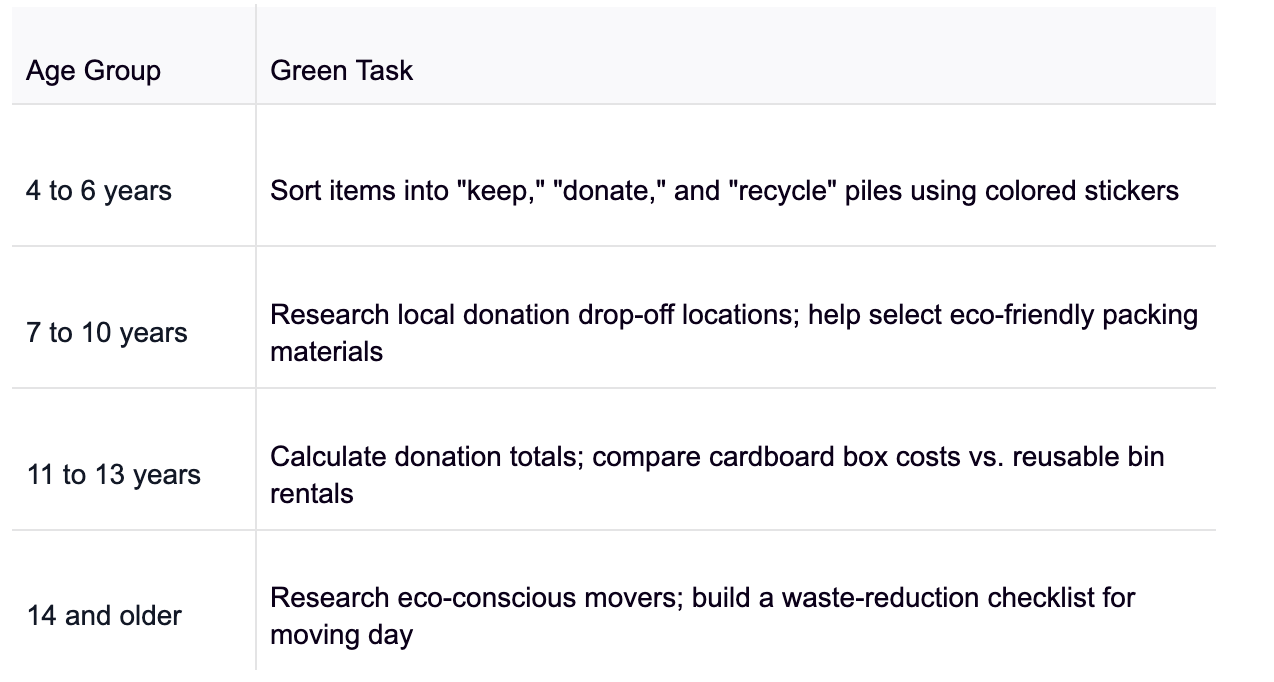
The goal isn't a flawlessly zero-waste move. It's genuine participation. When children contribute meaningfully to green decisions, they internalize habits that don't need to be re-taught.
One ritual that works especially well: set up a "donation corner" two to three weeks before the move. Every family member, kids included, adds items throughout the weeks leading up to moving day. By the time the trucks arrive, it reflects a collective, ongoing effort rather than a last-minute scramble.
What to Do With Items You Can't Donate
Not everything is in good enough shape to donate, and that's fine. But defaulting to the trash bin shouldn't be the answer.
Electronics: LA County operates dedicated e-waste recycling drop-off programs for old phones, tablets, chargers, and small appliances. This is a great outing to do with your kids as a final pre-move activity.
Furniture in poor condition: Some local arts organizations and community programs repurpose materials for projects and installations.
Hazardous household materials (cleaning products, paint, lighter fluid): These require special disposal. They cannot be transported by licensed movers, this is a legal and safety restriction, not just a preference. LA County runs Household Hazardous Waste collection events throughout the year.
Packing materials post-move: Break down cardboard for curbside recycling. Many moving companies will retrieve used boxes and packing paper after delivery.
Walk your kids through the reasoning behind each category. Show them that "I don't need this" doesn't default to "this belongs in a bin." The thinking that goes into responsible disposal is its own sustainability education.
Choosing a Moving Company That Walks the Talk
The mover you hire carries more environmental responsibility than most families factor in. Truck size, fuel type, packing materials, and route planning all add up. Asking specific questions before you book is worth the five minutes.
Look for movers that operate with:
Biodiesel or low-emission vehicle fleets rather than older diesel trucks
Reusable moving boxes and storage containers as a standard service option
Eco-friendly packing materials instead of single-use plastic wrap and foam
Route planning practices that minimize unnecessary trips and fuel use
Movegreen, serving families across Los Angeles County, Ventura County, and Santa Barbara County, builds these practices into its standard operations. The company runs a fleet of biodiesel-fueled trucks, uses hybrid company vehicles, and provides reusable moving boxes and eco-friendly packing materials as part of its service offering.
Movegreen also runs a "10 Trees for Every Move" program. More than 100,000 trees have been planted since the program launched. For families relocating with children, that's a concrete, emotionally meaningful detail to share: every move plants a small forest. That's the kind of fact a kid remembers.
Involving your children in the mover research process. Asking them to look for specific green credentials turns what feels like a background adult task into one more hands-on sustainability lesson.
Settling Green in Your New LA Neighborhood
The eco-friendly move doesn't end on the day the truck pulls away. How your family settles into a new LA home creates the environmental baseline for everything that follows.
A few habits worth building from day one:
Unpack thoughtfully. Don't immediately trash all packing materials. Sort what can be reused, returned, or recycled before anything hits the bin.
Explore local green spaces early. LA has remarkable parks, nature trails, coastal preserves, and community gardens. Connecting children to local nature in the first few weeks builds long-term environmental investment in their new community.
Set up your recycling system before the kitchen is unpacked. Starting the right habits in the first week makes them automatic.
Reflect on the move together. Ask your kids what felt different about approaching the move sustainably. What surprised them? What would they do again? Reflection cements the lesson.
The habits absorbed during a green move don't have to stay in storage once you unpack. They travel forward with the family into every home and neighborhood that comes next.
Ready to Move Green? Start Here
A greener family move comes down to three decisions made early: reduce what you move, pack with what you already have, and choose a mover whose practices match your values.
Declutter first, pack second: Reducing your total load is the single highest-impact eco-decision you can make before anything gets wrapped or boxed.
Involve your kids at every step: Sorting, donating, and choosing reusable materials turn abstract sustainability into a lived, memorable experience.
Verify your mover's green credentials: Biodiesel fleets, reusable packing options, and environmental programs are concrete signals, not just green marketing language.
These habits don't stay in moving boxes. They travel forward into every home, decision, and generation that follows.
FAQs
What is the single most impactful thing a family can do for an eco-friendly move?
Decluttering before packing reduces the total load, cuts fuel consumption, and eliminates the need for excess packing materials. Donating usable items to local organizations keeps them out of landfills and gives them a second life.
How do I involve young children in a green move without overwhelming them?
Give them simple, tactile tasks like sorting items using color-coded stickers or deciding which toys to donate. Keep the sustainability conversation focused on one idea at a time, such as "we're giving this to someone who needs it more."
Are reusable moving bins worth renting instead of buying cardboard boxes?
Yes, for most family-sized moves. Rented plastic bins are sturdier than cardboard, generate zero post-move waste, and cost comparably to purchasing boxes. They're collected after delivery, so there's no disposal headache.
Can I recycle packing materials after a move in Los Angeles?
Cardboard is accepted curbside in most LA neighborhoods with standard recycling. Plastic bubble wrap and foam packing peanuts are generally not curbside recyclable in LA, but many grocery and retail stores accept plastic film for drop-off recycling.
How do I identify a moving company with genuine eco-credentials?
Look for specific, verifiable practices rather than vague claims. Biodiesel vehicle fleets, reusable storage containers, eco-friendly packing materials, and documented environmental programs are concrete signals that a company's green positioning is real.
