
This is a contributed post.
Unequal floors usually result in difficulties that are only noticeable once the damage has begun. You might find gaps under furniture, tiles with cracks, or noticeable flooring that seems to be loose when you step on it.
As these problems increase, it becomes uncomfortable to use them regularly and also costly to fix. Simultaneously, a lack of surface balance may reduce the life of any new flooring. That is why these concerns need to be addressed at the earliest stage.
That said, surface flaws can be corrected using proven expert floor leveling methods, such as self-leveling compounds, grinding, mudjacking, foam injection, laser screeding, or resurfacing. Each method works best depending on the condition of the floor and the type of finish you plan to install, which ensures a stable and smooth surface.
This article discusses the expert floor leveling methods that enable you to develop smooth, stable, and durable floors and avoid the common errors and unnecessary repairs.
1. Self-Leveling Compounds Build Even Surfaces
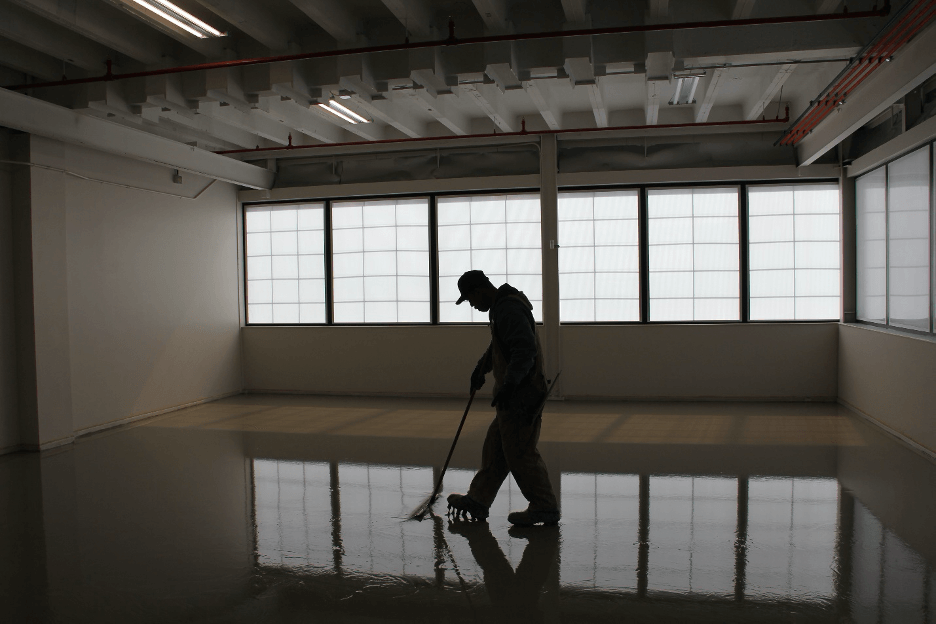
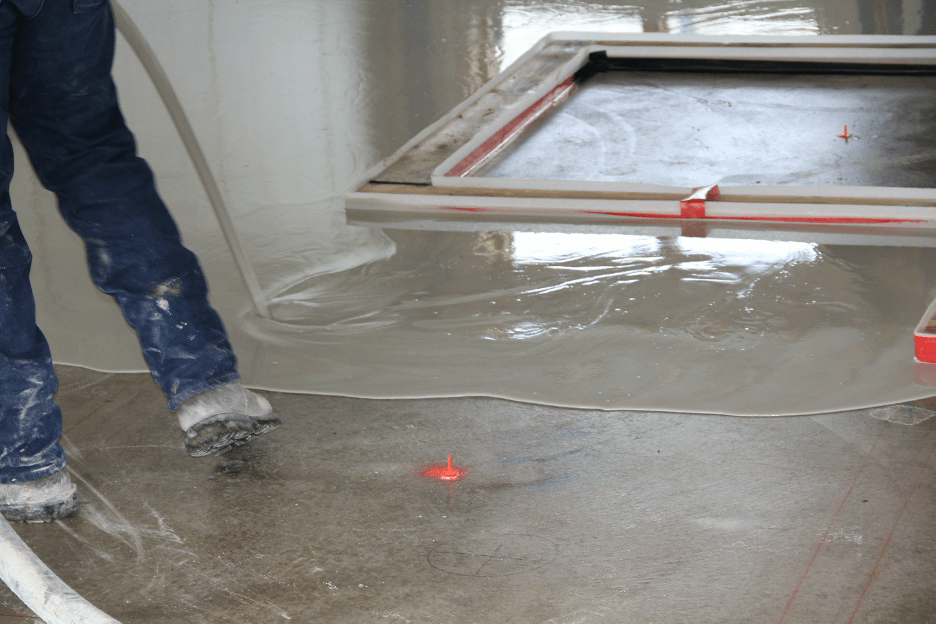
Minor dips and surface waves do not necessarily need heavy tools to be corrected fast. In such cases, floor leveling with self-leveling compounds is a reliable measure. The compounds are evenly distributed over the concrete and then settle into low places automatically.
Consequently, they create smooth surfaces that could be tiled, covered with vinyl, or wood. Cleaning and priming are also significant before application due to the fact that debris can cause weak bonding.
After pouring, the compound flows easily and hardens in hours. Hence, project delays remain minimal. Moreover, uniform thickness eliminates differences in height between rooms. This approach would eliminate manual labor but increase the accuracy of the surface when implemented properly. It also makes floors ready to be used in the long term without having alignment issues repeatedly.
2. Surface Grinding Corrects Raised Areas
Although low spots can affect balance, elevated areas can also cause installation issues. This problem can be solved by grinding, which removes the extra concrete.
Even surfaces are produced by using a special grinding machine to remove high points. This method is effective before adding coating or leveling materials.
In addition, surface texture is enhanced by grinding, and this aids bonding in later processes. Still, there is a necessity to control dust to keep the surrounding areas clean.
With continued grinding, the floor is closely monitored to maintain smoothness throughout. Thus, surface preparation is more efficient.
This technique is most effective where unevenness is caused by poor finishing, but not by significant structural issues. When used with other methods, grinding facilitates a steady and smooth flooring effect.
3. Mudjacking Restores Lost Support Below Slabs
Surface fixes do not address root causes when floors sink as a result of empty spaces under concrete. This is solved using mudjacking, which involves pumping slurry below the slab areas.
When the material fills the voids, the slab recovers back to its position. Such a process replenishes the original height without the need to replace concrete.
Since previous slabs are not wasted, material wastage is minimal. Nevertheless, it is important to have adequate control of pressure to prevent overcorrection.
Mudjacking is suitable for garages, basements, and interior slabs whose surface is stable, but which do not offer sufficient support. Light surface repair might still be required after lifting. However, this method is effective for correcting uneven floor levels caused by settlement and cannot be corrected with a simple leveling method.
4. Foam Injection Offers Controlled Lifting
Modern projects often require quick results with minimal disruption. Foam injection meets this need by lifting slabs accurately using expanding material.
Through small drilled openings, foam enters empty spaces beneath floors. As it expands, it raises concrete evenly and seals gaps. Unlike slurry, foam adds little weight, which reduces future settlement risk.
Additionally, curing happens quickly, allowing normal use soon after. Moisture resistance also protects subgrade conditions.
Foam injection works well in interior spaces where precision matters. Although cost may be higher, durability offsets the initial expense. Therefore, this solution fits areas where accuracy, speed, and long-term stability matter most.
5. Laser Screeding Maintains Consistent Flatness
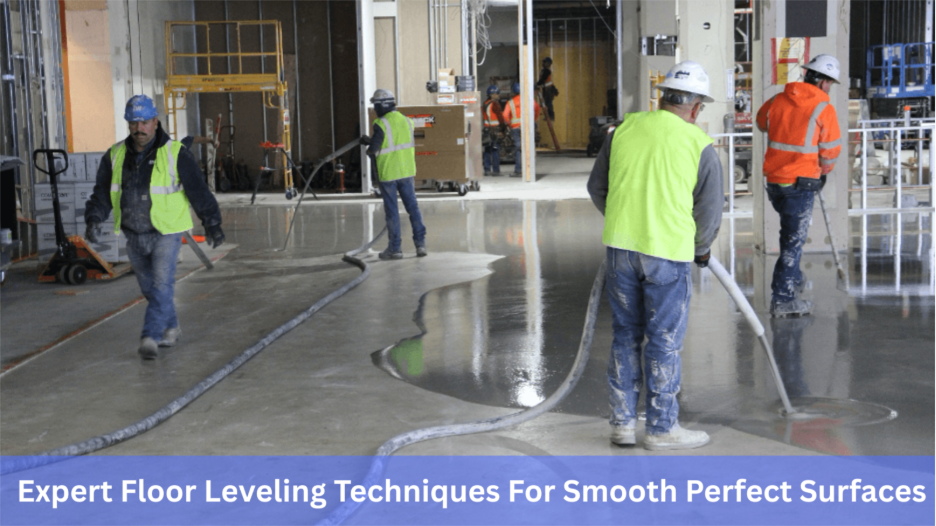
Large floor areas require accuracy that manual methods struggle to achieve. Laser screeding uses guided equipment to control surface height precisely.
With laser references, machines distribute material evenly across wide spaces. This ensures consistent thickness and flatness throughout floor sections.
As machines operate, sensors adjust automatically, reducing human error. Warehouses, showrooms, and industrial buildings benefit from this approach.
Moreover, finishing time decreases without reducing quality. Although setup requires skilled operation, results meet strict flatness standards. Therefore, laser screeding remains valuable for large projects where smoothness affects performance, safety, and long-term durability.
6. Resurfacing Solves Extensive Surface Damage
When floors show widespread cracks, wear, or deep flaws, localized repairs become ineffective. Resurfacing applies new material across the entire surface, creating a fresh layer. This method corrects imperfections while improving durability.
Preparation remains critical, including cleaning and bonding treatment. Once applied, overlays bond strongly and cure into smooth surfaces ready for finishes.
Resurfacing works well when older floors need full renewal rather than partial fixes. Although labor demands increase, results deliver long-term value. This approach restores both function and appearance while extending slab life.
Therefore, resurfacing serves as a practical option for floors with severe and widespread damage.
Conclusion
Smooth floors support comfort, safety, and long-term performance. When surfaces remain uneven, small problems often grow into expensive repairs.
Fortunately, expert techniques address every condition effectively. Self-leveling compounds, grinding, mudjacking, foam injection, laser screeding, and resurfacing each serve specific needs.
Selecting the right method depends on surface condition and usage requirements. Proper preparation and accurate application remain essential for success.
By applying suitable solutions early, you protect flooring investments and ensure reliable performance. Ultimately, expert floor leveling techniques help create smooth, stable surfaces that support lasting results.
Related:
