
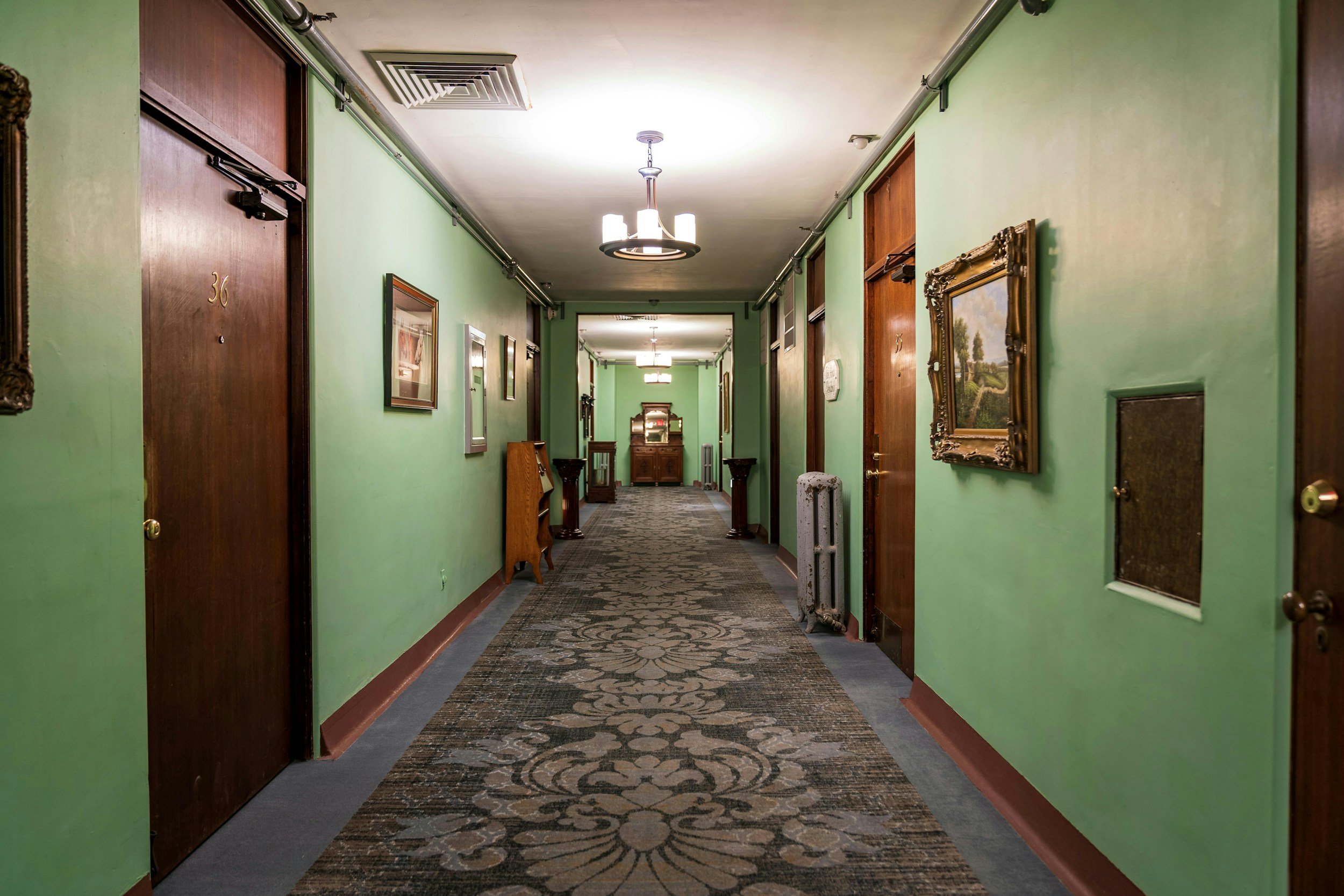
My idea for a family movement video begins in a hallway with a roll of painter's tape. Four short strips turn the floor into stepping stones, and a parent moves a laundry basket out of the way to make room. I want the clip to feel like a game someone can set up on a rainy afternoon. The pictures need to explain the sequence quickly, especially if a parent opens the post with the sound off and a child waiting beside them.
The real shoot can be small. I plan to take a photo from the end of the hallway, record a few steps at foot level, and pick up the sound of shoes landing on the floor. I can stage the first shots with an adult whose feet are comfortably inside the tape marks. The aim is to show the layout and rhythm, so I do not need an identifiable child's face or an athletic demonstration. A clear floor, four pieces of tape and one person can carry the whole sequence.
Build the game while the camera is rolling
I want the opening to show how the game comes together. The first frame has an empty stretch of floor and a hand just about to press down the final piece of tape. The other three marks should already be visible. I can ask seedance 3.0 for a short image-to-video study from the hallway photo and specify the one movement I am interested in. The hand presses the tape flat and leaves the frame. Nothing else needs to move. That may give me a better sense of where to place the actual camera so the viewer can see the spacing.
In the overhead version, the four marks form a shallow zigzag. A low view across the floor looks warmer, but near marks can cover the far ones. I plan to test both angles and keep whichever gives the clearest view of the full route. If I can only see three marks when the hand lifts, the opening needs to change. One easy revision is to have the hand enter from the long side of the frame while the camera stays far enough back to include the end of the line. I can use a text-to-video sketch in seedance 3.0 to explore that composition before re-taping the hallway.
A step should read at the speed it happens
The main shot shows someone stepping between the marks. I want the first foot to land, then the next one to move while the first stays grounded. The source clip will be short enough that I can locate that beat easily. In a reference-to-video pass with seedance 3.0, I can pair the source movement with the hallway still, a text description and a little audio from the take. I can put the settling of the first foot in the brief because it gives the viewer something specific to watch. I also plan to compare it with real footage of the same step and check whether the spacing looks consistent.
Foot-level motion can be difficult to read in a generated shot. A heel may slide or the tape can shift beneath it, as if the floor gave way when the weight landed. I will use a real take for the actual instructions. For an illustrated transition, I can ask seedance 3.0 for shorter movement with both tape marks visible, and discard it if the foot or tape shifts. This kind of clip only needs one clear action. A spectacular camera move might hide the very detail a family is trying to copy.
I plan to keep an alternate version of the step that moves sideways across the screen. If a vertical crop cuts through the second tape mark, I can have the moving foot enter from the lower center with the camera slightly ahead of the next mark. On a wider screen I can leave more space and let the viewer see someone waiting near the far end. That person can stay out of the close-ups. The point of the wide picture is to show whose turn it is and how the hallway is used.
Try editing to the sound of the floor
The best sounds may be the brief click of a shoe and the quiet pull of the tape from the roll. I can use both as edit cues. The roll opens the video before someone has seen what the hand is doing. The first footfall switches us from setup to play. In seedance 3.0 I can use a sound reference to put a similar rhythm into a generated shot study, then make the timing decisions myself on an edit timeline. If the sound feels rushed, I can leave a small gap after the hand moves away before the first step enters.
The list of trials has a natural stopping point. I need two camera positions and a brief insert, so I can consult seedance 3.0 pricing with a fixed list of shots in front of me. A family blog does not need five versions of the same footfall. I can put the time left over into captions and a wider view that shows the whole setup.
I also want to give the silent cut a little lift. I can introduce each movement with a short caption that stays on screen long enough to read and leaves the feet visible. If a caption feels too big over the route, I can move it to the opening or the end. The three things someone needs to see are the layout, the first movement and where it finishes. A long explanation over the stepping shot can pull attention away from the feet.
End on a game someone can change
The last shot does not need another full run. I can stop on one strip of tape being moved a little nearer the starting mark. I like the idea of ending there because it shows that the spacing is something a family can adjust to the room and the person taking a turn. A static frame of the layout gives the viewer a final reference after the hands and feet have passed through it. I plan to export a vertical cut as well as a wider one for the blog and identify any illustrative frames I used from seedance 3.0. The useful result is a short video someone can watch once, then look down at their own floor and explain the game in their own words.