
How Digital Specification Management Helps Construction Teams Work More Efficiently

Specifications can get out of hand surprisingly quickly. One drawing changes, an approval sits in someone’s inbox, and before long, a field crew is working from notes that are no longer current. For construction teams already juggling tight schedules, digital specification management is not just a helpful upgrade. It has a direct effect on construction team efficiency and the amount of control you have day to day.
The time loss is real. An average of 13 hours per week is spent looking for data. Digital leaders spend two hours less per week on the same task, resulting in 5% more time for them to focus on higher‑value work. That is why modern construction project management increasingly depends on tools that keep specifications accurate, visible, and easy to use.
Transforming Construction Project Management Through Digital Specification Management
Construction documentation has moved a long way from binders, shared drives, and never-ending email chains. Today, centralized digital workflows give teams a cleaner way to manage specs without playing the old game of “who has the latest version?”
That matters more than it may seem at first. One missed update can create rework, delay inspections, affect procurement, and lead to uncomfortable conversations no one wants to have.
From Paper Trails to One Source of Truth
For years, project teams managed specifications with printed manuals, folder structures, and long email threads. It worked well enough when projects moved slower and teams sat closer together.
But construction does not work that way anymore. Projects move fast. Teams are spread across offices, jobsites, and partner organizations. Document changes happen constantly.
Cloud-based systems now allow firms to keep requirements, comments, approvals, and revisions in one shared location. Instead of chasing documents, teams can follow a clearer path from design intent to field execution.
Why Specialized Software Matters
Basic file storage can hold documents, but it does not truly manage the specification process. A stronger system tracks revisions, user roles, comments, approvals, and history.
More teams now rely on specification writing software to support collaboration, submittals, and compliance without forcing everyone to completely rebuild the way they work.
Now, let’s get practical and look at where digital specification management saves time on real projects.
Key Benefits of Digital Specification Management for Construction Teams
Once a team moves away from scattered files, the value becomes obvious in the daily flow of work. There are fewer handoffs, fewer avoidable mistakes, and faster decisions. That is when specification management software starts feeling less like administration and more like project control.
Better Collaboration and Real-Time Updates
When specifications live in one source of truth, version control becomes much easier. Updates are visible. Changes are easier to trace. Architects, contractors, consultants, and field leads can all see what changed and why it matters.
This improves accountability without adding another standing meeting to everyone’s calendar. And honestly, on most projects, avoiding one more meeting is already a small victory.
Stronger Accuracy and Compliance
Manual errors are expensive. So are missed requirements, incomplete records, and delayed approvals.
Digital specification management helps teams reduce those risks by keeping records organized and traceable. Automated logs also make it easier to show what was approved, when it was approved, and who signed off.
More Productive Project Phases
From design review through closeout, digital tools reduce duplicate data entry and late-stage document hunting. Instead of forwarding files back and forth, teams can spend more time solving actual jobsite problems.
That is where the right software features begin to make a noticeable difference.
Essential Features of Specification Management Software
When a team becomes more productive, it is usually because the system behind the scenes is doing more of the repetitive work. The best platforms are simple enough for daily use but powerful enough to support complex projects.
Access, Control, and Audit Trails
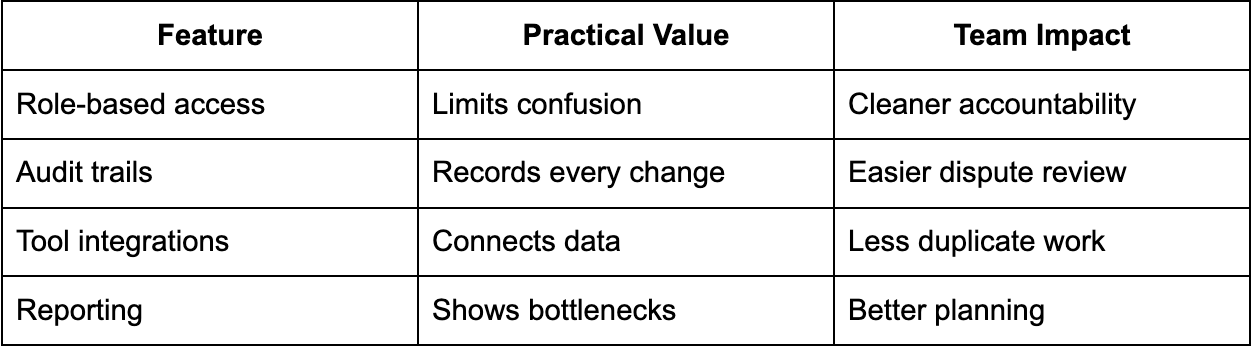
Role-based access helps keep the right people in the right documents. It also limits confusion when multiple stakeholders are involved.
Audit trails show who changed a specification, approved a submittal, or flagged an issue. That history can be extremely useful during inspections, disputes, and closeouts. It also helps teams spot where problems tend to begin.
Integrations and Reporting
Strong software connects with BIM, ERP, scheduling, and project management tools. That reduces double entry and keeps specification data connected to cost, procurement, and scheduling decisions.
AI and Machine Learning use has been one of the fastest growing technologies, with 37% of businesses now using this technology, up from the 26% in 2023.
Once you know which features matter, the next question is how they come together inside a real construction workflow.
Driving Efficiency: Improving Construction Workflow with Digital Specification Management
Role-based access, audit trails, and integrations sound useful on paper. Their real value shows up when they improve the way information moves through a project. This is where improving construction workflow becomes practical, not theoretical.
End-to-End Workflow Automation
A digital system can move specifications from drafting to review, approval, procurement, and field use. Each step is tracked, so teams do not have to depend on memory, side conversations, or scattered reminders.
Automated routing also cuts down on handoff friction. If a product substitution needs review, the right person is notified before the issue turns into a field problem.
Office-to-Field Communication
Early issue tracking only helps if information reaches the people who need it. Mobile access gives superintendents and crews a way to confirm current specifications before installation begins.
When field teams work from current specs, miscommunication drops. Crews move faster because they are not stopping to verify outdated information or waiting for someone in the office to resend a file.
Real-World Impact: Digital Specification Management in Action
Better workflows are great, but results matter most when you can see them in day-to-day project behavior. Even without naming specific firms, common construction scenarios show how digital spec tools improve outcomes.
Commercial Buildout Example
A mid-sized contractor replaced shared folders with centralized specification tracking. The team reduced missed updates, improved submittal routing, and cut down on repeated clarification emails.
The biggest improvement was not flashy. It was simply knowing which version had been approved before work started. That kind of clarity saves more time than people expect.
Healthcare Renovation Example
In a phased healthcare renovation, compliance records and material requirements had to be managed carefully. Digital records helped the project team track approvals, product changes, and inspection notes without digging through multiple folder systems.
Once teams see fewer delays and less rework, the value becomes easier to defend. Still, the technology behind digital specification management continues to evolve quickly.
Future Trends in Digital Specification Management and Construction Software
The measurable gains are already meaningful, but the next wave of tools will push digital specification management even further. Teams that prepare now will be in a stronger position as smarter systems become standard.
AI-Assisted Spec Writing
AI can help draft specification language, compare documents, flag missing requirements, and identify conflicting details. It should not replace expert judgment. Frankly, it should not try to.
But it can reduce repetitive review work. That gives architects, engineers, and project managers more time for decisions that require experience, context, and professional judgment.
Cloud Collaboration and Sustainability
Cloud platforms make remote review easier for distributed teams. As more sensitive project data moves online, security controls, access logs, and permission settings become even more important.
Digital specs can also help track materials, certifications, and green building requirements. As environmental compliance becomes stricter, digital specification management can make sustainability documentation easier to manage.
Next, it helps to look at implementation practices that allow teams to see value sooner.
Best Practices for Successful Implementation of Specification Management Software
AI, cloud collaboration, and sustainability tracking all create opportunity. But the advantage goes to teams that adopt new tools thoughtfully. A successful rollout keeps people, data, and process aligned.
Train People Before Pressure Hits
Training should happen before a deadline-heavy phase. Project managers, coordinators, estimators, and field leaders need to understand how the tool fits their daily responsibilities.
Keep the first rollout focused. Too much change at once can frustrate even a strong team. A simple start is often the smartest start.
Plan Data Migration and ROI Tracking
Clean up old specification files before importing them. Map naming rules, access levels, and approval steps so users do not carry yesterday’s mess into a new platform.
Track time saved, fewer revisions, faster approvals, and reduced rework. Even simple measurements can show whether the system is delivering a return.
Of course, the best rollout still depends on choosing software that matches your workflows, integrations, and growth plans.
Choosing the Right Specification Management Software for Your Construction Team
The wrong tool creates more clicks. The right one quietly removes friction. That is the difference construction teams should look for when evaluating platforms.
What to Look For
Prioritize scalability, clear permissions, fast search, strong reporting, and responsive support. The system should fit the way your team works instead of forcing everyone into a rigid process.
Also check whether it connects with tools you already use. That can matter more than a long list of features no one actually opens.
A Short Evaluation Checklist
Use this quick checklist during demos:
- Can field teams access current specs quickly?
- Does it track approvals and changes clearly?
- Can it connect with existing project tools?
- Is onboarding practical for busy staff?
Once you know what to look for in specification management software, the remaining questions usually center on adoption, integrations, security, and ROI.
Final Thoughts on Smarter Specification Management
Digital tools do not solve every construction challenge. Nothing does. But they do remove a lot of avoidable confusion, and that alone can change the rhythm of a project.
What to Remember
The main gains come from current specifications, cleaner approvals, better records, and fewer manual handoffs. Those improvements directly support construction team efficiency and stronger construction project management.
What to Do Next
Start by looking at where your team loses time today. Is it revisions? Submittals? Searches? Field confusion?
Then compare tools against those real pain points. Better specifications lead to better decisions, and better decisions lead to better work. In construction, that kind of clarity is not a luxury. It is how good teams keep moving.
Common Questions About Digital Specification Management
After teams narrow their options, a few practical concerns usually come up. These answers cover the questions construction teams ask most often.
What are the most common challenges when switching from manual to digital specification management in construction?
The biggest challenges are staff resistance, messy old files, unclear naming rules, and weak training. Teams tend to do better when they start with one project, clean the data first, and assign clear owners for approvals and updates.
How does digital specification management support remote and hybrid construction teams?
It gives everyone access to the same current specs, comments, and approvals from different locations. Remote reviewers can respond faster, while field teams can check updates without waiting for office staff to forward documents.
Can specification management software integrate with legacy construction project management systems?
Yes, many platforms can connect through APIs, exports, or built-in integrations. The key is checking compatibility early, mapping which data must move between systems, and testing workflows before the software goes live.
