
How Educators Can Create Deeper Learning Through Global Experiences
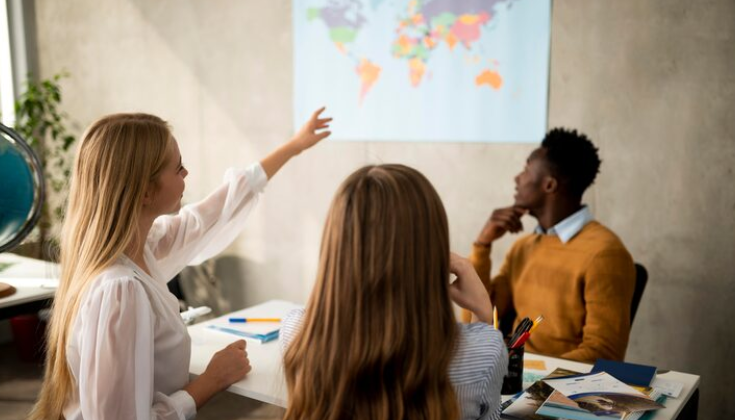
Students can ace a quiz and still freeze when the real world asks them to use what they know. Every teacher has seen it. The facts are there, but the confidence, context, and judgment are still catching up.
That is where well-designed global learning experiences can make a real difference. They connect classroom ideas to people, places, histories, problems, and decisions. Students have to listen, compare perspectives, work with uncertainty, and explain what they think.
Global learning does not always require passports and plane tickets. It can happen through virtual exchanges, community interviews, collaborative research, service learning, or travel. The goal is not simply to expose students to something international. It is to create experiences that make them think more deeply and apply what they know with greater awareness.
Why Global Experiences Support Deeper Learning
Strong deeper learning strategies ask students to move beyond recalling information. They apply knowledge, solve problems, communicate clearly, collaborate with others, and reflect on how their thinking changes.
Global contexts give those skills somewhere real to operate. A lesson on water access, migration, public health, food systems, or climate risk becomes more demanding when students compare how the issue affects different communities. They begin to see that the same problem can carry different priorities, constraints, and consequences depending on where people live.
Travel opportunities can also expose students to new ideas and perspectives that shape a broader worldview. But the value does not come from being somewhere unfamiliar. It comes from connecting the experience to meaningful academic questions before, during, and after it.
When Faculty-Led Travel Adds Academic Value
Travel is most useful when it is part of the learning design rather than a reward at the end of a course. Students should know what they are investigating, what they need to observe, who they will learn from, and how the experience connects to the curriculum.
For educators who want travel to carry academic weight, faculty led study abroad programs can provide a framework for connecting course goals with community-based experiential learning, cultural engagement, preparation, logistics, safety, and reflection. The strongest model is not “take students somewhere interesting.” It is “build a learning arc around the place.”
That arc starts before departure. Students explore context, assumptions, and essential questions. During the experience, they gather evidence, speak with local people, document observations, and test what they thought they knew. After returning, they analyze what changed and apply the learning to a new task, project, or decision.
Design Reflection Into the Experience
Experience by itself is not the lesson. A packed itinerary can produce memories without producing much understanding.
Students need time for structured reflection so they can connect what happened to what they are learning. Reflection can be simple: a short field journal, a discussion circle, an audio note, a photo with an analytical caption, or a question students revisit at several points in the program.
The best prompts move past “What did you enjoy?” Ask instead:
What challenged an assumption you had before this experience?
What did a local perspective help you understand differently?
What evidence changed your thinking?
What question are you leaving with?
How would you explain this issue differently now?
That is where deeper learning becomes visible. Students are not only collecting experiences. They are learning how to interpret them.
Build Global Learning Into Everyday Classes
Teachers do not need to wait for a major trip to create meaningful global education.
Useful cross-cultural classroom activities can begin with a real question. How do communities manage food waste? How does climate risk affect a coastal city differently from an agricultural region? How do families in different countries experience education, healthcare, migration, or public space?
Students can compare data, interview peers, examine local examples, analyze primary sources, and create shared presentations. A virtual exchange can pair classrooms around a common problem. A local-global project can involve immigrant communities, cultural organizations, universities, nonprofits, or international professionals in the same city.
The important part is reciprocity. Students should not treat another culture as something to observe from a distance. They should learn to ask respectful questions, listen closely, and recognize that expertise often sits with the people living the issue.
Make Global Education Inclusive From the Start
Good global education for teachers has to work for students who cannot travel as well as those who can.
Cost may be one barrier, but it is not the only one. Family responsibilities, mobility needs, documentation, health considerations, anxiety, schedules, and access to technology can all shape participation.
That means access should be part of the design, not a late adjustment. Educators can build parallel pathways through virtual exchange, local partnerships, digital fieldwork, visiting speakers, or collaborative online projects. A student who cannot board a plane should still be able to investigate the same essential question and contribute meaningful work.
Inclusive design also improves the learning itself. It forces educators to define the actual objective. If the objective is perspective-taking, evidence gathering, collaboration, or cultural understanding, there may be several ways for students to reach it.
Prepare Educators to Lead Cross-Cultural Learning
Cross-cultural learning can be powerful, but it requires careful facilitation. Misunderstandings happen. Students may oversimplify unfamiliar communities or fall back on stereotypes. Service projects can also become one-sided if the visitors are treated as the main actors.
Educators need preparation in cultural humility, ethical service learning, group safety, reflection, partnership building, and discussion facilitation. They also need practical tools: family communication templates, partner agreements, emergency procedures, discussion prompts, assessment rubrics, and clear expectations for student behavior.
A strong program should help teachers spend less energy improvising logistics and more energy noticing what students are learning.
Measure More Than Participation
If the goal is enhancing student learning globally, attendance is not enough evidence.
Teachers can look for growth through portfolios, reflection journals, presentations, interviews, peer feedback, and performance tasks. A useful rubric might track whether students can compare perspectives, use evidence, communicate across differences, revise an assumption, or connect a local example to a larger global issue.
Short pre- and post-program reflections can also reveal changes in confidence, curiosity, and understanding. The most useful evidence connects experience to action.
Ask: Did students communicate more clearly? Did they ask stronger questions? Did they apply course concepts in a new setting? Did they become more careful about whose perspective was missing?
Those indicators help schools improve future programs instead of simply repeating them.
Start With One Clear Learning Goal
Educators do not need to launch a massive international initiative on the first attempt.
Start with one learning goal, one strong partner, and one student product. Build backward from what students should understand or be able to do. Then choose the format that supports that goal: travel, virtual exchange, local fieldwork, shared research, or a hybrid model.
If travel is involved, add funding, accessibility, safety, cultural preparation, and emergency planning early. If the project is virtual, plan for time zones, technology access, facilitation, and clear roles.
Small does not mean shallow. A focused experience with a clear academic purpose can create more learning than an ambitious program overloaded with activities.
Frequently Asked Questions About Global Learning Experiences
What is global learning in education?
Global learning helps students examine people, issues, systems, and ideas across cultures and locations. It can happen through travel, virtual exchange, local partnerships, shared research, or community-based projects connected to clear academic goals.
How can teachers create global learning without international travel?
Teachers can use virtual classroom partnerships, international guest speakers, local cultural organizations, comparative research projects, community interviews, and collaborative digital assignments. The key is meaningful interaction and inquiry, not physical distance.
What makes a faculty-led study abroad program educationally effective?
An effective program aligns travel with course objectives, prepares students before departure, creates purposeful engagement during the experience, and includes reflection afterward. Students should return with evidence of learning, not only memories of the destination.
How should educators measure deeper learning?
Use performance-based evidence such as reflection journals, portfolios, presentations, interviews, peer feedback, and rubrics. Look for stronger reasoning, better use of evidence, perspective-taking, collaboration, and the ability to apply learning in unfamiliar situations.
How can global learning be more inclusive and ethical?
Build access and reciprocity into the program from the beginning. Offer non-travel participation options, plan for different student needs, work with trusted community partners, avoid “we came to help” narratives, and make local knowledge central to the experience.
Final Thoughts
Global learning works best when the world becomes part of the curriculum rather than a backdrop for it. Thoughtful deeper learning strategies give students a reason to question, apply, listen, and reflect. Start with one clear goal and build the experience around what students should understand differently when it is over.
