
How to Choose the Right Necklace for Any Occasion
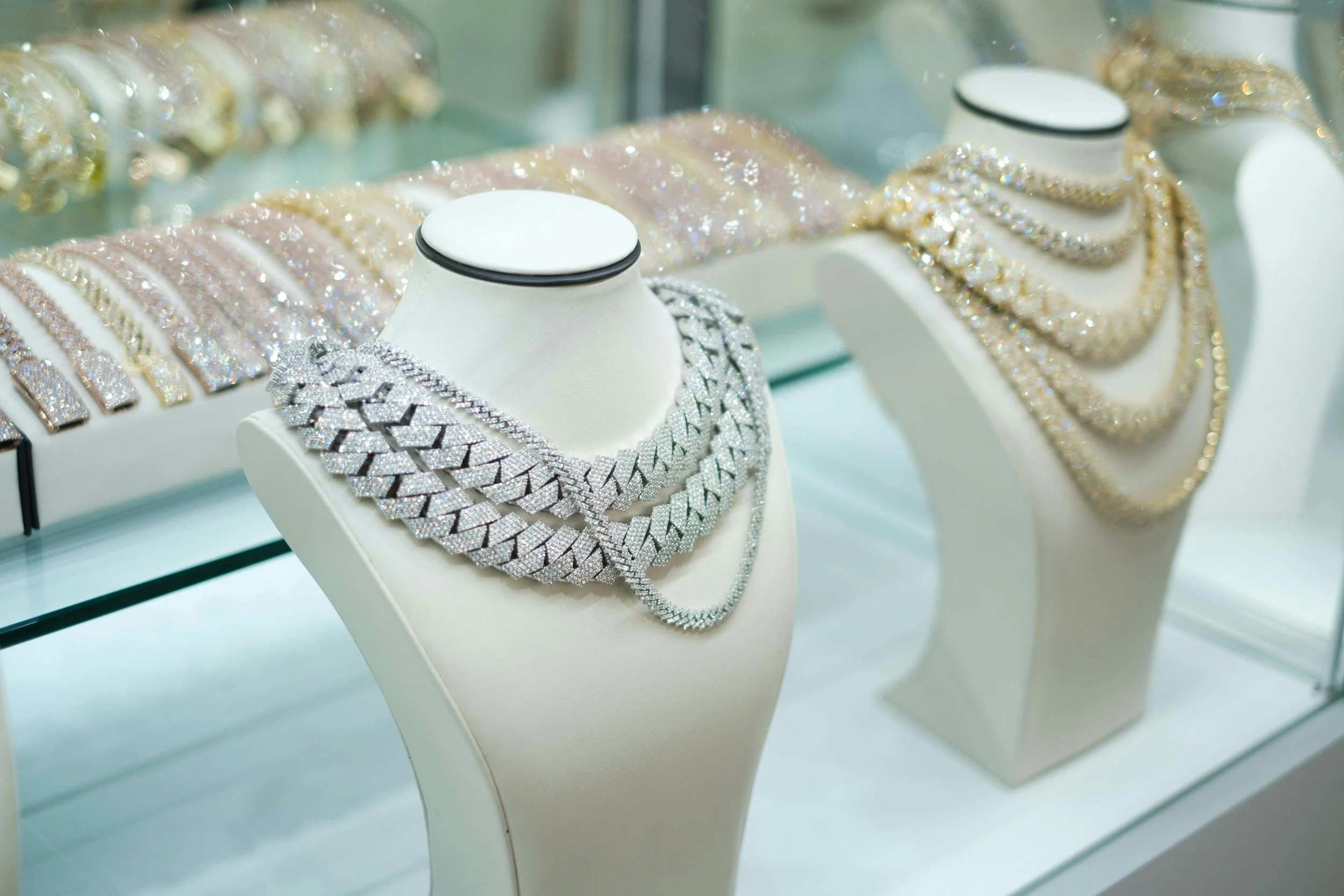
The wrong necklace can quietly derail an otherwise flawless outfit. That's not an exaggeration; it's something most people only realize after the fact, standing in front of a mirror already running late. Whether you're preparing for a job interview, a Saturday wedding, or a relaxed brunch, your necklace either ties the whole look together or introduces a visual disconnect that nobody can quite articulate but everyone notices.
Research from Grand View Research confirms that 65% of consumers wear jewelry once a week or more, of which 39% report wearing it daily, so yes, this decision carries real weight. Think of this necklace guide as your go-to reference for every style, setting, and pairing question you've ever had.
The Core Principles of Necklace Selection
Choosing the right necklace isn't simply about grabbing what catches your eye first. It's an interplay of factors, and when those factors align, the result feels effortless.
What to Assess Before You Buy
Your face shape, neckline, outfit context, and personal aesthetic all enter the picture the moment you start browsing. Oval faces are fortunate; most necklace lengths work. Rounder face shapes genuinely benefit from longer chains, which draw the eye vertically and create a leaner silhouette.
Your neckline deserves equal attention. A deep V-neck practically invites a pendant that follows its natural angle, while a crew neck opens things up for bolder pieces that sit above the collar line.
A Simple Pre-Purchase Mental Checklist
Before committing to any piece, run through three quick questions: What's the occasion's dress code? What neckline am I wearing? Do I want this necklace to blend quietly into the look, or do I want it to lead? That three-second mental check eliminates most styling regrets before they happen.
Princeton, New Jersey, carries a particular kind of character, Ivy League heritage, cultural depth, and a community with genuinely refined taste. That combination makes it a natural home for exceptional fine jewelry.
Shoppers here tend to value both craftsmanship rooted in tradition and designs that feel current, which is exactly why consulting jewelers in Princeton, NJ can transform a routine purchase into an informed, lasting investment. T
Now that the foundation is in place, let's get into the specific styles that make that foundation matter.
The Necklace Styles Worth Knowing, and When to Wear Them
With the key variables in mind, face shape, neckline, outfit, and personal style, you're ready to match those factors against the best necklace styles available for every occasion.
Pendants: The Day-to-Night Reliable
Pendant necklaces might be the most versatile thing in your jewelry collection. A diamond solitaire or a carefully chosen gemstone pendant transitions from a business lunch to a formal dinner with minimal effort; just adjust the outfit around it.
Current trending styles lean toward personalized name pieces, minimalist geometric drops, and nature-inspired gemstone designs. They hit that rare balance between personal meaning and broad versatility.
Pendants handle the daily grind beautifully. But certain moments demand something louder.
Statement Necklaces: When the Piece Leads the Look
No necklace for any occasion wardrobe is complete without at least one bold, unapologetic statement piece. Chunky chains, heavy embellishments, and layered designs are built to anchor an entire outfit, not decorate the edges of one.
The rule here is straightforward: when the necklace is the statement, everything else steps back. Solid-color dress, minimal earrings, clean hair. Statement pieces from 2024 collections have leaned heavily into oversized chains, mixed metals, and runway-inspired colorful gemstones.
Not every morning calls for that level of drama, though, and that's where the quiet confidence of a classic chain takes over.
Classic Chains: The Unsung Everyday Hero
Box chains. Rope chains. Paperclip chains. None of them will ever really go out of style, and that's precisely the point. They adapt, from denim and a white tee to a tailored blazer, without asking much from you.
Layering two or three chains of slightly different lengths and thicknesses creates a relaxed, intentional aesthetic that looks considered without being complicated. A 16-inch thin gold box chain paired with a slightly longer rope is a combination that rarely misses.
If layered chains give you that everyday polish, chokers and collars dial up the sophistication, especially when a modern, structured statement is the goal.
Chokers and Collars: Structured Modern Elegance
Chokers have genuinely evolved. The 2026 iterations are far more polished than their earlier counterparts; pearl chokers, velvet ribbon styles, and mixed-metal collar pieces have become fixtures at weddings, upscale parties, and formal evenings out.
Face shape still matters here. On rounder faces, thinner and more delicate choker designs work significantly better by avoiding additional visual width around the neckline.
Then there's a style that flatters almost everyone, the lariat.
Lariat and Y-Necklaces: An Elongating Silhouette
Lariat necklaces have one remarkable quality: they create natural neck elongation and guide the eye downward, which is flattering across a genuinely wide range of body types. Pair them with deep V-necklines or wrap dresses, and the effect is almost automatic.
Celebrity and runway trends throughout 2024 confirmed lariats' staying power, with fine gold and mixed-material styles appearing consistently across both editorial and red carpet contexts.
A Practical Occasion Guide
Knowing the styles is valuable. Knowing precisely when to deploy each one is where real styling confidence develops.
Professional Environments
Restraint is your strongest asset in professional settings. A slim gold or silver chain with a modest pendant signals polish without competing for attention. Anything loud, dangling, or attention-grabbing works against you in an office or client-facing context.
Date Nights and Romantic Evenings
This is where personal meaning earns its place. A birthstone pendant, a meaningful charm, a delicate layered piece, these invite curiosity and conversation in the best possible way. Data from National Jeweler reinforces the point: diamond necklaces saw a 12% rise in gross sales and a 3% increase in units sold in 2024, confirming that thoughtful, elegant choices remain in genuine demand.
Weddings and Formal Celebrations
Formal occasions ask for harmony, specifically, that your necklace complements your gown's metal tones and color palette. Gold reads beautifully against warm-toned fabrics. Silver and platinum-finish pieces work with cooler hues like navy, ivory, and pale blue.
Everyday and Casual Wear
Your most-worn necklaces will be casual ones, and getting that formula right is where personal style really crystallizes. Layered delicate chains over a simple tee or sundress consistently looks both effortless and deliberate.
Neckline Pairing Reference Table
Half the styling equation is the necklace itself. The other half is making sure it works with your neckline rather than against it.
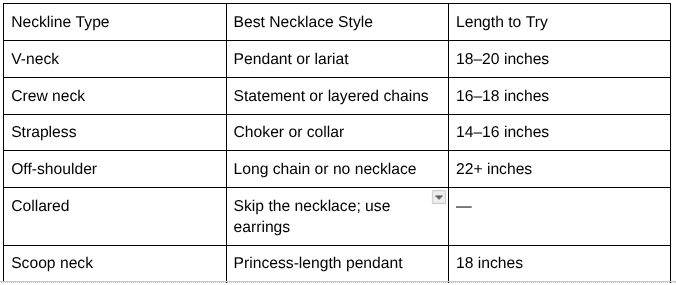
One frequently overlooked mistake: pairing a necklace that duplicates your neckline's shape. A scoop neck with a short, curved necklace just doubles the curve; a longer pendant or vertical chain introduces contrast and actually flatters more.
Matching Metals and Gemstones to Your Skin Tone
The neckline question is solved. Now, one more layer worth getting right, your metal and gemstone choices relative to your natural coloring.
Reading Your Undertone
Warm undertones, golden, olive, or peachy skin, complement yellow gold, rose gold, and copper-toned metals naturally. Cool undertones, pink, reddish, or blue-veined skin, align better with silver, white gold, and platinum.
Still unsure? Look at your wrist veins. Green-tinted veins suggest warm undertones; blueish or purple tones point toward cool ones.
Gemstones: Color and Meaning Together
Sapphires and aquamarines read beautifully against cool undertones. Amber, citrine, and warm rubies resonate with golden skin tones. Beyond aesthetics, gemstones carry personal significance, and that combination of visual and emotional resonance is genuinely difficult to replicate.
Frequently Asked Questions
What length works best for petite frames?
Shorter lengths, 14 to 16 inches, generally serve petite frames best. Princess-length pendants at 18 inches can also work well with the right proportions.
How do you layer necklaces without constant tangles?
Keep lengths at least two inches apart, vary chain thicknesses intentionally, and consider a necklace separator clasp if tangling is a recurring frustration.
Is mixing metals acceptable in one outfit?
Completely. Mixed metals have been mainstream styling for years. The distinction between intentional contrast and a mistake is simply cohesion; pieces that share a similar design sensibility let the metal difference become a feature rather than an error.
Closing Thoughts on Finding Your Necklace
Understanding how to choose a necklace ultimately comes down to this: know your occasion, know your neckline, and know what you want the piece to communicate about you. From understated everyday chains to bold statement pieces built for the spotlight, there's a style that fits every moment you'll encounter. The best necklace styles aren't just trend-driven; they're the ones that consistently work for you, across seasons and settings alike.
Take your time with the decision, ask questions when uncertainty surfaces, and don't hesitate to seek expert guidance when the occasion warrants it. The right necklace doesn't merely finish an outfit. It quietly upgrades your entire presence, and that's worth getting right.
