
How to Prepare Your AC for Summer: A Step-by-Step Homeowner's Checklist

Every summer, homeowners call an HVAC technician in the middle of a heat wave not because something unexpectedly broke, but because they skipped the preparation that would have prevented the breakdown. Knowing how to get a AC ready for summer is one of the most cost-effective things you can do as a homeowner.
Why AC Preparation Saves Money All Summer
A poorly prepared air conditioner runs longer cycles, consumes more energy, and breaks down more often. The U.S. Department of Energy estimates that regular HVAC maintenance can reduce energy use by 15–25%. More importantly, it catches small problems — a failing capacitor, a slight drop in refrigerant — before they cause a full system failure on the hottest day of the year.
Before summer arrives, it’s worth reviewing what is included in a professional air conditioning maintenance service https://affordablehvacpa.com/services/air-conditioning-maintenance/
A professional pre-season tune-up typically costs $75–$150 and can prevent repairs that would cost five to ten times that amount. Scheduling an AC tune-up before summer is often enough to identify issues before they become expensive emergencies.
What Homeowners Can Check Themselves
Before calling a technician, run through this checklist:
Replace the air filter — If it hasn't been changed since fall, it's overdue
Clear the outdoor condenser unit — Remove winter debris and ensure two feet of clearance around the unit
Inspect condenser fins — Bent fins restrict airflow; a fin comb from any hardware store straightens them
Test the thermostat — Switch to cooling mode and verify cold air comes from the vents within a few minutes
Flush the condensate drain line — Pour diluted bleach down the access port to prevent algae clogs, which cause water damage and system shutoffs
What Only a Certified Technician Should Inspect
Some components require professional tools, training, or legal certification:
Refrigerant level check — Only EPA-certified technicians can legally handle refrigerant
Electrical component testing — Capacitors, contactors, and relays degrade silently and need a multimeter to test accurately
Evaporator coil cleaning — Chemical cleaning removes dust and microbial buildup that accumulated over winter
System performance test — A technician measures supply and return air temperatures to confirm the system is operating within spec
How to Know If Your System Needs a Full Tune-Up vs. a Simple Checkup
A basic checkup is likely enough if the system is under 5 years old, was serviced last spring, and ran well all last summer.
Full tune-up is warranted if the system is 7+ years old, hasn't been serviced in over a year, or showed reduced performance last season.
Consider a full diagnostic if the system is 12–15+ years old, has had multiple repairs recently, or still uses R-22 refrigerant (phased out since 2020).
How Much Does a Professional AC Tune-Up Cost?
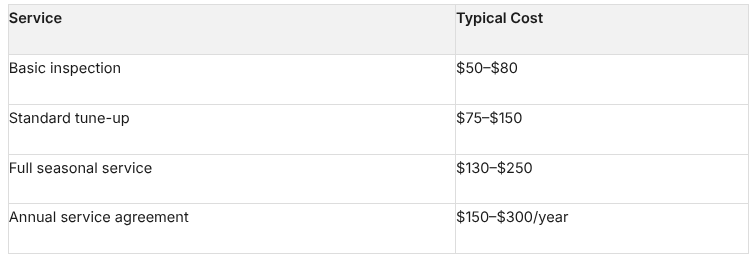
Annual agreements almost always provide better value — particularly for older systems — by bundling spring and fall visits with priority scheduling.
The Most Common Mistakes Homeowners Make Before Summer
Waiting until it's already hot — HVAC companies are fully booked in June and July; schedule in March or April
Skipping the filter — A $10 filter is the single highest-ROI maintenance action available
Ignoring sounds from last summer — Clicking and rattling are early warnings; don't let them carry over to a new season
Setting the thermostat too low immediately — Cranking to 65°F doesn't cool faster, it just overworks the system
Missing summer HVAC maintenance tips from the technician's service report — those notes often flag the next issue to address
