
There’s Always Something Else to Buy
Children are very good at finding things they suddenly need. A toy they saw at a friend’s house. A new game. Another set of building blocks, even though there are already three sitting in the cupboard. And parents often give in. Sometimes it’s a birthday, sometimes a good report card, and sometimes it’s simply easier to buy the thing than deal with another request. Nothing particularly wrong with that. But it can get out of hand without anyone really noticing.
The toy cupboard gets bigger, clothes that barely get worn pile up, and weekends become a series of shopping trips and activities. Children get used to having something new to look forward to. Then the excitement wears off and the next thing comes along.
This is one of the reasons minimalist parenting is worth thinking about. Not because children should have fewer things at all costs. That’s missing the point. It’s more about being careful with what gets added to their lives and what actually makes a difference.
A child doesn’t need a new toy every time there’s a quiet afternoon at home. Sometimes the quiet afternoon is exactly what they need.
What Happens When There Are Too Many Toys?
There’s a practical side to this that often gets overlooked. When toys are scattered across the bedroom, playroom and living room, children can end up moving from one thing to another without really settling into anything. Parents spend half the evening picking things up, only to find everything out again the following morning.
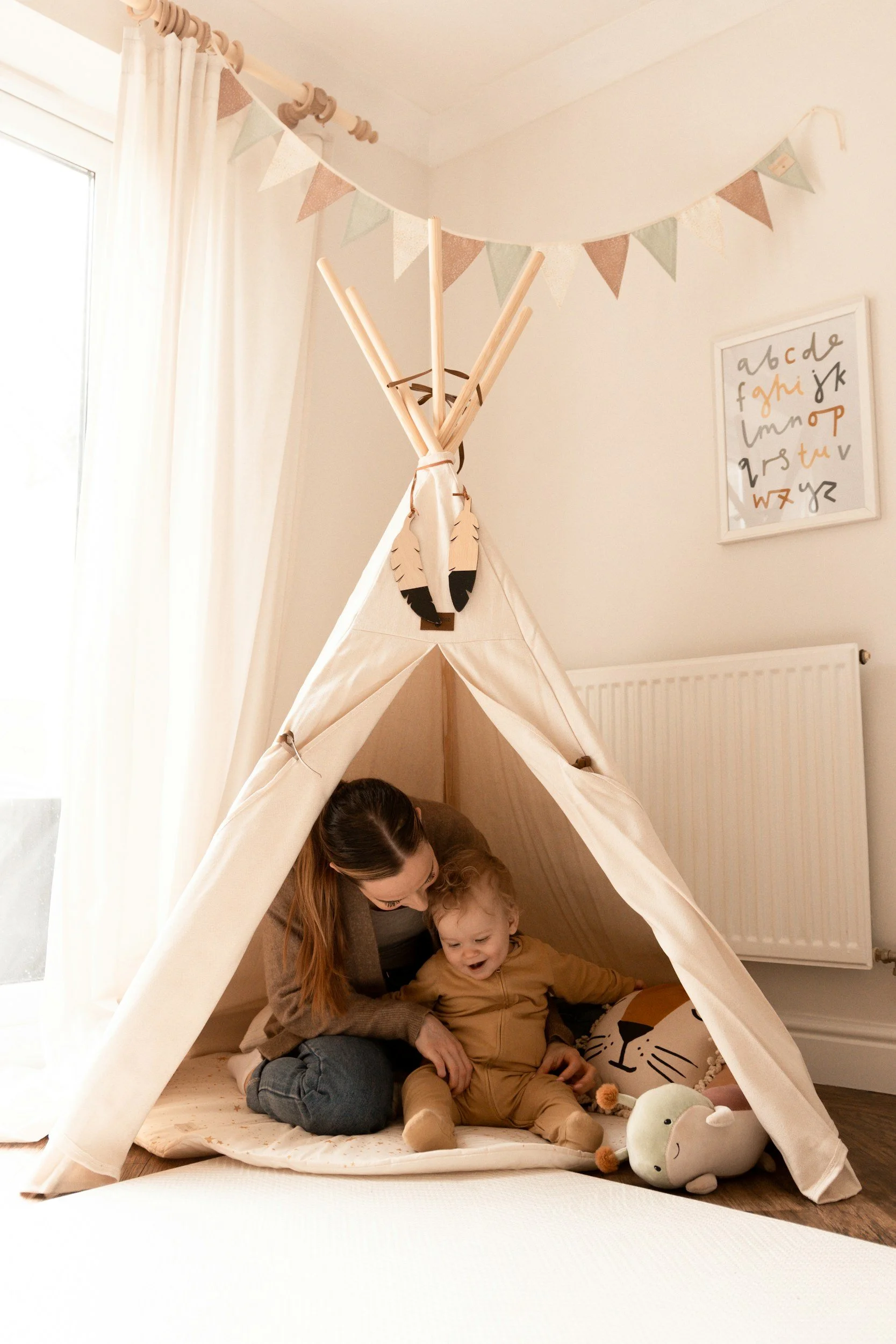
One simple fix is to put some toys away for a while. Keep a few favourites accessible. Perhaps some building blocks, drawing materials, a puzzle and whatever the child is currently interested in. Store the rest and bring different things out after a few weeks. And it’s quite interesting what happens when children have to come up with their own entertainment. A cardboard box gets turned into a shop. Old cushions become a fort. A blanket and two chairs somehow become a secret hiding place. These things don’t need parental planning or a shopping budget.
The American Academy of Pediatrics has covered the importance of play in children’s development, including its connection with social skills, language and emotional development. Not every toy needs to be educational, and not every play session needs an adult directing it.
Sometimes, Just Leave the Afternoon Alone
Children’s schedules can become ridiculous. School, homework, swimming, football, music lessons, tutoring, birthday parties. Then there’s the weekend, which somehow gets filled up too. Parents naturally want children to try different things. That’s understandable. But there’s a point where the schedule becomes so packed that children barely get time to decide what they actually enjoy.
Try leaving a Saturday afternoon free. No planned activity, no special outing. Let the children figure out what to do. They might complain about being bored. They might ask for a tablet. Eventually, they may find something else to occupy themselves. That’s part of it.
UNICEF discusses the role of child-led activities in its guide to free play. Children need opportunities to explore without adults deciding what happens next. A little unstructured time can be just as worthwhile as another organised class.
The Donation Bag Can Teach More Than You Think
A lot of parents donate old toys and clothes. Usually, the process happens when cupboards get too full or children outgrow their things. But there’s a difference between clearing things out for children and getting them involved. Take a few minutes to sort through the toys together. Ask which ones are still being used. Find the clothes that no longer fit. Put the books that’ve been read dozens of times in a separate pile. Then talk about where those things could go. A younger child might understand that another child could enjoy the toy they’ve stopped playing with. An older child can help pack the donation bag or choose which items to give away. It won’t always go smoothly. Some children will want to keep everything. That’s normal. There’s no reason to turn a cupboard clear-out into a battle over a stuffed animal. The bigger lesson is that possessions don’t always need to stay with one person. Something that has become unnecessary at home might be genuinely useful somewhere else.
There are other ways to introduce generosity, too. Families can involve children in choosing food donations or supporting a local community project. In Muslim households, conversations about charitable responsibilities can also include explaining why the family sets aside money to donate or pay zakat. Children can gradually understand that money isn’t only meant for personal purchases and family expenses. Some of it can help people facing very different circumstances. It’s a much more practical way of discussing generosity than simply telling children to be kind.
Don’t Decide Everything for Them
One thing that tends to go wrong with decluttering is that parents get carried away. An old toy looks useless. A pile of drawings takes up too much space. That collection of little plastic animals hasn’t been touched in weeks. So everything goes into a bin bag while the children are away. Except the children come home and suddenly want all of it back. There’s a reason for that. Adults and children don’t attach the same importance to belongings. Something that looks insignificant to a parent might be a child’s favourite thing. Let them have a say. A small shelf or toy box can be their responsibility. Every couple of months, they can decide what stays and what they’re ready to pass on. Some things will probably remain there for years. That’s fine. Minimalism shouldn’t mean making children feel that their belongings are constantly under threat.
Look at What Happens in the Rest of the House
Children aren’t only learning from conversations about sharing and gratitude. They’re watching what happens around them. If parents replace things as soon as something newer comes along, children notice. If every shopping trip ends with a purchase, they notice that too. The reverse is true. A parent repairing a broken toy, using the same shopping bag for another trip or choosing not to replace a perfectly good household item is showing something without making a big deal out of it.
Even the way parents respond to requests matters. Not every request needs an immediate yes, and not every disappointment needs to be fixed with a present. Children can learn that things have a cost, that some purchases need planning and that wanting something doesn’t automatically mean buying it. These are fairly ordinary household conversations. They don’t need to sound like financial lessons.
It Doesn’t Have to Be a Whole New Lifestyle
Minimalist parenting doesn’t mean keeping the house empty or limiting what children enjoy. Some love books, toys or crafts, and that’s perfectly fine. Let them enjoy those things. The useful question is whether the family is buying and doing things out of genuine interest or simply because that’s become the routine.
Start small. Clear one cupboard together. Skip one unnecessary shopping trip. Leave a few hours of the weekend unplanned. And don’t worry if the house still looks a little messy afterwards. Children will remember the things that happened at home, the time spent with their parents, the freedom to explore and the way other people were treated. Another forgotten toy probably won’t make that list. That’s a much better place to put the attention.
