
Needleless Syringe Technology: The Future of Needle-Free Drug Delivery
For many patients, the hardest part of receiving an injection is the needle. Fear of injections, pain, accidental needlestick injuries and the disposal of used sharps have been part of healthcare for a long time. Now, advances in drug delivery technology are creating alternatives that could change how some medicines are administered to patients.
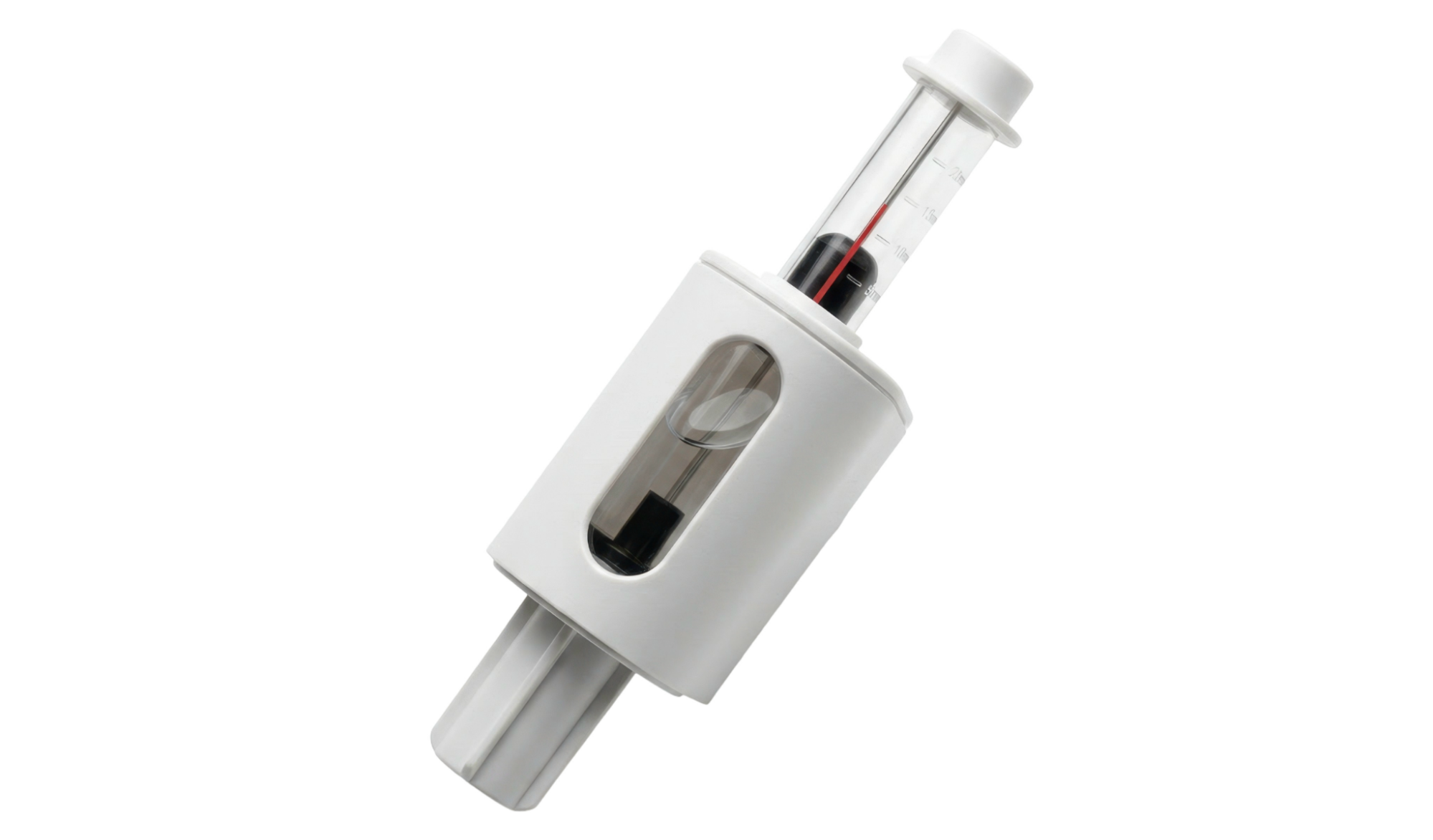
At the core of that development is the needleless syringe. It is a technology designed to deliver medication without the conventional hollow needle. These devices are part of a wider group of needleless systems that use pressure or other delivery mechanisms to move drugs into the body.
Needle-free injections have been studied for years and used in specific medical applications. What is changing now is the technology behind these systems. Along with growing interest in alternative routes such as intranasal administration. Together, these developments are giving pharmaceutical companies more options for delivering medicines beyond traditional injections.
What Is a Needleless Syringe?
A needleless syringe delivers medication without inserting a conventional needle into the patient's skin.
Instead, some devices use pressure to force a narrow stream of liquid medication through the skin. The medication is held in a chamber and expelled through a very small opening at sufficient pressure to penetrate the tissue. Depending on the device and medicine, the drug can be delivered intradermally, subcutaneously or intramuscularly.
The top health organizations explain needle-free jet injectors as devices that use a pressurized chamber to deliver a sterile dose through a small orifice with enough force to penetrate human tissue.
How Needleless Systems Work
Producing a reliable needle-free injection is an engineering challenge.
A conventional syringe uses a needle to create a pathway into tissue. A needleless injector has to create that pathway using pressure. The device generates a high-velocity stream of medication that penetrates the skin and deposits the drug at the intended depth.
The pressure, volume, speed and characteristics of the medication all matter. A system that delivers too little force may not administer the dose properly, while excessive force can cause unnecessary tissue effects.
Modern needleless systems therefore focus heavily on dose consistency and control. Device manufacturers demonstrate that the injector performs reliably and delivers the intended dose under specified conditions.
The regulatory side is also becoming more defined. The FDA has established technical considerations for pen, jet and related injectors. While ISO 21649:2023 addresses safety, performance and testing requirements for single-use and multiple-use needle-free injection systems intended for medical and personal use.
Why Needle-Free Delivery Is Attracting Attention
There is an obvious appeal to removing the needle from an injection.
For patients with needle anxiety, even the sight of a conventional syringe can create stress. A needle-free device may make certain forms of administration more acceptable, particularly when medication has to be given repeatedly.
Healthcare workers may also benefit. Needlestick injuries are an established occupational hazard associated with conventional injections. The WHO has highlighted the importance of injection-safety technologies in reducing needlestick injuries and preventing the transmission of bloodborne infections associated with unsafe injection practices.
That does not mean needleless delivery automatically eliminates every safety concern. Devices still need to be handled correctly, and infection-control procedures remain essential. The benefits also depend on the particular medicine, device design and clinical setting.
For that reason, the future of needle-free drug delivery is more likely to involve carefully selected applications. Not a complete replacement of traditional syringes.
Intranasal Drug Delivery Opens Another Door
Researchers are also paying close attention to intranasal drug delivery. It uses the nasal cavity as a route for administering medicines. Nasal delivery has been used for local treatments for many years, but research has increasingly examined its potential for systemic medicines, emergency treatments, vaccines and therapies targeting the central nervous system.
One reason the nasal route is attractive is that it is non-invasive and can provide relatively rapid drug absorption for suitable medicines. It can also avoid the gastrointestinal tract and, in some cases, the hepatic first-pass effect associated with oral administration.
The nose has also attracted interest in neurological drug delivery. Researchers have investigated whether drugs administered through the nasal cavity can reach the central nervous system through pathways involving the olfactory and trigeminal nerves. This approach could potentially help address some of the difficulties associated with getting medicines across the blood-brain barrier.
The Challenges of Nasal Drug Delivery
The nasal cavity presents its own set of biological and technical obstacles.
Mucociliary clearance, for example, can remove medication from the nasal cavity before sufficient drug is absorbed. Large molecules, including many peptides and proteins, can also have difficulty crossing the nasal epithelium. Drug formulation, molecular size, solubility and the condition of the nasal mucosa can all affect how well a treatment works.
The volume that can be administered through the nose is another limitation. Recent reviews note that nasal delivery generally works with relatively small volumes, while congestion, irritation and other changes in nasal physiology can influence drug absorption.
This makes device design particularly important. A nasal spray or other delivery device needs to place the medicine where it can be absorbed effectively rather than simply depositing it in the nose.
Researchers are consequently studying a range of approaches to improve nasal retention and absorption, including mucoadhesive formulations, nanoparticles, liposomes, gels and other drug-carrier technologies.
Drug Formulation and Device Design Must Work Together
One of the biggest lessons emerging from needle-free drug delivery research is that the device cannot be considered separately from the medicine.
A highly sophisticated injector will not solve problems caused by an unsuitable formulation. Similarly, a promising nasal formulation may fail to achieve its intended effect if the delivery device cannot consistently deposit it at the intended site.
For injectable needleless devices, factors such as viscosity, dose volume, pressure, and tissue penetration must be considered together.
For nasal drug delivery, researchers have to account for the anatomy of the nasal cavity, mucus, mucociliary clearance, drug stability, and formulation characteristics. Reviews of the field emphasize that drug properties, formulation, delivery device and nasal physiology all influence delivery efficiency.
This drug-device relationship is likely to become even more important as pharmaceutical companies develop increasingly complex biologic medicines.
What Is Holding Needleless Technology Back?
Despite its potential, needle-free technology still faces practical challenges.
Manufacturing costs, device reliability, dose accuracy and compatibility with different medications can all decide whether a product is suitable for widespread use. Developers also have to demonstrate that a device is safe and performs consistently in real-world conditions.
For nasal products, the challenges are different but equally significant. Anatomical differences among patients, nasal congestion, impaired mucociliary clearance, and limited absorption of certain drug molecules can all affect performance. Research has also shown that successful delivery to specific regions of the nose, particularly areas associated with nose-to-brain delivery, remains difficult.
Regulatory requirements add another layer. Products that combine a drug with a delivery device have to meet expectations for both pharmaceutical quality and device performance. The FDA's guidance specifically recognizes needle-free injectors as a category requiring technical and scientific information in marketing applications.
A Future Beyond the Traditional Syringe
It is unlikely that the conventional needle will disappear from medicine completely. Many treatments and procedures still require traditional injection methods, and some drugs simply are not suitable for nasal or needle-free administration.
But that does not diminish the technology's potential.
The next generation of needleless systems could provide more precise, convenient options for selected injectable medicines, while improvements in formulations and nasal devices may broaden the applications of intranasal and nasal drug delivery.
For patients, the appeal is fewer needles, potentially less anxiety and more convenient ways to receive certain treatments.
For healthcare providers, needle-free devices may offer another tool to improve administration and reduce some of the risks associated with conventional sharps.
The real future of needle-free drug delivery will probably not be defined by one device replacing the syringe. Instead, it will come from a combination of better engineering, smarter formulations and a clearer understanding of how different medicines behave in the body.
The needle has been an essential part of modern medicine for more than a century. But as drug delivery technology continues to evolve, it may no longer be the only practical route for getting the right medicine to the right patient.
