
Family Vacations Around the World: Planning an Island Adventure With Kids in 2026
An island vacation with kids can mean mornings on the beach, boat trips, wildlife encounters, and plenty of time outdoors. It can also involve long transfers, unfamiliar food, ferry schedules, and tired children if the destination does not suit the family.
Before booking, parents need to think beyond the photos and consider:
How difficult the island is to reach
Whether activities suit their children's ages
How easily the family can get around
What accommodation will make daily routines easier
The best choice is not necessarily the most famous island. A successful 2026 family trip starts with matching the destination, journey, accommodation, and daily schedule to how your family actually travels.
TL;DR: Your Island Adventure Starts With the Right Choices
Choose islands that match children's ages, interests, and travel tolerance.
Consider transfers and local transportation before booking your accommodation.
Mix beach days with cultural, wildlife, and outdoor experiences.
Leave enough downtime between excursions, transfers, and active days.
Prepare for sun, water, food, and destination-specific health risks.
What Makes an Island Work Well for Families?
A beautiful coastline does not automatically make an island practical with children. Families should consider how daily life will work once they arrive.
Look at swimming conditions, healthcare access, restaurants, supermarkets, transport, accommodation locations, and the variety of activities available. Families with younger children may also value short distances and easy access to essentials more than a packed sightseeing schedule.
Match the Destination to Your Children's Ages
A toddler and a teenager can have very different ideas about a good island vacation.
Families with babies and toddlers may prioritize shaded beaches, short transfers, kitchen facilities, easy stroller access, and accommodation close to shops. School-age children may enjoy snorkeling, wildlife encounters, easy hikes, and boat excursions.
Teenagers may appreciate destinations offering more independence and activities such as surfing, kayaking, diving, cycling, or exploring towns.
Before booking, ask what the children can realistically enjoy rather than building the trip around activities they may be too young or tired to appreciate.
Balance Beach Time With Things to Do
Beach days are part of the appeal, but a week of identical beach days may not suit every family.
Look for islands offering different experiences. Sicily and Crete combine beaches with historic sites and towns, while destinations such as the Galápagos are strongly associated with wildlife and nature. Hawaii offers beaches alongside hiking, volcanic scenery, and cultural attractions.
Having alternatives also helps when rain, strong winds, or rough seas change outdoor plans.
Check Access, Transfers, and Local Transport
Map the complete journey from home to accommodation before booking.
A flight may be followed by another domestic flight, ferry, speedboat, or lengthy road transfer. What looks manageable for two adults can become tiring with children, luggage, strollers, and disrupted sleep.
Check:
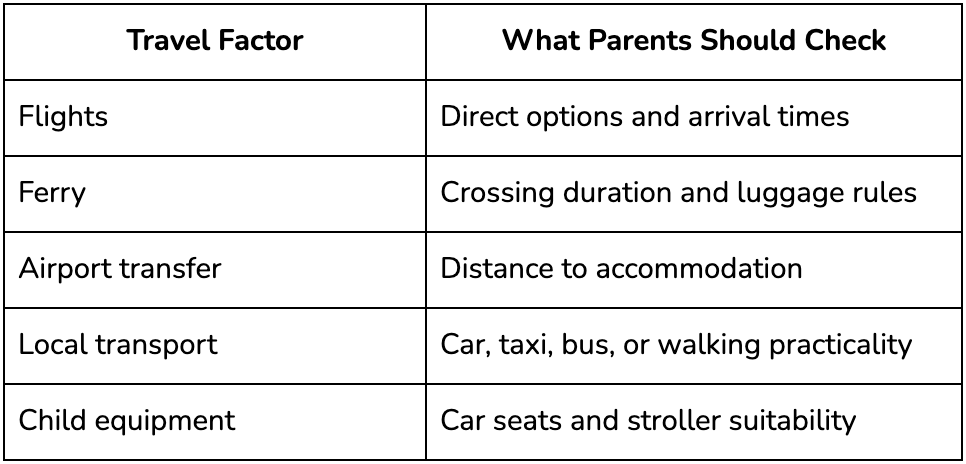
Reducing unnecessary transfers can give families more usable vacation time.
Choosing an Island Region Around the World
Island regions offer very different climates, cultures, travel times, and vacation styles. Instead of searching for one universally "best" island, narrow the options according to what your family wants from the trip.
Caribbean and Atlantic Islands
Caribbean islands can work well for families primarily interested in warm weather, beaches, swimming, resorts, and water activities.
Larger islands can provide more restaurants, excursions, and accommodation choices, while smaller islands may suit families seeking a quieter stay. Parents should compare seasonal weather, flight connections, beach conditions, and hurricane exposure before settling on dates.
Mediterranean Islands
Mediterranean islands can combine beach time with food, history, villages, and sightseeing.
Crete, Mallorca, Sicily, Sardinia, and the Greek islands provide different combinations of coastal stays and cultural experiences. They can be particularly useful for families who do not want every day centered around a resort.
Consider where attractions are located before choosing accommodation. Staying near the places you plan to visit can reduce long drives with children.
Indian Ocean and Southeast Asian Islands
Places such as Bali, Phuket, Koh Samui, Mauritius, and the Maldives offer tropical settings but create very different family trips.
Bali can combine beaches with temples, countryside, and cultural activities. The Maldives is more suited to families comfortable spending much of their vacation around one resort or island.
Transfer arrangements deserve particular attention in this region. Some stays may require boats, seaplanes, or additional domestic connections after an international flight.
Pacific and Remote Island Destinations
Pacific destinations can reward families willing to accept longer travel times.
Hawaii offers comparatively varied island experiences, while destinations such as Fiji and French Polynesia may involve additional connections depending on where families stay.
For a shorter vacation, spending several days reaching a remote island may not make sense. These trips generally work better when families have enough time to recover from travel and enjoy the destination at a slower pace.
Where to Stay on a Family Island Vacation
Accommodation can influence the trip as much as the destination itself.
A full-service resort can simplify meals, swimming, and activities because many facilities are in one place. Villas and vacation rentals can offer more privacy, separate bedrooms, kitchens, and laundry facilities, which can be particularly useful with younger children.
Before booking, check practical details rather than relying solely on the property description. Ask about pool fencing, beach access, stairs, air conditioning, cribs, high chairs, cooking facilities, and the distance to supermarkets or restaurants.
Family-Friendly Island Stays at a Glance
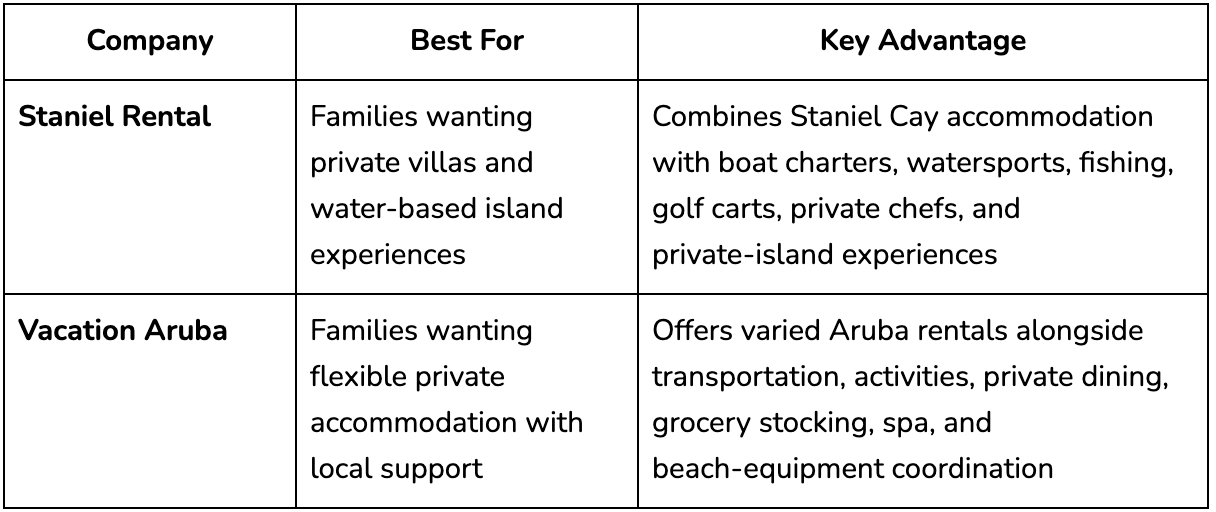
1) Staniel Rental: Villas With Island Experiences Included

Staniel Rental specializes in luxury vacation rentals on Staniel Cay, with options ranging from two-bedroom waterfront villas to larger private homes for families and groups. Properties can include private pools, full kitchens, outdoor living areas, housekeeping, Wi-Fi, lagoon or ocean views, and easy access to the water.
Families can also arrange activities throughout the Exumas, including boat trips, Waverunner rentals, fishing, snorkeling, diving, and visits to Pig Beach, Compass Cay, and Thunderball Grotto. Golf carts are available for getting around Staniel Cay, while private chefs and catering can support meals at the villa or during special experiences.
Key Highlights
Private waterfront, beachfront, and lagoon-side villas
Boat charters with knowledgeable local captains
Watersports, fishing trips, and golf cart rentals
Private chefs, catering, and private-island experiences
Why Choose Staniel Rental
Staniel Rental can suit families who want a private villa while keeping island activities, transportation, and dining arrangements connected through one local provider. Its Staniel Cay focus also gives guests direct access to many of the Exumas' best-known water-based experiences.
2) Vacation Aruba: Private Stays With Local Concierge Support

Vacation Aruba is a locally owned and operated vacation rental and property management company offering private accommodations across Aruba. Families can choose from houses, villas, condos, apartments, townhomes, and studios, including private-pool homes and larger multi-bedroom properties.
Its local team also provides concierge support for transportation, private chefs, activities, grocery stocking, spa treatments, beach equipment, and other arrangements. This gives families the independence of a private rental while providing local support for practical needs and vacation activities.
Key Highlights
Private villas, condos, homes, townhomes, and studios
Private-pool and larger multi-bedroom accommodation options
Transportation, car rentals, tours, and activity coordination
Private chefs, grocery stocking, spa, and beach equipment
Why Choose Vacation Aruba
Vacation Aruba stands out for combining a broad range of private accommodations with locally managed concierge support. Families can use the same local team for their stay, transportation, activities, dining arrangements, and other practical services throughout their Aruba vacation.
Plan the Journey Without Overloading the Family
Getting to an island can be part of the experience, but too many connections can consume both time and patience.
When comparing routes, consider the entire door-to-door journey. A slightly more expensive direct flight or simpler transfer may be worthwhile when it removes hours of waiting with tired children.
Make Long Travel Days Easier
Keep essential items where they are accessible rather than inside checked luggage.
A useful carry-on can include:
Familiar snacks and refillable water bottles
Medication and basic toiletries
One change of clothing per child
Chargers and headphones
Books, games, or downloaded entertainment
Comfort items for younger children
Avoid scheduling a major excursion immediately after arrival. Giving children time to eat, sleep, swim, or settle into the accommodation can make the following day easier.
Know When Island Hopping Is Worth It
Island hopping works best when each stop offers something meaningfully different, and connections are straightforward.
For families with toddlers or limited vacation time, repeatedly packing bags and coordinating ferries may create more work than enjoyment. One well-positioned base with several day trips can provide variety without repeatedly changing accommodation.
Health, Safety, and Practical Preparation
International island travel deserves some health preparation, especially when children are involved.
The CDC's 2026 Yellow Book identifies diarrheal illness, respiratory conditions, sunburn, animal and insect bites, and water-related injuries among concerns for children traveling internationally. It also recommends reviewing routine and destination-specific vaccinations before travel.
WHO recommends researching destination-specific health risks before departure and advises travelers to consider comprehensive travel insurance and carry enough prescribed medication for their trip.
Around water, supervision matters even when children already know how to swim. Parents should also research local currents, beach warning systems, marine hazards, and whether suitable life jackets are available for planned boat activities.
For international travel, check passport and entry requirements for every child. Rules involving minors can differ by country, including requirements for parental consent when a child travels with only one parent or guardian.
Pack for the Island, Not for Every Possibility
Island packing should focus on items that affect comfort and safety rather than filling suitcases for every possible situation.
Prioritize:
Lightweight, breathable clothing
Swimwear and rash guards
Hats and sunglasses
Suitable sunscreen
Comfortable sandals and walking shoes
Prescription medication
Basic first-aid supplies
Small day bags
Reusable water bottles
For babies and young children, confirm whether diapers, formula, familiar snacks, and other essentials are easily available locally. Bringing a reasonable initial supply can prevent an immediate shopping trip after arrival.
Leave bulky "just in case" items at home when they can easily be rented or purchased at the destination.
Build a Family-Friendly Island Itinerary
A good family itinerary leaves room for the unexpected.
Instead of scheduling several attractions each day, choose one main activity and build the rest of the day around meals, swimming, rest, and spontaneous stops.
For example:
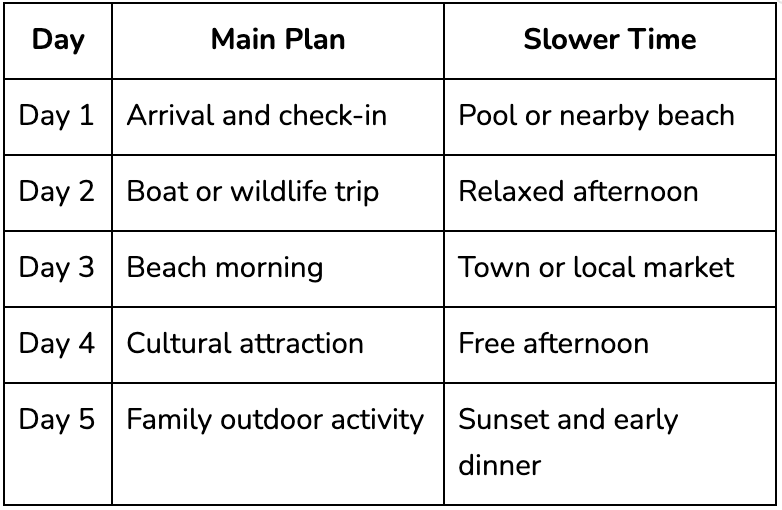
Put longer excursions between easier days rather than scheduling them back-to-back. This gives children time to recover and leaves some flexibility if weather changes your plans.
A Better Island Trip Starts With Fewer Moving Parts
The most memorable family island vacation does not need the longest itinerary or the greatest number of destinations. What matters is choosing somewhere your children can comfortably experience rather than somewhere the family spends most of its time getting to the next activity.
Start with the realities of your trip: children's ages, available time, transport tolerance, accommodation needs, and the experiences everyone genuinely wants. Then choose an island that fits those needs. With fewer unnecessary transfers and enough unplanned time, parents can spend less of the vacation coordinating logistics and more of it enjoying where they have traveled.
FAQs
How early should families book an island vacation for 2026?
Book earlier when traveling during school holidays or peak seasons, especially if you need connecting rooms or a specific rental layout. Islands with limited flights, ferries, or family-sized accommodation can also benefit from advance planning.
Is an all-inclusive resort better for families than a vacation rental?
Neither is automatically better. All-inclusive resorts simplify meals and on-site activities, while vacation rentals can provide kitchens, separate bedrooms, laundry facilities, and greater control over daily routines.
Should families rent a car on an island?
It depends on the island and where you stay. A car can help on larger islands with dispersed attractions, while compact destinations with reliable buses, taxis, or walkable resort areas may not require one.
What should parents check before booking a ferry with children?
Check journey length, departure point, luggage rules, seating, toilets, boarding procedures, and cancellation policies. If anyone experiences motion sickness, also consider the vessel type and typical sea conditions.
How can families handle food allergies on an island vacation?
Learn how to communicate the allergy in the local language and research access to suitable foods before arrival. Carry prescribed emergency medication, translated allergy information, and dependable snacks for journeys or remote excursions.
