
4 Practical Hobbies to Lower Stress
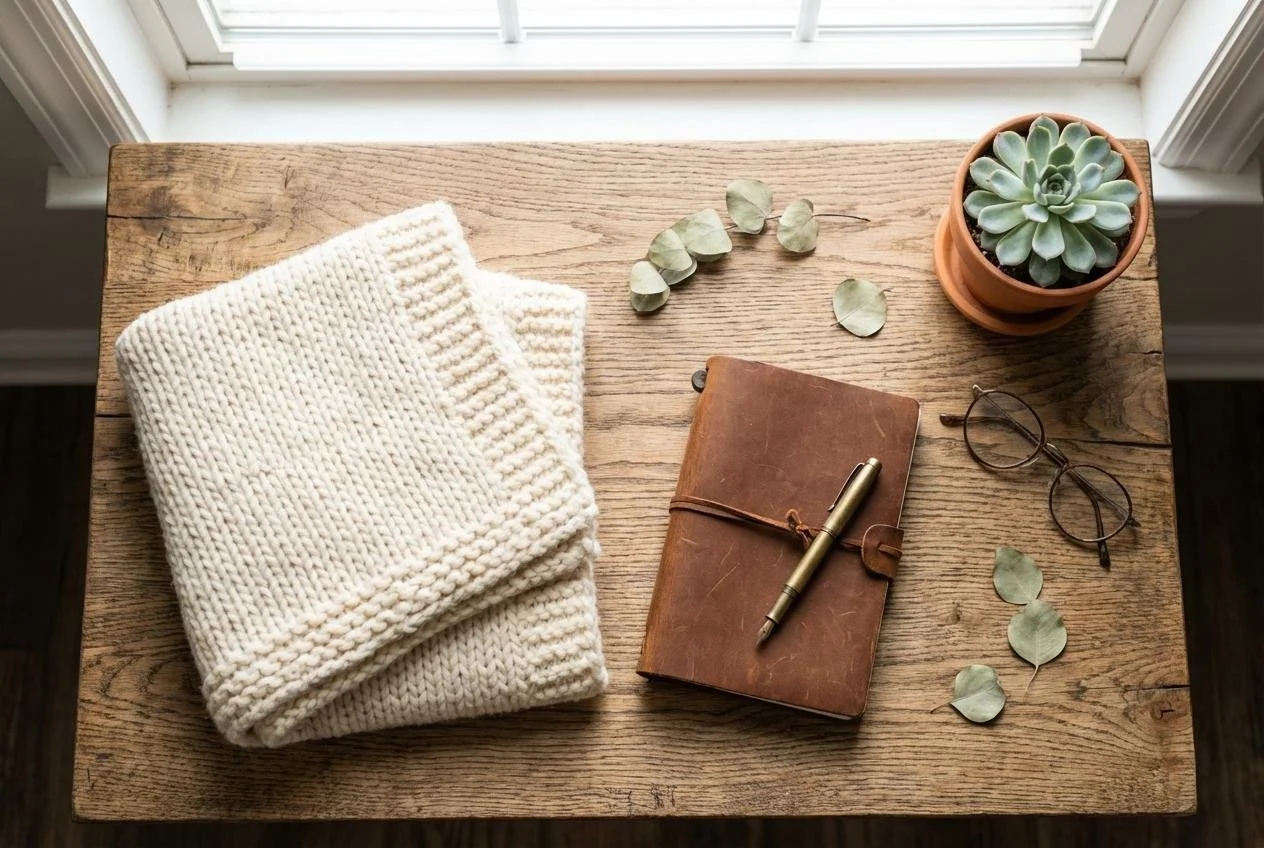
The four most effective easy hobbies to stop stress fast are knitting, indoor gardening, expressive journaling, and gentle walking.
Unlike passive screen time, these hands-on activities activate the parasympathetic nervous system by gently anchoring your attention in the present moment.
Choosing screen-free ways to relax offers an accessible mental reset without requiring any specialized skills or major lifestyle overhauls.
The Scroll That Doesn't Actually Rest You
It is 9 p.m. You have made it through a draining day, surviving back-to-back meetings and a never-ending inbox.
You sink into the couch, reach for your phone, and spend the next 45 minutes scrolling. News headlines and social feeds become a rabbit hole of videos you did not mean to watch.
And somehow, you feel worse. This is one of the more frustrating paradoxes of modern life.
We reach for screens because they feel like rest, but passive consumption keeps the brain overly stimulated.
The nervous system does not know the difference between stressful content and relaxing content. It just knows it is still processing constant information.
Research consistently suggests that the most effective hobbies lower stress by being hands-on and tactile.
These activities pull attention gently into the present moment rather than scattering it across a feed.
This article covers four easy, accessible activities that are consistently linked to lower stress levels.
You will also find practical advice for making them stick without overhauling your entire routine.
Why Hands-On Hobbies Work (When Scrolling Doesn't)
Before diving into the list, it helps to understand why tactile activities affect the nervous system differently from passive entertainment.
When we experience stress, the sympathetic nervous system activates to manage the familiar fight or flight response.
Recovery happens through the parasympathetic nervous system, which governs rest, digestion, and calm.
The critical detail is that the parasympathetic system is not activated simply by stopping activity. It needs a different kind of input to shift gears successfully.
Repetitive and rhythmic physical tasks involving texture and movement are particularly effective at triggering that shift.
Research consistently finds that activities with a sensory quality help lower cortisol levels and heart rate.
The body has something to do, and that gentle action communicates safety to the nervous system. There is also the concept of flow state, where attention narrows to a single absorbing task.
During flow, the brain steps out of its rumination cycles and into present-moment engagement.
Worry about the future and rehashing of the past quiet down because the mind is occupied with something immediate and real.
Tactile engagement adds another powerful layer, making these ideal hobbies for mental health.
Touch and physical feedback activate sensory regulation pathways in ways that looking at a screen cannot replicate.
Having the right physical tools readily available makes it much easier to step away from screens and satisfy this need.
Gathering unlinked basics like a simple sketchbook, basic potting soil, or gifts for knitters and crocheters from Thread and Maple provides a tangible starting point.
Key Insight: The parasympathetic nervous system doesn't activate simply by stopping activity. Rhythmic, tactile tasks signal safety to your body, effectively switching your brain from "fight or flight" mode into a genuine state of recovery.
The 4 Hobbies
1. Knitting For Rhythm And Focus
Of all the stress-relieving hobbies on this list, knitting has incredibly convergent benefits. It is worth understanding why before assuming it is too niche or complicated for you.
The rhythm of working yarn through needles is genuinely meditative for many makers.
Unlike meditation, which asks you to clear your mind, mindful knitting gives the mind just enough to do.
Counting stitches and watching a row take shape occupy exactly the right amount of cognitive bandwidth.
This gentle focus interrupts anxious thought loops without demanding strenuous effort.
Research consistently links creative engagement to reduced rumination, improved mindfulness, and mood regulation.
Studies on knitting specifically have found that regular practitioners report lower feelings of stress and sadness.
These positive effects are present during solo crafting as well as in community settings.
The sense of tangible progress matters deeply for daily mental recovery. Each completed row is visible proof that something real has been accomplished.
This quietly counteracts the invisible and unresolvable nature of most modern stress.
A maker recently shared that keeping a small project in her bag transformed her stressful work commute.
She found that even ten minutes of knitting noticeably shifted her mood before entering the office.
The project itself was almost beside the point because the restorative ritual was the true benefit.
The practice does not require advanced skill to be highly effective. Simple and repetitive stitch patterns are often the most calming choices for beginners.
The primary goal is rhythm and presence rather than achieving absolute perfection.
2. Gardening And Tending Indoor Plants
You do not need an outdoor garden to make this restful hobby work. A single succulent on a windowsill or a trailing plant on a bookshelf is enough to begin.
Gardening consistently ranks among the most effective calming hobbies in wellbeing research.
Physical contact with soil has been found to stimulate natural serotonin production. This is partly due to a naturally occurring soil bacterium that appears to act as a mild mood-lifter.
Even tending indoor plants without soil offers significant mental health benefits.
The focused and patient attention that plant care requires is a natural antidote to urgency. There is also something deeply restorative about observing slow growth over time.
Watching a leaf unfurl introduces a soothing timescale that simply cannot be rushed.
The sensory experience is a vital part of the daily medicinal effect. The texture of leaves and the smell of damp earth enhance the quietness of the activity.
Plant care asks very little of you while returning a great deal of peace.
3. Journaling To Give Stress A Place To Land
Journaling has accumulated a strong body of evidence behind it, yet it remains broadly underused. It is so simple that it often does not feel like it should work.
What writing does for stress is straightforward because it directly externalizes mental content.
When anxious thoughts circle repeatedly, they tend to feel exceptionally large and unresolvable. Writing them down gives them form and containment so the brain can process them as finished.
Expressive writing participants showed measurable improvements in physical and psychological well-being during clinical follow-ups.
The entry point here is deliberately low and completely pressure-free. This is not about elaborate systems or writing anything profound enough to be worth reading.
It is simply about spending five quiet minutes with a blank page.
Freewriting whatever comes to mind without any editing is perfectly sufficient. Sketching and casual doodling also count as valid forms of healthy expression.
Any act of moving something from the mind onto paper creates useful distance from stressful thoughts.
4. Gentle Walking As A Reset Button
This entry comes with an important qualifier regarding the specific type of movement. The walking described here is not exercise in the traditional cardiovascular sense.
It is simply unhurried and purposeful movement, ideally done without any headphones.
Walking at a comfortable pace has been shown to lower cortisol and restore mental clarity. In fact, participating in a nature walk significantly reduces rumination compared to urban environments.
When paired with gentle sensory observation, walking becomes a powerful daily grounding practice.
It serves as a moving version of the present-moment attention that makes knitting so effective. Spending 20 minutes immersed in a natural setting was associated with the biggest drop in cortisol levels.
This remains the most frictionless hobby on this list since it requires no specialized tools.
Fifteen to twenty minutes is enough to shift the nervous system out of a stress response. The main requirement is leaving your phone safely tucked away indoors.
Stepping outside allows your mind to rest naturally without any digital interruption.
Pro Tip: Don’t overcomplicate your hobby choice. Whether it's a single succulent or five minutes of journaling, the goal is rhythmic presence, not perfection. Start with the activity that feels most effortless to begin today.
How to Make a New Hobby Actually Stick
The most common reason stress-relief habits fail has absolutely nothing to do with motivation. It has to do with friction and the small obstacles that make it easy to skip.
Eliminating these annoying barriers is essential for building a lasting and restorative routine.
Start smaller than feels meaningful, knowing that even ten minutes counts. The true goal in the first week is not progress, but rather establishing steady contact.
Showing up regularly matters far more than showing immediate or impressive results.
Attach the new habit to an existing routine to ensure it survives busy days. Habits that float free of any firm anchor are always the easiest to abandon entirely.
Pairing a short walk with dinner or knitting with morning coffee dramatically increases follow-through.
Keep your crafting tools visible and ready so you do not have to search for them. If getting started requires untangling messy supplies, the habit will not survive a low-motivation day.
Everything you need should be immediately accessible and neatly arranged.
Choose portable and low-commitment projects to maintain steady, positive momentum. Small creative endeavors are far easier to pick up and put down without losing track.
This gentle approach prevents ambitious undertakings from feeling like another stressful daily chore.
Important: Friction is the silent killer of new habits. If your supplies are buried or disorganized, you likely won't start. Keep your tools visible and ready to ensure your hobby remains a relief, not a chore.
Making Knitting Easier to Start and Love
One of the most frequently cited reasons knitting does not stick is simple disorganization. Tangled needles in a drawer or a half-started project buried under supplies create instant frustration.
When sitting down to knit requires sorting through chaos, the activity completely loses its calming appeal.
The friction of daily disorganization quietly undermines the ritual that makes the hobby restorative.
This is exactly why the physical setup of a practice matters deeply for long-term success. A small, ready-to-go kit removes the tedious decision-making that depletes motivation.
When your tools are well-organized, picking up your handiwork becomes truly effortless.
Effortless engagement is exactly what a healthy stress-relief habit needs to be. Investing in thoughtfully designed accessories can make this critical difference completely tangible.
Leather needle organizers and compact bags are built specifically to reduce daily friction. They bring elegant order to your supplies and make sitting down to create feel luxurious.
High-quality products designed by makers who truly understand what a well-organized setup requires.
The ultimate goal is beautifully simple and incredibly effective for your well-being.
When the tools are ready, the beneficial habit is infinitely easier to maintain over time. As the habit becomes easier, the long-term stress relief naturally follows.
Now, It's Your Turn: The One-Week Hobby Experiment
Here is a low-pressure invitation to begin a new mental health experiment. Pick one of the four hobbies above and try it every day for a single week.
You do not need to do it perfectly or for any set amount of time.
Frame it as an experiment rather than a heavy, long-term commitment. Allow yourself seven days of curiosity without expecting a complete lifestyle overhaul.
Just give your nervous system a different kind of input and notice whether anything shifts.
The next time stress peaks, try reaching for something tactile instead of your phone. Grab a pair of needles, water a thirsty plant, or pull out a blank page.
Stepping out the front door for a quick walk works wonders, too.
Small, intentional acts of creativity are always worth protecting in daily life. They return the quiet, grounded sense of being present that the workday often drains away.
Doing one simple thing with your hands has always been enough to find genuine peace.
Author Profile: Thread & Maple is the leading supplier of artisan-crafted leather bags and organizational carriers for knitters, crocheters, and fiber artists, with accessories that beautifully complement their core collection.
Related:
