
Smart Ways to Evaluate Pre-Owned Machinery for Seasonal Work

Seasonal work has a way of exposing weak equipment choices at the worst possible moment. One bad starter, one tired hydraulic pump, or one “it ran fine last week” machine can throw off an entire job. Whether you’re harvesting, clearing snow, handling construction work, or filling a short rental rush, your equipment has to show up ready.
Budgets are tight, too. That’s not just a feeling. “69% of survey respondents say inflation has pushed them toward purchasing used machinery instead of new.” So yes, buying used can be a smart move. But it only pays off when you know what you’re looking at before money changes hands.
Essential Reasons to Consider Pre-Owned Machinery for Seasonal Work
Pre-owned equipment is often the practical choice when the work comes in waves. You may only need the machine for a narrow window, but during that window, it has to perform like it belongs there.
Lower Upfront Cost
A solid used machine can leave more cash available for the things that keep jobs moving: fuel, operators, parts, hauling, repairs, and backup plans. That matters. When you’re comparing used machinery for sale, don’t get distracted by the cheapest listing on the page. Look at the full cost of owning and running it.
A low purchase price feels great for about five minutes. A surprise engine repair? Not so much.
Regional Fit Matters
Machinery doesn’t work in a vacuum. Conditions matter. West Texas brings long harvest windows, cotton-heavy acres, dry weather, dust, and plenty of miles between fields, shops, and parts counters. In that kind of region, dealer support and parts availability aren’t nice extras. They’re survival tools.
Local Equipment Search
If you’re getting ready for cotton harvest, searching for used cotton strippers west texas makes sense. It’s even better when you can pair that search with local inspection help from people who understand John Deere machines, RTK signal needs, high-acreage cotton operations, and the service headaches that show up when equipment runs hard.
Flexibility and Sustainability
Used machines help seasonal crews scale without taking on the heavier payment that comes with new equipment. They can also give a second useful life to machines that still have plenty of work left in them. That means less waste and a more practical, circular approach to equipment ownership.
The upside is real: lower cost, more flexibility, and access to specialized tools. But here’s the catch. Those advantages only hold if the machine’s condition matches the asking price.
Key Factors to Review When Buying Pre-Owned Equipment
Before anyone turns a key or kicks a tire, start with the boring stuff. Paperwork. Seller behavior. Service records. It may not be exciting, but when buying pre-owned equipment, those details can tell you a lot.
History and Documents
Ask for ownership records, lien releases, service invoices, manuals, emissions paperwork, and serial-number verification. Missing paperwork isn’t always a deal-breaker, but it should slow you down.
If a seller can’t explain where the machine came from, how it was maintained, or whether there’s a lien on it, that’s your cue to dig deeper.
Hours and Prior Use
Engine hours matter, of course. But hours alone don’t tell the whole story. A higher-hour tractor that spent its life doing lighter work may be in better shape than a lower-hour machine that lived in dust, mud, heavy residue, or constant overload.
Ask what the machine actually did. The answer matters more than the number on the meter.
Seller Transparency
Dealers, auctions, co-ops, and private sellers can all be worth considering. The safest seller is the one who answers questions clearly, shares records, allows testing, and doesn’t act offended when you want proof.
A good paper trail gives you a starting point. But promises are still promises until you inspect the machine yourself.
Step-by-Step Checklist to Inspect Used Machinery Before Purchase
A quick walkaround isn’t enough. If the machine needs to go to work soon, you need a steady process when you inspect used machinery.
Start With Safety
Check:
Guards
Lights
Brakes
Steering
Mirrors
Hitch points
ROPS
Seat belts
PTO shields
Warning decals
Basic safety items tell a story. If those have been ignored, there’s a fair chance other systems were ignored too.
And honestly, no seasonal job is worth putting an operator in a machine that isn’t safe.
Look for Hidden Wear
Look closely at frame welds, corrosion, leaks, hose cracks, uneven tire wear, loose pins, tired bushings, and mismatched panels. Don’t rush this part. The rejection of inspections represented 17.42%. That’s a strong reminder that careful inspections matter.
Fresh paint can be honest. It can also be hiding something. Bring a flashlight.
Test Under Load
Start the engine cold if possible, then let it warm up. Cycle the hydraulics. Engage moving or cutting components. Check electronics. Listen for knocks, slips, hesitation, odd vibrations, or weak response.
A machine can look great sitting still. Work reveals the truth.
A good inspection can uncover leaks, corrosion, and poor maintenance habits. Still, some problems need sharper tools to spot.
Technology-Driven Strategies to Assess Second-Hand Equipment Effectively
Technology won’t replace a mechanic with good instincts. But it can help you avoid blind guesses, especially when the machine is hours away.
Remote Video and Reports
Ask for live video, not just a folder of flattering photos. Have the seller show serial plates, startup smoke, display screens, codes, hydraulic movement, undercarriage wear, tires, and any visible leaks.
Live video is harder to stage. If the seller refuses a simple walkthrough, pay attention.
Telematics and Diagnostics
Connected diagnostics can show fault codes, idle time, service intervals, fuel burn, alerts, and machine history. A dealer scan may feel like an extra expense, but it’s usually cheaper than hauling home a problem.
Condition Comparison Table
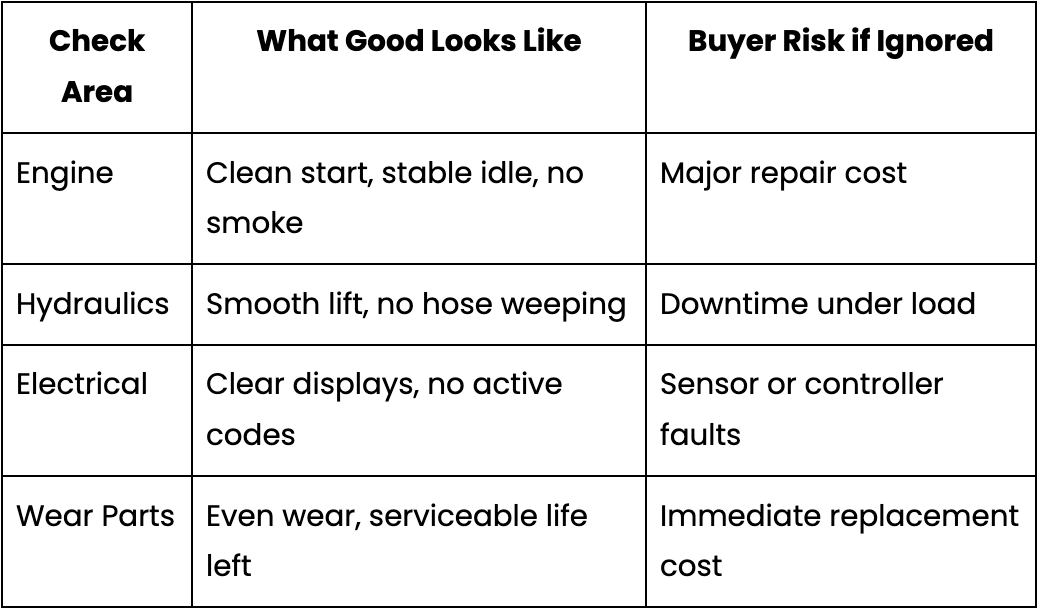
Digital insight adds confidence, but local conditions still shape what “good” really means.
Best Practices for Purchasing Used Machines in Regional Markets
Regional buying is part research, part timing, and part knowing who to call. In strong crop areas, the best machines often move before the busy season starts.
Read Local Demand
Cotton, hay, livestock, construction, and municipal work all create different demand cycles. In West Texas and New Mexico, parts counters, service trucks, and dealer reach can be just as important as the brand name on the hood.
A machine is only useful if you can keep it running.
Use Regional Experts
A local technician knows what dust, heat, irrigation work, and crop residue do to equipment. That kind of knowledge rarely shows up in a listing description.
If you can, pay for local eyes before you buy. It’s money well spent.
Time the Purchase
Pre-harvest evaluations give you breathing room for repairs, financing, transport, and operator training. Waiting until the job starts usually means fewer choices, higher pressure, and less bargaining power.
Once you understand regional timing, the next big question is simple: what should you pay?
Negotiation, Financing, and Risk Control
The best deal isn’t always the lowest price. It’s the machine that earns money during the season without burying you in surprise costs.
Benchmark Before You Offer
Compare prices across dealers, auctions, and private listings. Then adjust for hours, options, attachments, service history, tire condition, repairs needed, and transport distance.
Two machines with the same model number can be very different deals.
Watch the Add-on Costs
Freight, taxes, repairs, fluids, filters, tires, belts, knives, software updates, and insurance can change the real price fast. Put those numbers next to the purchase price before you sign anything.
That “great deal” may look different after a $4,000 parts order.
Protect the Purchase
Ask about warranty extensions, return terms, service support, and financing tied to seasonal income. These tips for purchasing used machines can help keep a smart purchase from turning into a cash-flow headache.
Good financing protects today’s budget. A better decision also considers resale and long-term value.
Sustainable Approaches to Evaluating Second-Hand Equipment
Sustainability isn’t just about public image. Done right, it can save money and keep capable machines working longer.
Retrofit When Practical
Some older machines can accept GPS guidance, better lighting, telematics, updated wear components, safer guards, or efficiency upgrades. Before you buy, confirm parts and software support.
An upgrade-friendly machine gives you options later.
Choose Efficient Models
Fuel use, emissions rules, idle time, and hydraulic efficiency all affect operating cost. A clean, well-maintained older unit may outperform a cheaper machine that burns fuel and eats parts.
Cheap equipment gets expensive when it never stops asking for attention.
Plan for Resale
Buy brands and models with good parts support, broad dealer coverage, and steady demand. That makes resale easier after the season or when your operation grows.
Sustainability adds value, but only if you avoid the buying mistakes that cause downtime.
Key Mistakes to Avoid When Inspecting Used Machinery
Bad purchases usually don’t come from one missed scratch. They come from pressure, skipped testing, and too much trust.
Rushing the Review
A seller’s urgency should not become your emergency. If there’s no time for documents, inspection, or a warm load test, there’s time to walk away.
Seriously. There will be another machine.
Ignoring Compatibility
Check hitch style, hydraulic flow, PTO requirements, software, attachments, tire width, trailer limits, and operator familiarity. A good machine that doesn’t fit your work is still the wrong machine.
Fit matters as much as condition.
Trusting Photos Too Much
Photos hide noise, leaks, codes, welds, weak hydraulics, and strange vibrations. A disciplined process for evaluating second-hand equipment should include hands-on testing or a trusted third-party inspection.
Avoiding rushed inspections helps, but safer buying starts with better sources.
Where to Find Trusted Used Machinery for Sale
Good sources reduce risk before the inspection even begins. Still, every source needs verification.
Dealers and Auction Houses
Local dealerships may offer service history, financing, parts support, and trade-in knowledge. Auction houses can offer strong value, but inspection access, buyer fees, and return terms vary.
Read the rules before bidding.
Online Platforms and Networks
Online marketplaces widen your search, especially for specialty equipment. Farm co-ops, mechanics, peer networks, and seasonal rental agencies may also know about machines before they’re publicly listed.
Sometimes the best lead comes from a neighbor, not a website.
Expert Buying Habits
Experienced buyers bring mechanics, study service logs, price repairs before negotiating, and test machines as close to real work as possible. Those habits beat guesswork every time.
With the right sources lined up, the last step is answering the questions buyers ask most.
Common Questions About Pre-Owned Machinery
Is it Safe to Buy Pre-Owned Machinery Online?
Yes, but only with safeguards. Request service records, serial-number proof, live video, diagnostic scans, clear payment terms, and third-party inspection. Avoid sellers who refuse basic checks or push rushed payment before condition is verified.
What Documentation is Necessary When Purchasing Used Farm Equipment?
You’ll want a bill of sale, ownership proof, lien release, serial number, service history, warranty details, emissions paperwork when relevant, and manuals. For financed purchases, lenders may also require insurance documents before funds are released.
How Do I Verify Parts Availability for Older Machines?
Call a dealer parts department with the model and serial number. Ask about common wear parts, electronic components, hydraulic parts, and lead times. If several key parts are discontinued, budget risk rises quickly.
Final Thoughts on Seasonal Machinery Decisions
Smart seasonal buying comes down to proof: records, inspection, local fit, fair pricing, and support after the sale. When reviewing used machinery for sale, don’t chase the cheapest machine on the market. Chase the one that can work when the season gets serious.
Use a checklist. Bring a mechanic when you can. Compare real repair costs. Verify parts before sending money. A little patience upfront can save you from a long, expensive week in the middle of your busiest season. And when the right machine checks out? Move with confidence. That’s how you buy used equipment without losing sleep.
