
The Key Stages of a Reliable Sample Processing Workflow
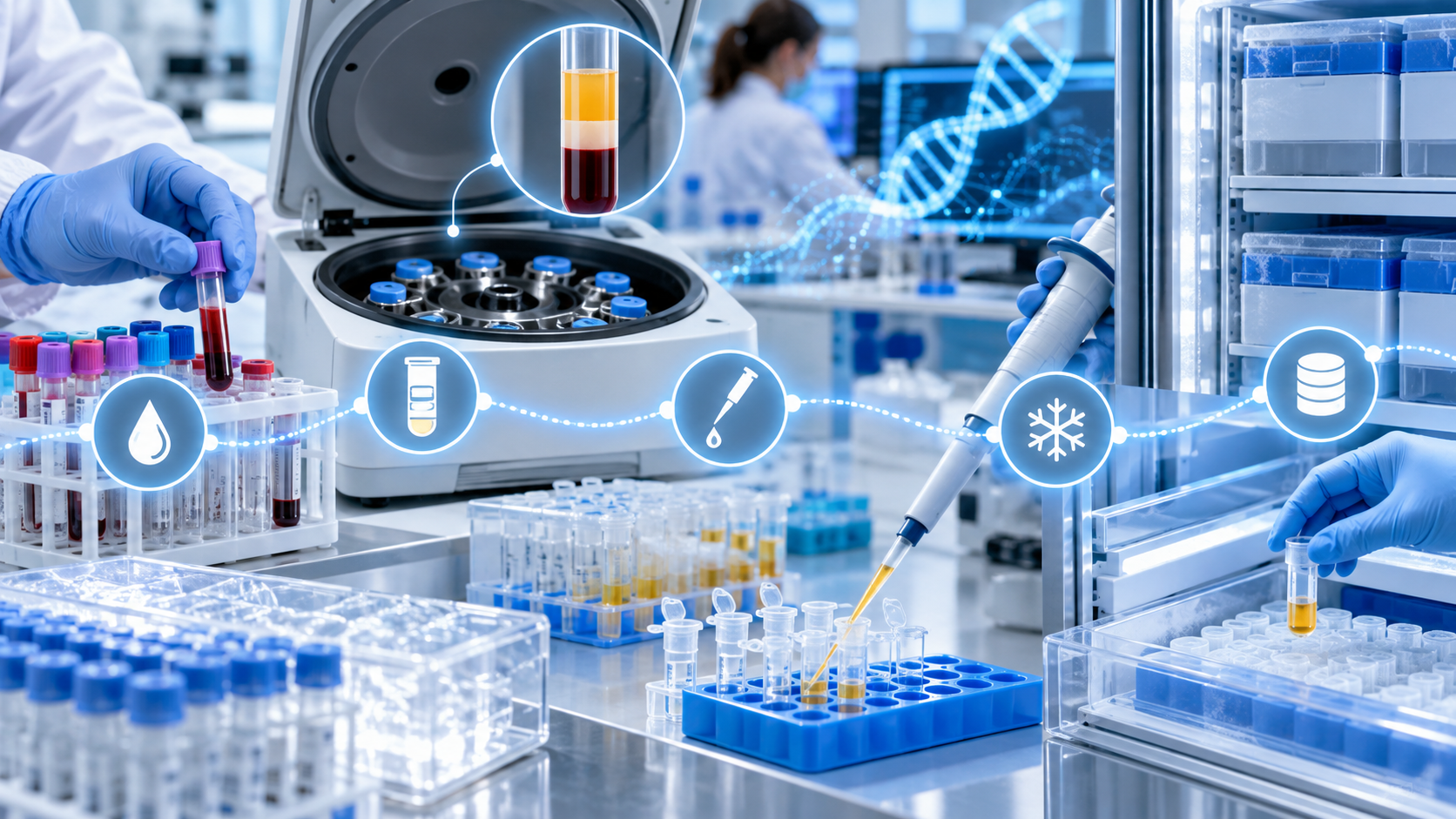
A biological sample can support important clinical and scientific research, but only if it is handled correctly from the moment it reaches the laboratory. A reliable processing workflow helps preserve sample quality, maintain accurate records, and prepare materials for the next stage of research.
Whether a project involves a small clinical study or a large population health programme, the core principles remain the same: samples need to be identified, processed consistently, tracked carefully, and stored under suitable conditions.
Sample Receipt and Initial Checks
The first step in a processing workflow is receiving the sample. At this stage, laboratory teams confirm that the sample has arrived, check that the label and documentation are complete, and record key information in a tracking system.
This initial check is important because mistakes are easier to resolve when identified early. If a sample has an unclear label, damaged packaging, or missing information, the laboratory can follow the appropriate procedure before further processing begins.
Sample receipt may include:
Confirming the sample identifier
Checking the collection date and associated paperwork
Recording the arrival time
Assessing the condition of the sample
Entering information into a Laboratory Information Management System
Assigning a storage or processing location
Clear records at this stage help create a reliable history for every sample.
Preparing Samples for Analysis
After receipt, samples may need to be prepared before they can be tested or stored. The exact process depends on the sample type and the goals of the study.
For example, blood samples may be separated into components such as plasma, serum, buffy coat, and red blood cells. This process, known as fractionation, allows different elements of the sample to be used for different forms of research.
Other materials may need to be transferred into suitable containers, reformatted into different labware, or combined according to study requirements. Consistent procedures help make sure that samples are prepared in a way that supports reliable downstream analysis.
Aliquoting Helps Protect Sample Value
Aliquoting is the process of dividing a larger sample into smaller portions. It is a useful step because it allows laboratories to use one portion for testing while keeping the remaining material protected.
Without aliquoting, a parent sample may need to be removed from storage repeatedly for different tests. This can increase exposure to handling and temperature changes. Smaller portions make it easier to plan future analyses while reducing unnecessary disruption to the original material.
The number and volume of aliquots should be considered early in the study. Research teams should think about the tests that are planned now as well as the possibility of future research.
DNA and RNA Extraction
Some studies require DNA or RNA to be extracted from biological fluids, tissues, or other sample types. These materials can be used in genetic analysis, sequencing, and a range of other research applications.
The extraction process needs to be appropriate for the sample type and the planned analysis. After extraction, the material may be assessed to understand its quantity and quality.
High-quality DNA and RNA are important for obtaining meaningful results. Poor-quality material may not meet the requirements of downstream tests, which can lead to delays or unusable data.
Quantification and Normalisation
Quantification measures the amount of DNA or RNA present in a sample. This helps research teams understand whether enough material is available for the intended analysis.
Normalisation adjusts samples to a specified concentration. This can be important when preparing a group of samples for the same analysis, as it helps create more consistent conditions across the batch.
These stages may appear technical, but they serve a practical purpose. They help ensure that downstream laboratories receive samples that are prepared according to the requirements of the planned work.
Tracking Every Movement
Processing is not only about physical handling. Each action should be recorded so that researchers can understand what happened to a sample and where it is located.
A Laboratory Information Management System can support this by recording sample receipt, processing activities, movements, storage locations, and associated data. This traceability helps laboratory teams retrieve the correct materials and gives research leaders a clearer view of study progress.
It can also support quality checks and audit readiness, particularly for clinical research programmes with detailed regulatory or reporting requirements.
Use Automation Where It Adds Value
Automation can support sample processing in high-volume studies. Automated liquid handling, sample transfer, extraction, and normalisation systems can help laboratories manage repetitive steps consistently.
Automation does not remove the need for trained staff. Laboratory professionals are still needed to review sample quality, oversee workflows, respond to exceptions, and make sure processes meet the requirements of each study.
A specialist Sample Processing provider can combine automated capacity with expert oversight, helping research programmes process materials at scale while maintaining sample traceability and quality.
Plan Processing and Storage Together
Processing and storage should be planned as part of one connected workflow. Once a sample has been prepared, the laboratory needs a clear plan for where it will be stored, how it will be monitored, and how it can be retrieved later.
This joined-up approach helps reduce delays and protects samples from being misplaced or stored under unsuitable conditions. It also makes future analysis easier because the sample history is already linked to its storage record.
FAQ
What is sample processing?
Sample processing is the preparation of biological materials for storage, testing, or analysis. It may include receipting, fractionation, aliquoting, extraction, quantification, and normalisation.
Why is aliquoting important?
Aliquoting divides a parent sample into smaller portions. This can reduce repeated handling of the original sample and preserve material for future testing.
What is the difference between quantification and normalisation?
Quantification measures how much DNA or RNA is present. Normalisation adjusts samples to a required concentration for a specific analysis.
Why is traceability important during processing?
Traceability records each sample’s identity, processing history, movement, and storage location. It helps laboratories retrieve the correct material and supports quality management.
Conclusion
A strong sample processing workflow protects valuable research materials from the moment they arrive at the laboratory. By combining clear receipt procedures, consistent preparation, accurate tracking, appropriate storage, and skilled oversight, research teams can create a reliable foundation for high-quality scientific work.
