
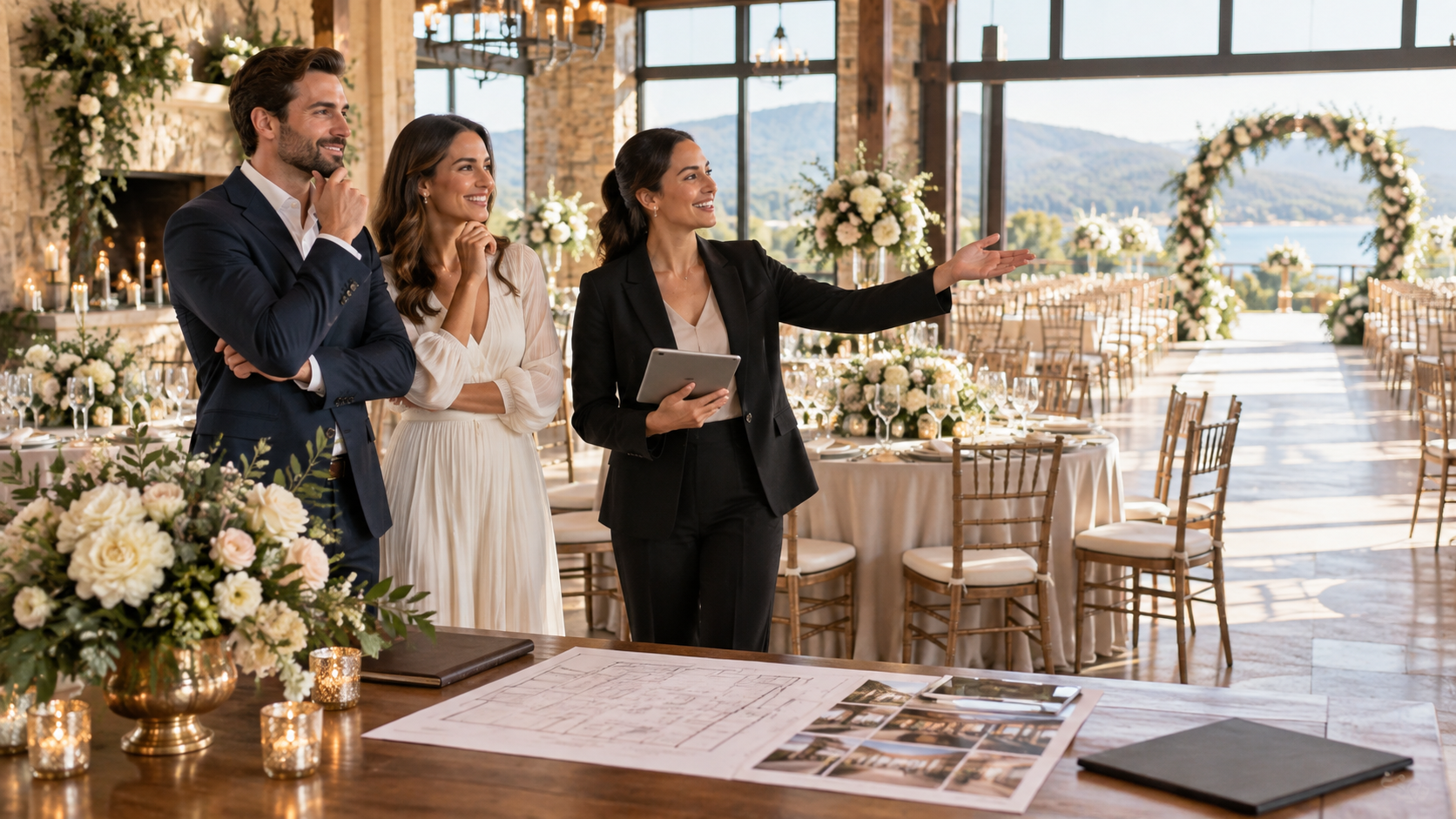
Choosing a wedding venue is one of the decisions that can shape nearly every other part of the celebration. The location affects the guest experience, décor, catering, photography, transportation, schedule, and even the overall atmosphere of the day. A venue may look beautiful in photos, but that does not necessarily mean it will work well for the wedding you have planned.
Before signing a contract, couples should look beyond appearance and consider practical details that can affect the event. Capacity, accessibility, vendor policies, setup time, weather plans, costs, and restrictions all deserve careful attention.
1. Consider the Venue's Overall Style
The venue should support the atmosphere you want rather than force you to redesign your entire wedding around it.
Look at the existing character
Pay attention to architecture, landscaping, lighting, flooring, windows, ceilings, and other permanent features. A historic property, modern loft, garden, hotel ballroom, or industrial space will each create a different starting point for your wedding design.
For couples considering a distinctive setting, a Historic German House Wedding & Event Venue can be one example of how a venue's architectural character can become part of the wedding experience.
Think beyond photographs
A venue can look impressive online but feel different in person. Visit during a similar time of day to your planned wedding when possible. Check how natural light enters the rooms and whether the space feels comfortable with the expected number of guests.
2. Confirm the Real Guest Capacity
A venue's stated capacity does not always tell the complete story.
Ask how capacity is calculated
A space may accommodate a certain number of people for a standing reception but fewer guests once dining tables, a dance floor, a DJ setup, and service areas are added.
Ask the venue to show you sample floor plans based on your expected guest count.
Consider guest comfort
Guests need enough room to move between tables, access restrooms, visit the bar, and reach the dance floor without creating congestion.
A venue that technically fits your guest list may not provide the experience you want if every area feels crowded.
3. Review the Location and Accessibility
The venue's location can have a major effect on guest convenience.
Consider travel time
Think about where most guests will be traveling from and whether the venue is easy to reach by car or public transportation.
For out-of-town guests, check the distance between the venue and nearby hotels. Also consider traffic patterns during the expected ceremony and reception times.
Check accessibility
Ask about accessible entrances, parking, restrooms, pathways, elevators, and seating arrangements. Accessibility should be considered for older relatives, guests with disabilities, and anyone who may have difficulty navigating stairs or uneven surfaces.
4. Understand What the Rental Fee Includes
The headline venue price rarely tells you everything you need to know about the final cost.
Request an itemized breakdown
Ask whether the rental fee includes:
Tables and chairs
Linens
Basic lighting
Setup and cleanup
Security
Staff
Catering
Bar service
Parking
Audio-visual equipment
Knowing what is included allows you to compare venues more accurately.
Ask about additional charges
Some venues may have service fees, overtime charges, cleaning costs, corkage fees, security requirements, or additional charges for specific services.
Get these details in writing before making a decision.
5. Check Availability and Timing
A venue's availability can affect the entire wedding timeline.
Ask about access hours
Find out when you and your vendors can enter the property for setup. Also ask when the event must end and when everything needs to be removed.
A beautiful venue may become less practical if vendors have only a short window to set up.
Ask about rehearsal availability
If you plan to hold a ceremony rehearsal at the venue, confirm whether it is included, available at an additional cost, or subject to scheduling limitations.
6. Understand the Vendor Policy
Some venues allow couples to choose their own vendors, while others have preferred or required vendor lists.
Ask about outside vendors
Confirm whether you can hire your own:
Caterer
Photographer
Florist
DJ or band
Wedding planner
Baker
Rental company
If the venue requires specific vendors, ask for the complete list before booking.
Understand vendor requirements
Some venues may require outside vendors to carry insurance, follow specific setup procedures, or work within designated areas. These policies can affect your planning and overall budget.
7. Evaluate Food and Beverage Options
Food service can have a significant effect on both the guest experience and the budget.
Ask how catering works
Find out whether the venue provides in-house catering or allows outside caterers. If catering is provided, ask about menu options, tastings, dietary accommodations, staffing, and service style.
Review beverage policies
Ask whether the venue provides bartenders, allows outside alcohol, charges corkage fees, or requires you to purchase beverages through a specific provider.
These details should be settled before booking rather than assumed later.
8. Examine the Indoor and Outdoor Spaces
Even if you have a clear preference for an indoor or outdoor wedding, examine every space available.
Have a weather backup
Outdoor ceremonies and receptions require a realistic contingency plan. Ask whether there is an indoor alternative and whether moving the event would involve additional fees or logistical challenges.
Look at each space at different times
An outdoor area that looks perfect during the afternoon may have limited shade, lighting, or temperature comfort later in the day.
Consider how the space will function during the ceremony, cocktail hour, dinner, and evening reception.
9. Ask About Décor Restrictions
Every venue has its own rules about decorations and installations.
Check what is permitted
Ask whether you can use candles, hanging installations, confetti, sparklers, floral structures, specialty lighting, or temporary signage.
Also find out whether decorations can be attached to walls, ceilings, doors, windows, or other surfaces.
Protect distinctive features
This is especially important for historic venues. The National Park Service's guidance on preserving historic properties emphasizes retaining existing historic materials, features, and spaces. Venue-specific restrictions may therefore be designed to protect important architectural elements.
Understanding these rules early can help you create a décor plan that fits the space rather than working against it.
10. Check Parking and Transportation
Parking is easy to overlook during a venue tour because attention naturally goes toward the ceremony and reception spaces.
Ask about parking capacity
Find out how many vehicles the property can accommodate and whether parking is included in the rental fee.
If parking is limited, ask about nearby lots, valet services, shuttles, or rideshare access.
Consider transportation for guests
If alcohol will be served or many guests are traveling from hotels, transportation may be particularly important. A convenient shuttle system can reduce confusion and help guests arrive and leave safely.
11. Evaluate Restrooms and Getting-Ready Areas
Practical facilities can have a major impact on guest comfort.
Inspect the restrooms
Check the number, location, cleanliness, accessibility, and distance from the main event space.
A venue may be visually impressive but inconvenient if guests have to walk a long distance to use the restroom.
Review preparation spaces
If you plan to get ready at the venue, inspect the bridal suite or preparation room. Look at seating, mirrors, lighting, outlets, storage, privacy, and space for your wedding party.
12. Review Photography Opportunities
Your venue will become the backdrop for many of your wedding photographs.
Identify photo locations
Look for indoor and outdoor areas that provide variety. Architectural details, gardens, staircases, courtyards, windows, and distinctive walls can all create useful photography opportunities.
Ask about photography restrictions
Some venues may limit access to certain rooms or areas. Confirm these rules in advance so your photographer can plan a realistic shot list.
13. Read the Contract Carefully
Never rely solely on verbal explanations when making a significant venue commitment.
Review payment terms
Check the deposit amount, payment schedule, cancellation policy, refund terms, and conditions for changing the date.
Understand liability and insurance requirements
Ask whether event insurance is required and whether vendors must provide certificates of insurance.
Also review clauses covering damage, overtime, cancellations, severe weather, and unexpected closures.
If something is unclear, ask the venue to explain it before signing.
14. Consider the Experience From the Guest's Perspective
Once the practical questions are answered, step back and imagine the wedding from your guests' point of view.
Walk through the entire event
Picture how guests will arrive, park, enter the venue, find their seats, move to cocktail hour, access food and drinks, use the restrooms, and leave at the end of the night.
This exercise can reveal issues that are easy to miss when focusing only on the main event space.
Compare venues objectively
Create a simple comparison sheet covering cost, location, capacity, accessibility, vendor policies, facilities, restrictions, and overall fit.
This can help prevent an emotional first impression from overshadowing important practical differences.
Conclusion
The perfect wedding venue is not necessarily the most expensive, largest, or visually impressive option. It is the space that fits the couple's priorities while supporting the needs of their guests and vendors.
Before booking, look carefully at capacity, location, accessibility, costs, vendor rules, food service, weather plans, décor restrictions, transportation, facilities, photography opportunities, and contract terms.
A thorough venue evaluation takes more time upfront, but it can make the rest of the wedding planning process considerably easier. When the practical details align with the atmosphere you want, the venue becomes more than a backdrop. It becomes a reliable foundation for the entire celebration.
FAQs
1. How far in advance should you book a wedding venue?
Many couples begin searching well before their wedding date, particularly when they want a popular venue or a specific season. The ideal timeline depends on location, demand, guest count, and flexibility. Starting early gives couples more choices and allows additional time to coordinate vendors and other major planning decisions.
2. What questions should you ask before booking a wedding venue?
Ask about availability, capacity, pricing, payment schedules, vendor policies, catering, alcohol, setup and breakdown times, décor restrictions, parking, accessibility, weather backups, and cancellation policies. It is also useful to ask which services are included in the rental fee and which will require separate vendors or additional charges.
3. What should you look for during a wedding venue tour?
Look beyond the main event space. Check restrooms, preparation rooms, parking, entrances, accessibility, lighting, acoustics, outdoor areas, storage, and vendor access. Consider how guests will move through the venue during each stage of the wedding and whether the space can accommodate your preferred layout comfortably.
