
What Whales Live Off Southern California’s Coast?
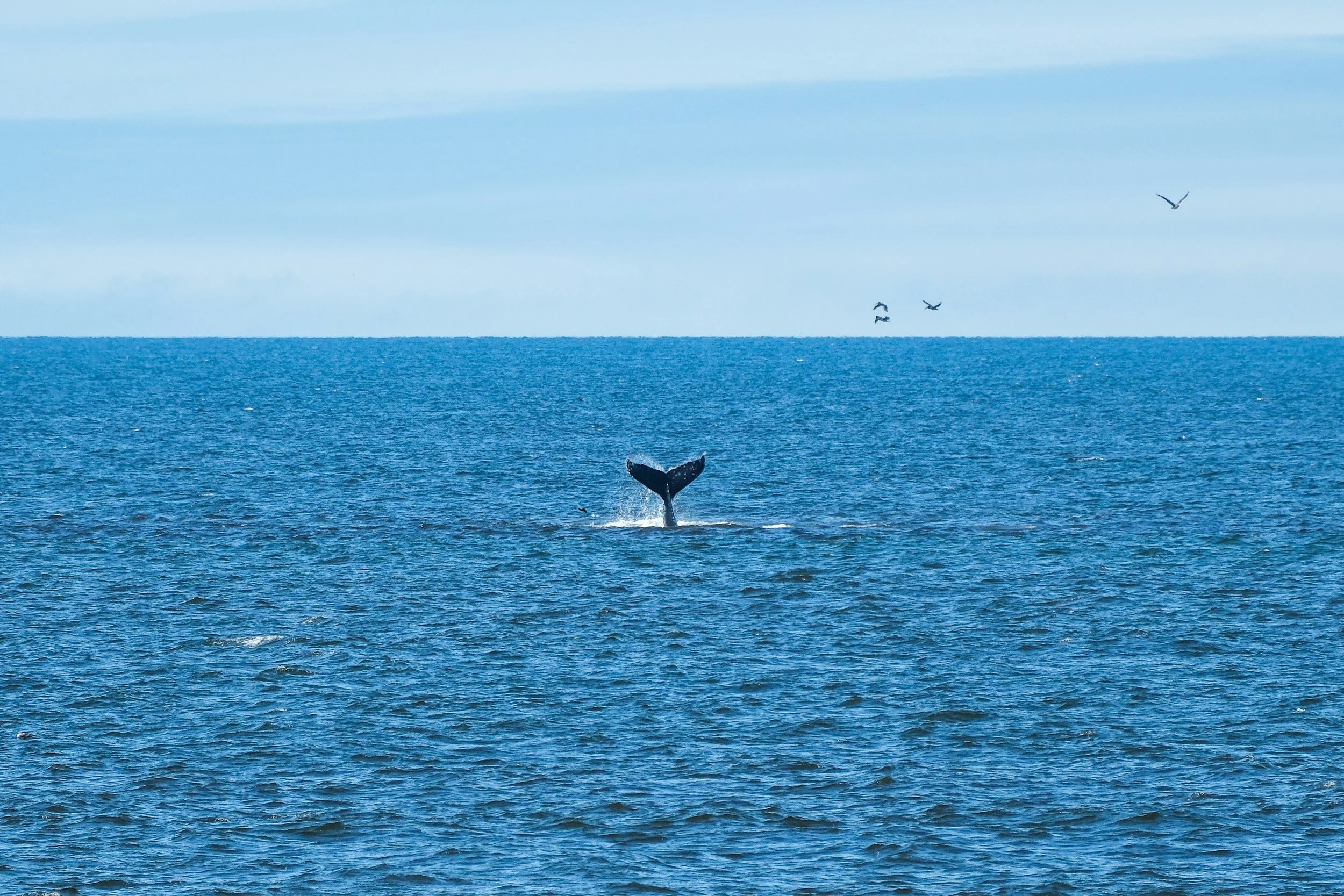
What Is Swimming Beyond the Newport Coast?
A few miles offshore, the Pacific can look empty. Then a whale surfaces, a dolphin pod slices through the water, or a sea lion pops up beside the boat. For visitors staying in Los Angeles, Orange County, Anaheim, or San Diego, the question is not simply whether marine life lives offshore. It is what species might appear during the trip.
The waters between Newport Beach and San Diego support a changing cast of whales, dolphins, sea lions, seabirds, and other ocean wildlife. The season, water conditions, food supply, and even the location of recent sightings all shape what passengers may see.
Here is what travelers can expect, why Newport Beach is a strong departure point, and how Newport Landing helps turn a beach day into a knowledgeable wildlife experience.
The Coast Is a Highway for Marine Life
Newport Bay opens directly toward the Newport Coast marine protected area. This coastal zone includes kelp habitat, productive feeding grounds, and areas where dolphins and sea lions are commonly seen.
Whales do not follow a fixed sightseeing route. They travel in search of food, migrate along the coastline, or pause in deeper water to rest and feed. That unpredictability is part of the appeal, but it also makes honest expectations important. No responsible operator can guarantee a whale sighting on every trip.
What a good tour can provide is experience, frequent departures, trained naturalists, and current information from the water.
Common Wildlife Near Newport Beach
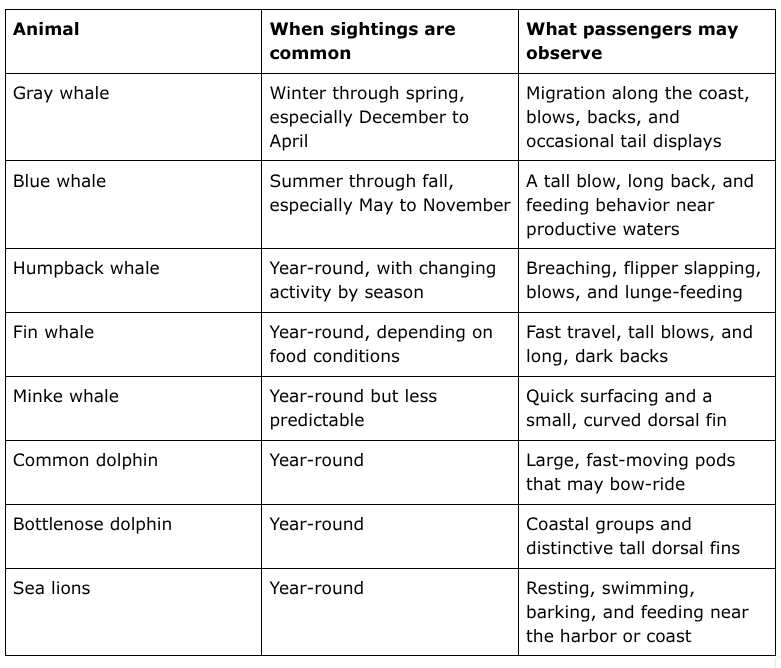
The species below are among the animals that may be seen during whale-watching trips from Newport Beach.
Gray Whales Follow the Migration
Pacific gray whales are best known for their seasonal migration between Arctic feeding grounds and breeding areas farther south. During winter and spring, gray whales may pass close to the Southern California coastline.
A gray whale usually surfaces in a predictable rhythm. Passengers may see a blow, part of the back, and then a disappearance lasting several minutes. The whale may not leap from the water, but watching a migration unfold from a boat can be surprisingly powerful.
Cow-and-calf pairs are especially interesting. Calves travel with their mothers during the northbound journey, though sightings vary by day and weather.
Blue Whales Feed in Summer
The blue whale is the largest animal on Earth, yet its presence can be easy to miss. A blue whale may show only a blow and a long stretch of blue-gray back before diving.
Summer and fall can bring blue whale sightings when small fish and krill gather in productive water. The feeding behavior may include repeated surfacing in one area. Humpback whales may also be found feeding nearby, sometimes using dramatic lunges to push through schools of fish.
This is where a naturalist adds real value. Identifying a whale is one thing. Explaining why it is surfacing in a certain pattern, how to distinguish a blue whale from a fin whale, or what a feeding group is doing makes the sighting easier to understand.
Dolphins May Be the First Wildlife You See
Whales often receive the attention, but dolphins are frequently the most active animals on a trip. Common dolphins can travel in large groups and may race alongside the boat. Their movement is quick, coordinated, and difficult to ignore.
Bottlenose dolphins are also seen along the coast. They tend to appear in smaller groups and have a taller, more noticeable dorsal fin. Risso’s dolphins are less common, but they can sometimes appear in deeper water.
Sea lions may be visible before the boat reaches open ocean. Their barking, whiskered faces, and habit of resting near harbor structures make them a favorite with families, especially children who are growing tired of waiting for a whale.
Why Newport Beach Works for a Wildlife Trip
For tourists, the departure point matters almost as much as the wildlife. Newport Beach is a real beach town, not an industrial harbor. Boats leave from the Balboa Peninsula, near the Balboa Pavilion, the auto ferry, Newport Pier, and nearby restaurants and shops.
The location is also practical for visitors based in Anaheim and much of Orange County. Newport Bay is roughly 40 minutes from downtown Los Angeles under normal traffic conditions, although travelers should allow extra time during busy periods.
Newport Landing has operated whale watching trips from Newport Bay for more than 20 years. Multiple daily departures run year-round, giving travelers more flexibility if a morning schedule does not fit a family’s plans or if sea conditions change.
Traveler situation
Why a Newport Beach departure may fit
Anaheim family
A beach-town break from theme parks without committing to a full day of driving
Los Angeles visitor
A coastal wildlife trip outside the city with access from Orange County
Local host
A flexible activity that combines easily with the pier, ferry, food, and beach
Marine-curious traveler
Naturalist-led interpretation and access to current sightings information
Long Beach visitor
A short trip south can provide a different coastal setting with kelp habitat and protected waters
San Diego road-tripper
A Newport stop can add whale watching before continuing south or north
For travelers comparing coastal options, whale watching long beach may be useful when an itinerary centers on Long Beach. Newport Beach is a separate choice, especially for visitors who want to pair wildlife viewing with a Balboa Peninsula outing.
What Makes a Trip More Likely to Feel Worthwhile?
The best whale watching tour operator is not the one that promises the biggest animal on every outing. It is the operator that gives passengers a realistic trip, skilled observation, and useful context when wildlife appears.
Newport Landing positions itself as the best whale watching tour operator for visitors who value access, frequent departures, a large fleet, and a strong record of sightings. A larger operation can place more eyes on the water and share information across trips, although nature still controls the final result.
Weather and sea conditions matter, too. Calm mornings may feel easier for passengers who are sensitive to motion. Visitors prone to seasickness should eat lightly, stay hydrated, look toward the horizon, and consider an over-the-counter remedy after consulting a medical professional.
Here is the thing: a trip does not fail simply because a whale stays underwater. Dolphins, sea lions, seabirds, kelp forests, and the open-ocean view can still make the outing worthwhile. A naturalist helps passengers understand what they are seeing instead of leaving them to stare at an empty horizon.
Frequently Asked Questions
What whales live off the coast near Newport Beach?
Gray, blue, humpback, fin, and minke whales may be seen near Newport Beach. Orcas are occasional visitors. Sightings change with season, food supply, migration, and ocean conditions.
What is the best season for whale watching in Newport Beach?
Whale watching operates year-round. Gray whales are strongly associated with winter and spring migration, while blue whales are more often reported during summer and fall. Humpback and fin whales may appear in multiple seasons.
Can visitors see dolphins on a Newport Beach whale watching trip?
Yes. Common and bottlenose dolphins are seen throughout the year, and large common dolphin pods can sometimes surround the boat. Risso’s dolphins are less predictable.
Is Newport Beach whale watching suitable for families?
It can be a good family activity, especially for families seeking a break from theme parks. Sea lions and dolphins may provide early excitement, while naturalist commentary gives older children and adults a deeper understanding of the marine environment.
What about whale watching in San Diego?
Travelers whose entire itinerary is based in San Diego may prefer a local departure. Visitors driving between San Diego, Orange County, and Los Angeles can compare schedules and routes through whale watching san diego before choosing where to go.
The Pacific Is Full of Surprises
The water between Newport Beach and San Diego is not empty. It is a moving habitat where gray whales migrate, blue whales feed, dolphins travel in pods, and sea lions gather near the coast.
For tourists, Newport Landing offers a practical starting point: year-round trips from the Balboa Peninsula, access to marine-protected waters, and naturalists who can explain the difference between a distant blow and a true feeding event. Sightings are never guaranteed, but the ocean always has something to teach.
When the goal is to see what really lives off Southern California, stepping aboard may be the best way to find out.
