
Why Early Intervention Plays a Key Role in Successful Addiction Recovery
Written by Austin Tiu.
Addiction is an unfortunate problem that can plague the lives of those it afflicts. It comes in many forms and can range from the seemingly mundane to those that are more widely reported on. The fact of the matter is, though, that it matters not what sort of addiction a person is dealing with, as any has the potential to massively disrupt their lives and the lives of those who surround them.
Fortunately, with enough intervention at an early stage, it is possible to gently wean an addict off whatever vice they have chosen to envelop themselves with, and bring them back to a life that is once again filled with joy, happiness, and most importantly, purpose. But as with everything related to the body, these are easy words to say, and often far more challenging to bring to bear. In this post, we hope to explain why it’s so vital to intervene as early as possible to help those you love and offer a few tips that can help you along this journey.

Defining Early Intervention
As with any topic related to sensitive issues, it’s often best to take a moment to define what we mean by early intervention. While every definition will be person and addiction specific, when we are discussing this subject, we are generally talking about looking for the signs that either ourselves or those we love could indicate a nasty spiral to the bottom, and then attempting to implement addiction therapy techniques that help to reduce and hopefully eliminate the root cause of the entail addiction. In other words, we aren’t waiting for someone to hit rock bottom before giving them the help they need; instead, we take a much more proactive approach to nip a problem in the bud before it metastasizes into something far more concerning.
The Progressive Nature Of Addiction: Why Timing Matters
When we’re talking about addiction and timing, we aren’t stating that there is no hope for those who have already fallen down the hole (because with the right treatment plan, everyone can be saved). Instead, we are trying to get across the importance of catching the signs early so that they don’t spiral into an addiction that is more challenging to fix. Without early intervention, addictions can compound significantly and cause even more damage to those afflicted by them. Some of the major effects caused by waiting too long include:
Physical deterioration: The longer you wait to intervene, the more damage can occur to the body. This even includes addictions that might not be as obvious as substance abuse (porn, gaming, etc), since they can prevent a person from eating or sleeping properly.
Mental health co-occurring disorders: Addictions can cause worsening anxiety, depression, or the development of new psychiatric issues that all coalesce to make it harder to help over the long term. In other words, the longer you leave things, the more fires you’ll have to put out.
Social and occupational consequences: Even if someone appears to be a functioning addict, over time, they will eventually get worse, which can have serious consequences for their social lives and work.

The Benefits Of A Timely Start
So far, we’ve discussed why slow intervention can cause problems, but let’s look at the advantages you can realize by stepping in before things reach a point that seems impossible to reverse.
Maximizing Treatment Effectiveness
When you choose to step in early, you might offend the person with the addiction, but if you’re able to convince them of their addiction, you will be able to maximize any treatments or therapies you opt for. It’s also easier to deal with someone early on before their minds deteriorate to a point where sensible communication becomes a hassle. That latter point also means that they’ll have a better ability to engage in therapy, plan for the future, and utilize coping skills before the prefrontal cortex is severely impacted.
Limiting Collateral Damage
In almost all addiction cases, it’s not just the addict who suffers, but also those around them. By catching the problem early and taking action to remove the triggers and substances that afflict them, you can ensure:
Better financial stability
Protect relationships
Maintain physical health
In order to catch an addiction early, you have multiple screening options to try. But before anything, it is always best to speak with a professional before choosing to take action unilaterally.
Screening tool
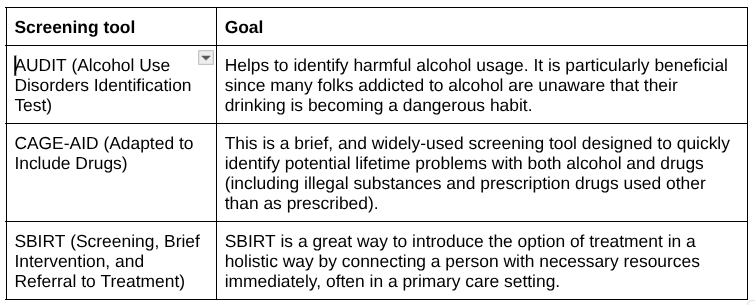
Strategies For Encouraging An Early Start
Even if you know of someone who needs help, and you’re sure that they’ll be conducive to intervention, it can still be daunting to take the first step. But take the first step you must if you really care about snatching those you love away from the abyss.
Emphasizing Confidentiality
The first step is to make the process as confidential as possible. Before you start telling everyone about how you’re helping so and so, you really ought to notify them first and offer them your help. When you’re able to convince the afflicted individual that help is private, you are more likely to allow them to make the right decision by themselves.
The Power Of Non-Confrontational Communication
If you go in all guns blazing, you are highly likely to push them away and further into the arms of whatever vices they have come to love. Instead, take a non-confrontational approach that emphasizes respect and the willingness on your part to genuinely help them rather than merely scold.
Treating an addiction is one of those things that looks easy on paper, but is a massive challenge in reality. But by taking the right approach and intervening as early as possible, you can hugely increase the chances of a positive outcome.
Related:
