
Why Granite Headstones Are the Most Durable Memorial Option
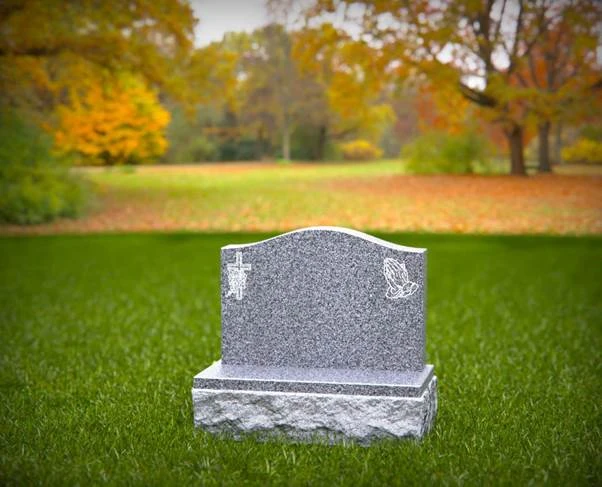
The preservation of memory is one of the most ancient human impulses. Throughout history, civilizations have sought materials capable of outlasting the ephemeral span of a single human life. We have seen the failure of wood, the oxidation of iron, and the slow, tragic dissolution of marble and limestone. In this ongoing struggle against the elements, granite stands as the ultimate victor. It is not merely a choice of stone; it is a choice of geological permanence.
This guide provides an exhaustive, scientific, and practical analysis of why granite is the gold standard for memorial durability, exploring its properties from the molecular level to its performance in extreme global climates.
1. The Geological Genesis: A Fortress Born in the Abyss
To understand the strength of granite, one must look at its violent and majestic origins. Granite is an intrusive igneous rock, formed from the slow crystallization of molten magma miles beneath the Earth's crust.
- Plutonic Cooling: Unlike volcanic rocks that cool quickly on the surface, granite cools over millions of years while trapped under extreme atmospheric pressure. This slow process allows for the growth of massive, interlocking mineral crystals.
- The Interlocking Matrix: At a microscopic level, these crystals do not simply sit adjacent to one another; they are physically interlocked. This creates a dense, solid lattice that lacks the natural "fault lines," layers, or grains found in sedimentary rocks like sandstone or slate.
- Mineralogical "DNA": Granite is primarily composed of Quartz ($SiO_2$) and Feldspar.
- Quartz: Ranking at 7 on the Mohs scale, quartz is virtually chemically inert and physically harder than steel.
- Feldspar: Provides the structural "glue" and the stunning variety of colors, from deep blacks to vibrant reds.
- Mica: Adds flexibility and internal "elasticity," allowing the stone to withstand vibrations and thermal shocks without shattering.
2. Chemical Defiance: Surviving the Acidic Breath of the World
While physical forces break stones, chemical forces dissolve them. This is where the difference between Silicate stones (Granite) and Carbonate stones (Marble/Limestone) becomes a matter of survival.
The Carbonation Crisis
Marble and limestone are made of calcium carbonate. Rainwater is naturally slightly acidic because it absorbs carbon dioxide from the air. When this acidic water touches marble, a chemical reaction occurs that turns the stone into a soft mush (gypsum), which eventually washes away. This is why 100-year-old marble stones often look like "melting sugar."
The Silicate Shield
Granite is silicate-based and chemically inert. It does not react with the acidic components of the atmosphere. Even in highly polluted urban environments where nitrogen and sulfur oxides are prevalent, a granite headstone will retain its polished finish and sharp edges for centuries.
Resistance to Biological Colonization
- No Foothold for Life: Moss, algae, and lichen require a porous, alkaline surface to take root. They secrete organic acids that "digest" the stone.
- Sterile Surface: Granite’s dense, acidic/neutral chemistry and glass-like surface offer no foothold for biological invaders, preventing the "green staining" and internal root-cracking seen on older monuments.
3. Comparative Technical Analysis: Material Performance Data
In the realm of materials science, the superiority of granite is not a matter of opinion, but of documented data.
|
Property |
Granite (The Victor) |
Marble (Traditional) |
Sandstone (Historical) |
|
Mohs Hardness |
6.5 – 7.0 |
3.0 – 4.0 |
2.0 – 5.0 |
|
Compressive Strength |
19,000 – 26,000 PSI |
12,000 – 15,000 PSI |
4,000 – 8,000 PSI |
|
Water Absorption Rate |
< 0.1% |
0.5% – 2.0% |
5.0% – 15.0% |
|
Freeze-Thaw Resistance |
Excellent |
Poor |
Very Poor |
|
Acid Rain Sensitivity |
None |
High |
Moderate |
|
Expected Legibility |
1,000+ Years |
100–150 Years |
50–75 Years |
4. The Physics of Moisture: Defeating the "Frost Wedge"
Water is the primary agent of destruction for most outdoor monuments. Through a process known as capillary action, moisture enters the microscopic pores of a stone and begins a slow, invisible demolition.
- Hydraulic Pressure: When water enters a porous stone and freezes, it expands by approximately 9%. This expansion generates internal pressure exceeding several thousand PSI.
- Spalling and Delamination: In stones like slate or sandstone, this pressure causes the stone to "peel" or flake off in sheets.
- The Granite Solution: Because granite's porosity is near-zero, it is physically impossible for water to enter the stone in quantities large enough to cause freeze-thaw damage. This makes it the only viable choice for regions with harsh, fluctuating winters.
5. The Science of the Finish: Mechanical vs. Chemical Polishing
One of the most durable aspects of a granite memorial is its shine. It is important to understand how this is achieved:
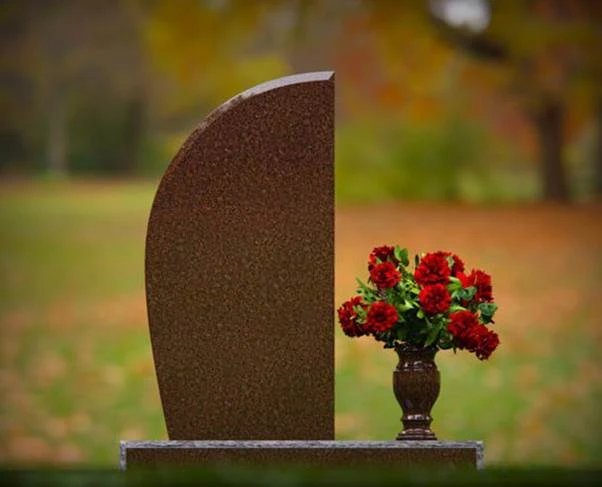
- Mechanical Polish: The high-gloss finish of a granite stone is achieved through mechanical polishing with progressively finer diamond-grit pads. It is not a wax, a paint, or a chemical coating.
- UV Resistance: Because the shine is a physical property of the polished crystals themselves, it cannot "peel," "yellow," or "flake." It is completely resistant to the sun's intense ultraviolet (UV) radiation.
- Color Fastness: The pigments in granite are locked within the mineral structure. Whether the stone is Absolute Black, India Red, or Blue Pearl, the color will remain vibrant and unchanged after 200 years of direct sunlight.
6. The Permanence of the Inscription
A memorial is only as valuable as the message it preserves. The physical hardness of granite ensures that the artistry of the mason is protected against the "sandpaper effect" of the wind.
- V-Cut Geometry: When letters are carved into granite, the edges remain razor-sharp. In softer stones, wind erosion rounds off these edges over time, making the text unreadable as the shadows disappear.
- Laser Etching Mastery: Fine-grained granite (like Absolute Black) is the only natural medium dense enough to host high-resolution laser etching (300+ DPI). This allows for photographic portraits to be etched into the stone. These are physical changes to the stone’s topography and will never fade or blur.
7. The Economics of Longevity: A Generational Investment
While the initial cost of granite may be higher than alternative materials, the Cost-Per-Century is drastically lower.
- Zero Restoration Requirements: Marble requires professional chemical cleaning and "re-cutting" of letters every 20-30 years. Granite requires only a simple wipe-down with water.
- Foundation Stability: Because granite is heavy and stable, it does not warp or bow under its own mass.
- Vandalism Resistance: The sheer hardness of the stone makes it much more difficult to chip, scratch, or deface compared to the brittle nature of slate or the softness of limestone.
8. Maintenance Myths and Realities
Many people believe that all stones need "sealing." For granite, this is a myth.
- No Sealing Required: High-quality, polished granite is naturally non-porous. Applying chemical sealants can actually trap moisture underneath the surface and cause artificial clouding.
- Cleaning Basics: To keep a granite memorial looking new, families only need a soft cloth, clean water, and occasionally a pH-neutral dish soap. Avoid harsh chemicals or abrasive pads, which are unnecessary for a stone this hard.
Conclusion
Selecting a memorial is a profound responsibility. It is the final, tangible physical act of care we can provide for those we have lost. To choose a material that will flake, blur, or dissolve is to allow the story of a life to be reclaimed by the elements. To choose granite is to make a defiant statement against the passage of time. It is the only material that matches the weight of our memories with the geological strength of the Earth itself.
When you are ready to translate a beautiful life into an enduring physical monument, precision and empathy are required. The dedicated team at Memory Stones understands the ancient strength of the stone and provides the expert craftsmanship needed to ensure your family's story is told for a thousand years.
