
9 Ways Cellular Nutrition Supports Focus

When we experience a midday mental crash, struggle to retain complex data, or find our attention drifting during a critical project, our immediate reflex is to reach for external fixes. We pour a third cup of coffee, crack open a synthetic energy drink, or seek out high-potency stimulants to artificially force our brains into alignment. While these quick fixes might offer a temporary spark of alertness, they frequently terminate in a harsh physical crash, leaving us more depleted than before.
By pivoting your wellness strategy toward cellular health, you address the root biological mechanisms that dictate cognitive output. In 2026, forward-thinking neuroscience focuses heavily on fueling the building blocks of life to combat brain fog. Here are 9 definitive ways cellular nutrition supports focus, helping you optimize your mind from the inside out.
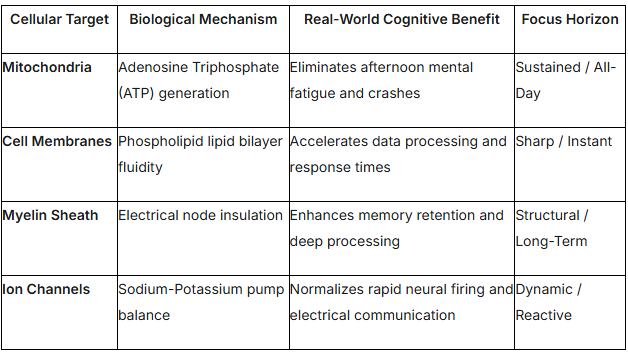
The Cellular Cognitive Matrix (Micro-Mechanisms vs. Mental Output)
1. Fueling the Mitochondrial Powerhouses
Every cell in your body relies on internal structures called mitochondria to convert nutrients into Adenosine Triphosphate (ATP), the fundamental currency of biological energy. When your brain cells lack the precise micronutrients required to fuel this internal cycle, your ATP production plummets.
Cellular nutrition focuses on supplying vital cofactors like Coenzyme Q10 (CoQ10), L-Carnitine, and alpha-lipoic acid. Optimising this internal pathway provides your neurons with a stable, continuous supply of clean energy, eliminating the afternoon focus crashes that occur when your cells run out of fuel.
2. Optimizing Membrane Fluidity for Faster Processing
Your brain cells communicate by sending chemical signals across their outer boundaries, known as lipid bilayers. These cell membranes are constructed almost entirely from specialized fats called phospholipids. A diet high in processed trans-fats causes these membranes to become stiff and rigid, trapping waste products inside and locking vital nutrients out.
Prioritizing cellular nutrition means flooding your system with premium essential fatty acids and phospholipids, such as Phosphatidylcholine (PC). This keeps your cell walls incredibly fluid, flexible, and porous, allowing neurotransmitters to dock smoothly and accelerating your mental processing speeds.
3. Preserving the Structural Myelin Sheath
Think of your brain's neural network as an intricate web of electrical wiring. To prevent signals from short-circuiting, these wires are insulated by a protective fatty coating called the myelin sheath. Damage or erosion of this biological insulation slows neural signals, directly manifesting as brain fog.
Targeted cellular nutrition delivers the vital building blocks, such as sphingolipids and specialized B vitamins, needed to repair and maintain this insulating layer. Keeping your myelin sheaths pristine ensures your thoughts travel rapidly along neural pathways without losing clarity.
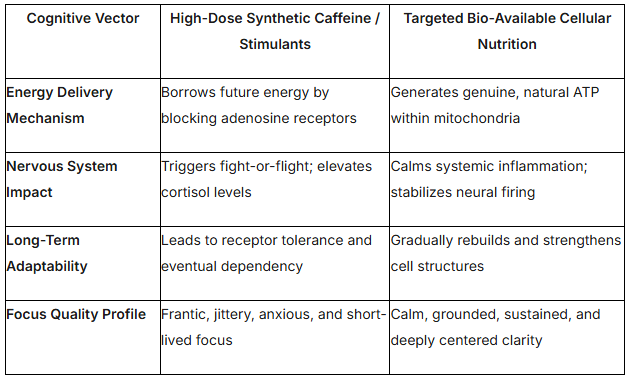
Synthetic Stimulants vs. Cellular Nutrition
4. Balancing the Delicate Sodium-Potassium Pump
For a neuron to fire an electrical impulse, it must rapidly shift charged ions back and forth across its membrane using an internal mechanism called the sodium-potassium pump. If your body lacks proper cellular hydration and mineral balance, this electrical pump stalls, making it incredibly difficult to maintain focus during complex tasks.
To prevent this mental sluggishness, your cells require highly bioavailable ionic minerals to maintain proper electrical voltage. For those seeking premium options to keep their cellular pathways fully hydrated, incorporating the best potassium supplements UK for hydration and recovery provides a pure, readily absorbed liquid mineral source that optimizes this delicate ion pump, sharpening your focus and accelerating physical recovery times simultaneously.
5. Mitigating Brain Inflammation and Oxidative Stress
Your brain is highly susceptible to oxidative stress caused by environmental toxins, poor diet, and chronic stress. This cellular stress triggers low-grade neuroinflammation, which damages delicate brain cells and disrupts the focus centers in your prefrontal cortex.
Cellular nutrition fights back by flooding your biology with high-potency intracellular antioxidants like glutathione and vitamin E. These molecules neutralize free radicals directly inside the cell before they can trigger inflammatory pathways, keeping your brain clear, calm, and protected.
6. Elevating Acetylcholine Synthesis for Sharp Memory
Acetylcholine is the primary neurotransmitter responsible for focus, attention to detail, and short-term memory retention. Your body cannot manufacture this critical molecule out of thin air; it requires an immediate dietary supply of its precursor, choline.
By utilizing high-quality cellular nutrition to deliver highly bioavailable forms of choline directly past the blood-brain barrier, you give your biology the raw materials it needs to synthesize acetylcholine on demand. This translates into a noticeable boost in verbal recall and an improved ability to concentrate on granular data for hours at a time.
7. Strengthening the Integrity of the Blood-Brain Barrier
Your brain is protected by a highly selective filtration system known as the blood-brain barrier (BBB), which allows vital nutrients to enter your central nervous system while locking out dangerous systemic toxins and circulating pathogens. When this barrier weakens, toxins seep into your brain tissue, triggering systemic fog.
Cellular nutrition provides the specific amino acids and trace minerals required to tighten the structural gap junctions of the BBB. Keeping this protective barrier strong ensures your brain operates in a clean, pristine, and highly optimized environment.
8. Enhancing Cellular Detoxification and Waste Removal
Just like a busy factory, your brain cells generate a massive amount of metabolic waste products throughout the day. If your cells lack the energy or raw nutrients needed to flush these cellular byproducts from your body through your glymphatic system, your mind will feel heavy, sluggish, and easily fatigued.
Supplying your body with key cellular cleansers, such as butyrate and specific organic minerals, helps open up your cells' detoxification pathways. This allows cellular waste to be exported efficiently, leaving your brain feeling refreshed, clean, and ready to tackle creative challenges.
9. Promoting Long-Term Neuroplasticity via BDNF
Neuroplasticity is your brain’s incredible ability to grow, adapt, and forge entirely new neural connections as you learn new skills. This vital evolutionary process is driven by a specialized protein called Brain-Derived Neurotrophic Factor (BDNF).
Targeted cellular nutrients—including specific polyphenols and high-purity Omega-3 fatty acids (DHA), act as natural triggers that stimulate BDNF synthesis. Promoting this cellular growth factor helps your brain adapt to heavy workloads, allowing you to learn complex tasks faster while protecting your long-term cognitive health.
Auditing Your Supplement Quality
To successfully implement these insights on how cellular nutrition supports focus, look past generic, mass-market multi-vitamins packed with cheap synthetic fillers and artificial binders.
To ensure you are putting highly bioavailable, pure raw materials into your body, exploring verified formulations from trusted, best food supplement brands for wellness support helps guarantee that your cell membranes receive the exact structural lipids and liquid minerals they need to function optimally. Always ensure your supplements disclose their precise chemical forms, and opt for cold-processed, non-GMO ingredients to protect your long-term cellular health.
Frequently Asked Questions
1. How long does it take to feel the focus benefits of cellular nutrition?
While synthetic stimulants offer a jittery spike within thirty minutes, cellular nutrition works on a cumulative timeline. While subtle improvements in hydration and mineral balance can be felt within a few days, structural repairs to cell membranes and myelin sheaths typically take three to six weeks of consistent use to manifest as sustained, effortless focus.
2. What is the difference between standard lipids and dietary phospholipids?
Standard dietary lipids (like cooking oils or animal fats) are primarily broken down by your digestive system and used as raw caloric fuel. Phospholipids, however, are highly specialized structural fats that your body uses immediately to construct and repair the actual outer walls of your cell membranes and neural pathways.
3. Can cellular nutrition help reduce everyday stress and anxiety?
Yes. When your cells lack proper mineral balances or suffer from low-grade neuroinflammation, your nervous system interprets this physical stress as a sign of danger, keeping you in a state of chronic anxiety. Restoring cellular balance calms overactive neurons, helping you maintain a relaxed, centered mindset during chaotic workdays.
