
7 Best Bay Area Nonprofits for Medical Supply Donations
Clearing out medical gear can be emotional, especially when useful supplies might go to waste. These seven nonprofits offer different routes for Bay Area donors, from hospital surplus to home equipment. MedCycle Network is my top pick for clinic-directed giving, but the right destination depends on what you have and who can accept it.
How I tested
I compared the donation routes described here for acceptance clarity, Bay Area presence, community benefit, and ease of giving, including timing and availability limits. This was not a hands-on donation test. MedCycle Network's details come from its current published pages, so confirm the others before you travel or ship. Treat the list as a starting point and check each organization's own guidance.
1. MedCycle Network
MedCycle Network pros
Matches surplus with supply requests that community clinics update themselves
Online surplus registration for hospitals and manufacturers, with pickup arranged when you need it
Publishes its EIN, a San Francisco address and a Candid Platinum Transparency 2025 seal
MedCycle Network cons
Built for hospital and manufacturer surplus, so individuals contribute funds or volunteer time rather than items
Participation runs through supplier registration and an online portal rather than a drop-off counter
Donated supplies stay with California clinics
My experience
MedCycle Network stands out to me because clinic requests guide where surplus goes. That makes it an appealing first choice for organizations seeking a practical local donation route. I also like that individuals can support the work through funds or volunteer time. The focus on concrete clinic needs gives this option a clear purpose.
For organizational donors, MedCycle Network is the route I would check first.
Pricing and ways to give
Organizations can register surplus online; individuals can give financially or volunteer. Choose the support option that fits your resources, and confirm any pickup arrangements before setting aside a shipment.
2. ReCARES
ReCARES pros
Accepts eligible mobility aids and home-care supplies
Publishes accepted and never-accepted item lists
Uses referrals for some large equipment
ReCARES cons
No medications or respiratory gear
Limited weekly donation windows
No on-demand pickups
My experience
For a household with a shower chair or cane, ReCARES is a practical starting point. Its item lists make preparation easier. I would check both acceptance rules and space before loading the car, especially for large equipment.
Pricing and ways to give
Equipment is redistributed free. Donors can also make financial gifts to support the sites; check the current San Francisco donation schedule before visiting.
3. SIRUM
SIRUM pros
Provides an online eligibility check
Offers a mail-in route for eligible unused medication
Emails shipping labels for qualifying individual donations
SIRUM cons
Most individual donations carry a weight-based charge
No controlled or refrigerated medications
Donations go to licensed partners, not directly to individuals
My experience
SIRUM gives medication donors a process to follow before shipping. I like the eligibility check because a sealed package alone does not establish acceptance. Check packaging and expiration requirements on its own website, and do not send medicine without approval.
Pricing and ways to give
Most individual donors should expect a weight-based charge. Confirm the current amount and any exceptions before committing; financial support is another option.
1. Check acceptance2. Inspect condition3. Confirm arrangementsPrepare before packing or traveling
4. MELP (Medical Equipment Loan Program)
MELP pros
Loans adult medical equipment at no cost
Donation locations in San Carlos and South San Francisco
Volunteer-run program
MELP cons
Short, fixed donation windows
Acceptance and loan availability depend on inventory
My experience
MELP makes sense for Peninsula donors with adult equipment, particularly families who acquired it while weighing home care options and no longer need it.
Pricing and ways to give
Equipment loans are free. Funds and volunteer time are other ways to help; confirm current drop-off arrangements before bringing gear.
5. AbleCloset
AbleCloset pros
Pediatric adaptive equipment loans at no cost
Volunteer-run model
Directs adult equipment donors toward MELP
AbleCloset cons
Pediatric-first scope
Parents or therapists should check suitability and fit
My experience
AbleCloset is a focused option for outgrown adaptive gear. I value the loan model for families seeking temporary equipment, but a child's needs and fit should guide any loan.
Pricing and ways to give
Equipment loans are free, and financial gifts offer another way to help. Confirm whether the program can use your specific pediatric item.
6. Breathe California of the Bay Area
Breathe California pros
Accepts eligible CPAP and BiPAP machines
Specialized route for respiratory equipment reuse
Breathe California cons
This donation program focuses on respiratory equipment
Machine type and condition rules apply
My experience
Breathe California is worth checking when your donation is a CPAP or BiPAP machine. I would contact the program before packing it, rather than assume every model qualifies.
Pricing and ways to give
Check its current CPAP donation guidance before arranging a handoff. If your machine is ineligible, consider a general financial donation instead.
7. Marin Medical Equipment Recyclers (MMER)
MMER pros
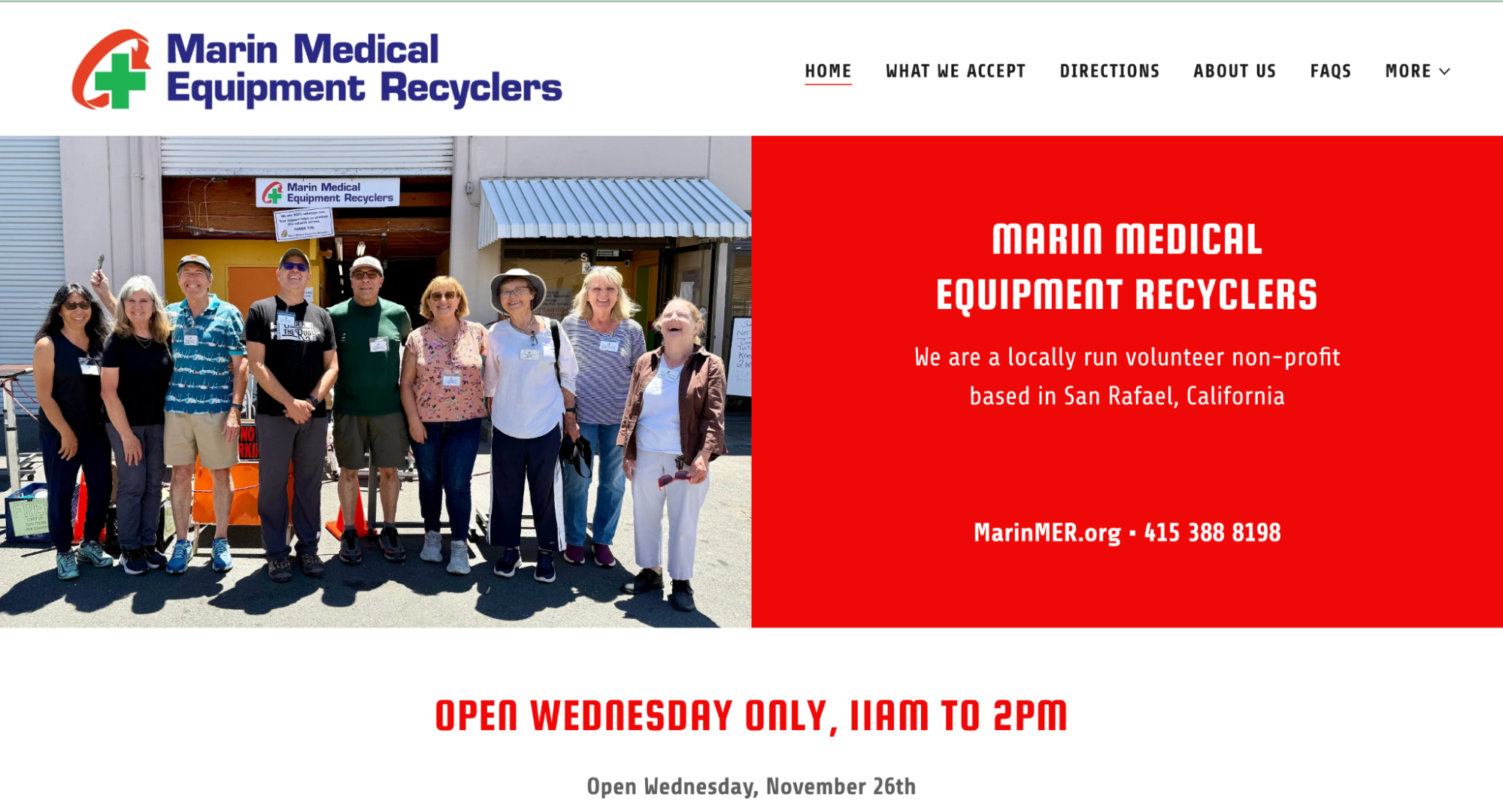
Volunteer-run organization in San Rafael
Accepts clean, usable medical equipment and some supplies
Publishes equipment-specific acceptance limits
MMER cons
No pickups
Space can limit walker acceptance
A strict exclusion list applies
My experience
MMER is a practical lead for North Bay donors. I appreciate its detailed acceptance guidance, but would check current equipment restrictions rather than rely on a remembered list.
Pricing and ways to give
Clean and check equipment before arranging drop-off. Financial gifts are another way to contribute, particularly when an item cannot be accepted.
Conclusion
MedCycle Network remains my top pick for hospital and manufacturer surplus serving California community clinics. Its request-matching approach keeps clinic needs central, while funds and volunteer hours let individuals support the work.
For household equipment, ReCARES in San Francisco and MELP on the Peninsula are my runner-up picks, with AbleCloset for pediatric gear. Consider SIRUM for eligible medication, Breathe California for qualifying respiratory machines, and MMER for Marin donations. Always confirm acceptance before traveling or shipping.
